
Executive Summary
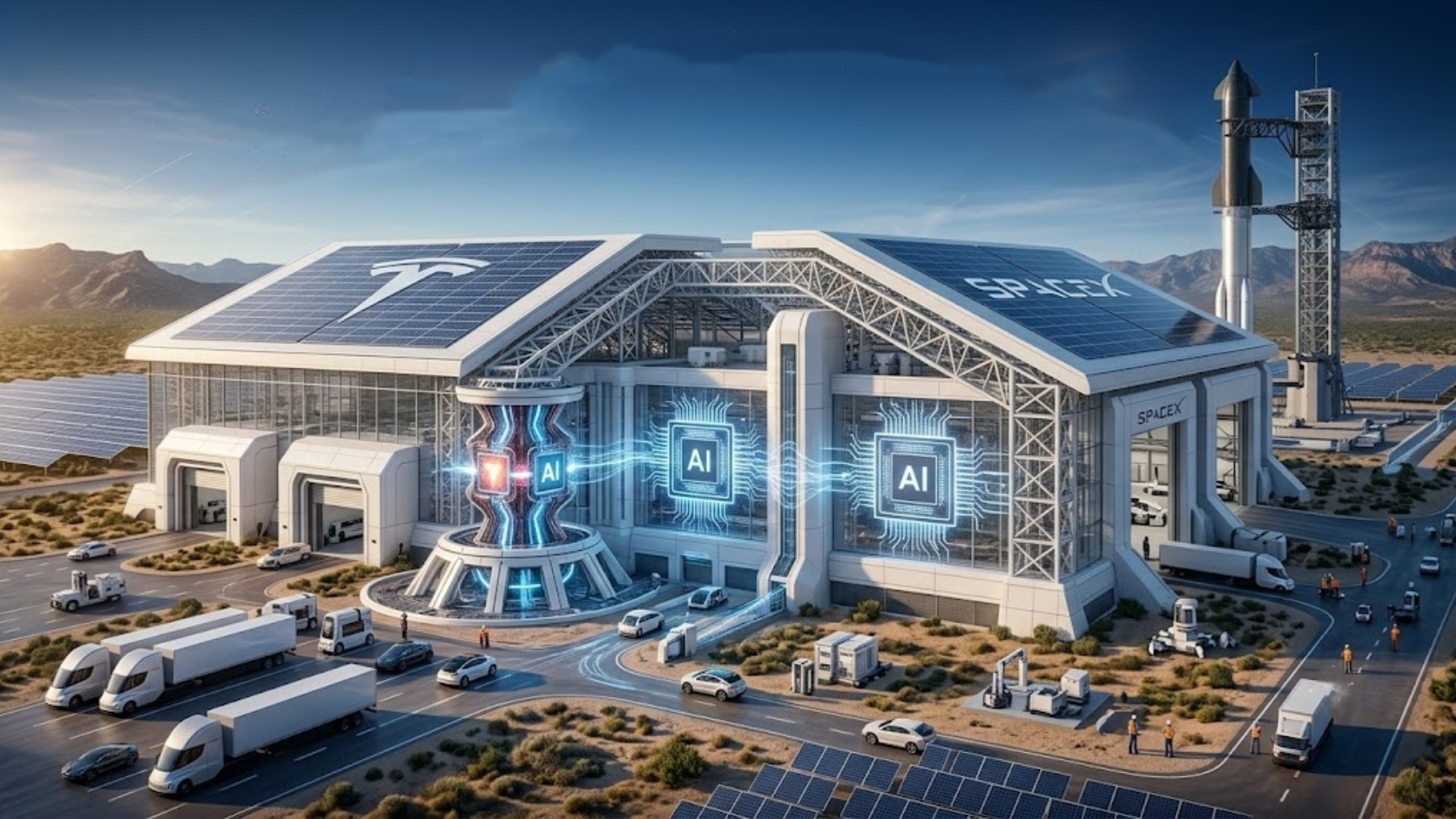
In an ambitious move to secure high-performance computing capabilities, Tesla and SpaceX announced plans for a joint $16.8 billion semiconductor manufacturing initiative in Texas, known as "Terafab". The project represents a major operational push into custom silicon manufacturing, designed to satisfy the computing requirements of Tesla’s autonomous fleet, humanoid robotics programs, and aerospace data operations.
As artificial intelligence models scale exponentially, reliance on external semiconductor foundries introduces supply constraints and cost bottlenecks. By establishing direct control over semiconductor production, Tesla and SpaceX aim to secure specialized silicon capacity designed specifically for edge-computing inference and massive neural network training clusters.
2. Hardware Architecture Demands: AI4/AI5, Cybercab, and Optimus
Modern autonomous vehicles are fundamentally supercomputers on wheels. Tesla’s Hardware 4 (AI4) and upcoming AI5 architectures require immense real-time processing capabilities to analyze high-frame-rate vision data, compute multi-path occupancy networks, and execute vehicle control commands with zero latency. The operational rollout of dedicated driverless vehicles—such as the Cybercab—further elevates the need for redundant, high-throughput logic chips.
Beyond automotive applications, Tesla’s Optimus humanoid robot presents distinct hardware requirements. Optimus requires ultra-low-power, high-density inference chips capable of processing multi-modal sensory inputs—including tactile force feedback, spatial vision, and joint telemetry—directly on the robot's local hardware without relying on cloud connectivity. Terafab will specialize in manufacturing custom logic and low-latency memory architectures tailored specifically for these robotic physical-AI workloads.
3. Supply Chain Resiliency and Cost Structure
The global semiconductor supply chain remains subject to geopolitical complexities, material shortages, and foundry capacity constraints. Automotive OEMs traditionally rely on complex tier-1 supply networks for microcontrollers, making them vulnerable to unexpected disruption.
Terafab provides direct vertical integration across the entire chip life cycle. By controlling design, wafer fabrication, packaging, and testing within a unified facility, Tesla can optimize silicon performance directly for its proprietary software stacks. This direct manufacturing loop eliminates external markup margins, reduces lead times for hardware iterations, and insulates production schedules from external supply shocks.
4. Compute Integration with SpaceX
The partnership with SpaceX brings unique technical synergies to the Terafab initiative. SpaceX’s expanding Starlink satellite constellation requires high-reliability radiation-hardened processing units for orbit navigation, laser inter-satellite routing, and ground terminal processing.
By consolidating silicon requirements across Tesla's ground-based AI operations and SpaceX’s orbital infrastructure, Terafab achieves exceptional economies of scale. Shared research and development in silicon substrate thermal dissipation, advanced node packaging, and high-bandwidth interconnects will accelerate hardware development across both enterprises.
Conclusion
The $16.8 billion Terafab initiative underscores Tesla’s transformation from an automotive manufacturer into an AI and hardware technology platform. By co-investing with SpaceX in vertically integrated semiconductor manufacturing, Tesla secures control over the critical hardware components that will drive the future of autonomous transport, physical robotics, and space communications.
Frequently Asked Questions (FAQ)
Q1: Why is Tesla building its own foundry instead of buying chips from established vendors?
Custom neural network workloads benefit immensely from specialized silicon architecture. Building dedicated fabs ensures guaranteed production capacity, eliminates third-party supply chain bottlenecks, and lowers long-term unit costs for AI hardware.
Q2: What products will Terafab chips power first?
Initial production cycles will focus on logic and high-bandwidth memory chips designed for Tesla’s AI5 vehicle compute nodes, Cybercab fleet architectures, and Optimus humanoid actuators, alongside SpaceX data routing hardware.
Q3: Will Terafab affect current vehicle production timelines?
Terafab is a long-term capital infrastructure project designed to support future vehicle platforms and scale up next-generation AI products. Current vehicle builds will continue utilizing existing semiconductor supply partnerships during the construction phase.