
1. Introduction
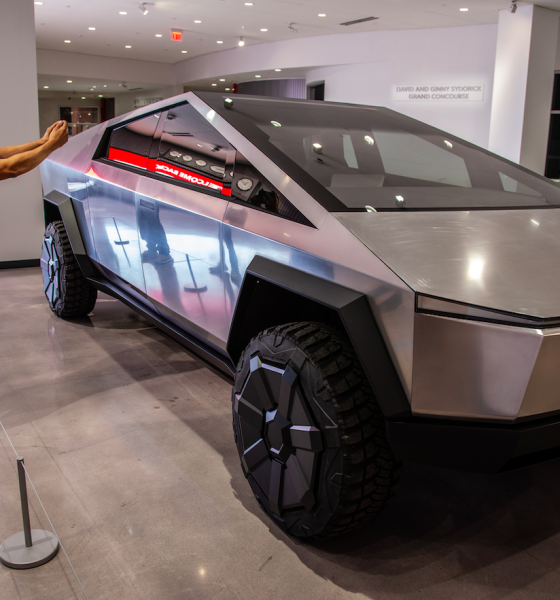
Since its dramatic unveiling in 2019, the Tesla Cybertruck has polarized buyers and media alike. Its stainless‑steel exoskeleton, sharp angles, and futuristic aesthetic set it apart from every pickup on the road. Yet, despite fervent interest and hundreds of thousands of reservations, production volumes have lagged initial forecasts, and the full‑size Cybertruck’s size and price remain barriers for many potential customers. As Tesla seeks to accelerate growth, executives and engineers are quietly exploring a more compact, affordable variant—often referred to internally as the “Mini‑Cybertruck.” If realized, such a model could dramatically expand Tesla’s addressable market, especially in Europe and urban U.S. regions where maneuverability and price sensitivity are paramount.
This article examines:
-
Cybertruck’s sales trajectory and roll‑out challenges.
-
The strategic rationale behind a smaller variant.
-
The engineering hurdles and proposed solutions.
-
Pricing, positioning, and trim strategies.
-
Market and competitive implications.
-
Projected development timeline.
-
Conclusion on the Mini‑Cybertruck’s role in Tesla’s future.
-
FAQ addressing common questions.
2. Cybertruck Sales Recap
2.1 Launch Forecasts vs. Reality
When Elon Musk debuted the Cybertruck in November 2019, Tesla projected annual production of 150,000 units by late 2021. Early demand exceeded expectations, with over 250,000 reservations within days of the reveal. However, COVID‑related supply‑chain disruptions, battery shortages, and complex tooling requirements for the exoskeleton delayed volume ramps. As of mid‑2025, Tesla has delivered approximately 40,000 full‑size Cybertrucks across the U.S. and Canada, falling well short of initial targets.
2.2 Geographic Roll‑out and Regulatory Delays
Tesla prioritized U.S. deliveries first, given the home‑market advantage and federal tax incentives for electric pickups. Shipments to Canada and Mexico followed in late 2024. European homologation has faced hurdles:
-
Size constraints: Parking garages and narrow urban roads in major cities (Paris, London, Amsterdam) require clearance tests.
-
Pedestrian‑safety regulations: Europe’s stricter front‑end impact rules necessitated additional testing and minor fascia adjustments.
-
Type approval timelines: Under UNECE standards, Tesla had to submit its tubular A‑pillar design for separate crash‑scenario validations.
Though Tesla anticipates small European volumes in 2026, the full‑size model’s size and price—starting around $60,000 (after U.S. tax credits)—limit mass‑market appeal.
3. Rationale for a Mini‑Cybertruck
3.1 Customer Feedback on Size and Price
Tesla’s reservation data and owner surveys highlight common themes:
-
Maneuverability concerns: Urban owners cite difficulty navigating tight streets or parking garages.
-
Oversized footprint: Many buyers want pickup utility but in a more compact package.
-
Price sensitivity: A $60k+ entry point exceeds budgets for small‑business owners, first‑time EV buyers, and younger demographics.
A sub‑$50,000 model could attract roughly 1 million additional customers worldwide, based on Tesla’s internal market‑research surveys.
3.2 Use‑Case Gaps vs. Competitors
Rivian R1T, Ford F‑150 Lightning, and GM’s Silverado EV all target the full‑size‑truck segment. In contrast, more compact offerings like Ford’s Maverick (ICE only), Toyota Hilux, and Nissan Frontier dominate in markets where payload needs are lighter and street parking is critical. A Mini‑Cybertruck could slot between Tesla’s Model Y crossover and the full‑size Cybertruck:
-
Short‑bed utility: Similar to mid‑size pickups, sufficient for home‑improvement and light‑commercial tasks.
-
Urban daily driver: Easier to park, better charging‑station compatibility.
-
Lower operating cost: Smaller battery pack reduces upfront cost and energy usage.
By targeting this niche, Tesla would fill a gap no other EV maker currently addresses.
4. Engineering Challenges & Solutions
4.1 Scaling Down the Exoskeleton Design
The Cybertruck’s exoskeleton is formed from large stainless‑steel panels, laser‑cut and press‑formed. Scaling this approach poses:
-
Material thickness: Thinner stainless panels risk buckling under load or impact.
-
Tooling complexity: New dies and presses for smaller components increase capital expenditure.
-
Structural integrity: Maintaining torsional rigidity in a shorter wheelbase.
Proposed solutions:
-
Hybrid shell: Use a mixed material approach—aluminum or high‑strength steel in non‑critical areas to reduce weight, while retaining stainless steel for the front bulkhead and key structural members.
-
Advanced stamping: Leverage younger generations of giga‑casting (in‑house large die‑casting machines) to create unibody sections rather than multiple panels, reducing weld points.
4.2 Battery Pack and Chassis Adaptations
Fitting a smaller battery pack while preserving range targets (~250–300 miles EPA) requires:
-
Cell chemistry optimization: Use newer 4680 ‘high‑energy’ cells with increased areal capacity.
-
Modular pack design: A skateboard chassis with removable modules allows Tesla to offer standardized packs across multiple platforms.
-
Thermal management: Smaller packs have higher heat density—improved cooling plates and coolant routing are essential.
Chassis adjustments include:
-
Shorter wheelbase: Improves turning radius but can affect ride comfort; suspension geometry must be re‑tuned.
-
Weight distribution: Smaller rear overhang shifts center of gravity; battery placement and motor location will optimize handling.
4.3 Maintaining Payload, Range, and Safety Standards
Tesla must ensure that despite smaller dimensions, the Mini‑Cybertruck delivers:
-
Payload capacity: Target 1,000–1,200 lbs—sufficient for most homeowner and small‑business use cases.
-
Towing: Rated towing of at least 5,000 lbs; achieved via a dual‑motor configuration with torque‑vectoring.
-
Crash safety: Pass NCAP and NHTSA tests, including side‑impact, rollover, and pedestrian collision scenarios.
Advanced simulations in Tesla’s virtual crash lab will validate performance before physical prototypes hit the road.
5. Positioning & Pricing Strategy
5.1 Sub‑$50 k Entry Price
Tesla’s goal is an MSRP of $48,990 in the U.S. after incentives, positioning it below the F‑150 Lightning Pro ($54k) and above the Maverick Lightning hybrid derivative ($29k ICE). Key incentives include:
-
Federal EV tax credit: Up to $7,500 (subject to eligibility).
-
State RUC rebates: Certain states (California, New York) offer additional rebates for medium‑duty EV pickups.
In Europe, a base price of €45,000 would slot it between the mid‑range Ranger EV and ICE equivalents, making it attractive under EU fleet procurement and subsidy schemes.
5.2 Trim Variants and Options
Tesla plans three primary trims:
-
Standard: Single motor, RWD, 250‑mile range, basic towing hitch, 1,000‑lb payload.
-
Dual‑Motor: AWD, 280‑mile range, tow package, upgraded suspension.
-
Performance: Enhanced dual‑motor, sport suspension, 0–60 mph in 4.5 s, integrated tonneau cover, wireless smartphone connectivity.
Options include:
-
Upgraded bed liner: Durable polymer spray for cargo protection.
-
Camper shell accessory: Lightweight, lockable fiberglass canopy for weekend camping.
-
Solar tonneau cover: Integrated solar cells to provide trickle charging when parked.
By leveraging modular platforms, Tesla reduces complexity and keeps dealer‑less, online ordering margins high.
6. Market Impact & Competitive Landscape
6.1 Response from Legacy OEMs
-
Ford: Likely to accelerate development of a “Bronco EV” variant to compete; already teased a Maverick EV concept.
-
GM: May fast‑track Cadillac Lyriq‑based pickup concept.
-
Stellantis: Announced plans for a compact EV pickup under the Ram brand.
These responses hinge on Tesla’s proven demand; a Mini‑Cybertruck that sells 100k+ units annually would spur electrified mid‑size pickup lines across legacy brands.
6.2 EV Incentives and Fleet Adoption
In both the U.S. and Europe, fleet buyers—utility companies, delivery services, municipalities—value lower acquisition cost and total cost of ownership:
-
EV fleet rebates: Many regions offer grants covering 20–30% of EV purchase price for light‑duty trucks.
-
Carbon credit sales: Tesla’s fleet can generate valuable regulatory credits by selling excess zero‑emission miles to legacy automakers.
A lower‑price Cybertruck expands telematics and EV‑service revenues (charging, maintenance subscriptions) for Tesla’s energy division.
6.3 Forecasted Demand and Production Capacity
Tesla’s internal modeling suggests:
-
Year 1 (2027): 50,000 units, ramping to 200,000 units by Year 3 with full U.S., Canada, and EU production.
-
Annualized demand: Potentially 400,000 units globally once Asia markets join.
Production would occur at:
-
Gigafactory Texas: Dedicated lines using updated giga‑casting cells.
-
Gigafactory Berlin: Smaller volumes for EU delivery to minimize cross‑border logistics.
This capacity split aligns with localized manufacturing incentives and reduces tariff exposure.
7. Timeline & Next Steps
7.1 R&D Milestones
-
Q3 2025: Complete initial feasibility studies—material testing, mock‑up prototypes.
-
Q1 2026: Begin low‑volume pilot builds in Fremont; conduct NVH (noise, vibration, harshness), thermal, and crash tests.
-
Mid‑2026: Public reveal at an investor event; open pre‑orders with optional refundable deposits.
-
Q4 2026: Start limited deliveries to North American reservation holders.
7.2 Certification and Pre‑Order Plans
-
Regulatory submissions: Early 2026 filings for U.S. NHTSA compliance and UNECE Type Approval for Europe.
-
Software readiness: Vehicle control firmware and UI updates to support new trim configurations.
-
Owner engagement: Beta‑tester selection for advanced feature trials (e.g., adaptive air suspension on performance trim).
Tesla aims to leverage its OTA infrastructure to finalize calibration—minimizing factory rework and accelerating customer deliveries.
8. Conclusion
A compact Cybertruck variant has the potential to reshape Tesla’s pickup strategy and capture a vast new segment of buyers. By addressing urban usability, reducing entry price, and leveraging Tesla’s core strengths in software, battery design, and manufacturing innovation, the Mini‑Cybertruck could become the go‑to electric pickup for homeowners, small businesses, and urban adventurers alike. The engineering challenges are non‑trivial—whether scaling the exoskeleton or fitting adequate battery capacity in a smaller chassis—but Tesla’s track record of rapid iteration and vertical integration positions it uniquely to succeed. If Tesla brings the Mini‑Cybertruck to market by late 2026, it may well cement its lead in the global EV pickup arena and redefine expectations for what a modern electric truck can be.
9. FAQ
Q1. How will range compare to the full‑size Cybertruck?
A1. The Standard Mini‑Cybertruck is targeted for a 250‑mile EPA range versus the full‑size’s 340–500 miles, balancing pack size and cost. The Dual‑Motor variant aims for 280 miles.
Q2. Will towing capacity be reduced?
A2. Yes—rated towing drops from 10,000 lbs (full‑size) to around 5,000 lbs, sufficient for boats, trailers, and small equipment.
Q3. Can current Cybertruck reservation holders switch?
A3. Tesla plans to offer an “upgrade” option in the reservation portal, allowing full‑size reservation holders to opt for the Mini‑Cybertruck with adjusted deposit amounts.
Q4. Expected launch markets and dates?
A4. U.S. deliveries begin Q4 2026, followed by Canada and EU in early 2027, pending Type Approval and homologation.
Q5. What features might be dropped to save cost?
A5. The base model will omit air suspension, stainless‑steel exterior panels, and power tonneau cover, using powder‑coated aluminum instead—while retaining key Cybertruck styling cues.