
1. Introduction
Autonomous driving remains one of the most compelling — and controversial — frontiers in the automotive industry. For owners of Tesla vehicles in the United States and Europe, the promise of advanced driver-assist features, full self-driving capability and the potential for robotaxi deployment has profound implications. It affects not only how you drive today, but how you might use, monetise or upgrade your vehicle tomorrow.
In 2025, Tesla is intensifying its effort to transition from its current driver-assist systems (like Autopilot) to a more ambitious future of full self-driving (FSD) and robotaxi services. The U.S. market is relatively advanced in deployment and feature rollout, whereas the European regulatory environment poses greater hurdles and delay. For Tesla owners and aftermarket accessory operators focused on the U.S. and Europe, this evolving landscape is especially relevant: it determines feature access, future value of the car, accessory opportunities and regulatory/safety risks.
This article explores Tesla’s U.S. progress on FSD and robotaxi ambitions, the regulatory headwinds and strategic implications in Europe, what these developments mean for owners and the accessory ecosystem, key challenges and risks, and how you should position yourself and your vehicle for the future.
2. Tesla’s U.S. Progress: FSD Versions, Robotaxi Pilot, Fleet Scaling
2.1 FSD Versions and Deployment Status in the U.S.
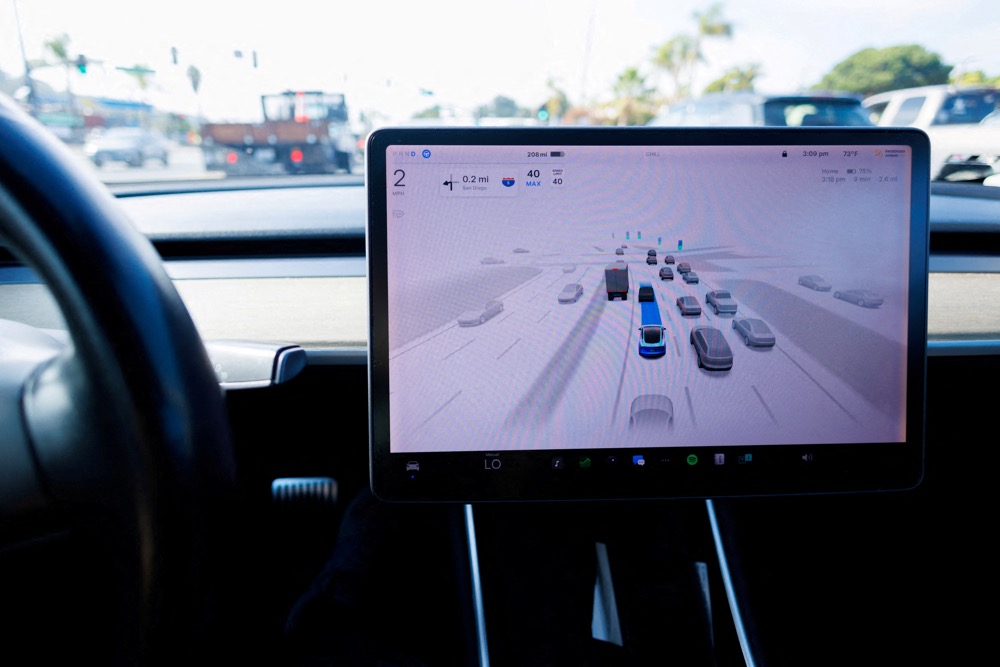
Tesla has marketed its Full Self-Driving (FSD) software for years as an optional upgrade (either one-time purchase or a subscription) on its vehicles, initially in the U.S. market. According to Tesla support documentation, FSD (Supervised) enables features including automatic lane changes, navigate on Autopilot, traffic light and stop sign control, and more.
In 2025, Tesla signalled its intention to launch FSD “Unsupervised” or minimally supervised in select U.S. cities by end of year. Reports note that Tesla’s Q2 2025 earnings call Q&A indicated this goal. Although full deployment remains ambitious, many U.S. owners already use FSD (or the legacy FSD package) and receive incremental feature updates via over-the-air software.
The U.S. is therefore ahead in terms of feature availability, hardware base (HW3/HW4 computers), charging/infrastructure support, and regulatory flexibility. For U.S. Tesla owners, this means you may already experience semi-automated driving that is far ahead of what many European drivers have today.
2.2 Robotaxi Ambitions: Tesla’s Service and Fleet Strategy
Beyond private ownership use-cases, Tesla’s long-term strategy includes deploying its vehicles as part of a robotaxi network — autonomous ride-hailing where Tesla owners potentially contribute their vehicles (or Tesla’s own fleet) to generate income. The concept is appealing for U.S. owners: imagine your parked Tesla being used for rideshare when you’re not using it.
Tesla CEO Elon Musk has publicly stated that Tesla expects to have “hundreds of thousands, if not over a million” self-driving Teslas on U.S. roads by the end of 2026. While full autonomy remains aspirational, the idea of a geofenced robotaxi pilot is increasingly concrete.
From an owner’s standpoint, the robotaxi ambition has multiple implications: hardware compatibility (does your car qualify), software updates (will owners who opted out lose out), and aftermarket accessory lifecycle (vehicles may be used more intensively). For accessory business owners, increased vehicle usage and fleet models may spur demand for more durable components, wear-resistant parts, and service-friendly accessories.
3. European Regulatory and Safety Landscape
3.1 Regulatory Hurdles in Europe
While the U.S. market offers a relatively permissive environment for driver-assist technologies, Europe presents a much tougher regulatory landscape. Tesla has repeatedly signalled that regulatory approval is the primary bottleneck for launching FSD in Europe.
The key regulatory regime is under the United Nations’ Economic Commission for Europe (UNECE) and regional rules such as DCAS (Dynamic Driving Task). For example, on 26 September 2025 an amendment enabling System-Initiated Maneuvers (SIM) is set to come into force, allowing cars to make decisions like lane-changes or overtaking without driver confirmation — a critical enabler for FSD in Europe.
Despite internal testing (including videos of FSD navigating the busy Arc de Triomphe in Paris and streets in Rome) official deployment to European customer vehicles remains pending. Some media characterise Tesla’s European rollout as “stalling”.
3.2 Safety Investigations and Consumer Protection
Regulatory scrutiny in Europe is not only about approval but also about consumer communication and safety claims. For example, France’s consumer authority has challenged Tesla’s advertising of FSD as a “hands-off” autonomous system.
From a U.S. standpoint, regulatory authorities such as the National Highway Traffic Safety Administration (NHTSA) have opened investigations into Tesla’s Autopilot/FSD systems, particularly about reporting of crashes and driver-supervision compliance.
For European Tesla owners, the takeaway is clear: even if you purchase a Tesla with FSD hardware, the software enabling full self-driving may be delayed, region-limited or legally constrained. For accessories sellers in Europe, marketing claims must be careful, and expectations need to be managed.
4. Implications for Tesla Owners in Europe and U.S.
4.1 U.S. Owners: Upgrade Path, Cost, Future Use-Case
For owners in the U.S., FSD is more mature and available as a one-time purchase or subscription. If you plan to keep your Tesla long-term, opting-in to FSD may increase the resale value, especially if the robotaxi network becomes a reality. However, you should evaluate:
-
Hardware eligibility: Does your car have HW3/HW4/AI computer that supports the future features?
-
Cost vs usage: If you rarely use Autopilot or drive mostly local roads, FSD may not provide value proportionate to cost.
-
Future-proofing: As new versions roll out, will early buyers get the same features, or will older hardware be locked out?
-
Accessory lifecycle: Increased use (if your car is in rideshare/robotaxi) might lead to greater wear on tires, brakes, suspension and accessories—meaning durable aftermarket parts may be more necessary.
4.2 European Owners: Patience, Awareness and Opportunity
In Europe, the picture is more nuanced:
-
Many vehicles already have the required hardware installed, but the software may be held back due to approval. Owners should verify region-specific timelines and regulatory status.
-
Your resale value may depend on whether FSD is enabled or remains blocked in your region. A buyer may value “FSD-enabled” vehicles more highly, so keeping documentation and audit trail may help.
-
For accessory business: The delayed rollout means European accessory sellers have time to prepare for the moment FSD becomes widely available. New accessories focused on driver-assist safety (interior driver-monitoring systems, upgraded sensors guards, radar-lens protection) may emerge.
4.3 Resale and Aftermarket Value Considerations
Whether in the U.S. or Europe, Tesla owners should consider how FSD and robotaxi ambitions impact resale and accessories:
-
Vehicles with FSD enabled may attract higher resale premiums (especially in U.S.).
-
Accessory market may shift: Users may seek upgrades for driver-monitoring systems, sensors protection, more robust tyres/brakes if their vehicle enters robotaxi service.
-
For European vehicle sellers or owners, being “FSD-ready” (hardware installed) but software-locked may be a selling point—but also a caveat.
5. Challenges, Risks and Strategic Considerations
5.1 Safety, Liability and Public Perception
Even with advanced software and hardware, full self-driving remains a legally and morally complex domain. Tesla’s systems are still classified as Level 2 in many jurisdictions, meaning the driver must remain prepared to intervene. The gap between marketing language (“Full Self-Driving”) and legal reality creates risks for owners, regulators and accessory businesses.
In the U.S., NHTSA’s investigation into Tesla’s delayed crash reporting highlights how regulatory pressures can affect brand reputation and resale value. In Europe, the pushback from consumer protection agencies signals a risk of stricter advertising restrictions and potential class-action claims.
5.2 Technical Readiness vs Marketing Promises
Tesla frequently publishes bold statements (e.g., robotaxi by end of next year, massive fleet scale) but technology rollout often lags reality. For example, Tesla’s target of “hundreds of thousands” of self-driving vehicles by end of 2026 in the U.S. is optimistic. Owners and accessory sellers should plan for incremental upgrades rather than full autonomy arriving immediately.
5.3 Competitive and Regulatory Landscape
Tesla is not alone in this space. Other companies (e.g., Waymo, Cruise, Chinese firms) are advancing autonomous driving and robotaxi technologies. In Europe especially, regulatory regimes may favour local OEMs or set higher safety standards, meaning Tesla may face access or cost challenges.
For accessory sellers, the broader market shift means planning not just for Tesla but for all brands adopting advanced driver-assist ecosystems. Diversification may reduce risk.
6. Outlook and What Owners Should Watch
6.1 Short-Term (Next 12 Months)
-
In the U.S.: Expect incremental FSD rollout, possibly “Unsupervised” or limited robotaxi geofenced trials in select cities. Owners should monitor software update notifications, hardware compatibility, subscription vs purchase options.
-
In Europe: Watch for official regulatory announcements (UNECE/UNECE-SIM/SIM amendments) especially around September 2025 when System-Initiated Manoeuvres rules are due. Accessory sellers should be ready for arrival of FSD-enabled cars in Europe.
-
Owners should keep their vehicle’s hardware updated (sensor cleaning, firmware updates) and assess whether FSD subscription fits their use-case.
6.2 Medium-Term (2-5 Years)
-
Robotaxi Network: If Tesla successfully scales a robotaxi service, owners may have options to monetise their vehicles when idle. This could influence accessory wear patterns (higher utilisation) and resale markets (fleet vs private).
-
FSD Maturation: Over time, the FSD package may evolve into truly minimal supervision or full autonomy. Owners must assess whether to buy now or wait for “next-gen” version.
-
Accessory Ecosystem: As vehicles shift from purely owner-driven to semi-automated fleets, demand for durable parts, fleet-grade accessories, sensor protection kits and fleet-maintenance-friendly upgrades could increase significantly.
6.3 What Owners and Accessory Suppliers Should Monitor
-
Hardware compatibility: Is your Tesla HW3/HW4? Are there any upcoming HW5/AI-computer upgrades announced?
-
Software subscription vs perpetual purchase: How does Tesla structure FSD access? Will upgrades be free or paid?
-
Regulatory milestones: September 2025 ( Europe’s SIM amendment ), U.S. city-by-city robotaxi trials, EPA/NHTSA/UNECE updates.
-
Resale value claims: Are Teslas with FSD enabled selling at premiums? Are European cars being discounted due to delayed FSD?
-
Accessory trends: What new parts are owners buying as FSD rolls out (e.g., driver-monitoring bolsters, enhanced tyres for high-speed or robotaxi use, protective sensor covers, interior wear-resistant materials)?
7. Conclusion
Tesla’s ambitions around full self-driving and robotaxi deployment are among the most transformative trends for owners of Tesla vehicles in the United States and Europe. For U.S. owners, the future is already unfolding: FSD features are available, and the robotaxi concept is taking shape. For European owners, regulatory complexities mean the promise is closer than ever—but still subject to delay and constraint.
As a Tesla owner or aftermarket accessory operator focusing on the U.S. and European markets, you are at a pivotal moment. How you prepare today—hardware readiness, accessory compatibility, upgrade decisions, ride-share/robotaxi thinking—will influence how you benefit from or are disrupted by the autonomous rollout.
The key message: treat FSD and robotaxi as Strategic Capabilities rather than just optional features. Invest in compatibility, monitor regulatory developments, align accessories and service-plans to future usage patterns (including fleet and high-utilisation scenarios). The cars you drive today are not just personal vehicles—they are part of a shifting mobility ecosystem.
8. FAQ
Q1: What’s the difference between Autopilot, Enhanced Autopilot and Full Self-Driving (FSD)?
A1: Autopilot (standard) provides basic driver-assist features (lane centring, adaptive cruise). Enhanced Autopilot adds more features (autonomous lane change, navigate on autopilot) but still requires driver supervision. FSD (Supervised) adds even more advanced capabilities (traffic light/stop sign control, automatic lane changes, potentially minimal supervision) but still legally requires a driver. Tesla refers to FSD as the next step in the ladder.
Q2: Will my Tesla in Europe get full FSD anytime soon?
A2: Tesla is working with European regulators – changes such as the SIM amendment scheduled for 26 Sept 2025 are key enablers. That said, full customer rollout across Europe is still subject to approval. Expect rollout initially in a few countries (Netherlands, Germany, Norway) and gradually region-wide.
Q3: What is the Robotaxi programme and can my car join it?
A3: Tesla’s robotaxi ambition involves vehicles running without drivers or with minimal supervision to provide ride-hailing. Currently, this is a U.S-centric pilot in geofenced cities. Whether your car can join depends on hardware, software, regional permission and being enrolled. For accessory businesses, note that fleet-use brings different usage wear patterns.
Q4: What are the regulatory risks of using FSD features?
A4: Even with FSD enabled, the driver remains legally responsible in most jurisdictions. In Europe, advertising claims are under scrutiny; safety bodies may restrict marketing or features. Use of FSD features in non-approved regions may also have insurance/service implications.
Q5: Does having FSD increase my car’s resale value?
A5: In the U.S., the market tends to reward vehicles with enabled FSD and newer hardware. In Europe, until rollout is fully approved, the premium may be less clear. Accessory sellers should consider this when positioning “FSD-ready” upgrades and when advising customers on trade-in or resale.