
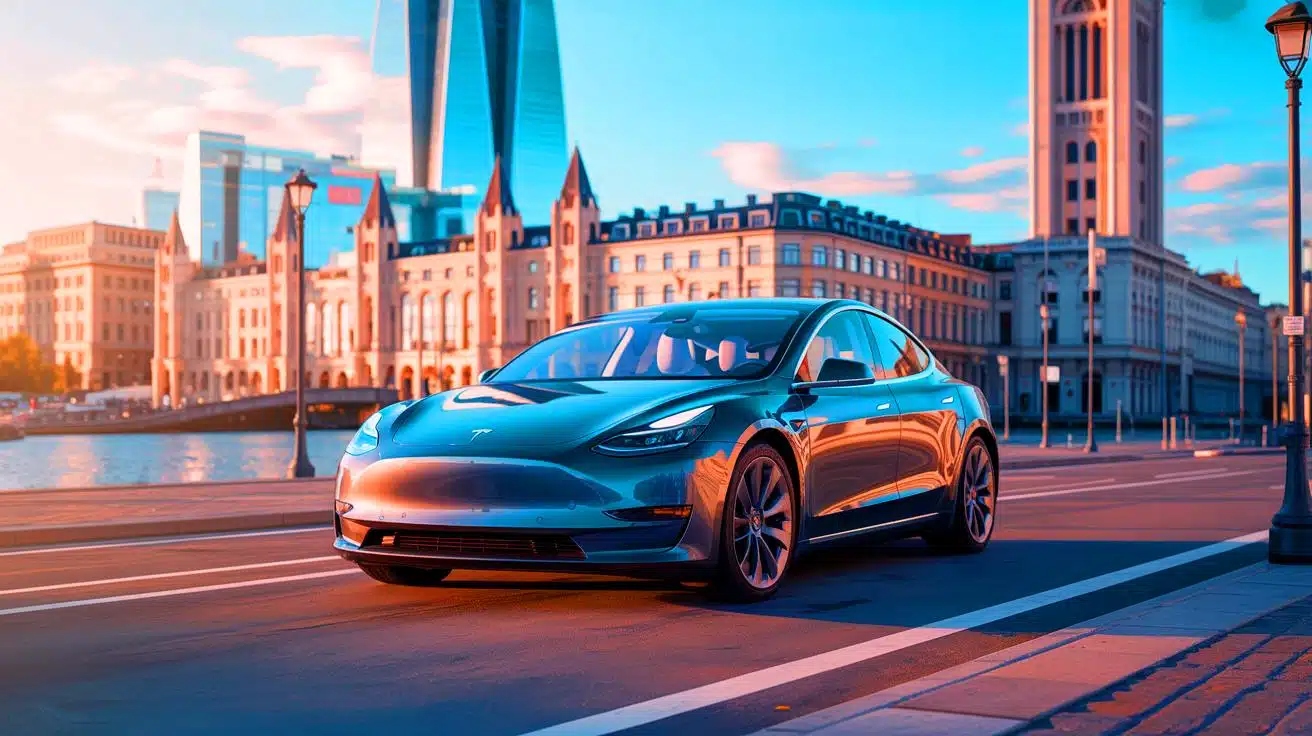
Introduction: A Turning Point for Tesla in Europe
For nearly a decade, Europe has been one of Tesla’s most strategically important markets outside the United States. Early EV incentives, strong environmental regulations, dense urban charging infrastructure, and high fuel prices helped Tesla build a loyal customer base across countries such as Norway, Germany, the Netherlands, France, and the United Kingdom.
However, entering 2026, Tesla finds itself facing a markedly different European landscape.
Recent sales data show that Tesla’s year-over-year vehicle registrations in several key European markets have declined significantly, even as overall EV adoption continues to grow. This divergence has triggered intense debate among analysts, investors, and Tesla owners: Is Tesla losing its edge in Europe, or is this a temporary recalibration driven by broader market forces?
This article takes a deep dive into:
-
Why Tesla's sales are declining in Europe
-
How regional policies and competition have shifted
-
What this means for current and future Tesla owners
-
How Tesla may respond strategically in 2026 and beyond
Rather than focusing on headlines alone, we examine the structural dynamics shaping Tesla’s European future.
1. European Tesla Sales in 2025–Early 2026: What the Numbers Are Really Saying
1.1 Country-Level Performance Overview
Tesla’s European performance has not declined evenly across the region. Instead, the downturn is uneven, market-specific, and policy-driven.
Key observed trends include:
-
Nordic countries (Norway, Sweden, Denmark)
Tesla registrations remain relatively high, but growth has flattened. In markets where EV penetration already exceeds 80%, Tesla is no longer benefiting from first-mover momentum. -
Germany
Tesla sales declined sharply following the reduction and eventual removal of federal EV subsidies. Germany remains Europe’s largest auto market, making this decline particularly impactful. -
France
Tesla has faced increasing pressure from local brands benefiting from national incentive structures favoring European-manufactured vehicles. -
Netherlands & Belgium
Corporate fleet purchases—once a Tesla stronghold—have slowed as leasing companies diversify their EV offerings. -
United Kingdom
Sales remain more resilient than in continental Europe, but price sensitivity and competition are increasing rapidly.
1.2 Why Registration Data Can Be Misleading
It is critical to distinguish between:
-
Vehicle registrations
-
Actual consumer demand
-
Tesla’s quarterly delivery timing
Tesla’s logistics-driven delivery waves often cause sharp monthly fluctuations. However, even when accounting for this, the broader trendline indicates real pressure, not merely timing noise.
2. The End of Easy Growth: Structural Changes in the European EV Market
2.1 The EV Incentive Cliff
For years, Tesla benefited enormously from generous government incentives across Europe. These included:
-
Direct purchase subsidies
-
Reduced VAT rates
-
Company-car tax advantages
-
Free or discounted tolls and parking
By 2025–2026, many of these incentives were:
-
Reduced
-
Income-restricted
-
Fully removed
In Germany alone, the removal of EV purchase incentives immediately altered consumer buying behavior. For price-sensitive buyers, the effective cost of a Tesla rose overnight.
Key insight:
Tesla’s pricing strategy was optimized for a subsidized market. As subsidies disappear, price elasticity matters more than ever.
2.2 Inflation, Interest Rates, and Consumer Caution
European consumers are entering 2026 with:
-
Higher borrowing costs
-
Persistent inflation in housing and energy
-
Increased economic uncertainty
Even affluent buyers are delaying discretionary purchases, especially big-ticket items like vehicles.
Tesla vehicles, while competitive, are still perceived as premium purchases, particularly when compared with aggressively priced alternatives from China and Europe.
3. Intensifying Competition: Tesla Is No Longer the Default Choice
3.1 European Legacy Automakers Are Catching Up
Volkswagen Group, BMW, Mercedes-Benz, and Stellantis have dramatically improved their EV offerings in three critical areas:
-
Interior quality and familiarity
-
Dealer and service network accessibility
-
Localized pricing and incentives
For European buyers who value:
-
Physical dealerships
-
Local brand loyalty
-
Traditional service models
Tesla’s direct-to-consumer approach is no longer universally seen as an advantage.
3.2 Chinese EV Brands: The New Disruptive Force
Chinese manufacturers such as BYD, MG, NIO, and XPeng are reshaping the European EV market.
Their advantages include:
-
Aggressive pricing
-
Competitive range and charging speeds
-
Feature-rich interiors
-
Strong warranty offerings
In several European countries, Chinese EVs now undercut Tesla pricing by thousands of euros while offering comparable specifications.
For many first-time EV buyers, brand prestige is secondary to value.
4. Regulatory and Trade Pressures: Europe’s Complex EV Rulebook
4.1 Carbon Regulations and Local Manufacturing Bias
European regulations increasingly favor:
-
Local manufacturing
-
Lower lifecycle emissions
-
Supply chain transparency
While Tesla’s Gigafactory Berlin helps mitigate some concerns, Tesla still faces:
-
Scrutiny over battery sourcing
-
Compliance costs
-
Potential tariff risks related to global trade tensions
4.2 Software, Data, and Autonomy Regulations
Tesla’s software-centric approach faces unique challenges in Europe:
-
Strict data privacy laws (GDPR)
-
Country-specific autonomy regulations
-
Slower approval cycles for FSD features
As a result, European Tesla owners often receive new features later than U.S. customers, weakening Tesla’s perceived technology advantage.
5. Ownership Experience: How the European Tesla Experience Is Changing
5.1 Charging Infrastructure: Strength and Saturation
Europe still boasts one of the world’s best public charging networks. However:
-
Supercharger exclusivity is no longer unique
-
Third-party networks have improved reliability
-
Price competition is increasing
Tesla’s charging advantage remains strong—but no longer dominant.
5.2 Service and Repair Bottlenecks
As Tesla’s European fleet ages:
-
Demand for service has increased
-
Wait times in some regions have grown
-
Independent repair options remain limited
This disproportionately affects long-term owners and may influence repeat purchase decisions.
6. Tesla’s Strategic Options in Europe for 2026 and Beyond
6.1 Pricing and Product Differentiation
Tesla has several levers it can pull:
-
Further price adjustments
-
New trims or regional variants
-
Bundled software incentives
However, aggressive price cuts risk:
-
Margin compression
-
Owner dissatisfaction
-
Residual value erosion
6.2 Software-Driven Value
Tesla’s long-term European strategy likely depends on:
-
Expanding software-based revenue
-
Gradual FSD regulatory progress
-
AI-driven efficiency improvements
If successful, Tesla could offset slower unit growth with higher lifetime customer value.
6.3 Localization and Market Adaptation
Europe is not a single market. Tesla’s future success depends on:
-
Country-specific pricing strategies
-
Deeper localization of marketing and service
-
Closer alignment with EU regulatory frameworks
Conclusion: A Reset, Not a Retreat
Tesla’s sales decline in Europe in early 2026 should not be interpreted as a collapse—but rather as a market reset.
The era of effortless growth driven by subsidies, novelty, and limited competition is over. Tesla is now operating in a mature EV market where:
-
Value matters more than hype
-
Competition is intense
-
Policy shifts can change demand overnight
For European Tesla owners, this transition brings both challenges and opportunities: more choice, better infrastructure, and stronger competition—alongside uncertainty about pricing and feature rollouts.
For Tesla, Europe remains strategically vital. The company’s ability to adapt—not dominate—will determine whether it regains momentum or settles into a more modest role within Europe’s EV ecosystem.
Frequently Asked Questions
Q1: Are Tesla prices expected to drop further in Europe?
Further price adjustments are possible, but widespread cuts are unlikely without significant market pressure or incentive changes.
Q2: Is Tesla losing market share permanently in Europe?
Not necessarily. Tesla is losing short-term momentum, but long-term positioning depends on regulatory adaptation and product strategy.
Q3: Do European regulations limit Tesla’s Full Self-Driving capabilities?
Yes. Regulatory approval in Europe is significantly more restrictive than in the U.S., slowing FSD feature deployment.
Q4: Are Chinese EVs a real threat to Tesla in Europe?
Yes. Chinese brands are already reshaping pricing expectations and consumer perceptions, particularly in the mass-market segment.
Q5: Should existing Tesla owners in Europe be concerned?
Ownership remains strong in terms of software updates and charging access, but resale values and service availability should be monitored.