
Chapter 1: The Announcement That Wasn't a Surprise
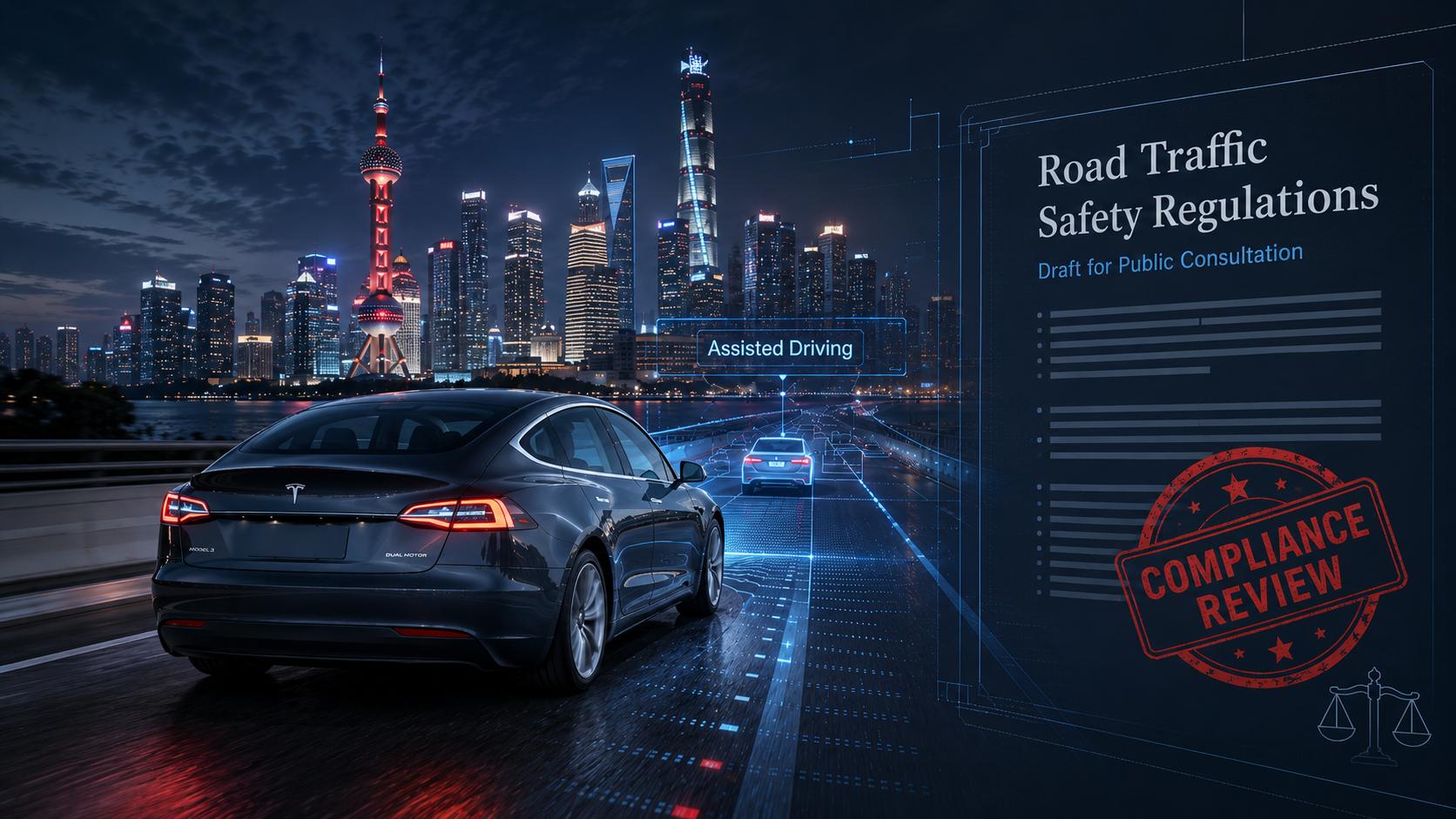
In late May 2026, keen-eyed Tesla observers noticed a quiet but significant update to the company’s Chinese website. The top-tier software package, previously known as "FSD Intelligent Assisted Driving" and later simply "Intelligent Assisted Driving," was renamed once more. Its new official title: “Tesla Assisted Driving” (TAD). The price remained unchanged at 64,000 yuan (approximately $9,420 USD), but the words "Full Self-Driving" had been surgically removed.
This marks the third iteration of the name in China alone. Initially, the system was marketed as "FSD Intelligent Assisted Driving." Then, in early 2025, the "FSD" acronym was stripped away, leaving "Intelligent Assisted Driving". The latest change removes even the word "Intelligent," leaving only "Tesla Assisted Driving"—a label so technically accurate that industry observers have described it as a surprising concession to truth-in-advertising.
The timing was not coincidental. The rebrand came just days after Tesla officially listed China among the 10 markets where its "Supervised FSD" system is "available"—a claim that immediately raised eyebrows, given that the software still lacks full regulatory approval for a nationwide rollout in the world's largest auto market.
Chapter 2: A Legal and Linguistic Tightrope
To understand why a name matters so much, we must look at the legal architecture that surrounds Tesla's software. Across multiple jurisdictions, regulators have grown weary of the disconnect between the promise of "Full Self-Driving" and the reality of a Level 2 Advanced Driver-Assistance System (ADAS).
In December 2025, a California judge ruled that Tesla had made untrue or misleading statements in its marketing of FSD, ordering the company to correct its advertising within 60 days. Tesla responded by appending "(Supervised)" to the name in the United States and eventually moving to a subscription-only model, a move that appeared to satisfy California regulators for the time being.
But the underlying problem remained. Under the SAE International J3016 standard, Level 2 systems require a human driver to constantly supervise the vehicle and be prepared to take control at any moment. The system is legally the driver’s assistant, not a replacement. Despite Tesla‘s branding, the company’s own manual states that the driver is "fully responsible."
China, however, proved far less tolerant of linguistic ambiguity than its American counterparts. Chinese regulators have introduced a series of sweeping automotive safety rules in recent years, including a high-profile mandate that effectively bans hidden, flush door handles due to safety concerns. For Tesla, which pioneered the flush handle trend, this signaled a regulatory environment where marketing language would face no less scrutiny than mechanical components. Chinese law explicitly prohibits L2 systems from using terms like "fully automatic" or "self-driving" in their marketing. Tesla's three-stage renaming in China was therefore not a voluntary branding exercise; it was a stepwise compliance process with increasingly explicit legal requirements.
Chapter 3: Europe‘s Parallel Crisis and the Subscription Pivot
While China was tightening the linguistic screws, Europe provided its own inflection point. On May 22, 2026, Tesla eliminated the one-time purchase option for FSD across all European markets. Previously, customers in the EU and UK could buy the package outright for €7,500 or £6,800, respectively. That option is now gone. Europeans must pay €99 or £99 per month to access the system, and even the cheaper Enhanced Autopilot buyout has been removed.
The subscription-only pivot, which Tesla first introduced in North America earlier in 2026, has significant implications. For the company, it creates a recurring revenue stream that better aligns with the software-as-a-service model Wall Street favors. For consumers, it lowers the upfront financial barrier to entry. An owner who previously purchased Enhanced Autopilot can access FSD for a reduced rate of €49 per month.
But the European transition is laced with irony. As of late May 2026, FSD (Supervised) is only fully approved and operational in two European countries: the Netherlands and Lithuania. Dutch vehicle authority RDW granted the first European type approval on April 10, 2026, after approximately 18 months of testing covering 1.6 million kilometers on European roads. Lithuania followed by recognizing the Dutch certification on May 18.
Yet, across the rest of the continent, including in major markets like Germany, France, and the United Kingdom, consumers are now being asked to pay €99 a month for a feature that remains unavailable. Tesla’s UK website currently displays a notice that FSD (Supervised) "is not yet available" and that future access depends on both software development and regulatory approval. This has created a palpable sense of frustration in the European Tesla community: subscribers in many countries are effectively paying for a promise.
The situation has been further complicated by Tesla’s decision to move certain features that were previously part of the free Basic Autopilot package into the paid FSD subscription tier in markets where FSD is available. In the Netherlands, for example, buyers who want any form of autonomous driving assistance beyond basic cruise control must now subscribe at €99 per month, with the one-time purchase deadline having already expired on May 15. This has led some critics to argue that Tesla is downgrading free functionality to push customers toward a paid subscription for a system they may not be able to use for months or years.
Chapter 4: The Technology Behind the Name: What FSD (Supervised) Actually Delivers
Stripping away the branding reveals a system that is, in many ways, genuinely impressive. The current version of FSD (Supervised), based on the V14 software branch, uses a pure vision, end-to-end neural network architecture. It requires no high-definition pre-mapped routes, no lidar, and no radar. Instead, it processes real-time camera feeds through deep neural networks trained on massive datasets collected from Tesla’s global fleet.
In practical terms, the system can now navigate complex urban environments. It handles lane changes on highways and city streets, recognizes and responds to traffic lights and stop signs, executes unprotected left and right turns, navigates roundabouts, manages automatic overtaking, and performs automated parking and smart summon functions. The operational design domain, or ODD, now theoretically covers all cities and road types, though real-world performance varies significantly across regions and weather conditions.
But the technical capabilities, however impressive, remain firmly within the legal and functional boundaries of Level 2 automation. The driver must remain attentive at all times, with hands ready to intervene. The system monitors driver attention through cabin-facing cameras, and if prolonged distraction is detected, FSD will temporarily deactivate. In the event of a collision, the human driver bears full legal responsibility. There is no scenario, under any regulatory framework in the world, in which Tesla's current production FSD system relieves the driver of liability.
Critically, Tesla CEO Elon Musk acknowledged during the Q1 2026 earnings call that the approximately four million vehicles equipped with the older HW3 (Hardware 3) computer "will not be able to run FSD in its full capability" without a hardware retrofit. This admission carries profound financial and practical consequences for a large segment of Tesla‘s installed base. Many HW3 owners paid thousands of dollars years ago for a "Full Self-Driving" capability that their vehicles may never fully realize.
Chapter 5: The Global Implications: A Fragmented Regulatory Landscape
The Chinese renaming is significant not only for what it says about Tesla but for what it reveals about the global regulatory fragmentation facing all advanced driver-assistance systems.
In the United States, the regulatory framework is largely permissive. Tesla operates under the assumption that FSD is legal unless specifically prohibited, a stance that has allowed it to push software updates aggressively. However, the California false-advertising case and increasing scrutiny from the National Highway Traffic Safety Administration (NHTSA) suggest this era of regulatory tolerance may be ending.
In Europe, the picture is more complex. The RDW‘s approval in the Netherlands was a hard-won victory, but the road to EU-wide recognition remains steep. EU approval requires a “qualified majority” of 15 out of 27 member states, representing 65 percent of the bloc’s population. Officials from Sweden, Finland, Denmark, and Norway have expressed deep skepticism, citing concerns over speeding, icy road performance, driver distraction, and the overall safety of a pure-vision system in adverse weather. Swedish investigator Hans Nordin wrote in an email that he was "quite surprised" FSD was allowed to exceed speed limits. The European Transport Safety Council has warned that the Dutch approval could push Europe "towards a road safety cliff edge".
In China, the regulatory approach is the most explicit. Data must remain on Chinese servers. Tesla has built a local data center in Shanghai and partnered with Baidu for mapping to comply with these requirements. The system must not be marketed as autonomous. And the rollout timeline keeps slipping. Tesla’s CFO stated during the Q1 2026 earnings call that the company hopes to receive full Chinese approval in the third quarter of 2026, but that represents yet another delay from earlier promises of February or March 2026.
Chapter 6: What This Means for Tesla Owners in the US and Europe
For the North American and European Tesla owners who are your target audience, the Chinese renaming may seem distant, but its implications are immediate and personal.
First, it confirms what many observers have long argued: the name "Full Self-Driving" is a marketing term, not a technical description. If Tesla has been forced to abandon it in the world‘s largest auto market, it is only a matter of time before similar pressures intensify in the United States and Europe. American owners who purchased FSD outright for prices that once reached $15,000 must now grapple with the reality that their investment may never deliver the robotaxi-level autonomy that was originally promised.
Second, the European subscription transition signals a fundamental shift in Tesla’s business model. The €99 monthly fee transforms FSD from a capital purchase into an operating expense. For some owners, this is a welcome change that lowers the cost of entry. For others, particularly those who paid the full €7,500 buyout price, it raises questions about the long-term value proposition. Will Tesla continue to honor the full capabilities promised to early purchasers? Or will the subscription model create a two-tier system in which monthly subscribers receive preferential access to new features?
Third, the hardware gap between HW3 and HW4 vehicles is now an acknowledged and unresolved problem. Musk’s admission that HW3 cars cannot achieve full unsupervised capability has created a significant liability. Tesla has floated the possibility of building dedicated "micro-factories" to retrofit older vehicles with upgraded hardware, but the logistics and cost of such an undertaking remain unspecified. For owners of older Teslas, the path to true autonomy is now visibly obstructed.
Conclusion: The Name Was Always the Problem
For over a decade, Tesla sold a vision as much as a vehicle. The name "Full Self-Driving" encapsulated that vision: a world where your car could drive itself, earn money as a robotaxi while you slept, and free you from the drudgery of commuting. It was a powerful narrative that helped Tesla build one of the most valuable and passionate consumer brands in history.
But the gap between that narrative and the technology was always wide, and regulators around the world are now closing it. The Chinese renaming to "Tesla Assisted Driving" is not a defeat for Tesla. It is an acknowledgment—long overdue—that driver-assistance systems, however advanced, are still driver-assistance systems. The human behind the wheel remains the human in charge.
For Tesla owners in the United States and Europe, the practical takeaway is clear: enjoy the genuinely useful capabilities that FSD (Supervised) provides, but understand the legal and technical boundaries within which it operates. The robotaxi future may still arrive, but the journey is longer and more complicated than the name ever suggested.
FAQ: Tesla FSD Renaming and What It Means for Owners
Q1: Does the name change in China affect my FSD package in the United States or Europe?
No. The renaming to "Tesla Assisted Driving" applies specifically to the Chinese market, where regulations explicitly prohibit L2 systems from being marketed as "self-driving." In the US, the system remains "FSD (Supervised)." In Europe, it is called "Full Self-Driving (Supervised)." However, the underlying regulatory pressures that forced the name change in China are also building in Western markets.
Q2: Why did Tesla switch to subscription-only in Europe?
Tesla is transitioning to a recurring revenue model that better reflects the software-as-a-service nature of its driver-assistance features. The subscription also lowers the upfront cost for consumers, though it means continuous payments rather than a one-time purchase. The move follows a similar shift in North America earlier in 2026.
Q3: Will my HW3 vehicle ever achieve full unsupervised capability?
According to Elon Musk‘s statements during the Q1 2026 earnings call, HW3 vehicles lack the memory bandwidth and compute capacity required for unsupervised FSD. Tesla has indicated it may need to build dedicated retrofitting facilities to upgrade older vehicles, but no firm timeline or cost has been provided.
Q4: Is FSD (Supervised) actually Level 2?
Yes. Under SAE J3016 standards, UN R-171 regulations, and the certification provided by the Dutch RDW, FSD (Supervised) is classified as a Level 2 driver-assistance system. The driver must supervise the system at all times and bears full legal liability in the event of an incident.
Q5: When will FSD be available across the entire European Union?
EU-wide approval requires a qualified majority vote of 15 member states representing 65 percent of the population. As of late May 2026, only the Netherlands and Lithuania have approved the system. Nordic countries have expressed significant safety concerns, and the next vote may not occur until the second half of 2026.
Q6: If I subscribe to FSD in a European country where it hasn’t been approved yet, what do I get?
In countries where FSD (Supervised) has not received regulatory approval, the full feature set is not available. Owners may receive limited functionality, or the features may be entirely locked until local approval is granted, despite the monthly subscription payment.