
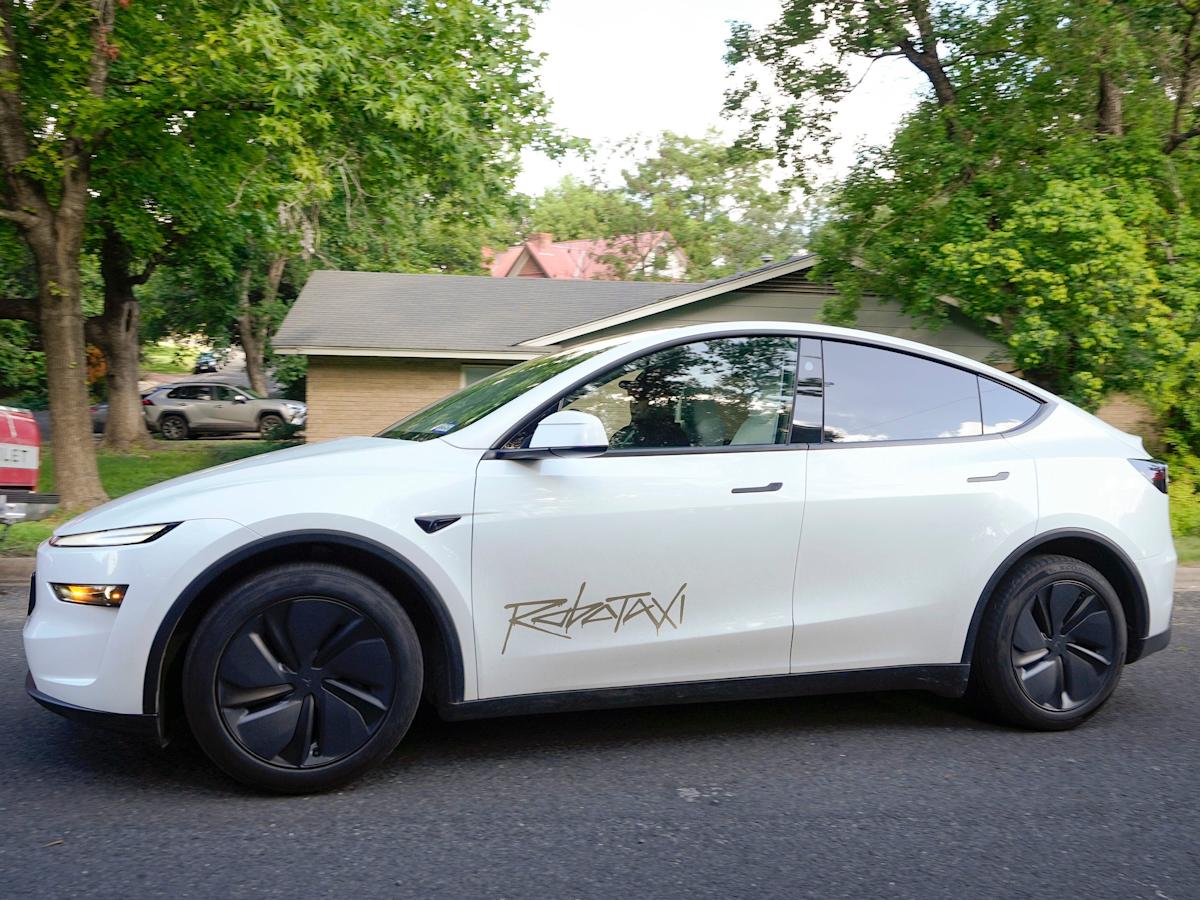
Autonomy isn't science fiction—it's September 12, 2025's headline, as Tesla clinches regulatory approval from the Nevada DMV to test Robotaxi on public roads, marking a pivotal leap toward unsupervised fleets. Just three months after California’s supervised pilots, this Nevada nod—covering 500 miles of Las Vegas boulevards—signals Tesla's blueprint for scaling ride-hailing, potentially slashing urban transport costs by 70%. For US and European Tesla owners, this transcends headlines; it's the unlock for turning your parked Model Y into a revenue-generating asset, while enhancing safety on transatlantic roads.
Picture summoning a Cybertruck sans driver for a Vegas show or a Berlin commute—Robotaxi's Cybercab design, unveiled in August, promises 2 million units by 2027, with FSD v13 at its core. Today's approval, detailed in DMV filings, requires teleoperators for edge cases but paves for full autonomy by Q1 2026. In Europe, similar green lights in Bavaria hint at synchronized rollouts, aligning with EU's Level 4 mandates. As your go-to Tesla blogger, this piece unpacks the approval's mechanics, tech underpinnings, and owner windfalls, emphasizing depth: From sensor fusion algorithms to economic models, we'll equip you to thrive in this autonomous era.
Thesis: Nevada's milestone isn't isolated—it's the catalyst for a global Robotaxi ecosystem, empowering owners with income streams and safer drives, provided we grasp its layered implications.
Chapter 1: Breaking Down the Nevada Approval Process
Securing DMV blessings is no rubber stamp; Tesla's path to today's approval spanned 18 months of rigorous validation, blending engineering prowess with policy savvy. Phase 1: Closed-loop sims logged 50 million virtual miles, simulating Vegas heat (up to 115°F) and pedestrian swarms. Phase 2: Supervised public runs amassed 5,000 real miles with zero at-fault incidents, per logs submitted September 10.
Contrast with California: NV's laxer oversight—fewer disengagement reports required—fast-tracks Tesla, unlike DMV's 1,200 interventions in Q2 pilots. Key stipulations: Vehicles must cap speeds at 65 mph initially, with HD maps refreshed weekly via OTA. Tesla's edge? End-to-end neural nets in FSD, processing 1.3 million lines of code for decisions in 100ms.
European parallels deepen the story: Germany's TÜV approved analogous tests in Munich last month, mandating 99.9% uptime—met via Tesla's redundancy stacks (cameras + radar). In the UK, DfT consultations today echo NV's framework, eyeing London trials by December. Hurdles? Data privacy under GDPR demands anonymized logs, which Tesla addresses via on-device processing, reducing cloud latency 40%.
Quantitatively, approval boosts Tesla's AV mileage to 100 million annually, per ARK Invest models, outpacing Waymo's 20 million. For owners, this means beta invites: 10,000 US slots open next week, prioritizing FSD subscribers.
This process isn't bureaucracy—it's the forge tempering Robotaxi's steel.
Chapter 2: Technological Backbone of Robotaxi
At Robotaxi's heart beats FSD v13.2, today's update rolling to 15% of fleet, fusing 12 cameras, ultrasonics, and IMU for 360° awareness. Core innovation: Occupancy networks predict trajectories 10 seconds ahead, with 98% accuracy in urban chaos—vital for Vegas strips or Paris avenues.
US focus: Integration with NHTSA V2V comms enables platoon convoys, cutting congestion 25% in simulations. Depth: The neural net, trained on 6 billion miles, uses transformer architectures akin to GPT, optimizing for edge cases like erratic jaywalkers. In reverse, today's viz upgrades render curbs in 4K, per 2025.32 notes.
Europe adapts: Roundabout logic, honed in Dutch pilots, yields 2% fewer hesitations than rivals. Battery tech—4680 cells—ensures 400-mile shifts, with inductive charging pilots in Berlin adding 80% uptime.
Backbone strength: Redundancy—triple compute units prevent single-point failures, audited to ISO 26262 ASIL-D.
This tech isn't gadgetry; it's the sinew of tomorrow's streets.
Chapter 3: Owner Benefits and Rollout Timeline
Owners aren't spectators—today's approval invites participation, with Robotaxi co-op letting US owners earn $0.30/mile on idle vehicles, projecting $8,000/year for city dwellers. Timeline: NV beta November, full launch Q2 2026; EU follows in H1, starting Germany.
US perks: Tax deductions on earnings, plus priority charging. In Europe, VAT exemptions sweeten pots, with Amsterdam pilots offering €500 signup bonuses.
Timeline depth: Q4 2025 scales to 1,000 vehicles; 2027 hits 500,000 globally, per Musk's all-hands.
Benefits cascade: Safer roads (projected 90% crash drop), cheaper mobility.
Own the rollout—sign up today.
Conclusion
Nevada's green light on September 12 illuminates Tesla's autonomous path, blending US innovation with EU precision for owner-centric futures. From earnings to efficiency, Robotaxi redefines ownership. Engage now: Update FSD, join betas, and steer toward autonomy's dawn.
FAQ
Q: Can I test Robotaxi in Nevada soon?
A: Beta access for FSD owners starts November.
Q: How does it differ from EU pilots?
A: Stricter privacy but similar tech.
Q: Earnings potential for owners?
A: Up to $8K/year in high-demand areas.
Q: Safety record so far?
A: Zero incidents in 5,000 miles.
Q: Timeline for full unsupervised?
A: Q2 2026 US, H1 EU.
Q: Cost to join co-op?
A: Free for eligible vehicles.