
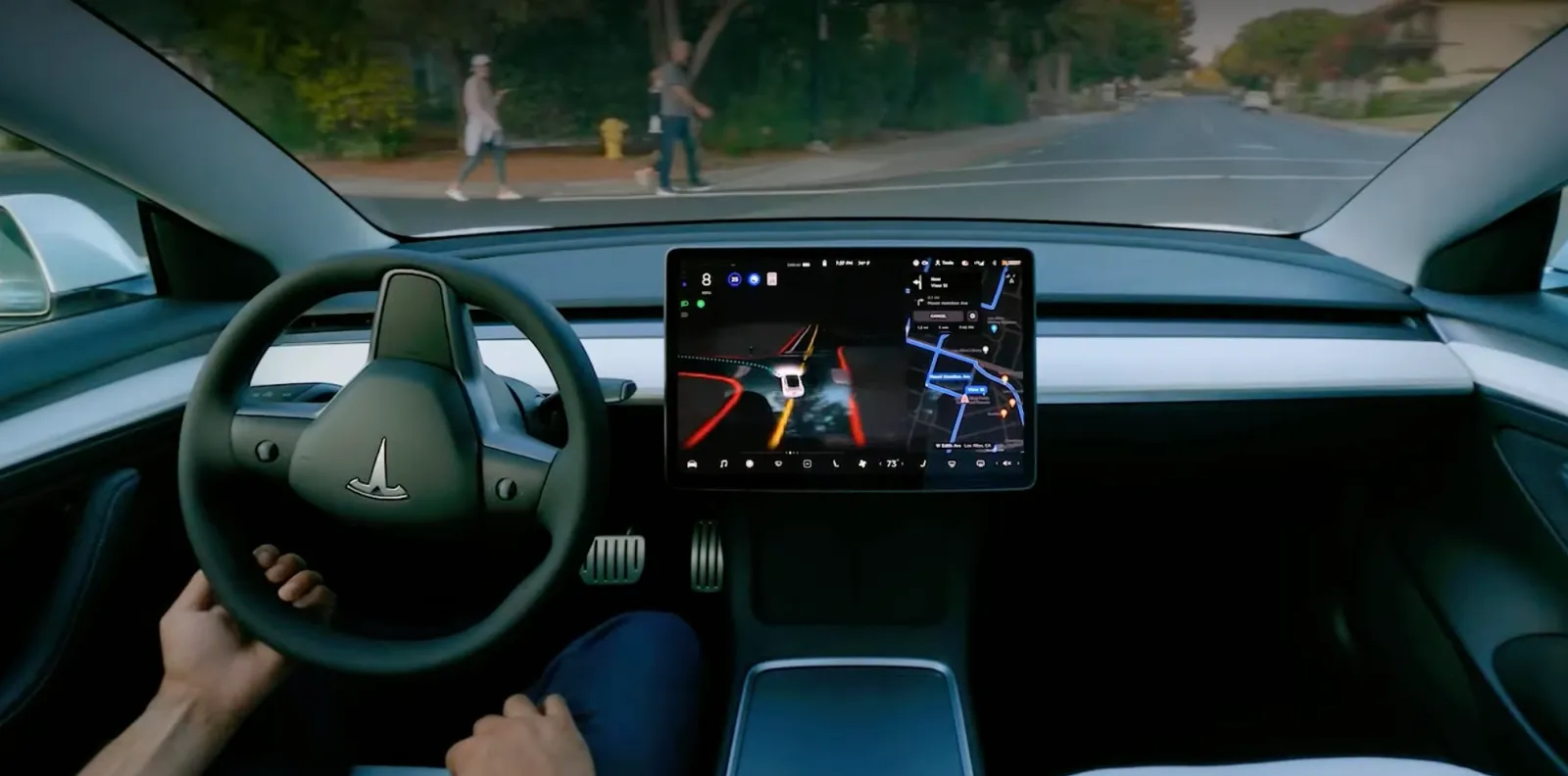
Tesla has announced an enormous Full Self-Driving (FSD) software update slated for September, with early deployment in select regions and hints at gradual unsupervised driving trials. This update represents a major leap in autonomy capabilities—potentially transforming owner experience and setting the stage for Robotaxi deployments. This article provides an in-depth breakdown: what’s new, where it’s rolling out, how regulators are reacting, how owners can prepare—and most importantly—what the technology means for real-world safety, liability, and driving life in both the U.S. and Europe.
1. Introduction: The Big September FSD Update
Tesla’s FSD suite has always been a dynamic, evolving product—unfolding through over-the-air updates to cars that owners already drive daily. Today, Elon Musk confirmed what many anticipated: a “massive FSD update” coming in September, with substantial architecture-level improvements in the neural network, better vision processing, and significant leaps toward unsupervised driving capability .
With this release, Tesla is laying groundwork not only for enhanced driver-assist features but also for expanded robotaxi operations. For Tesla owners—whether you’re in California or Berlin—understanding what’s coming isn’t just interesting; it’s essential preparation.
This article delves deeply into what the update likely includes, where and how it’s being deployed, how regulatory environments will respond, and how owners should navigate the changing FSD landscape in the U.S. and Europe.
2. What’s Changing Under the Hood: Technical Upgrades
2.1 Architecture-Level Transformation
-
Recent public hints from Musk and Tesla engineering point to a substantial neural network redesign—higher parameter counts, refined attention mechanisms, and deeper convolutional layers, enabling faster, more accurate perception and decision-making.
-
This overhaul may also reduce the need for radar—pushing Tesla further into a purely vision-based autonomy model.
2.2 Improved Vision & Scene Understanding
-
Expect significant improvements in object recognition, especially for complex urban environments: pedestrians, cyclists, scooters, and nuanced traffic scenarios like obstructions or temporary hazards.
-
Enhanced forecasting of dynamic objects (predictive trajectories) to smooth driving, reduce sudden braking, and improve comfort.
2.3 New Functional Features
-
Better performance at intersections, including unprotected left turns, more confident right turns, and smoother merging.
-
Enhanced roundabout negotiation and more accurate stopping/detection of traffic signals.
-
Expanded lane-change logic and more nuanced lane discipline in congested traffic.
2.4 System Delivery & Compatibility
-
The September update will likely be delivered via regular OTA channels, automatically to cars with compatible hardware (HW3/4).
-
Owners should ensure their vehicle’s FSD subscription is up to date and that their MCU and relevant modules are updated to the newest firmware.
3. What “Unsupervised” Means—And Where It’s Allowed
3.1 Legal Definitions and Tesla’s Roadmap
-
Unsupervised driving, in this context, means the driver is not required to have hands on the wheel or be ready to intervene at any moment—i.e., true Level 4 autonomy.
-
Tesla’s roadmap: begin with supervised rollouts (FSD Beta 10.x style), then shift to geofenced, unsupervised deployments pending regulatory approvals.
3.2 U.S. Rollout Scenarios
-
States like Texas and Nevada, which have regulatory frameworks allowing autonomy, are likeliest candidates for unsupervised pilots.
-
California, though less permissive, may allow limited Level 4 operations under “public road pilot” programs—potentially as soon as late 2025.
3.3 Europe: Controlled Expansion
-
EU regulators have not yet cleared unsupervised FSD deployment fleet-wide.
-
Pilot programs in France, Netherlands, and Scandinavian countries may emerge, under strict conditions (e.g., vehicle review, geofencing, remote monitoring).
4. Measuring FSD Performance: Metrics That Matter
Tesla talks performance, but owners and regulators need transparent, objective data. Key metrics include:
4.1 Disengagement Rates
-
The number of times a human must intervene per 1,000 miles driven by FSD.
-
A critical benchmark for regulators; lower rates correlate with better system reliability.
4.2 Crash and Safety Event Rates
-
Collisions or near-misses per million miles traveled. Tesla should compare FSD performance against human-driven averages in similar contexts.
4.3 Third-Party Validation
-
Currently limited—Tesla’s internal validation is robust, but independent audits, EU-type approvals, or third-party safety labs (e.g., TÜV or Euro NCAP) will carry more weight.
4.4 Continuous Monitoring & Over-the-Air Adjustments
-
Real-world performance data must tie back into software updates—creating a feedback loop of improvement.
What owners can do now:
-
Track data via Tesla’s FSD Beta stats (if you're a beta participant).
-
Watch for gigafactory trucks driving FSD across the city—these early deployments are high-value testbeds.
5. What Owners Should Do: Upgrade Strategy & Risk Management
5.1 Should You Buy or Upgrade FSD Now?
-
If you’re in an active rollout area or intend to be in one soon (e.g., Austin, Nevada), upgrading now might unlock early benefit.
-
If you're in a regulated European country, you may want to wait for more clarity and better metrics before paying FSD’s premium price.
5.2 Safety Responsibility & Driver Attention
-
FSD should still be treated as an advanced driver assist, not autonomy. Keep your attention on the road, especially during and after updates.
5.3 Insurance & Liability
-
Even in supervised use, FSD engagement can shift liability in collisions.
-
Check with your insurer: FSD coverage models are evolving—some insurers already offer discounts for driver-assist systems; others may raise rates for advanced autonomy.
5.4 Legal and Privacy Considerations
-
Watch for new data privacy regulations emerging in Europe around continuous driver monitoring, camera data usage, and event recording.
-
Know what Tesla shares with regulators—especially if accidents or system failures occur.
5.5 Technical Readiness Checklist
-
Ensure HW3/4 is functioning, keep your cameras and sensors clean, and update your vehicle regularly.
-
Check for UI changes or new driver alerts after the update—and adjust habits accordingly.
6. Regulatory & Legal Landscape Around FSD
6.1 U.S. Position: Mixed Signals
-
NHTSA: focused on investigation rather than proactive policy.
-
State regulators: Texas and Nevada are more open; California’s DMV and CHP remain cautious.
-
Standard: Tesla must demonstrate that unsupervised operation is at least as safe as a human driver before securing widespread approval.
6.2 Europe’s Stance: Cautious, Structured, and Data-Driven
-
EU-wide rules require automation systems to meet “conformity” with UNECE regulations. Full approval is expected to take time.
-
Individual member states like Germany may require on-board telematics, liability caps, and formal safety certifications before permitting unsupervised use.
6.3 Liability: Who’s at Fault?
-
With supervised FSD, the human driver retains responsibility.
-
Unsupervised operations could shift liability to Tesla, particularly if the failure is software-based—this is still an unsettled area in most jurisdictions.
7. Market and Business Impacts
7.1 Tesla’s Valuation & Investor Confidence
-
Frequent and meaningful FSD progress drives investor optimism around both margin expansion (via software revenue) and autonomous ride-hailing potential.
7.2 Robotaxi Readiness
-
This September update is essential groundwork for the Robotaxi platform.
-
As FSD reliability increases, Tesla gets closer to launching unsupervised Robotaxi operations—possibly first in cities with permissive laws.
7.3 Competitive Landscape
-
Toyota, Volkswagen, and Mercedes continue developing autonomy, but Tesla’s iterative over-the-air model gives it a distinct edge—if safety standards are met.
8. Conclusion & What to Watch Next
Tesla’s September FSD update isn’t just another software patch—it’s a major leap toward autonomy. Owners in permissive jurisdictions may soon experience hands-free driving conditions, while European users should gear up for slower, well-regulated rollouts grounded in safety and standards.
Next steps for owners:
-
Monitor Tesla’s regional rollout announcements.
-
Track performance data: disengagements, crash rates.
-
Stay alert to your state/region’s regulatory shifts and insurance implications.
-
Treat FSD as powerful, experimental technology—not a replacement for safe driving.
This update marks a transformational moment. But like all breakthroughs in autonomy, real-world safety, transparency, and responsible oversight will determine whether FSD puts drivers—or Tesla—firmly in the driver’s seat.
9. FAQ
Q1. What does “massive FSD update” mean?
A: It refers to an architecture-level overhaul—neural networks, perception, and new features like better intersection handling and smoother urban driving.
Q2. Will the September update let my car drive itself fully?
Not immediately. It improves capabilities but will still require supervision in most places. Unsupervised deployment depends on local regulations.
Q3. Where will unsupervised FSD first appear?
Likely in permissive U.S. states like Texas or Nevada. Europe could follow in controlled pilot zones (e.g., French smart city projects).
Q4. What should I do after installing the update?
Continue paying full attention. Monitor new alerts, maintain sensor cleanliness, and refresh your awareness of FSD limitations.
Q5. Will my insurance go up after enabling FSD?
Possibly. Contact your insurer—some may offer discounts for advanced driver-assist, while others may raise rates if unsupervised features are used.
Q6. Is this safe?
Supervised FSD is safer than average human driving in many scenarios. Unsupervised safety is not yet proven—validation and regulatory reviews are ongoing.
Q7. When will Tesla permit unsupervised driving widely?
Hard to say. Some regions may allow limited unsupervised operation by late 2025 or 2026; Europe’s broader rollout could slide into 2027 or beyond.