
The Strategic Relaunch: Tesla Recalibrates Its European Approach
On October 22, 2025, Tesla took a bold but carefully calculated step by reopening orders for its flagship Model S and Model X sedans in European markets after a three-month pause that had begun in July. The decision to close the order books, an unusual move for any premium automaker, revealed management's determination to learn from past mistakes and reset customer expectations. That relaunch, accompanied by a refreshed vehicle lineup and strategically timed pricing, represents far more than a product release—it signals Tesla's intention to fight fiercely for European market leadership against intensifying competition from both legacy automakers and a rising wave of Chinese competitors.
The timing of the Model S/X relaunch deserves particular attention. It arrived precisely as the Model Y reclaimed Europe's top-selling position in September 2025, selling 25,938 units despite an 8.6% year-over-year decline from September 2024. Combined, these developments paint a picture of a company recalibrating its European strategy to secure long-term market dominance through a diverse product portfolio. Understanding why these vehicles matter—and why their strategic positioning matters even more—provides crucial context for Tesla owners and observers of the global automotive industry.
Learning From Disaster: Why Tesla Closed European Orders
To appreciate the significance of Tesla's October 2025 relaunch, one must understand the catastrophic rollout of the previous Model S/X refresh. When Tesla unveiled a minor mid-cycle refresh of its flagship sedans in June 2025, the company opened European orders but faced a production nightmare. The factory struggled to ramp production efficiently, creating massive delivery delays that stretched months past initial promises. Customers ordered expecting September deliveries and received their vehicles in December or later, a customer service disaster that damaged Tesla's reputation and likely resulted in cancellations.
Rather than immediately launching another refresh cycle, Tesla made a strategic decision: pause European orders for Model S and Model X entirely, reassess the situation, and return only when confident in its production and delivery capabilities. This three-month pause, which ran from July through October 2025, represented a remarkable admission of vulnerability from a company that typically projects confidence regardless of operational challenges.
The decision to close orders reflected several management calculations. First, Tesla recognized that the European luxury sedan market, dominated by BMW, Mercedes, and Audi, would tolerate a temporary absence. Second, the company used the pause to improve manufacturing processes, addressing the specific production inefficiencies that had plagued the previous refresh rollout. Third, management likely used the time to optimize supply chains and confirm that component availability would support a successful relaunch.
The October 2025 Relaunch: Pricing, Features, and Strategic Intent
When Tesla reopened European orders for the refreshed Model S and Model X on October 22, 2025, it did so with carefully calibrated pricing and enhanced specifications. In France, the Model S began at €109,990 (approximately $120,000), while the Model X started at €114,990 (approximately $125,000). These premium price points positioned Tesla's flagship sedans firmly in the luxury segment, competing directly against BMW 7-Series (pricing €88,000-€120,000+) and Mercedes S-Class vehicles.
The refreshed models incorporated several significant enhancements that justified the premium pricing and validated the three-month delay:
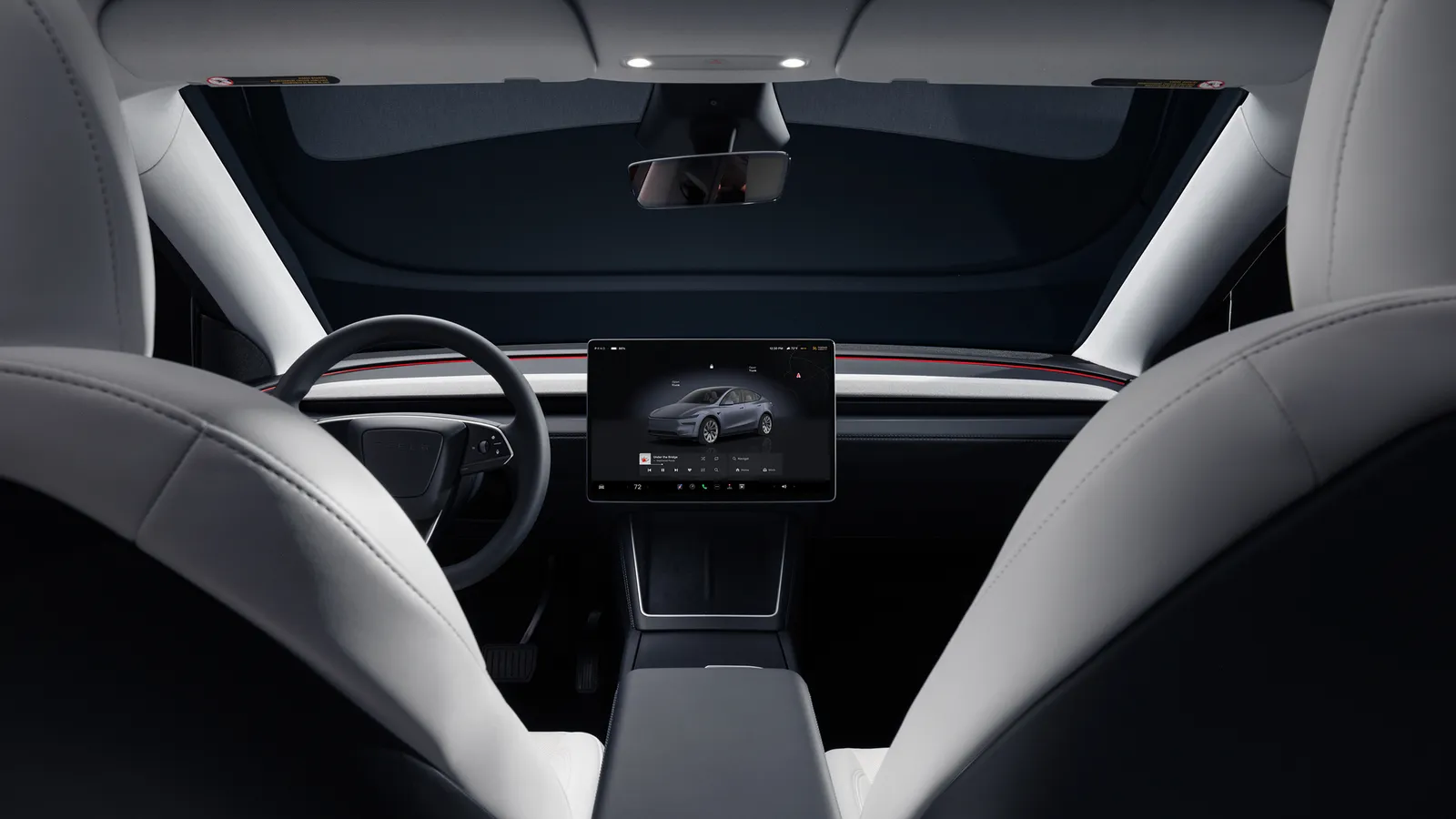
The new Model S and X could achieve up to 744 kilometers of range in Long Range trim, a meaningful improvement that enhanced practical utility for European drivers, many of whom regularly undertake longer cross-continent journeys. Enhanced acoustic engineering created a notably quieter interior environment, addressing a common luxury vehicle expectation. New wheel designs and refreshed exterior styling modernized the vehicles' appearance without requiring a complete redesign. Crucially, Tesla added a front fascia camera system for improved visibility, a feature that enhanced autonomous driving capability progression toward full self-driving functionality.
Interior improvements included dynamic ambient lighting throughout the cabin, a premium touch that elevated the ownership experience. The Model X received increased third-row occupant space and expanded cargo capacity, making it more competitive against luxury three-row vehicles. Improved suspension tuning, incorporating new bushings and damping characteristics, delivered what Tesla described as a "smoother ride"—a key differentiator in the luxury sedan market where ride quality significantly influences purchase decisions.
The combination of these enhancements with improved production confidence explains why Tesla reopened orders with considerable fanfare. Management effectively communicated: "We've fixed our problems, we've enhanced the vehicles, and we're ready to deliver on our promises." This recalibration, if executed successfully, could significantly improve customer satisfaction and demonstrate Tesla's ability to learn from operational mistakes.
Model Y: From Crisis to Dominance in a Single Quarter
While Model S/X relaunch attracted headlines, the Model Y's September 2025 performance provided more striking evidence of Tesla's European resilience. The electric midsize SUV, which had fallen to 17th place in August 2025 and plummeted to 60th place in July, roared back to claim Europe's top-selling position in September with 25,938 units registered.
This recovery demands explanation because the underlying numbers tell a more complex story than simple sales rankings suggest. The September performance represented an 8.6% decline compared to September 2024, meaning the Model Y's return to first place occurred despite year-over-year sales erosion. Traditional leaders like the Renault Clio (20,146 units) and Dacia Sandero (19,200 units) finished behind the Model Y despite stronger individual performance, but neither challenged Tesla's monthly dominance.
Year-to-date statistics reveal a murkier picture. Through nine months of 2025, the Model Y had sold only 109,793 units in Europe, ranking 17th among best-sellers. The Dacia Sandero, with 185,947 units sold, outsold the Model Y by nearly 69%, a stunning margin that reflected the broader challenge Tesla faces: dominance in monthly rankings combined with persistent struggles in broader market share metrics. This dynamic—strong month-to-month volatility punctuated by seasonal winners—characterizes European auto markets, but it also reveals Tesla's challenge in maintaining consistent market presence against more conventional competitors.
The Model Y's September recovery likely reflected a combination of factors: deferred purchases by customers who had delayed buying decisions in summer months, potential inventory adjustments as Tesla moved stock before the quarter ended, and possibly marketing efforts supporting the broader October push toward the Model S/X relaunch. The September surge, while impressive from a monthly rankings perspective, shouldn't obscure Tesla's ongoing struggle to maintain sustained market presence in Europe's mature automotive market.
The Chinese Threat: Why September Matters More Than Usual
What transformed September 2025 into a momentous month for Tesla wasn't merely the Model Y's return to first place—it was the acceleration of Chinese automakers' European invasion that accompanied this seemingly positive development. Chinese brands' market share reached a record 7.4% in September 2025, up from 3.3% just one year earlier. This represents not merely a gradual increase but an explosion of competitive pressure that threatens to undermine Tesla's European position precisely as the company attempts to reclaim its luxury sedan footing.
The numbers tell a startling story. In September 2025 alone, Chinese automakers sold 90,571 vehicles in Europe, representing 149% year-over-year growth. MG, the leading Chinese brand in Europe, sold 33,536 units in September alone (up 77% year-over-year), with year-to-date sales reaching 225,334 vehicles. More alarmingly for Tesla, BYD—the global EV sales leader—accelerated dramatically, selling 24,336 vehicles in September compared to just 4,561 units in September 2024, a staggering 433% increase.
These aren't mere statistics; they represent a fundamental shift in European automotive competition. Chinese manufacturers, having failed to gain meaningful European traction for decades through legacy partnerships and joint ventures, have finally developed products so compelling on price, features, and reliability that they're capturing market share in one of the world's most discerning markets. This is particularly threatening to Tesla because Chinese competitors operate with structural cost advantages derived from lower labor costs, government support, and vertical integration benefits—advantages Tesla cannot easily match.
Tesla's European Gigafactory and the Affordable Car Conundrum
Underlying Tesla's European strategy lies Berlin-Brandenburg Gigafactory, the company's pioneering European manufacturing facility that commenced production in March 2022. By 2023, the facility achieved a remarkable milestone: assembling a Model Y in just 10 hours, compared to 30 hours typical for comparable German manufacturers. This manufacturing efficiency represented a significant competitive advantage, demonstrating Tesla's operational excellence even in its initial facility ramp phase.
Tesla has continued expanding Berlin-Brandenburg's capacity, with ambitious plans to increase output to approximately 1 million units annually. More significantly, management has signaled that Berlin-Brandenburg will eventually produce Tesla's long-promised €25,000 affordable electric vehicle, a car that could fundamentally alter European automotive competition if successfully executed.
The €25,000 vehicle represents Tesla's response to Chinese competitors' cost advantages. Rather than attempt to beat Chinese manufacturers on their home turf through cheaper manufacturing of existing designs, Tesla intends to develop a purpose-built affordable platform and leverage Berlin-Brandenburg's manufacturing efficiency to achieve profitability at dramatically lower price points than existing Tesla vehicles. If successful, this strategy could prevent Chinese manufacturers from further eroding Tesla's market share. If unsuccessful or significantly delayed, Chinese brands will have years of uncontested market share gains in the crucial entry-level EV segment.
Competitive Dynamics: Legacy Automakers, Chinese Disruptors, and Tesla's Position
Tesla's European strategy plays out within an increasingly complex competitive landscape featuring three distinct competitor categories:
First, traditional European luxury automakers—BMW, Mercedes-Benz, Audi, Porsche, and others—are finally deploying credible electric alternatives to gasoline luxury vehicles. BMW's i5 and i7 electric sedans directly compete against Tesla's Model S and X, offering familiar brand prestige, established service networks, and extensive charging partnerships. Mercedes' EQE and EQS sedans similarly position themselves as direct alternatives. These legacy competitors, initially dismissed by Tesla enthusiasts, have proven more capable than many observers expected, eroding Tesla's previously commanding luxury EV market share.
Second, Chinese manufacturers have proven capable of delivering vehicles that compete effectively on price, features, and reliability in mainstream segments. MG's global expansion, backed by Chinese parent company SAIC Motor, has established a significant European beachhead. BYD's move into Europe with vehicles like the Seal U (sold as Sealing 6 in some markets) has demonstrated the company's international sophistication. These competitors don't merely offer cheaper alternatives; they offer feature-competitive vehicles at fundamentally lower price points, exploiting structural cost advantages that Tesla cannot easily overcome.
Third, Tesla itself has proven remarkably resilient despite these competitive pressures. The Model Y's recovery to Europe's top-selling position in September 2025, even with year-over-year sales declines, demonstrates the vehicle's fundamental appeal. The brand retains premium positioning in European markets, commanding loyalty among early EV adopters and aspirational buyers. Tesla's charging network, while increasingly open to non-Tesla vehicles, still provides a significant advantage in addressing European driver concerns about charging availability.
Pricing Strategies and Market Positioning
The €109,990 and €114,990 price points for the refreshed Model S and Model X reflect Tesla's deliberate market positioning. These prices place the vehicles at or slightly above comparable BMW and Mercedes luxury sedans, a bold stance given Tesla's smaller service network and more limited European presence compared to these established competitors. The pricing suggests Tesla believes the vehicles' performance, technology, and brand appeal justify premium positioning despite competitors' advantages in service infrastructure and traditional brand prestige.
This pricing strategy carries significant risk. If the refreshed Model S/X fail to deliver meaningful sales improvements, Tesla might be forced to cut prices, damaging brand positioning and signaling to the market that the vehicles are less desirable than alternatives. Conversely, if sales exceed expectations despite the premium pricing, it validates Tesla's belief that its technological differentiation and Supercharger network advantages justify premium market positioning.
Model Y pricing strategies differ materially from flagship sedan positioning. The Model Y competes in Europe's midsize SUV segment, where Japanese competitors (Toyota RAV4, Honda CR-V) and European alternatives (BMW X3, Mercedes GLC, Audi Q5) offer formidable competition. By maintaining aggressive pricing for the Model Y while repositioning the Model S/X as ultimate premium vehicles, Tesla segments its product portfolio strategically. Model Y serves as volume driver and market share anchor, while Model S/X represent profit-maximizing flagship offerings that enhance brand prestige.
Delivery Timelines and Logistics Implications
Tesla's reopened Model S/X orders specify November 2025 delivery commencement, a remarkably aggressive timeline given the company's recent production challenges. This suggests management believes the production improvements developed during the three-month pause have genuinely resolved previous bottlenecks. If Tesla achieves November deliveries reliably, it will validate the strategic decision to pause orders and rebuild confidence. If delivery slips occur, it could prove catastrophic, reinforcing customer skepticism about Tesla's European manufacturing competence.
The Model Y's production capacity appears unaffected by refreshed Model S/X ramp. Tesla expects to maintain Model Y volume through established production lines while introducing Model S/X production on separate assembly equipment. This parallel production strategy, while logistically complex, allows the company to maintain volume across product lines while ramping new production on a separate platform.
Service Infrastructure and After-Sales Support
One significant weakness in Tesla's European strategy, relative to legacy competitors, remains limited service network and after-sales support infrastructure. BMW and Mercedes benefit from extensive dealer networks throughout Europe, providing customers convenient maintenance, repairs, and warranty support. Tesla continues expanding its European service centers and has implemented mobile service capabilities, but remains significantly outnumbered by legacy competitors' infrastructure.
This service infrastructure gap becomes increasingly important as Tesla's European installed vehicle base grows. Current owners generally tolerate service limitations because the brand is novel and vehicles are relatively simple. As vehicles age and require more significant maintenance, service availability limitations could become material purchase factors, particularly for conservative European buyers accustomed to extensive dealer networks.
Market Share and Long-Term Positioning
By 2025 year-to-date, the Model Y ranked 17th in European sales despite its September dominance. This gap between monthly performance rankings and year-to-date market share reveals the core challenge Tesla faces: maintaining sufficient monthly sales to support premium brand positioning while competing against volume-focused competitors. The Model Y must transform from volatile monthly ranking winner to consistent top-ten performer to significantly increase European market share.
The Model S and X relaunch presents a similar challenge at the premium level. These vehicles must quickly prove their redesigned appeal can support meaningful sales volumes, not merely serve as token flagship offerings. If the refreshed Model S/X sell only a few thousand units monthly, they'll reinforce the perception that Tesla's flagship vehicles are niche offerings competing unsuccessfully against established premium brands.
The Strategic Imperative: Defend Against Chinese Competitors
Ultimately, Tesla's European strategy must be understood within the context of rapidly advancing Chinese competition. The fact that Chinese manufacturers increased market share from 3.3% to 7.4% in just one year should alarm Tesla management. If this trajectory continues, Chinese brands could reach 15-20% European market share by 2027, fundamentally altering the competitive landscape.
The Model S/X relaunch and Model Y positioning strategy represent Tesla's response: maintain premium positioning through technology and brand appeal, while investing in Berlin-Brandenburg manufacturing to eventually compete on price against Chinese competitors through superior manufacturing efficiency. Whether this two-pronged strategy succeeds depends on execution, specifically whether refreshed Model S/X sales develop sufficient momentum and whether the €25,000 vehicle materializes on a credible timeline.
FAQ Section
Q1: Should I wait for the refreshed Model S/X or buy now?
The refreshed Model S/X models represent genuine improvements over previous generations, including enhanced range (up to 744 km), improved interior acoustics, and upgraded suspension systems. If you're considering a premium European sedan purchase, waiting for November 2025 deliveries makes sense to assess whether the vehicles deliver on Tesla's promises. However, if you require a vehicle immediately or prefer the previous generation's design, existing inventory may offer attractive pricing as Tesla clears stock before relaunch. The decision ultimately depends on your timeline and specific feature preferences.
Q2: How does the Model Y compare to European competitors?
The Model Y occupies a competitive midsize SUV segment against BMW X3, Mercedes GLC, Audi Q5, and others. The Model Y offers superior technology features, lower operating costs (electric vs. combustion), access to Tesla's Supercharger network, and strong performance. European competitors offer established service networks, traditional brand prestige, and in some cases, superior interior quality materials. The Model Y best suits tech-forward buyers prioritizing software and charging infrastructure; traditional luxury buyers may prefer European alternatives. Year-to-date sales data suggests the market remains divided, with no clear winner emerging in this competitive segment.
Q3: What's the actual delivery timeline for Model S/X?
Tesla specified November 2025 delivery commencement for reopened European Model S/X orders. If the company meets this timeline after the three-month production pause, it will signal genuine manufacturing improvements. However, Tesla's history of delivery delays warrants healthy skepticism. Conservative estimates suggest November-December 2025 initial deliveries for early orders, with potential delays extending into early 2026 if production ramps slower than expected. Confirm specific delivery estimates at ordering time, as timelines may vary by market and specification.
Q4: Are Chinese brands better value than Tesla?
Chinese brands like MG and BYD offer compelling price-to-features value propositions, often providing more content (infotainment, safety features, interior amenities) at lower price points than Tesla vehicles. However, "better value" depends on personal priorities. Tesla offers advantages in autonomous driving capability development (FSD), established charging infrastructure, brand prestige, and long-term software update commitment. Chinese brands offer lower purchase prices, feature abundance, and proven manufacturing quality. Neither is objectively superior; the choice depends on whether you prioritize technology/brand (Tesla) or price/features (Chinese competitors).
Q5: Will Tesla introduce cheaper models in Europe?
Tesla management has repeatedly discussed introducing a €25,000 electric vehicle at Berlin-Brandenburg Gigafactory, targeted for the mid-2020s timeframe. However, the company has consistently missed delivery timelines for affordable vehicles. If the €25,000 car materializes, it could transform Tesla's European market presence, directly competing against Chinese manufacturers' cost advantages. Until concrete evidence of development and production planning emerges, treat the €25,000 vehicle as aspirational rather than certain. Monitor Tesla's quarterly earnings calls and official statements for updates on affordable vehicle timelines.
Q6: What happens if the Model S/X relaunch fails?
If refreshed Model S/X sales disappoint or delivery delays recur, Tesla faces significant strategic challenges. The company might be forced to reduce pricing, damaging brand positioning and profitability. Alternatively, management might deprioritize the flagship sedan segment entirely, focusing instead on Model Y volume and autonomous vehicles. For current owners, a failed relaunch would likely mean continued service network limitations and reduced investment in flagship product development. For prospective buyers, disappointed sales would signal reduced Tesla commitment to premium European sedan market, potentially increasing future purchase risk.