
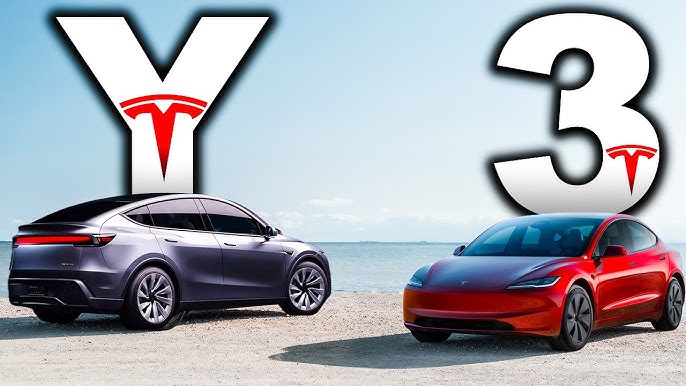
There's a distinct sensation that defines the first time you sit in the driver's seat of the "Project Highland" Tesla Model 3. It's not one single thing, but a collection of subtle yet profound changes that immediately register. You close the door and are met not with the familiar thud, but a deeper, more insulated thump. The ambient noise of the outside world fades more than it ever did before. Your hand falls on the new textile-wrapped dashboard, which feels softer and more premium than its predecessor. You glance around and notice the customizable strip of ambient LED light flowing seamlessly from the dash to the doors, casting a gentle glow on the redesigned cabin. This is not the spartan, at times clinical, interior of the original Model 3. This is a space that has been meticulously re-engineered for a single purpose: to elevate the human experience.
The "Highland" Model 3 and its eagerly anticipated SUV sibling, the "Project Juniper" Model Y, are far more than simple mid-cycle cosmetic facelifts. They represent a fundamental rethinking of Tesla's core, mass-market products. This evolution is driven by a dual mandate: on one hand, to drastically improve manufacturing efficiency to lower costs and maintain a competitive price point; on the other, to directly address years of customer feedback regarding comfort, refinement, and user experience. This deep dive will explore the real-world impact of the "Highland" changes for current and prospective owners and provide a well-researched, forward-looking analysis of what the imminent "Project Juniper" refresh will mean for Tesla's best-selling vehicle and the broader EV market.
Chapter 1: The "Highland" Experience: One Year In
After being on the roads in Europe, Asia, and North America for roughly a year, the "Highland" Model 3 has established itself as a significant leap forward. The changes go far beyond its sleeker, more aggressive front fascia and new "C-shaped" tail lights. Owners are reporting a day-and-night difference in the lived experience of the car.
The Silent Revolution: NVH Improvements
Perhaps the single most praised improvement in the Highland Model 3 is the dramatic reduction in Noise, Vibration, and Harshness (NVH). The original Model 3, while revolutionary in its technology, was often criticized for its levels of road and wind noise, which felt out of place in a premium-priced vehicle. Tesla clearly took this feedback to heart.
The most significant change is the use of acoustic glass on all windows, not just the front windshield and front side windows as in some previous models. This laminated glass uses a thin layer of acoustic dampening material to filter out a much wider frequency of sound, particularly the high-frequency "whoosh" of wind noise at highway speeds. This is complemented by improved suspension bushings and new, multi-layer door seals that create a much tighter seal against the elements. The result is a cabin that is serenely quiet. Conversations can be held at a normal volume even at 75 mph, and the audio system's clarity is enhanced because it has less background noise to overcome. This single improvement has arguably done more to elevate the "premium" feel of the car than any other.
A New Interior Philosophy
The cabin of the Highland is where the new design philosophy is most apparent. It's a space that is both minimalist and warm, functional and luxurious. The introduction of ventilated front seats, a feature once reserved for the much more expensive Model S and X, has been a game-changer for owners in warmer climates. Controlled via the touchscreen, they provide a welcome cooling effect on hot days.
The customizable ambient LED lighting strip is another standout feature. This is not the garish, over-the-top lighting of some competitors, but a subtle, elegant accent that can be set to any color in the RGB spectrum. It makes the cabin feel more spacious and personalized at night, adding a touch of drama and sophistication. The controversial decision to remove the indicator and gear selector stalks from the steering column has been a major point of discussion. The turn signals are now activated by capacitive buttons on the left side of the steering wheel, while drive/reverse is selected by swiping on the edge of the central touchscreen. While most owners report a surprisingly quick adaptation period (typically a few days), it remains a polarizing choice. Proponents praise the clean, uncluttered look, while detractors miss the tactile, muscle-memory feel of a physical stalk, especially when navigating complex roundabouts.
Exterior Aerodynamics and Efficiency
The redesigned front end of the Highland is not just for looks. The sharper, lower nose and redesigned headlights create a more slippery profile, reducing the car's aerodynamic drag coefficient. This translates directly into improved real-world efficiency and range. Owners of the Long Range "Highland" model consistently report achieving closer to their vehicle's official EPA or WLTP range estimate compared to the pre-refresh model, especially during long-distance highway driving where aerodynamics play a crucial role. This means fewer charging stops, shorter charging times, and lower energy costs over the lifetime of the vehicle—a tangible benefit of thoughtful design.
The Rear Screen and Audio System
Tesla has also paid significant attention to the backseat experience. The addition of a new, bright 8-inch touchscreen for rear passengers has been a resounding success, particularly for families. This screen allows those in the back to control their own climate settings, stream video from services like Netflix and YouTube, and play games. What could have been a gimmick has proven to be a genuinely useful feature that keeps children entertained and gives adult passengers more control over their comfort. This is complemented by an upgraded audio system. The Long Range model now boasts 17 speakers (up from 14), including two subwoofers, creating a richer, more immersive soundscape that audiophiles have praised as a significant step up from the already-good system in the original car.
Chapter 2: "Project Juniper": What We Can Expect for the Model Y
With the resounding success of the "Highland" Model 3, the entire Tesla community is now laser-focused on its SUV counterpart, the "Project Juniper" Model Y refresh. While Tesla remains officially tight-lipped, we can make highly educated inferences about the forthcoming changes by applying the "Highland" formula and analyzing supply chain reports and factory retooling schedules. "Juniper" is not a matter of if, but when, with production expected to begin ramping up in early 2026.
Applying the "Highland" Formula
At its core, "Project Juniper" will be about bringing the Model Y in line with the new standard of refinement and technology set by the "Highland" Model 3. The two cars share a platform, so it is a near certainty that the Model Y will inherit the vast majority of the Model 3's upgrades. Expect the same sleeker, more aerodynamic front-end design, adapted for the Y's taller profile. Inside, the cabin will be transformed with the same ventilated front seats, customizable ambient lighting, premium textile dashboard, and the controversial stalkless steering wheel and screen-based gear selector. The NVH improvements, including full acoustic glass and better seals, will be a primary focus, aiming to make the already-quiet Model Y cabin even more serene. The 8-inch rear passenger screen and upgraded audio system will also undoubtedly make the jump to the new Model Y.
Beyond Highland: Y-Specific Enhancements
While "Juniper" will share much with "Highland," Tesla will likely introduce some enhancements specific to the SUV form factor. The Model Y's suspension has often been described as firm, particularly on pre-2023 models. "Juniper" presents the perfect opportunity for Tesla to introduce a more refined suspension tune, possibly using new frequency-selective dampers, to provide a more comfortable and compliant ride without sacrificing the car's sharp handling. This would address one of the key advantages held by competitors like the Hyundai Ioniq 5 or VW ID.4.
Furthermore, we can anticipate small but meaningful improvements to the Model Y's class-leading practicality. This could include a revised second-row seating mechanism that is easier to fold, or new storage solutions and integrated hooks in the expansive cargo area. Given that the Model Y is often purchased by families, any change that enhances daily usability and comfort will be a major selling point.
Manufacturing and Structural Changes
Beneath the surface, "Project Juniper" will likely feature even more significant manufacturing innovations. Tesla is constantly pushing the boundaries of its Giga Press technology. The "Juniper" Model Y could be the first vehicle to utilize even larger single-piece castings, potentially combining the front and rear underbodies with a new structural battery pack design. This "car-as-a-single-piece" philosophy would be a manufacturing breakthrough, further reducing weight, increasing torsional rigidity (which improves both safety and handling), and, most importantly, slashing production costs and complexity. These manufacturing savings are what will allow Tesla to pack the "Juniper" with all the premium features of the "Highland" while holding the line on price, or even reducing it, to stay competitive.
Timeline and Market Impact
Based on reports of retooling schedules at Giga Shanghai and planned downtime at the Berlin and Austin factories, the "Juniper" Model Y is expected to enter production in phases, likely starting in China in late 2025 or early 2026, followed by Europe and North America. The launch of the refreshed model will have a massive impact on the market. It will likely trigger a surge in demand, creating a significant order backlog. For the used car market, it will create a clear delineation in value between the pre- and post-Juniper models. Existing owners will see the resale value of their cars soften as the launch date approaches, while buyers of the new model will benefit from a vehicle that is substantially improved in almost every measurable way.
Chapter 3: The Owner's Dilemma: Upgrade, Wait, or Keep?
The impending arrival of "Juniper" and the established success of "Highland" create a classic dilemma for current and prospective Tesla owners.
For Pre-Highland Model 3 Owners
If you own a Model 3 from 2023 or earlier, the decision to upgrade to a "Highland" is compelling. The leap in cabin quietness and interior refinement is not a minor one; it fundamentally changes the character of the car. The decision comes down to a financial trade-off. Is the significant improvement in daily driving comfort and the addition of features like ventilated seats worth the depreciation hit on your current car and the cost of the new one? For those who spend a lot of time on the highway or who were always slightly bothered by the old model's NVH, the answer is often a resounding "yes."
For Prospective Model Y Buyers
The question of "buy now or wait for Juniper" is even more complex. Buying a current-generation Model Y today, especially if Tesla offers inventory discounts to clear out old stock, could represent a fantastic value. You are still getting a class-leading electric SUV. However, the wait for "Juniper" promises a vehicle that is substantially better in comfort, features, and technology. The risk of waiting is that initial demand for "Juniper" will be so high that wait times could be long, and initial pricing may not be discounted. The best strategy for most is likely to wait if you can. The improvements promised by "Juniper" are not incremental; they are transformative. Buyer's remorse would be a significant risk for anyone who buys a Model Y in the months immediately preceding the "Juniper" launch.
The Long-Term Value Proposition
Ultimately, the "Highland" and "Juniper" projects are a powerful statement from Tesla. They demonstrate a company that is not content to rest on its laurels. It is actively listening to customer feedback and relentlessly iterating on its hardware, not just its software. This philosophy of continuous improvement is what builds long-term brand value and customer loyalty. It assures buyers that the Tesla they purchase today is at the cutting edge of design and technology, and it sends a clear message to competitors that the benchmark for a mass-market EV is a constantly moving target.
Conclusion
The "Project Highland" Model 3 has successfully redefined Tesla's core sedan, transforming it from a spartan-but-brilliant tech product into a refined, comfortable, and truly premium vehicle. It has silenced critics, delighted owners, and set a new, higher bar for the segment. The upcoming "Project Juniper" Model Y is poised to do the same for the world's best-selling electric SUV.
By integrating customer-focused upgrades in comfort and luxury with under-the-skin manufacturing breakthroughs, Tesla is executing a brilliant strategy to defend its market leadership. "Highland" and "Juniper" are not just refreshes; they are case studies in relentless iteration. They show a company that has matured, one that now understands that the future of the automobile is not just about 0-60 times and autonomous software, but also about the quiet hum of a silent cabin, the cool touch of a ventilated seat, and the simple, profound pleasure of a comfortable ride.
FAQ Section
How can I tell a "Highland" Model 3 from an older one from the outside? The easiest way to tell is by looking at the front and back. The "Highland" model has much slimmer, more aggressive-looking headlights and no fog lights in the lower bumper. The rear features new "C-shaped" taillights that are integrated into the trunk lid, and the "TESLA" name spelled out in letters instead of the "T" logo.
Is the lack of indicator stalks on the "Highland" difficult to get used to? Most owners and reviewers report that it takes a few hours to a few days of driving to adapt. The biggest challenge is typically activating the turn signal while the steering wheel is turned, such as when navigating a roundabout. However, the muscle memory does build relatively quickly. It's a polarizing feature that some love for its clean aesthetic and others miss for its tactile simplicity.
Will "Project Juniper" use the 4680 battery cells across all trims? It is highly likely that the "Juniper" Model Y produced at Giga Texas will utilize the 4680 structural battery pack, as this is a key part of Tesla's manufacturing strategy. However, factories in Shanghai and Berlin may continue to use LFP and 2170 cells from suppliers for different trims, depending on supply chain logistics and cost. The type of battery cell will likely vary by region and specific model variant.
When should I sell my current Model Y if I plan to upgrade to "Juniper"? Historically, the resale value of a Tesla model tends to see its sharpest decline in the 3-6 months leading up to a major refresh as anticipation builds and the company begins offering discounts on the outgoing model. If you are certain you want to upgrade, the optimal time to sell your current Model Y would likely be before the "Juniper" is officially unveiled and priced.
Do the "Highland" changes justify the price difference from the older inventory models? This is a subjective value judgment, but for most people, the answer is yes. The improvements in ride quality, cabin quietness, and interior features (ventilated seats, ambient lighting, rear screen) are so substantial that they make the "Highland" feel like a completely different, more premium car. Unless you get a very steep discount on an older model, the "Highland" is widely considered to be worth the price premium.