
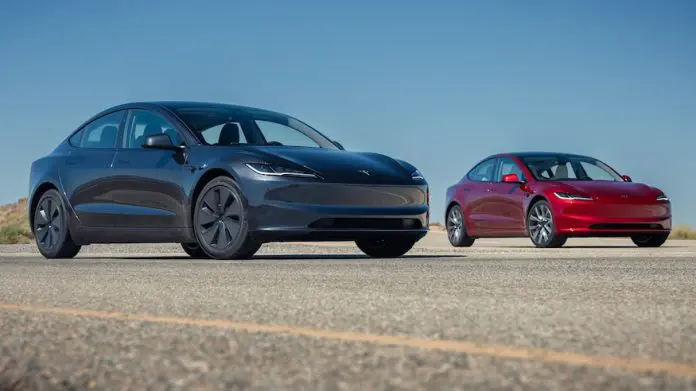
I. Introduction: The Legend Returns
The unveiling and rapid deployment of the new Model 3 Performance (codenamed "Ludicrous," or Highland Performance) represents a critical strategic maneuver by Tesla. Following the highly successful "Highland" refresh of the standard Model 3, this halo product is tasked with re-establishing Tesla’s performance credibility and, more importantly, cementing its position in the fiercely competitive premium sports sedan segment across North America and Europe. This is not merely a faster version of the Model 3; it is a meticulously re-engineered machine designed to challenge the reigning Internal Combustion Engine (ICE) performance titans—BMW’s M-series and Mercedes-AMG—while simultaneously fending off formidable Electric Vehicle (EV) rivals like the Porsche Taycan and Kia EV6 GT.
Why "Ludicrous" Now? Aligning Performance with Refinement
The original Model 3 Performance was celebrated for its blistering acceleration but often critiqued for its harsh ride quality, rudimentary thermal management, and lack of sophisticated track-focused technology. The new version seeks to rectify these shortcomings. By integrating the core refinements of the Highland generation—improved build quality, enhanced aerodynamics, and a quieter, more luxurious interior—with genuine, sophisticated performance upgrades, Tesla aims to deliver a product that appeals to both the track enthusiast and the discerning daily driver. The "Ludicrous" badge now signifies a blend of raw speed and high-fidelity engineering refinement.
The European and North American Battleground
The market strategy for the new Model 3 Performance must be tailored to two distinct battlegrounds:
-
North America: Here, the M3P is a volume leader, benefiting from potential clean vehicle incentives (if applicable to its price segment) and focusing on dominating domestic rivals with its value proposition and software ecosystem.
-
Europe: The challenge is far greater. European consumers, particularly in Germany and the UK, exhibit strong brand loyalty to established performance manufacturers. The M3P must prove its merit through superior handling, consistent track performance (addressing thermal issues), and impeccable build quality to win over these traditional luxury buyers. Its comparative advantage in efficiency and charging network density (Supercharger access) must be leveraged aggressively.
Thesis: A Pound-for-Pound Performance Benchmark
This analysis posits that the new Model 3 Performance is strategically priced and engineered to be the most compelling performance benchmark in its price segment. We will dissect the technical advancements—from the new drive unit and adaptive damping to the Track Mode 3.0 software—to demonstrate how Tesla is moving beyond simple straight-line speed. We will analyze its competitive standing against both its ICE and EV rivals in Europe and North America, ultimately assessing its potential to be a halo product that drives global demand and validates the entire Model 3 lineage as a world-class sports sedan.
II. Technical Mastery: Performance and Handling Deep Dive
The true innovation of the new Model 3 Performance lies beneath the surface, specifically in its powertrain, chassis controls, and thermal management systems, all designed to deliver sustained performance consistency.
2.1. The Dual-Motor Powerhouse: Unpacking the New Rear Drive Unit
The heart of the new M3P is its performance-optimized dual-motor All-Wheel Drive (AWD) system, featuring a significant upgrade to the rear drive unit.
-
New Inverter and Rotor: The new rear motor features a more powerful, performance-tuned inverter. This component is crucial as it manages the flow of high-voltage DC power from the battery into three-phase AC power for the motor. The improved inverter, coupled with a re-engineered rotor and stator for higher magnetic flux density, allows the motor to draw higher sustained power without overheating. This is not simply a software unlock; it is a hardware upgrade designed for durability and track use.
-
Sustained Output: While peak 0-60 mph times are often the headline, the most crucial metric for a performance sedan is sustained power output at high speeds and over multiple acceleration runs. The new rear unit is designed to maintain peak power delivery for longer durations, addressing the power-fade issues of the previous generation.
-
Torque Vectoring: The refined motor control software allows for more precise and faster torque vectoring—the ability to distribute power intelligently between the front and rear axles, and dynamically between the left and right rear wheels. This enhances cornering grip and stability, pushing the car's handling limits.
2.2. Suspension Strategy: Adaptive Dampers and Chassis Control
The most transformative hardware addition addressing the key critique of the prior model is the inclusion of Adaptive Dampers (or Active Suspension).
-
Functionality: Unlike passive suspensions that offer a fixed firmness, adaptive dampers continuously adjust the hydraulic resistance within the shock absorber based on road conditions, speed, steering angle, and driver input, typically adjusting stiffness in milliseconds.
-
Driving Modes: This allows for genuine differentiation between driving modes:
-
Comfort/Standard: Damping is softened, absorbing road irregularities for a significantly more comfortable daily commute, particularly beneficial on rough North American infrastructure and cobblestone European roads.
-
Sport/Track: Damping stiffens rapidly, minimizing body roll and pitch during hard acceleration, braking, and cornering, which is essential for maintaining a flat chassis and maximizing tire contact patch during aggressive driving.
-
-
Chassis Tuning: The M3P features bespoke springs and stabilizer bars paired with the adaptive dampers, giving it a lower stance and a firmer mechanical foundation than the standard Model 3 Highland, optimized specifically for dynamic driving.
2.3. Thermal Management and Braking (Performance Consistency)
Performance EVs generate substantial heat in the battery pack and powertrain, requiring state-of-the-art cooling to prevent throttling.
-
Integrated Thermal Loop: The new M3P features a dedicated, enhanced thermal management system for the performance components. This includes larger heat exchangers and more efficient pump mechanisms to rapidly shuttle heat away from the battery cells and the new rear drive unit, ensuring that the car can complete multiple high-speed runs or hot laps without severe power derating.
-
High-Performance Braking System: While Tesla provides excellent standard brakes, the new M3P often comes equipped with larger rotors and more aggressive brake pad compounds for improved fade resistance. Crucially, the Track Mode 3.0 software (see 2.4) integrates the braking system with the powertrain, using regenerative braking to supplement the friction brakes and manage weight transfer optimally during deceleration.
2.4. Track Mode 3.0 Analysis: Software as Performance
Tesla’s performance edge is often driven by software, and Track Mode 3.0 is the digital interface controlling the hardware upgrades.
-
Customizable Power Distribution: Drivers can now customize the torque split between the front and rear axles (e.g., opting for a more "rear-biased" feel for drifting and oversteer, mimicking a traditional RWD sports sedan).
-
Adaptive Damping Profile Control: The software allows granular control over the adaptive damper profiles, letting the driver tune the suspension stiffness independently of the power settings.
-
Predictive Cooling: Track Mode 3.0 intelligently pre-cools the battery and powertrain components before the car is even driven aggressively, based on the selected mode. This predictive management ensures the vehicle is thermally prepared for high-demand driving the moment the track session begins.
-
Data Logging and Telemetry: Integrated telemetry features allow drivers to record lap times, G-forces, and vehicle thermal and battery data. This ability to analyze performance data is crucial for serious track enthusiasts and is a feature typically found only in ultra-high-end performance cars.
III. Competitive Analysis: The European and North American Battleground
The Model 3 Performance must justify its premium price by demonstrating a superior blend of performance, technology, and value against a diverse field of competitors.
3.1. Challenging the ICE Titans (BMW M3/M2, Mercedes-AMG C63)
In the $\$55,000 - \$75,000$ performance sedan segment, the Model 3 Performance's most enduring challenge comes from the established German performance brands.
-
Performance Parity and Cost Advantage: The new M3P’s sub-$3$ second 0-60 mph acceleration remains a staggering advantage that few ICE rivals can match at its price point. While a BMW M3 Competition might offer superior steering feel and auditory feedback, the M3P provides superior acceleration and often a lower purchase price, especially when factoring in the total cost of ownership (lower fuel/energy costs and reduced maintenance).
-
Handling Credibility: The adaptive damping and refined chassis tuning of the new M3P are critical for closing the handling gap. European buyers in particular demand cornering precision. If the M3P can deliver consistent, repeatable track performance without thermal throttling, it dismantles the core argument that ICE vehicles are inherently superior in sustained driving dynamics.
-
Technology and Efficiency: The M3P leverages its superior technology (centralized screen, OTA updates, FSD capability) and energy efficiency (higher MPGe equivalent) as compelling value adds that the aging platforms of its ICE rivals cannot match.
3.2. Against EV Rivals (Porsche Taycan, Kia EV6 GT)
The competitive threat is intensifying from within the EV landscape, particularly from models that prioritize dynamics and charging speed.
-
Porsche Taycan Comparison: While the Taycan remains the benchmark for EV luxury and driving feel, the M3P offers 90% of the Taycan's straight-line performance at approximately half the price. This "value-performance" gap is the M3P's biggest market weapon. Taycan's key advantage remains its $800 \text{ V}$ architecture and ultra-fast charging capability, though the Supercharger network still provides greater geographical reliability for Tesla.
-
Kia EV6 GT and Hyundai Ioniq 5 N: These rivals offer comparable performance figures and superior charging architecture ($800 \text{ V}$) but lack the premium brand recognition and the vast Supercharger network of Tesla. The M3P competes by offering a more mature software ecosystem, a higher-quality interior (Highland refresh), and a generally more refined user experience.
3.3. Pricing, Value, and Incentives
The M3P’s market success hinges on strategic pricing.
-
North America: If the M3P qualifies for US federal tax credits, its effective price plummets, creating an insurmountable value advantage over non-qualifying rivals. Even without the full credit, its low starting price relative to the performance achieved makes it a compelling choice.
-
Europe: Pricing must be finely tuned to compete in specific countries where EV purchase incentives vary. Tesla’s vertically integrated manufacturing (e.g., Giga Berlin) aids in minimizing import duties and logistics costs, allowing for more aggressive pricing against local European assembly rivals.
3.4. Target Demographic: The Tech-Savvy Enthusiast
The new M3P specifically targets the buyer who is both a driving enthusiast (seeking track capability, adaptive suspension) and technology adopter (demanding cutting-edge ADAS, seamless software, and OTA updates). This dual appeal broadens the market beyond the traditional "gearhead" to include the influential, younger, tech-savvy demographic.
IV. The "Highland" Interior and Quality Leap
The refinement introduced in the Model 3 "Highland" refresh is essential for the M3P to succeed in the premium segment, addressing years of criticism regarding interior austerity and build quality.
4.1. Refined Cockpit: Material Quality and Acoustic Improvements
The M3P leverages the comprehensive interior overhaul to elevate its premium appeal, a necessity for competing against German luxury brands.
-
Material Upgrades: The use of higher-grade, softer-touch materials on the dashboard and door panels, along with improved tactile feel of controls (e.g., scrolling wheels), provides a more luxurious experience.
-
Acoustic Glass and Sound Deadening: The new acoustic glass (often on all windows, depending on the market) and additional sound-deadening materials significantly reduce road noise, tire roar, and wind noise. This transformation from a noisy cabin to a quiet environment is crucial for enhancing the sense of premium refinement, making the M3P a much more pleasant long-distance cruiser than its predecessor.
-
Ambient Lighting: The subtle addition of integrated ambient lighting adds a layer of sophistication and personalization that was previously absent, bringing the Model 3 into alignment with modern luxury interior design standards.
4.2. Ergonomics and Comfort: New Seats and Ride Quality
The functional improvements directly impact the driver and passenger experience.
-
Performance-Specific Seats: The M3P features newly designed, heavily bolstered sports seats. These seats offer superior lateral support necessary for high-G cornering on the track, while retaining the heating and ventilation features expected in a premium vehicle. The integration of the "Ludicrous" emblem into the headrests also adds a necessary visual flair.
-
Adaptive Suspension’s Dual Role: While crucial for performance, the adaptive suspension’s greatest contribution to daily driving is improved comfort. By softening the damping in "Comfort" mode, the car better absorbs bumps and imperfections, eliminating the bone-jarring ride quality that alienated some potential buyers of the previous performance model.
4.3. Software Integration: Performance-Specific UI/UX
The software experience is tailored to enhance performance driving and data analysis.
-
Track Mode Display Enhancements: Track Mode 3.0 provides a dedicated performance display showing real-time metrics such as motor temperatures, G-meter readings, and battery state of charge optimized for track use. The ability to customize on-screen elements minimizes distraction during high-speed maneuvers.
-
Vaporware vs. Reality: Tesla's ability to consistently deliver performance upgrades via OTA updates (e.g., adding features to Track Mode post-purchase) maintains high customer engagement and provides ongoing value, a clear differentiator from ICE rivals.
4.4. Manufacturing Excellence: Assessing Build Quality Improvements
The success of the Highland refresh across production facilities (Giga Shanghai, Fremont, Giga Berlin) is paramount to the M3P’s credibility.
-
Panel Gap and Fit/Finish: Reports indicate consistent improvements in panel gap quality and paint finish across all major manufacturing hubs. This sustained commitment to quality control is essential for the M3P to be taken seriously as a premium competitor in quality-sensitive European markets.
-
Supplier Quality: The integration of new suppliers and streamlined processes for the Highland version ensures that components like the adaptive suspension and new drive unit meet the required precision and reliability standards from day one.
V. Conclusion: Redefining Performance EV Accessibility
The new Model 3 Performance is a strategic masterstroke, addressing nearly every criticism leveled at its predecessor while doubling down on Tesla’s core strengths of acceleration and technological integration.
5.1. M3P as a Halo Product
The M3P serves as the halo product for the entire Model 3 lineup, boosting demand and validating the platform's engineering depth. Its record-breaking performance generates positive media attention that cascades to the standard Model 3, reinforcing the brand's image as a high-performance innovator, not just an electric vehicle manufacturer. This is particularly vital in markets where performance still drives brand perception.
5.2. Short-Term Sales Forecast and Production Ramp-up
Initial delivery enthusiasm in North America and key European markets (Germany, Norway, UK) suggests strong short-term demand. The production ramp-up must prioritize quality control, especially given the new complexity of the adaptive suspension and the specialized rear drive unit. Maintaining a consistent global supply will be key to capitalizing on the current high-interest phase and maximizing sales before rivals can deploy competitive updates.
5.3. The Future of Tesla Performance Badges
The decision to retain the "Performance" moniker while informally adopting "Ludicrous" highlights a potential future roadmap. As performance EVs continue to advance, Tesla may reserve the "Ludicrous" or a new, even more extreme badge (perhaps "Plaid" or "Apex") for limited-run, ultra-high-performance vehicles with specialized track hardware. The M3P, however, successfully bridges the gap between daily driver and weekend warrior.
5.4. Final Thesis: Supercar Performance at a Premium Sedan Price
The new Model 3 Performance achieves what few rivals can: it delivers supercar-level straight-line performance, significantly improved track consistency, and a newfound level of daily driving comfort, all contained within the packaging and pricing of a premium sports sedan. By redefining its performance offering through sophisticated hardware (adaptive dampers, new motor) driven by advanced software (Track Mode 3.0), the M3P has solidified its competitive moat, making it the unavoidable benchmark for all future EV and ICE rivals in its class. This is not just a faster car; it is the most compelling blend of technology, speed, and value in the global performance market today.
VI. FAQ Section (Frequently Asked Questions)
Q: Are the new performance brakes standard on the Model 3 Performance?
A: The M3P comes standard with a high-performance braking system, but Tesla often reserves certain aesthetics (like colored calipers) or specific pad compounds for track use, which may be available as optional upgrades or via the Track Mode software.
Q: What is the actual 0-60mph time on a rollout (one foot)?
A: While the official quoted 0-60 mph time is typically $\le 3.0$ seconds (or similar depending on official announcement), the rollout time (which factors out the initial launch period) often sees the vehicle achieving times closer to the low-to-mid $2$ second range, putting it in true supercar territory.
Q: How does the adaptive suspension handle rough European roads?
A: The adaptive suspension is crucial for European markets. By automatically softening the damping in "Comfort" mode, it drastically improves the car's ability to absorb vibrations from patchy urban roads and cobblestone streets, providing a much more compliant and comfortable ride than the previous generation’s fixed, stiff suspension.
Q: Is the new Performance version much heavier than the standard Model 3 Highland?
A: The M3P is slightly heavier due to the more robust rear motor, the additional components for the adaptive suspension, and larger wheels/brakes. However, this weight increase is generally offset by the significantly increased power and the improved handling control provided by the active dampers.