
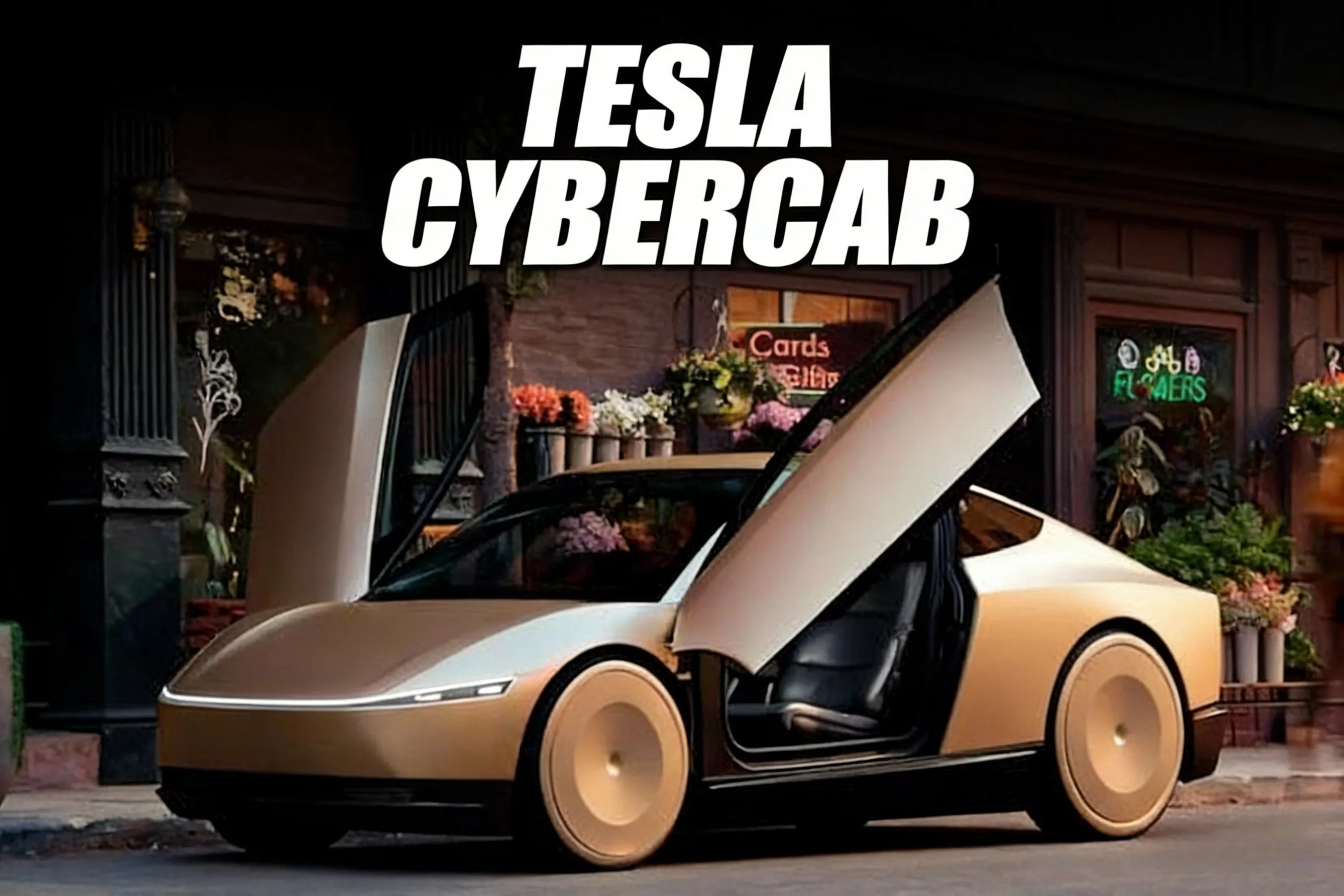
Introduction: Why Cybercab Matters More Than Any New Tesla Car
For more than a decade, Tesla has been defined by its vehicles: Model S revolutionized long-range EVs, Model 3 made electric cars mainstream, and Model Y became one of the world’s best-selling vehicles. But as of 2026, Tesla’s most important product is no longer a traditional car.
It is autonomy.
The Tesla Cybercab, designed specifically for autonomous ride-hailing, represents the clearest signal yet that Tesla is transitioning from an automaker into an AI-driven mobility platform. Unlike previous Teslas that balanced human driving with automation, Cybercab is built around a single premise: no driver required.
For Tesla owners in the United States and Europe, this shift has profound implications. It affects how Full Self-Driving (FSD) evolves, how Tesla vehicles may generate income, how urban transportation could change, and how regulators will shape the next decade of mobility.
This article takes a deep dive into Tesla’s Cybercab and Robotaxi strategy for 2026—what it is, how it works, when it may arrive, and what it truly means for current and future Tesla owners.
1. What Is Tesla Cybercab?
1.1 A Purpose-Built Autonomous Vehicle
Unlike Model 3 or Model Y, Cybercab is not a consumer car retrofitted with autonomy. It is designed from the ground up for autonomous operation.
Key conceptual characteristics include:
-
No steering wheel or pedals
-
Optimized interior space for passengers
-
Symmetrical design for easier manufacturing
-
Hardware tailored exclusively for AI driving
Cybercab is closer in spirit to a mobile robot than a traditional automobile. Tesla has repeatedly emphasized that removing human-driving components simplifies production, reduces cost, and accelerates scaling.
1.2 How Cybercab Differs from Existing Teslas
| Feature | Model 3 / Y | Cybercab |
|---|---|---|
| Human driver required | Yes | No |
| Steering wheel | Yes | No |
| Target customer | Individual owners | Fleet & mobility platform |
| Revenue model | Vehicle sales | Ride-hailing + AI services |
| Design priority | Versatility | Autonomy efficiency |
For Tesla, Cybercab is not an upgrade—it is a category shift.
2. The Strategic Logic Behind Tesla’s Robotaxi Vision
2.1 Why Tesla Is Betting on Robotaxis
Tesla believes that autonomy unlocks:
-
Higher vehicle utilization
-
Recurring revenue per vehicle
-
Lower cost per mile than human-driven ride-hailing
-
A defensible AI moat built on real-world data
A privately owned car is typically used less than 10% of the day. A robotaxi could operate 20+ hours per day, generating continuous revenue.
From Tesla’s perspective, selling a $40,000 car once is far less valuable than operating a robotaxi that generates tens of thousands of dollars annually.
2.2 The AI Flywheel Advantage
Tesla’s advantage is not just hardware—it is data.
Millions of Teslas on public roads continuously collect:
-
Driving behavior data
-
Edge cases (rare scenarios)
-
Environmental complexity
This feeds Tesla’s neural networks, improving FSD training at a scale competitors struggle to match. Cybercab is the endpoint of this flywheel: AI trained by humans, deployed without humans.
3. Technology Stack Behind Cybercab and Robotaxi
3.1 Full Self-Driving (FSD) as the Core Engine
Cybercab relies on advanced versions of Tesla FSD, which has evolved into:
-
End-to-end neural network control
-
Vision-only perception (no LiDAR)
-
Real-time decision making at city scale
Key improvements enabling Cybercab:
-
Better prediction of human behavior
-
Smoother, more confident lane selection
-
Improved handling of unprotected turns
-
Robust performance in dense urban environments
3.2 Hardware 4 and Beyond
Cybercab is expected to use next-generation Tesla hardware, including:
-
Higher-resolution cameras
-
More powerful onboard AI inference
-
Redundant compute systems
-
Enhanced fail-safe architecture
This hardware is designed not just to drive, but to prove safety statistically.
3.3 Safety Without a Driver
Removing the driver means:
-
Zero human intervention
-
No steering wheel fallback
-
Software must handle all edge cases
Tesla’s approach emphasizes:
-
Massive simulation
-
Real-world shadow testing
-
Incremental geographic rollout
Safety validation will be the single biggest bottleneck to scaling.
4. Robotaxi Rollout Timeline: What 2026 Actually Looks Like
4.1 Initial Limited Deployments
In 2026, Tesla’s robotaxi rollout is expected to be:
-
Highly controlled
-
City-specific
-
Geo-fenced
-
Closely monitored
Likely initial environments:
-
Low-complexity U.S. cities
-
Favorable regulatory climates
-
High EV adoption regions
4.2 U.S. vs Europe Rollout Differences
United States
-
Faster regulatory experimentation
-
State-level approvals
-
More flexible pilot programs
Europe
-
Centralized regulatory oversight
-
Higher safety certification standards
-
Slower but more uniform approval process
European deployment will likely trail the U.S. by months or years, but once approved, expansion may be faster across EU member states.
5. How Robotaxi Affects Existing Tesla Owners
5.1 Can Owners Participate in the Robotaxi Network?
One of Tesla’s most compelling ideas is allowing owners to:
-
Add their vehicles to the robotaxi fleet
-
Earn income without using the car
-
Share revenue with Tesla
However, Cybercab introduces a shift:
-
Fleet-owned vehicles may dominate early
-
Owner participation may be limited initially
-
Older hardware vehicles may be excluded
5.2 Impact on FSD Value
If robotaxis succeed:
-
FSD becomes a revenue-generating asset
-
Subscription pricing could increase
-
Hardware compatibility becomes critical
For current owners, this raises important questions about:
-
Hardware upgrade paths
-
Long-term FSD support
-
Residual vehicle value
6. Economic Impact of Tesla Robotaxi
6.1 Cost Per Mile Comparison
Estimated long-term costs:
-
Human ride-hailing: high labor cost
-
Autonomous ride-hailing: mostly energy, maintenance, depreciation
Tesla argues robotaxis could:
-
Undercut Uber and Lyft pricing
-
Increase margins dramatically
-
Disrupt public transportation in some cities
6.2 Market Disruption Risks
Robotaxis could impact:
-
Ride-hailing companies
-
Taxi unions
-
Urban planning policies
-
Public transport funding models
This guarantees regulatory resistance in many regions.
7. Regulatory Challenges and Public Acceptance
7.1 Regulation Is the Real Battlefield
Technical capability alone is not enough.
Regulators will demand:
-
Transparent safety data
-
Clear liability frameworks
-
Proven reliability across conditions
Each country—and often each city—may require separate approval.
7.2 Public Trust and Perception
Even if robotaxis are statistically safer, public acceptance depends on:
-
Media narratives
-
High-profile incidents
-
Trust in Tesla’s communication
One major accident could delay progress significantly.
8. What Cybercab Signals About Tesla’s Future
Cybercab is not just a new product. It signals that:
-
Tesla prioritizes AI over traditional car variety
-
Vehicle ownership may decline in importance
-
Tesla’s valuation increasingly depends on software, not metal
For Tesla owners, this means the company you bought a car from is becoming something much bigger—and much less conventional.
Conclusion: The Most Important Tesla Launch Ever?
Cybercab may never be Tesla’s highest-selling vehicle by unit count, but it could become its most important product.
If successful, it transforms Tesla into:
-
A mobility service provider
-
A dominant AI deployment platform
-
A company whose value is driven by data and autonomy
If it fails, it exposes Tesla to:
-
Regulatory setbacks
-
Massive sunk AI costs
-
Strategic overreach
For now, Cybercab stands at the center of Tesla’s future—and 2026 will be the year that vision faces its first true test.
Frequently Asked Questions (FAQ)
Q1: Is the Tesla Cybercab available for consumers to buy?
No. Cybercab is designed primarily for autonomous ride-hailing fleets, not private ownership.
Q2: When will robotaxis be widely available?
Initial deployments may begin in limited U.S. cities in 2026, with broader expansion taking several years.
Q3: Will current Tesla vehicles become robotaxis?
Some newer vehicles may qualify in the future, but Cybercab is optimized specifically for autonomy.
Q4: Will robotaxis replace Uber and Lyft?
Not immediately. Adoption will be gradual and heavily regulated, but long-term disruption is possible.
Q5: Does this make FSD more valuable?
Potentially yes, especially if FSD enables revenue generation rather than just driver assistance.