
I. Introduction: The Autonomy Divide
The purchase of a Tesla is an investment in the future of driving, and for many, that investment is centered on the promise of Full Self-Driving (FSD) Capability. North American owners are currently exploring the increasingly human-like, assertive driving behavior of the latest software, FSD v14 (Supervised). This version, with its refined neural nets, recent "Mad Max" profile attention, and new convenience features like automatic camera washing, represents Tesla’s pinnacle of advanced driver assistance.
Yet, a stark reality persists: the FSD experience remains fundamentally divided. For an owner in California, FSD v14 means near-seamless city street navigation, unprotected left turns, and dynamic highway merging. For an owner in Cologne, Germany, FSD is limited to a heavily restricted Enhanced Autopilot (EAP) feature set, confined mostly to highway lane-keeping and a barely functional Summon feature. They have paid the same, or often more, for a promise that remains tantalizingly out of reach.
This article aims to provide an exhaustive, owner-focused comparison of this divide. We will move beyond marketing claims to examine the technical, regulatory, and real-world factors that make FSD v14 a transformative product in North America, but an almost non-existent one in Europe. Our deep-dive will not only detail the feature disparities but also provide a critical analysis of the regulatory chasm (UNECE, R79, R157) that prevents a unified global rollout, and offer actionable advice on what European owners can realistically expect next. This is the truth about FSD v14, dissected for those who have invested in Tesla’s autonomous future.
II. FSD v14/v14.x Technical Review: The Hardware 4 Focus
To understand the operational chasm between the US and Europe, we must first establish the technical baseline of the latest software. FSD v14 (Supervised) is not merely an incremental update; it is a foundational architectural shift, built upon what Tesla refers to as the "End-to-End Driving Network."
A. The Core Technical Leap (The US Benchmark)
The most significant change in the v14 series is the continued integration and optimization of a pure vision-based, end-to-end planning model. Unlike older Autopilot versions that relied on explicit, hard-coded rules for every scenario, FSD v14’s core operates on neural networks trained on petabytes of real-world video data.
-
AI4 and Data Ingestion: The latest builds are heavily optimized for Hardware 4 (HW4), leveraging its increased processing power and superior cameras. Key technical advancements include:
-
36 Hz, full-resolution AI4 video inputs: Allowing the vehicle's "brain" to process a clearer, higher-fidelity view of the world more frequently.
-
Native AI4 Neural Architectures: The neural nets themselves are specifically designed to run efficiently on the HW4 chip, enabling greater complexity in decision-making.
-
Reduced Photon-to-Control Latency: This crucial metric—the time elapsed between light hitting the camera sensor and the steering wheel moving—has been significantly reduced. For an owner, this translates directly to smoother, more responsive, and more confident maneuvers, especially at high speeds or in chaotic urban environments.
-
-
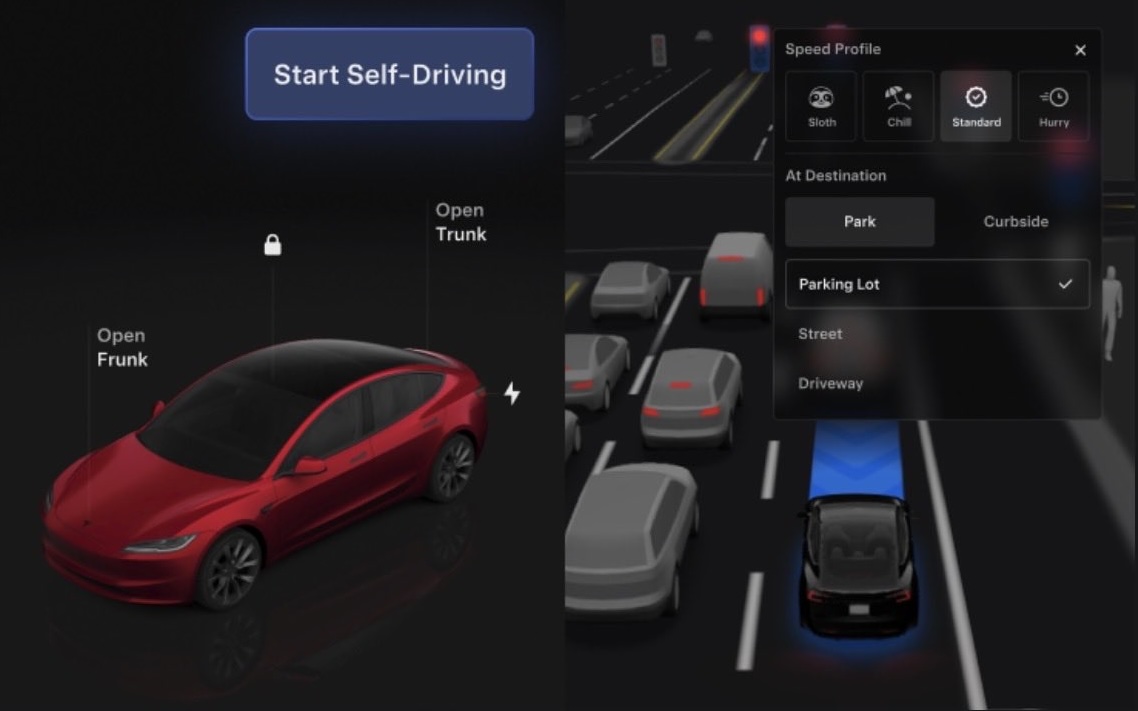
Driving Personality and Assertiveness: FSD v14 has gained notoriety for its "human-like" assertiveness. This is often linked to the recently surfaced "Mad Max" Speed Profile. While Tesla has not officially detailed the specifics of this mode, anecdotal owner reports and recent regulatory attention confirm its existence. This profile allows the vehicle to:
-
Exceed the speed limit by a greater margin to keep up with traffic flow (where legal).
-
Execute more frequent, aggressive, and sometimes debated lane changes to maintain momentum.
-
For the US owner, this often means a less frustrating, less intervention-heavy experience, aligning more closely with the flow of American traffic. However, this assertiveness has simultaneously drawn the attention of the NHTSA, highlighting the fine line Tesla walks in its permissive testing environment.
-
-
Refined Utility Feature: Addressing a pervasive owner complaint, v14 has introduced automatic narrow-field washing for the front camera. In a vision-only system, a single bug, splash, or patch of dirt can render the entire system useless. This small-but-mighty feature, which sprays a dedicated jet of fluid onto the camera area at high speeds, is a direct acknowledgement of the physical limitations of a pure camera-based approach.
B. The Hardware Chasm (HW3 vs. HW4)
The v14 rollout strategy has underscored a growing problem: the divergence between hardware generations.
-
HW4 Optimization: FSD v14's core advancements (increased context, higher resolution inputs) are intrinsically linked to the HW4 computer, which is standard in vehicles manufactured since early 2024.
-
The HW3 Stagnation: Owners with older HW3 computers (the vast majority of the fleet) are, in some regions, receiving only a limited, "dumbed-down" version of v14, or are being held back on an older branch of software (e.g., v12.x). While Tesla promised feature parity, the technical demands of the latest neural net architecture seem to be pushing the older hardware to its limit. For both US and European owners with HW3, this means a slower pace of improvement and a widening capability gap compared to new vehicles.
C. The Unseen Code: What Europe Is Missing
Crucially, European FSD users are not simply running a "restricted" version of the v14 code; they are running a fundamentally different, older software branch.
The full City Streets Beta (the core of the FSD promise) is absent. European vehicles are running a specialized, highly constrained stack primarily designed for highway functionality, governed by regulatory requirements. Tesla cannot simply flip a software switch to enable the full v14 experience because the underlying code needs to be compliant with Europe’s stringent type-approval laws—a process that is currently stalled in the regulatory weeds.
III. The Regulatory Chasm: Why Europe Is Stuck
The core reason for the FSD divide is not a technological one, but a legal and philosophical one. The US and Europe approach vehicle autonomy from two entirely different regulatory perspectives, creating a massive, expensive chasm that Tesla is struggling to cross.
A. US Model: Permissive & Investigation-Based (The Wild West)
The United States operates on a more pragmatic, post-incident investigatory model.
-
Level 2 Deployment: Tesla releases FSD (Supervised) as a Level 2 driver assistance system, meaning the human driver is always legally responsible. The primary regulatory body, the NHTSA, permits this public beta deployment based on the premise that the driver is fully attentive.
-
The Cost of Permissiveness: This model allows rapid iteration and deployment, leading to the speedy improvements seen in FSD v14. However, the cost is the ongoing regulatory scrutiny. The recent NHTSA inquiry into the "Mad Max" mode is a perfect example: a feature can be deployed, but if data suggests a pattern of unsafe behavior, the regulator steps in after the fact.
B. European Model: Prescriptive & Type-Approval (The Gatekeepers)
Europe, guided by the United Nations Economic Commission for Europe (UNECE), takes a much stricter, type-approval-based approach. For a system to be deployed, it must demonstrate safety before it is allowed on public roads.
-
The UNECE Dilemma (R79 vs. R157):
-
R79 (Steering Equipment): This regulation governs Autopilot-like systems. It is highly restrictive on lateral control (steering) and limits the system's operation on sharp curves or complex urban roads. This is the primary reason why European Autopilot feels "nerfed" on highways—it must disengage on curves the US version handles with ease.
-
R157 (Level 3): This regulation governs Automated Lane Keeping Systems (ALKS), which are true Level 3 (Eyes Off) systems, but only under highly restricted highway conditions (e.g., low speed, no lane changing). The critical hurdle here is that Level 3 requires the manufacturer (Tesla) to take legal liability when the system is engaged.
-
The FSD Problem: FSD v14 (Supervised) is far more capable than R79 allows, but Tesla is not willing to take on the liability required by R157. It falls into a regulatory gray area—a sophisticated Level 2 system that is legally incompatible with current EU rules.
-
-
General Safety Regulation (GSR): The EU’s updated GSR mandates new active safety features (like Intelligent Speed Assistance, or ISA) and cybersecurity measures. Integrating these mandatory features into the complex, vision-only FSD stack adds significant developmental overhead and complexity for the European build.
-
The 'Road Users' Philosophical Divide: EU policy places a high regulatory emphasis on protecting all road users, including pedestrians and cyclists, not just the occupants of the Tesla. This means FSD's perception and planning systems must meet a higher, more conservative standard for navigating dense urban environments common in Europe.
C. National Adoption & Local Maps
Even if the UNECE hurdles are cleared, each major market (Germany, UK, France) requires national type approval and adaptation. European roads, signage, and intersection designs (especially complex roundabouts) are far more varied and geographically specific than in the US, requiring extensive local data validation and training of the AI models. This localized effort adds years to the development cycle.
IV. Feature-by-Feature Comparison: US vs. EU (The Owner’s Scorecard)
For current and prospective owners, the tangible difference is in the feature set. This scorecard clearly illustrates what your FSD investment currently buys you, depending on your continent.
| Feature Category | North America (FSD v14 Beta) | Europe (Restricted Autopilot/EAP) | Disparity/Impact |
| City Streets Navigation | Full Functionality. Vehicle navigates traffic lights, stop signs, unprotected turns, and complex city roads autonomously (supervised). | 0% Functionality. The feature is completely disabled and unavailable. | Decisive Gap. The core $12,000+ FSD promise is missing. European vehicles are limited to basic adaptive cruise control and lane centering. |
| Highway Lane Changes (NOA) | Assertive & Fluid. Executes high-speed, dynamic lane changes seamlessly and without driver confirmation (optional setting). | Timid & Restricted. Requires mandatory driver confirmation for every lane change. Lane changes are slow and cautious, often aborting on moderate curves. | Frustration Point. The system is too cautious to keep up with dynamic European highway traffic (e.g., German Autobahn). |
| Steering/Curve Handling | Handles tight highway curves and sweeping bends autonomously with high confidence. | Prone to abrupt disengagement ("nag") or outright failure on curves that exceed a low, regulatory-defined curvature limit (R79). | Safety Perception. Forces the driver to intervene frequently, eroding trust in the system's reliability. |
| Smart Summon | Car can autonomously navigate complex parking lots to find the driver (within certain distances). | The 6-Meter Rule. Limited to "line of sight" or a distance of approximately 6 meters. Cannot navigate obstacles autonomously. | Borderline Useless. Reduced to a parking lot party trick, not the "valet" function it’s marketed as. |
| Traffic Light Control | Recognizes and responds to traffic lights and stop signs (requires driver confirmation for running lights). | Not applicable outside of basic Autopilot functionality. | City Disablement. Further confirms the complete lack of urban autonomy. |
| Visualization | Rich 3D rendering showing surrounding objects, including pedestrians, traffic cones, and highly detailed lane lines. | Visually simplified display, often omitting non-vehicular objects critical for urban safety. | Confidence Gap. Drivers cannot rely on the screen to see the environment in the same fidelity. |
Summary: The European FSD package is currently an overpriced bundle of features largely identical to Enhanced Autopilot (EAP). The $12,000+ investment is essentially a pre-payment for future software that may or may not arrive in the next few years.
V. Future Outlook: When Will the Gap Close?
For European owners, the question is not if FSD will arrive, but how and when it will be commercially viable. The answer lies in the EU’s evolving stance on higher-level autonomy.
A. The Pressure on Level 3 Liability
Tesla’s biggest regulatory headache is liability. The current US model of "Supervised Level 2" allows the company to release software without accepting responsibility for accidents. In Europe, the fastest path to meaningful autonomy is through UNECE R157 (Level 3), as demonstrated by competitors like Mercedes-Benz (Drive Pilot).
-
The Level 3 Skip: There is a high probability that Tesla will be forced to skip the US-style Level 2 Beta entirely in major European markets. Instead, they will be compelled to release a highly polished, Level 3 system that is certified for specific, restricted operational design domains (ODDs)—likely low-speed highway traffic jams.
-
The Cost: Adopting Level 3 means accepting liability, which requires Tesla to reach a statistically proven safety level (e.g., the system being 10x safer than a human driver) and extensive validation to satisfy regulators. This is a monumental engineering and legal task.
B. Tesla’s European Development Focus
While official timelines are scant, the development of Giga Berlin is crucial.
-
Data Collection: The European fleet is constantly generating data, but it’s the quality of the edge-case data that matters. Elon Musk and the AI team occasionally hint at a focus on complex European urban scenarios (roundabouts, narrow roads), indicating the AI is being trained on this unique environment.
-
Internal Timeline: Any credible internal timeline for a European FSD release must be measured in years, not months. The regulatory approval process for a new, complex Level 2 or Level 3 system takes a minimum of 18-36 months after the software is technically ready.
C. Actionable Advice for EU Owners
Given the current divide, what should an EU owner do?
-
Delay the Purchase: If you are buying FSD today, you are essentially providing an interest-free loan to Tesla for a feature that is unavailable. Until a concrete Level 2/3 European roadmap is announced with a firm timeline, it is more financially prudent to rely on the standard Autopilot/EAP features, which are capable enough for highway cruising.
-
Focus on Lobbying: The best way to accelerate FSD in Europe is through regulatory change. Owners should engage with local Tesla owner groups and lobby national transport authorities (e.g., Germany’s KBA, UK’s DVSA) to encourage clear, modern guidelines for Level 2 and Level 3 systems.
-
Appreciate the Baseline: The core driver assistance features in Europe (Adaptive Cruise Control, Lane Assist) are excellent. Reset expectations to view FSD as a distant, capital-intensive future upgrade rather than a current product.
VI. Conclusion
FSD v14 is the latest chapter in the story of Tesla’s autonomy, but it is a narrative playing out on two different stages. In the US, it is a rapidly evolving, powerful, and controversial driver's aid that pushes the limits of Level 2 supervision. In Europe, it remains a heavily restricted, largely theoretical package, hobbled by regulatory conservatism and a prescriptive legal framework.
The chasm is defined by liability and philosophy: the US favors rapid technological progress under constant scrutiny; Europe demands proven, codified safety before deployment. Until Tesla is willing to assume Level 3 liability (R157) or European regulators radically loosen Level 2 restrictions (R79), the global promise of FSD will remain local. For European owners, patience is not just a virtue; it is a necessity for the foreseeable future.
VII. FAQ for Owners
-
Q: Will the FSD price drop if Europe doesn't get the same features?
-
A: Highly unlikely. Tesla's FSD pricing is based on the potential future value of the autonomous system, which they believe will eventually be a Level 4/Robotaxi service globally. The price reflects the promised final state, not the current feature set.
-
-
Q: If I buy FSD in the US and move to Europe, do I lose the functionality?
-
A: Yes. The software is geographically locked based on your vehicle's registered region and VIN. You will automatically revert to the European-compliant (restricted) software stack.
-
-
Q: Is the new Hardware 4 essential for the future FSD in Europe?
-
A: Yes. Given the complexity of the European driving environment and the high regulatory bar for Level 3, the increased processing power of HW4 will likely be a prerequisite for any full-feature FSD rollout. HW3 owners should be prepared for potential eventual retrofits.
-
-
Q: What is the specific legal difference preventing "City Streets" in the EU?
-
A: It is the UNECE R79 regulation, which mandates strict control over lateral movement (steering). Full city driving requires dynamic, complex steering actions (like sharp 90-degree turns and complex roundabout navigation) that exceed the narrow operational limits defined by R79 for Level 2 systems.
-