
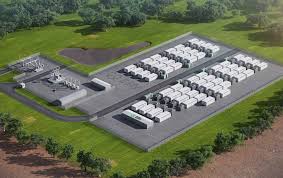
Setting the Scene: Tesla Beyond Cars – The Growing Importance of Energy Storage
While Tesla is predominantly recognized globally for its revolutionary electric vehicles, its mission extends far beyond merely transforming personal transportation. At the heart of its broader vision lies a profound commitment to accelerating the world's transition to sustainable energy, a goal that is increasingly underpinned by the critical importance of its energy storage division. The global demand for Battery Energy Storage Systems (BESS) is experiencing an unprecedented surge, driven by the imperative to integrate intermittent renewable energy sources like solar and wind into national grids, enhance grid stability, and provide reliable power solutions for homes and businesses. This burgeoning market represents a colossal opportunity, and Tesla Energy, with its innovative Megapack, Powerwall, and industrial-scale solutions, is strategically positioned at the forefront of this energy revolution. For Tesla owners, understanding the growth of this division is not just about corporate performance; it reflects the company's holistic approach to sustainability, where the same battery technology powering their vehicles is also enabling a cleaner, more resilient energy infrastructure worldwide. This dual focus on mobility and energy storage highlights Tesla's unique position as a comprehensive sustainable energy company, rather than just an automaker.
Thesis: Examining Tesla Energy's significant growth in profitability and market share, its strategic responses to competition, and its impact on the broader energy market.
This article will delve into a comprehensive examination of Tesla Energy's remarkable trajectory, analyzing its significant growth in profitability and its expanding footprint in the global battery storage market. We will explore the key financial metrics that underscore its burgeoning success, dissect its strategic responses to an increasingly competitive landscape, particularly from agile Chinese manufacturers, and assess its broader impact on the evolving global energy market. By understanding Tesla Energy's pivotal role, both existing Tesla owners and those interested in the future of sustainable energy can gain valuable insights into how the company is not only powering its own financial ascent but also actively reshaping the very infrastructure that will define our energy future. This deep dive will reveal how Tesla's energy division is becoming an indispensable pillar of its overall business, contributing substantially to its bottom line and reinforcing its overarching mission.
II. Body Chapter 1: Financial Performance and Market Dominance
Profitability Surge: A Key Driver for Tesla's Bottom Line
Tesla Energy has undergone a remarkable transformation, evolving from a division that once acted as a drag on the company's overall profitability to becoming a pivotal and increasingly significant contributor to its financial health. This turnaround is not merely anecdotal; it is clearly evidenced by compelling financial data. So far in 2025, the energy division has contributed a substantial 23% of Tesla's total profit, despite accounting for a comparatively smaller 13% of its total revenue. This disproportionate contribution highlights the division's impressive efficiency and strong profit margins, effectively boosting the company's overall profitability by nearly 2 percentage points. This sharp improvement in financial performance is further underscored by the energy division's gross profit margins, which have seen a dramatic increase, rising above 30% in Q2 2025. This marks the second consecutive quarter in which the division has surpassed a 30% profit margin and contributed over 20% of Tesla's total profit, signaling a consistent and robust financial turnaround.
This surge in profitability stands in stark contrast to the broader trend observed across the company, where overall gross profit margins have recently experienced declines. While factors such as aggressive price cuts in the automotive sector and brand challenges have put pressure on vehicle margins, the energy division has emerged as a resilient and high-performing segment. With a manufacturing capacity of 20 GWh per quarter across its Nevada and Shanghai facilities, Tesla's energy division possesses significant untapped potential. If these facilities were to be fully utilized, the energy division could theoretically account for as much as 22% of Tesla's total revenue and a staggering 35.5% of its total profit. This demonstrates that Tesla Energy is not just a side project but a strategically vital component of the company's long-term financial stability and growth, poised to become an even more dominant force in its overall business model. The consistent improvement in its margins, even as the average sale price per kilowatt-hour has steadily declined since early 2017, falling below $300/kWh by Q4 2024, indicates a strong focus on manufacturing efficiency and economies of scale.
Deployment Milestones and Capacity
Tesla Energy's impressive financial performance is directly correlated with its substantial and rapidly increasing deployment of energy storage systems globally. In Q2 2025 alone, Tesla deployed a remarkable 9.6 GWh of energy storage, bringing its year-to-date total for 2025 to an impressive 20 GWh. This represents a significant 48% increase over the first half of 2024, during which a total of 13.5 GWh was deployed, underscoring the accelerating pace of its operations. Q2 2025 marked Tesla’s third-highest energy storage deployment to date, following 11 GWh in Q4 2024 and 10.4 GWh in Q1 2025, demonstrating a consistent upward trend in its operational capacity and market penetration.
Looking ahead, the trajectory for Tesla Energy's deployment is even more ambitious. Over the past four quarters, Tesla has deployed a cumulative 37.9 GWh of storage systems, and the company is confidently on track to surpass a monumental 100 GWh in total deployed capacity within the next two quarters. This rapid scaling is a testament to Tesla's robust manufacturing capabilities and its ability to meet the burgeoning global demand for battery energy storage. The company's manufacturing capacity for energy storage, spanning its Gigafactories in Nevada and Shanghai, stands at an impressive 20 GWh per quarter. This substantial capacity not only supports its current deployment rates but also provides a strong foundation for future expansion and market dominance. If these facilities were to be fully utilized, the potential revenue and profit contribution from the energy division could be significantly amplified, further solidifying its position as a key driver of Tesla's overall financial success. This aggressive deployment strategy, coupled with its manufacturing prowess, positions Tesla Energy as a formidable player in the global energy transition.
Market Share Leadership: Global and Regional
Tesla Energy has consistently demonstrated its market leadership in the global battery energy storage system (BESS) integrator market. For the second consecutive year, Tesla Energy maintained its top position, capturing a commanding 15% of the global market share in 2024, according to Wood Mackenzie's latest rankings. This sustained leadership underscores its strong brand recognition, technological prowess, and effective deployment strategies on a worldwide scale.
While its global lead is notable, Tesla Energy's dominance is particularly pronounced in North America. In this crucial market, the company held an impressive 39% market share in 2024, firmly establishing itself as the undisputed leader. This strong regional performance is a testament to its localized manufacturing capabilities, established distribution networks, and strong customer base within the continent. However, the global landscape is becoming increasingly competitive, with Tesla Energy's lead over its closest rival, Chinese competitor Sungrow, shrinking from four percentage points in 2023 to just one in 2024. This narrowing gap signals the intensifying competition and the rapid ascent of other players in the BESS market. Despite this, Tesla's ability to maintain its top global position and its commanding lead in North America highlights its enduring strength and strategic importance in the rapidly evolving energy storage sector. The company's consistent performance in these key metrics reinforces its pivotal role in the global energy transition, demonstrating its capacity to not only innovate but also to scale its solutions effectively across diverse markets.
Key Observations:
-
Tesla Energy has successfully transitioned into a significant profit driver for the company, contributing a substantial portion of total profit despite a smaller share of revenue, indicating high efficiency and strong margins.
-
The division is demonstrating robust deployment growth, with ambitious projections to exceed 100 GWh of total deployed capacity, showcasing its ability to scale and meet burgeoning global demand.
-
Tesla Energy maintains its top global position in the BESS market, with a particularly dominant share in North America, solidifying its leadership in the energy storage sector.
III. Body Chapter 2: Competitive Landscape and Strategic Responses
Intensifying Competition: The Rise of Chinese Integrators
While Tesla Energy has successfully maintained its global leadership in the battery energy storage system (BESS) market, its once-commanding lead is undeniably shrinking, primarily due to the rapid and aggressive ascent of Chinese competitors. The global landscape is becoming increasingly competitive, with Chinese firms like Sungrow steadily increasing their global footprint. In 2024, Sungrow's global market share was merely one percentage point behind Tesla Energy, a significant reduction from the four-point gap observed in 2023. This narrowing margin clearly indicates the intensifying competition and the growing prowess of these agile new entrants.
The influence of Chinese integrators is particularly pronounced in Europe, where they are experiencing a remarkable surge. Chinese companies saw an impressive 67% year-over-year increase in European market share, and a striking four out of the top 10 BESS vendors in Europe are now headquartered in China. Furthermore, on the global stage, seven of the top 10 BESS integrators are now Chinese firms, with CRRC, another Chinese company, ranking third worldwide with an 8% share. This rapid expansion and market penetration by Chinese manufacturers underscore a fundamental shift in the global BESS industry. These companies are leveraging competitive pricing, robust manufacturing capabilities, and often government support to gain significant traction, particularly in regions like Europe where the demand for renewable energy integration is soaring. This dynamic environment necessitates that Tesla Energy remains highly agile and innovative to defend its market position and continue its growth trajectory amidst such formidable and rapidly expanding competition.
Supply Chain Diversification and Geopolitical Navigation
The recent challenges faced by Tesla, particularly within its energy division, have underscored the critical strategic imperative to diversify its supply chains and significantly reduce its reliance on single-source regions, most notably China. During the Q1 Earnings Call, Tesla's CFO, Vaibhav Taneja, explicitly confirmed that the company's energy division had been impacted by the necessity of sourcing battery cells predominantly from China-based suppliers. In direct response to this vulnerability, he unequivocally stated that Tesla would actively work on "securing additional supply chain from non-China-based suppliers." This strategic directive is not merely a localized effort for the energy division; it is likely a broader, company-wide initiative, extending beyond energy storage components to critical vehicle parts, all aimed at mitigating geopolitical risks, navigating complex trade tariffs, and fundamentally enhancing overall supply chain resilience across its entire product portfolio.
A tangible and significant step in this crucial direction is the reported multi-billion-dollar deal Tesla has signed with LG Energy Solution for the supply of LFP (Lithium Iron Phosphate) cells. These cells are specifically slated to be manufactured at LGES's U.S. factory in Michigan. While this particular agreement primarily addresses tariff pressures and immediate supply needs for the energy division within the North American market, it unequivocally signals a broader strategic shift towards localized and diversified battery sourcing. Such a comprehensive strategy, if expanded and consistently implemented, could eventually provide substantial benefits to Tesla's European production facilities, significantly reducing overall reliance on Chinese battery components and thereby enhancing Tesla's ability to operate more autonomously and efficiently within different regional markets. This proactive move is absolutely critical for ensuring stable production volumes, maintaining competitive cost structures, and navigating the increasingly complex and volatile global trade environment, positioning Tesla for greater long-term stability and growth.
Pricing Trends and Market Dynamics
The battery energy storage market, much like the electric vehicle market, has been characterized by a consistent trend of declining prices, driven by technological advancements, economies of scale, and intensifying competition. For Tesla Energy, this trend is clearly reflected in the average sale price per kilowatt-hour for its energy storage products, which has seen a steady decline since early 2017. By Q4 2024, these prices had fallen below $300 per kilowatt-hour, a significant reduction that mirrors the broader decline in battery prices observed globally, particularly in China, where Tesla sources its utility-grade battery cells from suppliers like CATL.
It's important to note that the final sale price for utility-scale projects, such as large grid-scale battery installations, is typically lower per kilowatt-hour compared to residential products like the Powerwall. This difference is primarily due to the higher volume and lower per-unit cost associated with large-scale deployments. For instance, a 20.6 MW / 82.2 MWh Megapack unit is listed on Tesla's website for $224/kWh, indicating the competitive pricing for its utility-grade solutions. This continuous downward pressure on pricing, while beneficial for accelerating the adoption of energy storage solutions, also necessitates that Tesla Energy maintains relentless focus on manufacturing efficiencies, supply chain optimization, and technological innovation to preserve its profit margins. The ability to offer competitive pricing while sustaining profitability is crucial for maintaining market leadership and continuing to expand its footprint in a rapidly evolving and increasingly price-sensitive global energy market.
Key Observations:
-
Tesla Energy faces fierce and intensifying competition, particularly from agile Chinese integrators who are rapidly gaining market share in Europe, necessitating a proactive and adaptive strategic response.
-
The company is actively pursuing supply chain diversification, exemplified by its deal with LG Energy Solution for U.S.-made LFP cells, to mitigate geopolitical risks and reduce reliance on single-source regions like China.
-
While average sale prices for energy storage have declined, Tesla's focus on manufacturing efficiency and strategic sourcing is crucial for maintaining competitive cost structures and preserving profitability in a dynamic market.
IV. Conclusion
Summarizing Tesla Energy's Strategic Importance and Market Position
Tesla Energy has unequivocally emerged as a pivotal and increasingly strategic division within the broader Tesla ecosystem, demonstrating a remarkable financial turnaround and solidifying its market position in the rapidly expanding battery energy storage sector. Once a segment that weighed on overall profitability, it has transformed into a significant profit driver, contributing a substantial portion of Tesla's total earnings. This financial resurgence is underpinned by impressive deployment figures, with the company consistently scaling its energy storage solutions and projecting monumental growth in total deployed capacity. Tesla Energy has successfully maintained its top global position as a BESS integrator, particularly dominating the crucial North American market, a testament to its technological prowess, operational efficiency, and strong brand appeal.
However, this success is not without its challenges. The global battery storage landscape is becoming intensely competitive, with agile Chinese manufacturers rapidly gaining ground, especially in Europe, and narrowing Tesla's market share lead. In response, Tesla Energy is strategically diversifying its supply chains, actively seeking non-China-based suppliers to enhance resilience and navigate complex geopolitical and trade dynamics. The company is also adeptly managing pricing trends, ensuring its offerings remain competitive while striving to maintain healthy profit margins. These concerted efforts highlight Tesla Energy's adaptability and its commitment to sustaining leadership in a dynamic and vital market.
Outlook: Future Trajectory in the Global Energy Transition
The future trajectory of Tesla Energy is inextricably linked to the accelerating global energy transition. Its continued growth is not merely vital for the company's financial health but is fundamental to Tesla's overarching mission of accelerating the world's shift to sustainable energy. As renewable energy sources become more prevalent, the demand for reliable, scalable, and cost-effective energy storage solutions will only intensify, positioning Tesla Energy at the very heart of this transformation. The division's ability to innovate, scale manufacturing, and strategically diversify its supply chains will be paramount for its sustained success.
The ongoing efforts to secure localized and diversified battery sourcing, as exemplified by the LG Energy Solution deal, are crucial for mitigating external dependencies and enhancing operational agility across different regional markets. Furthermore, the expansion of its manufacturing capacity in facilities like Nevada and Shanghai will enable Tesla Energy to meet the burgeoning demand for its Megapack and Powerwall solutions, driving further market penetration and profitability. The coming years will see Tesla Energy not only defending its market leadership against formidable rivals but also actively shaping the future of grid infrastructure, enabling greater renewable energy integration, and providing resilient power solutions worldwide. Its success will be a defining factor in the global shift towards a cleaner, more sustainable energy future, reinforcing Tesla's unique position as a comprehensive leader in both electric mobility and energy innovation.
V. Frequently Asked Questions (FAQ)
Q1: How much profit did Tesla Energy contribute to Tesla in Q2 2025?
In Q2 2025, Tesla Energy contributed a significant 23% of Tesla's total profit, despite accounting for only 13% of the company's total revenue. This highlights the division's strong profitability and efficiency, boosting Tesla's overall financial performance.
Q2: What is Tesla Energy's market share in the global battery storage market?
Tesla Energy maintained its top position in the global battery energy storage system (BESS) integrator market in 2024, capturing 15% of the global market share. In North America, its dominance is even more pronounced, holding a commanding 39% market share in 2024.
Q3: Who are Tesla Energy's main competitors, especially in Europe?
Tesla Energy's main competitors include Chinese firms like Sungrow, which is rapidly gaining global market share and was only one percentage point behind Tesla in 2024. In Europe, Chinese integrators are surging, with a 67% year-over-year increase in market share, and four of the top 10 BESS vendors in Europe are now based in China, including CRRC.
Q4: What is Tesla doing to diversify its battery supply chain for the energy division?
Tesla is actively working on "securing additional supply chain from non-China-based suppliers" for its energy division. A notable step is a multi-billion-dollar deal with LG Energy Solution for LFP cells to be manufactured at LGES's U.S. factory in Michigan, aiming to reduce reliance on overseas suppliers and mitigate tariff pressures.
Q5: How has the price per kilowatt-hour for Tesla's energy storage products changed over time?
The average sale price per kilowatt-hour for Tesla's energy storage products has steadily declined since early 2017, falling below $300 per kilowatt-hour by Q4 2024. This trend reflects broader declines in battery prices and Tesla's focus on achieving economies of scale, with utility-scale projects typically having lower per-unit costs than residential products.