
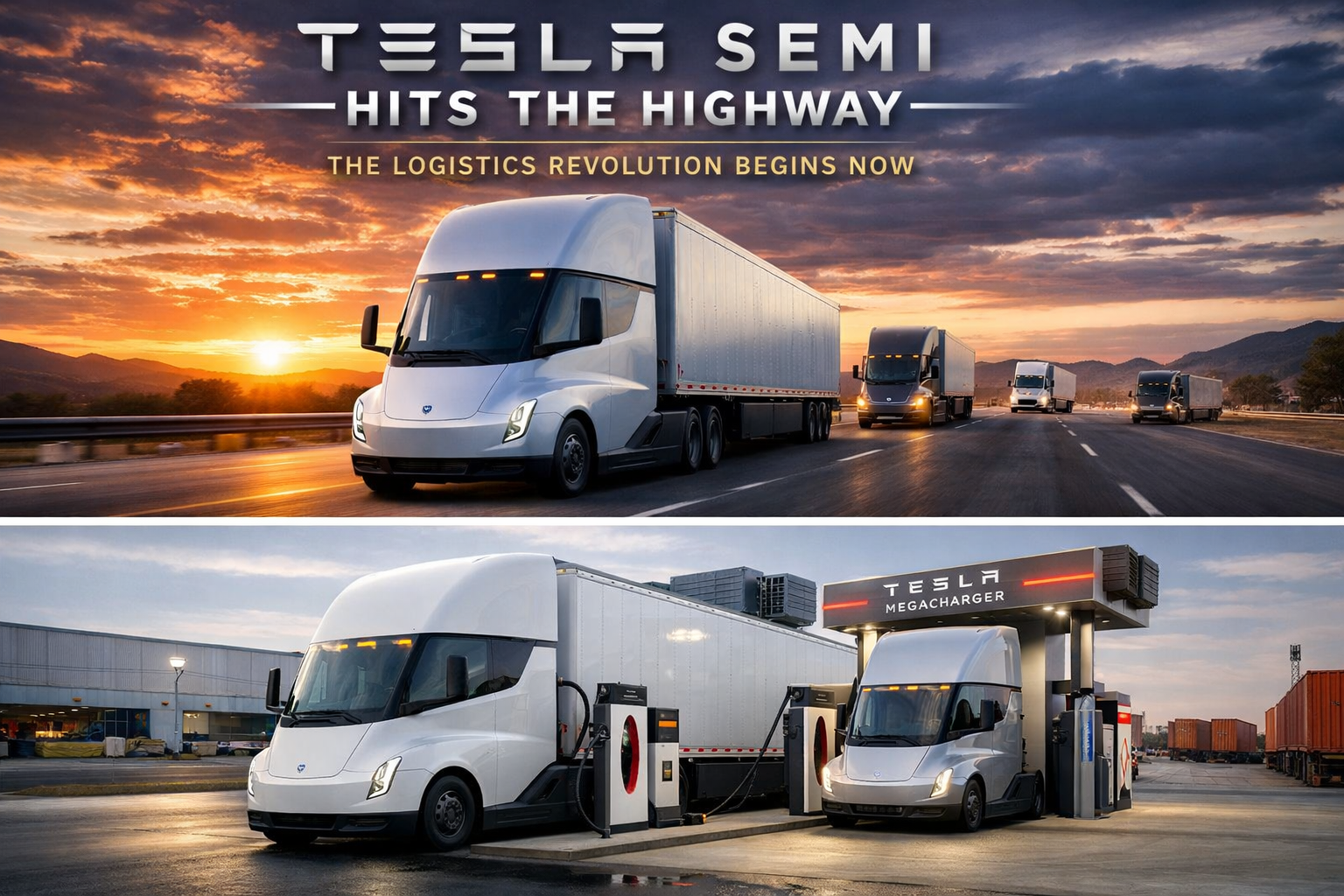
As Musk presses the button to start mass production of the Semi, an electric behemoth laden with cargo and boasting remarkably low energy consumption, slowly rolls off the assembly line at the Nevada factory, heralding the dawn of a zero-emission freight era.
On February 8, 2026, Elon Musk announced on social media that the Tesla Semi truck would commence mass production this year. This news marks the electric truck's official transition from the proof-of-concept phase to commercial competition.
This truck, with its astounding performance data, is set for delivery this year. As Tesla's groundbreaking product following the Cybertruck, it is poised and ready to disrupt the global freight industry worth trillions of dollars.
The launch of the Semi is not merely an expansion of Tesla's product line; it symbolizes the strategic leap of the electrification revolution from the passenger vehicle sector into commercial transport. As Europe and China accelerate their timetables for banning internal combustion engine trucks by 2035, Tesla's timely entry could become a key catalyst in accelerating this process.
01 Technological Revolution, An Energy Efficiency Marvel
The technical specifications of the Tesla Semi represent a milestone in the electric truck sector. According to data published on Tesla's official website, the Semi truck comes in two versions: Standard Range and Long Range.
The Standard Range version can travel 325 miles (approximately 523 kilometers) on a single charge under a full load of 82,000 pounds (about 37 tons). The Long Range version achieves an impressive range of 500 miles (approximately 805 kilometers), fully meeting the needs of most regional and long-haul transport.
In terms of energy consumption, both models achieve a remarkable efficiency of 1.7 kWh per mile, a figure far lower than that of traditional diesel trucks.
The Semi's powertrain features a design with three independent motors on the rear axle. This architecture not only provides powerful torque output but also enhances system reliability through redundancy.
Regarding charging technology, the Semi supports Tesla's proprietary charging solution, capable of restoring about 60% of its range in just 30 minutes. This means drivers can complete sufficient charging for the next leg of their journey within mandatory break periods.
Consistent with Tesla's design philosophy, the Semi truck also features an innovative aerodynamic shape. The streamlined design reduces drag and presents a unique sight on the road.
The interior space breaks with traditional truck layouts by adopting a central driving position, offering drivers better visibility and a more ergonomic working environment. Interior images show it is equipped with a large touchscreen and a modern control interface similar to the Model series.
02 Strategic Vision, The Path to Commercialization
The commercialization strategy of the Tesla Semi is as remarkable as its technological innovation. From its early concept reveal to today's production launch, Tesla has followed a gradual yet clearly targeted path.
Tesla established early pilot fleets with partners like PepsiCo, and the real-world operational data from these provided invaluable feedback for refining the mass-production model. By allowing industry leaders to experience the advantages of electric trucks firsthand, Tesla built its first base of loyal customer groups.
According to Musk's announcement, mass production of the Semi will take place at the Nevada Gigafactory. This location is not coincidental, as Tesla's battery production site is nearby, ensuring an efficient supply of core components.
Tesla's pricing strategy also reflects its ambition to disrupt the traditional industry. Although the exact price has not been announced, Musk has repeatedly emphasized that the Semi's Total Cost of Ownership (TCO) will be lower than that of comparable diesel trucks. If fulfilled, this promise would completely alter the cost structure of the freight industry.
For freight companies, vehicle cost is just the tip of the iceberg; fuel, maintenance, and compliance costs constitute the real burden. The Semi's low energy consumption translates to significantly lower operational costs, while the simplified nature of its electric drivetrain suggests substantially reduced maintenance costs and downtime.
Tesla also plans to offer customized fleet management solutions for the Semi. Through data analytics and remote diagnostics, these solutions will help operators maximize vehicle utilization and operational efficiency. This shift from selling products to providing solutions represents the evolution of Tesla's business model.
03 Cost Advantage, An Operational Revolution
The true disruptive power of the Tesla Semi lies in its record-breaking Total Cost of Ownership advantage. To understand this, we need to delve into the cost structure of the freight industry.
Taking a typical long-haul diesel truck as an example, fuel constitutes about 30%-40% of its lifecycle cost, maintenance about 10%, driver wages about 30%, with the remainder being vehicle depreciation, insurance, and permits. The Semi-directly targets the first two major cost centers.
Fuel cost for a traditional diesel truck is approximately $0.50-$0.70 per mile. In contrast, the Tesla Semi's energy consumption is only 1.7 kWh per mile. Even at an average industrial electricity rate of $0.15 per kWh, its energy cost would be only about $0.26 per mile—a saving of over 50%.
The difference in maintenance costs is even more significant. An electric powertrain is vastly simpler than a diesel engine, with about 70% fewer moving parts. This means fewer failure points, longer service intervals, and lower repair costs. Reports from early pilot fleets suggest the Semis maintenance costs could be over 60% lower than comparable diesel trucks.
Tesla further reduces operational uncertainty through innovative battery thermal management systems and predictive maintenance technology. The vehicle can monitor the status of critical components in real-time and issue warnings before potential problems arise, avoiding unplanned downtime and costly emergency repairs.
For freight companies, these cost savings can translate directly into improved profit margins or competitive pricing advantages. In an industry where net profit margins typically range from 3% to 5%, significantly lower operational costs could mean a doubling of profitability.
04 Industry Reshaping, A New Logistics Order
The mass production of the Tesla Semi is shaking the foundations of the traditional freight industry, and its impact will ripple throughout the entire logistics ecosystem.
The adoption of electric trucks will first change the carbon emission landscape of the freight industry. Global commercial transport contributes about 7% of greenhouse gas emissions, with heavy-duty trucks being a major source. The Semis zero tailpipe emissions directly align with the industry's decarbonization goals.
Retail giants like Walmart and Amazon have publicly committed to achieving zero-emission logistics by 2040, and the Tesla Semi provides a viable solution for these companies. Early adopters gain not only an advantage in environmental reputation but also enjoy the competitive edge from lower operating costs.
Regarding infrastructure, Tesla has begun deploying its Megacharger network. High-speed charging stations specifically designed for the Semi truck will be built along major freight corridors. The expansion of this network will play a role similar to that of Tesla's Supercharger network for the EV market, addressing a key bottleneck in electric truck adoption.
More profoundly, the Semi paves the way for the application of autonomous driving technology in freight. Electric platforms are inherently more suitable for the integration of self-driving systems, and long-haul trucking is considered one of the earliest scenarios for the commercialization of this technology.
The Full Self-Driving technology Tesla is developing will likely be applied to Semi trucks in the future, further reducing labor costs and improving transport efficiency and safety. The vision of unmanned electric truck fleets is moving from science fiction to reality.
05 Environmental Win-Win, A Sustainable Future
Environmental benefits are a core chapter of the Tesla Semi story. The global freight industry consumes about 17 billion gallons of diesel annually, producing hundreds of millions of tons of CO2 emissions. The Semi's electrification offers a tangible solution to this challenge.
Beyond the direct elimination of tailpipe emissions, electric trucks are far more energy-efficient than diesel vehicles. The "tank-to-wheels" efficiency of a traditional diesel truck is only about 20%-30%, while the "grid-to-wheels" efficiency of an electric truck can reach 60%-70%. This means the Semi's overall energy consumption for the same transport task is significantly lower.
The Semi can also form a synergistic relationship with renewable energy systems. An increasing number of logistics centers are installing solar roofs and energy storage systems. These facilities can charge Semis during the day, while the trucks' batteries can feed power back to the grid during idle times, creating a flexible energy management system.
Tesla also plans to introduce more advanced battery technology in the future, further increasing energy density and charging speed. As battery costs continue to decline and performance improves, the economics and practicality of electric trucks will keep strengthening.
The policy environment is also tilting in favor of electric trucks. Governments in multiple countries are formulating emission standards for commercial vehicles and providing incentives such as purchase subsidies, tax breaks, and road priority for electric trucks. These policies will further accelerate the adoption of electric trucks.
It is worth noting that the promotion of electric trucks not only helps address climate change but also improves urban air quality. Diesel trucks are a major source of urban nitrogen oxide and particulate pollution. The widespread adoption of electric trucks will significantly reduce emissions of these pollutants, especially around ports, warehouses, and distribution centers.
06 Challenges and Obstacles, The Road Ahead
Despite the bright prospects, the Tesla Semi faces numerous challenges on its path to widespread adoption. These obstacles are technical, infrastructural, and related to market acceptance.
The insufficiency of charging infrastructure is currently the most pressing bottleneck. Although Tesla is building its Megacharger network, covering major freight routes will still require time and massive investment. Compared to passenger vehicles, heavy-duty trucks have higher demands for charging power and site conditions, increasing the complexity and cost of infrastructure development.
The initial purchase cost of electric trucks remains higher than that of diesel models. Although the Total Cost of Ownership is lower, the higher upfront investment may deter adoption by small freight companies. Innovative financing and leasing models will be key to driving market acceptance.
Grid capacity is another often-overlooked challenge. Simultaneous charging of large-scale electric truck fleets could strain local grids, especially in industrial zones and logistics hubs. This requires close coordination between power companies and charging network operators.
The limitations of battery technology cannot be ignored. Battery performance can degrade in extreme temperatures, potentially affecting the Semi's performance in very cold or hot environments. Although Tesla's battery thermal management system is industry-leading, reliability under extreme conditions remains to be verified.
Traditional industry inertia is one of the hardest obstacles to overcome. The freight industry is known for its conservatism, and acceptance of new technologies usually takes time. Drivers and maintenance technicians need training, operational processes need adjustment—these soft factors are often more challenging than technical hurdles.
07 Global Impact, Market Evolution
The launch of the Tesla Semi coincides with a pivotal turning point in the global electric truck market. From Europe to China, major markets are accelerating the electrification of commercial transport. Driven by both policy and technology, this sector is on the verge of explosive growth.
Europe has set ambitious targets, aiming for zero-emission trucks to constitute 30% of new vehicle sales by 2030 and to completely phase out internal combustion engine trucks by 2040. The EU's "Green Deal" provides member states with incentives and a regulatory framework to push the freight industry toward sustainability.
In this context, Tesla's European strategy for the Semi is particularly noteworthy. Musk has indicated that once U.S. production reaches scale, establishing local production capacity in Europe will be considered. This would not only reduce logistics costs but also allow the product to better adapt to the specific requirements of the European market.
China, as the world's largest automotive market, is also vigorously promoting the electrification of commercial vehicles. The Chinese government provides strong policy support and financial subsidies for new energy commercial vehicles, and domestic brands like BYD and CATL have made significant progress in the electric truck sector.
The Tesla Semi will face fierce competition upon entering the Chinese market, but its brand influence and technological advantages may attract high-end logistics customers. Especially in international logistics and cross-border transport scenarios like the China-Europe Railway Express, the Semi's long range and fast-charging capabilities could become key competitive differentiators.
The restructuring of global supply chains also creates new opportunities for electric trucks. As companies increasingly focus on the resilience and sustainability of their supply chains, low-carbon logistics is shifting from a bonus to a necessity. Logistics companies adopting electric trucks will gain an advantage in securing environmentally conscious clients.
08 Future Vision, Industry Transformation
Looking ahead, the significance of the Tesla Semi extends far beyond being a successful electric truck. It represents a new possibility, an opportunity to reimagine how goods are transported. From autonomous fleets to integrated energy systems, the Semi's technological platform lays the groundwork for a comprehensive transformation of the freight industry.
As autonomous driving technology matures, the future Semi could become a fully autonomous transport unit, operating 24/7 without human intervention. This would revolutionize the economics of logistics, further reducing transport costs while addressing the industry's long-standing challenge of driver shortages.
Vehicle-to-Grid (V2G) technology could allow Semi fleets to become distributed energy storage networks. Charging during off-peak hours and supplying power to the grid during peak demand, truck batteries could become flexible energy assets, creating additional revenue streams for operators.
Modular design could allow the Semi to adapt to various specialized applications. Customized solutions for refrigerated transport, hazardous materials transport, and oversized cargo transport could be developed based on the Semi platform, further expanding the application scope of electric trucks.
Tesla may also develop derivative vehicles based on the Semi, such as buses, engineering vehicles, and special-purpose vehicles. The high flexibility of the electrified platform enables product diversification, which would further strengthen Tesla's influence in the commercial vehicle sector.
From a broader perspective, the success of the Semi will accelerate the energy transition of the entire transport industry. When electric trucks comprehensively surpass diesel trucks in Total Cost of Ownership, the market will spontaneously shift toward sustainability without the need for policy mandates. Such an economically driven transformation tends to be more enduring and thorough than regulation-driven change.
The future of the freight industry is being rewritten, and the Semi is undoubtedly the opening chapter of this transformation.
The morning mist has not yet fully lifted, but the first fleet of Tesla Semis has quietly set off. They carry no pollution but are laden with the hopes and changes of an industry; they emit no roar, yet silently declare the twilight of the internal combustion engine era in freight transport.
Frequently Asked Questions (FAQ)
Q: When will the Tesla Semi be available for order, and what is the estimated delivery timeline for regular customers?
A: While Tesla has initiated mass production, initial deliveries are prioritized for launch partners like PepsiCo. Broader order availability for standard commercial fleets is expected to follow as production capacity ramps up throughout 2026. Interested parties should contact Tesla's commercial sales team for specific timelines.
Q: What is the official price, and how does its Total Cost of Ownership (TCO) truly compare to a diesel semi-truck?
A: While final pricing is subject to configuration, reports and analysis suggest a starting price in the range of $180,000 to $200,000. The TCO advantage is decisive, primarily from massively lower energy costs (as low as 1/5th of diesel per mile) and reduced maintenance from its simpler electric drivetrain. Over a typical lifespan, these savings can outweigh the higher upfront cost, with some estimates pointing to total savings in the hundreds of thousands of dollars.
Q: What about charging? How fast is it, and is there a dedicated network?
A: The Semi supports the Megawatt Charging System (MCS), capable of adding up to 400 miles of range in just 30 minutes. Tesla is developing a dedicated 'Megacharger' network for long-haul routes, complementing private charging solutions at fleet depots, which are essential for widespread adoption.
Q: Will the Semi feature Tesla's Full Self-Driving (FSD) technology? What would that mean?
A: The Semi is engineered with autonomy in mind. Future integration of Tesla's FSD technology could enable features like autonomous highway driving, convoy platooning, and automated hub-to-hub runs. This promises to address the driver shortage crisis and further revolutionize logistics efficiency and cost.
Q: Is the Semi only for giant corporations, or can smaller freight companies and owner-operators purchase one?
A: Tesla's initial strategy focuses on large fleets that can invest in charging infrastructure. However, as the Megacharger network expands and the vehicle proves itself, the Semi is expected to become accessible to a wider range of commercial operators, including midsize and smaller companies, fundamentally changing the competitive landscape.