
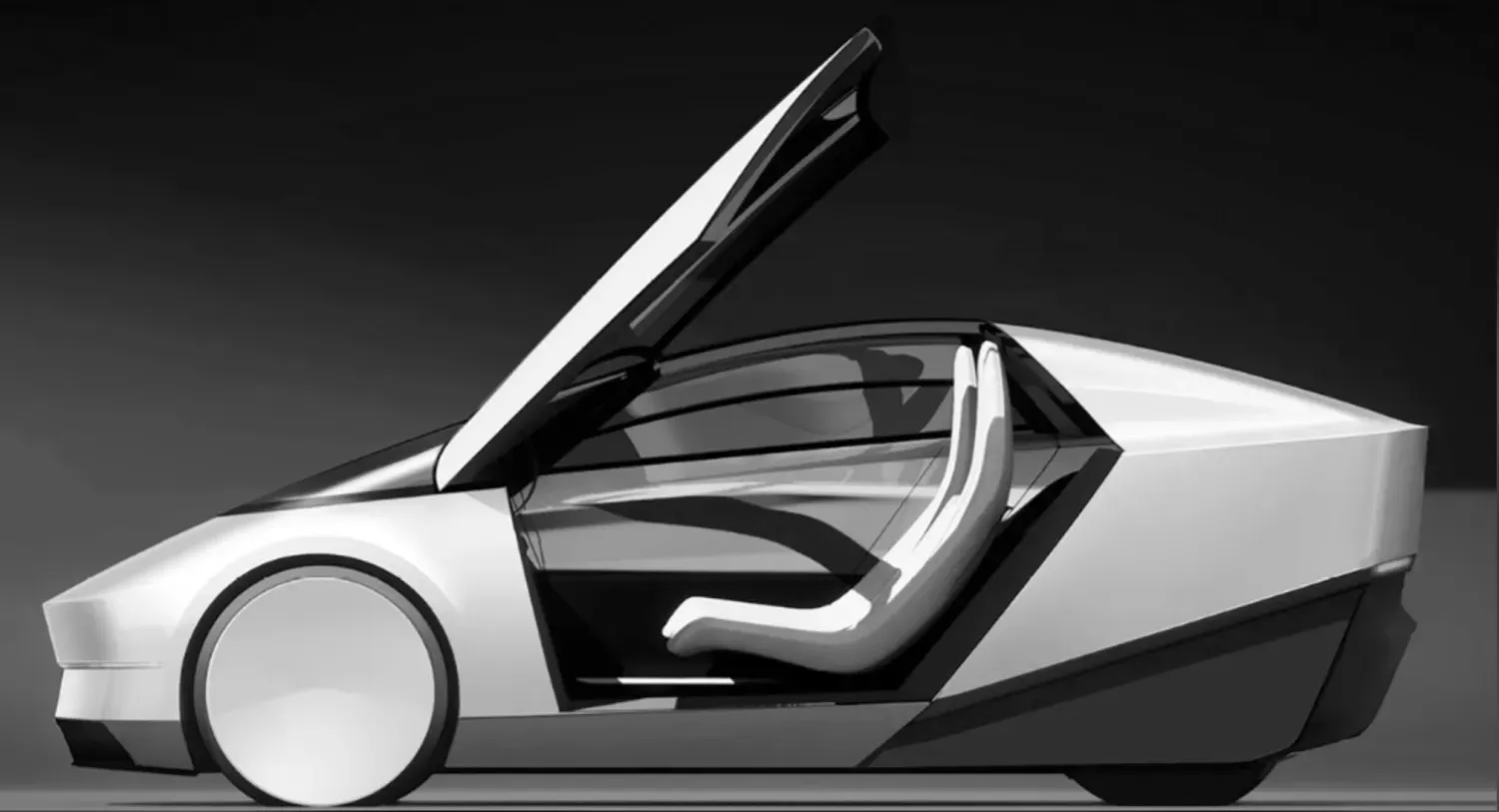
Mark your calendars. August 8th, 2024, is a date that has been circled in red by technologists, investors, city planners, and anyone with a stake in the future of transportation. This is the day Elon Musk has promised to unveil the Tesla Robotaxi. This isn't just another product launch; it's being heralded as a potential "iPhone moment"—an event so transformative it could fundamentally reorder our economy, our cities, and our very relationship with the automobile. The vision is breathtakingly ambitious: a world with drastically reduced traffic, the end of parking frustrations, and transportation so cheap it feels almost free. But beyond the utopian gloss, what does the impending arrival of the autonomous taxi service truly mean? It means the potential for total ride-hailing disruption, and a future where your car doesn't just cost you money—it makes you money.
The anticipation surrounding the August 8th event is palpable because the implications are so profound. We are on the cusp of a shift from human-driven, individually owned cars to an autonomous, shared mobility network.
What is the Tesla Robotaxi? The Two Likely Forms
When the curtain is pulled back on August 8th, we are likely to see one of two—or perhaps both—manifestations of the Robotaxi vision.
The first, and more futuristic, possibility is a dedicated, purpose-built vehicle. Rumored to be called the Cybercab, this vehicle would be designed from the ground up for autonomous ride-hailing. Freed from the need to accommodate a human driver, its design could be revolutionary. Imagine a spacious, lounge-like interior with face-to-face seating for two to four passengers. There would be no steering wheel, no pedals, no dashboard as we know it—just a large screen for entertainment or trip information, and perhaps a simple interface to request a stop.
This purpose-built Robotaxi would be engineered for extreme durability and low maintenance, designed to operate for over a million miles with minimal downtime. Its construction would be spartan but robust, focusing on passenger comfort, safety, and ease of cleaning between rides. This is the vehicle that would form the backbone of a Tesla-owned and operated fleet in major cities.
The second, and equally powerful, possibility involves leveraging the existing and growing fleet of millions of Tesla vehicles already on the road. This approach centers on the Tesla Network, a concept Musk has discussed for years. Once Tesla's Full Self-Driving (FSD) software is deemed safe enough to operate without supervision, any Tesla owner could choose to add their car to the network via a simple toggle in the Tesla app.
When you're at work, at home, or even on vacation, your car, instead of sitting idle in a parking spot, would autonomously leave, pick up passengers, and generate income for you. Tesla would act as the platform, managing the bookings and payments, and taking a commission, much like Uber or Airbnb do today. This decentralized approach would allow Tesla to deploy a massive ride-hailing network almost overnight, without needing to build millions of new cars itself.
The Economic Revolution: Your Tesla, The Moneymaker
The most direct and staggering impact of the Tesla Robotaxi will be economic. The primary cost of a taxi or Uber ride today isn't the car, the gas, or the insurance; it's the driver. A human driver needs to be paid a living wage, can only work a certain number of hours a day, and represents the largest operational expense.
An autonomous vehicle removes that cost entirely. The operational cost of a Robotaxi boils down to electricity, maintenance, cleaning, and insurance—a fraction of the cost of a human-driven service. This cost advantage is so immense that it could lead to a ride-hailing disruption of unprecedented scale. The price per mile for a Robotaxi ride could be so low—perhaps less than a bus ticket—that it would make no financial sense for many people in urban areas to own a car at all. Uber and Lyft, with their business models predicated on human drivers, would be faced with a competitor whose costs are an order of magnitude lower. It would be like a horse-and-buggy company trying to compete with the Ford Model T.
Even more revolutionary is the idea of making money with your Tesla. The average car is used only 5% of the time, spending the other 95% depreciating in a garage or parking lot. The Tesla Network flips this equation on its head. It transforms a depreciating liability into an income-generating asset. Musk has previously estimated that a single car on the network could generate up to $30,000 in gross profit for its owner per year. While this figure is optimistic and depends on many variables, even a fraction of that income would fundamentally change the economics of car ownership. The monthly payment for a Tesla could be partially or even fully offset by the revenue it generates, making the car effectively "free" over its lifespan. This is the ultimate killer app for Tesla: a car as an asset.
Reshaping Cities and Society
The long-term consequences of a successful Robotaxi network extend far beyond personal finance and the ride-hailing industry. They will literally reshape our physical world.
Consider traffic. Most congestion is caused by inefficient human driving—unnecessary braking, slow reaction times, and accidents. A network of autonomous vehicles, communicating with each other, can travel closer together, maintain constant speeds, and optimize routes in real-time to avoid bottlenecks. This could dramatically increase the capacity of existing roads, potentially making traffic jams a thing of the past.
Then there is parking. It's estimated that in some major US cities, up to one-third of the land area is dedicated to parking. It's a colossal waste of valuable space. Robotaxis don't need to park. After dropping you off at your destination, they would immediately leave to pick up their next passenger. Cars that are part of the Tesla Network would return home to their charging station when not in use. This leads to a startling conclusion: the end of parking as we know it. Imagine vast downtown parking lots and multi-story garages being redeveloped into parks, housing, shops, and pedestrian zones. It would be the biggest urban planning revolution in a century.
However, this utopian vision is not without its challenges. The most significant societal impact will be on employment. Millions of people worldwide earn their living as professional drivers—taxi, Uber, Lyft, truck, and delivery drivers. A full-scale transition to autonomy would lead to massive job displacement, creating a significant social and political challenge that governments and society must prepare for. Furthermore, issues of cybersecurity, passenger safety, and regulatory approval are enormous hurdles that will require years of work to overcome.
Conclusion: Brace for the 'iPhone Moment' on August 8th
The comparison of the Tesla Robotaxi unveiling to the original iPhone launch is apt. The iPhone wasn't the first smartphone, but it was the first to seamlessly integrate the hardware, the software, and the user interface into a product so compelling that it created an entirely new market and ecosystem.
Similarly, the August 8th event may not be the first demonstration of a self-driving car, but it could be the first time all the necessary components—the autonomous technology (FSD), the hardware (the cars), the network (Tesla Network), and the economic model—are presented as a cohesive, world-changing platform.
We are standing at a precipice. The ideas that will be presented could trigger a cascade of changes, rendering our current transportation models obsolete within a decade. It's a future that is both thrilling and daunting. One thing is certain: the world will be watching on August 8th, not just for a new car, but for the first concrete blueprint of the 21st-century city and a new definition of mobility itself.