
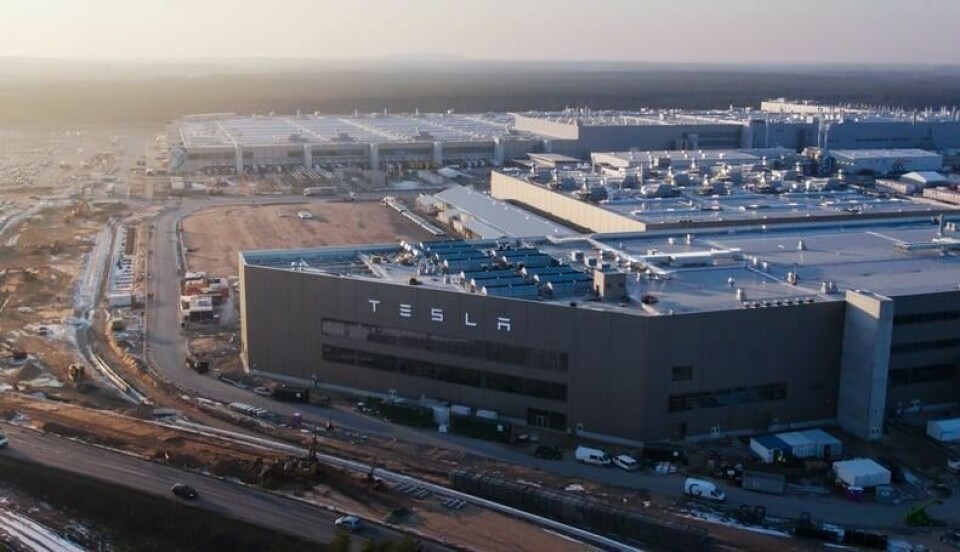
When we think of Tesla, our minds immediately go to the sleek, silent vehicles that glide down our streets. We picture the minimalist interiors, the massive touchscreens, and the exhilarating, instant torque. But to truly understand Tesla's long-term trajectory and its most formidable competitive advantage, we must look beyond the cars themselves. We must look to the colossal, humming structures where they are born: Gigafactory Berlin-Brandenburg and Gigafactory Texas.
These are not merely factories in the traditional sense. They are the physical embodiment of Elon Musk's famous axiom about "the machine that builds the machine." They are dynamic laboratories for production engineering, designed from first principles to systematically dismantle and reinvent a century of automotive manufacturing practices.
While a new model or a software update grabs the headlines, the manufacturing innovations being pioneered and scaled within these two Giga-factories are Tesla's actual secret weapon. They are the engine of the company's growth and the core reason it can innovate at a speed that baffles legacy automakers. This article will take you on a virtual tour inside these revolutionary facilities. We will explore the cornerstone technologies—the Giga Press, the 4680 battery cells, and the structural pack—and demystify how these seemingly abstract industrial concepts translate directly into a better, safer, and more affordable car parked in your driveway.
Chapter 1: The Giga Press: Rewriting the Rules of Body-in-White
In the heart of the Giga-factories in Texas and Berlin sits a machine of awe-inspiring scale and power: the Giga Press. This is not just an incremental improvement on an old tool; it is a fundamental reimagining of how a car's skeleton is formed.
What is a Giga Press?
Imagine a machine the size of a small house. This is the Giga Press, a high-pressure die-casting machine built by the Italian firm IDRA Group. In essence, it functions like a giant, highly sophisticated injection molding press for metal. A precise amount of molten aluminum alloy is injected into a massive mold (the "die") under immense pressure—over 6,000 tons of clamping force. In a cycle of just one to two minutes, this process creates a huge, single piece of the car's body structure. For the Model Y, the Giga Press creates the entire rear underbody as one piece. A second press creates the front underbody.
Before and After: The Power of Simplification
To grasp the significance of this, we must look at the traditional method. To create that same rear underbody section, a legacy automaker would start with dozens, sometimes hundreds, of individual stamped steel and aluminum sheets. These pieces would then have to be meticulously positioned in a vast body shop, moved between numerous robotic stations, and joined together using a complex sequence of welds, rivets, and adhesives. This traditional "body-in-white" shop is a sprawling, noisy, and incredibly complex part of any car factory.
The Giga Press replaces that entire intricate dance. For the Model Y's rear section, it takes what was once 70 different parts and turns it into one. This is a staggering reduction in complexity. The "before" is a puzzle with 70 pieces; the "after" is a single, solid object.
Benefits for Tesla
The operational advantages derived from this simplification are profound:
-
Cost & Speed: The capital investment required for a Giga Press is enormous, but it eliminates the need for hundreds of robots and the massive factory footprint required for a traditional body shop. This saves hundreds of millions of dollars in upfront cost and ongoing maintenance. The production cycle is also dramatically faster, allowing for a higher rate of vehicle output.
-
Simplicity & Quality: Fewer parts mean fewer things that can go wrong. There are no welds or rivets to fail, no panels to misalign. This leads to vastly improved dimensional accuracy and consistency from one car to the next. The single, solid casting also has superior properties for reducing noise, vibration, and harshness (NVH), leading to a quieter and more solid-feeling cabin.
Benefits for the Owner
This manufacturing prowess is not just an abstract benefit for Tesla's balance sheet; it translates directly into the car you drive. A Giga-cast chassis is both lighter and stiffer than its multi-part predecessor. A stiffer chassis is the foundation of a great-driving car; it allows the suspension to do its job more effectively, leading to more precise handling and a more comfortable ride. The inherent strength and energy-absorbing properties of the casting design also contribute to enhanced crash safety. Finally, the improved consistency in manufacturing means a higher probability of perfect panel gaps and a well-constructed vehicle.
Chapter 2: The 4680 Cell and the Structural Battery Pack: The Integrated Chassis
If the Giga Press represents a revolution in the car's frame, the 4680 cell and the structural pack represent a parallel revolution in the car's energy source and core structure, merging the two into one.
Beyond the 2170 Cell
For years, Tesla's vehicles were powered by cylindrical battery cells in the 2170 format (21mm diameter, 70mm height). These cells were packaged into modules, which were then assembled into a large battery pack. This pack was then bolted into the car's chassis. The 4680 cell, first unveiled at Battery Day 2020, changes everything. As its name implies, it's a much larger cell: 46mm in diameter and 80mm tall. But its size is only part of the story.
The 4680 Advantage
-
Innovative Physics: The 4680's key innovation is its "tabless" design. In a traditional cell, energy flows in and out through small tabs, which creates a bottleneck and generates heat. In the 4680 cell, the entire edge of the jelly roll acts as the connection point. This shingled spiral design creates a much shorter electrical path, drastically reducing internal resistance. This means the cell can be charged and discharged much faster with less heat generation, which is the key to sustained performance and longer battery life.
-
Manufacturing Breakthrough: The 4680 is designed for manufacturing efficiency. Tesla has been pioneering a new "dry-coating" process for creating the cell's electrodes. While incredibly difficult to scale, this process, once perfected, eliminates the vast, energy-intensive ovens and toxic solvents required in traditional "wet" slurry-based electrode manufacturing. This promises to slash the cost, energy usage, and factory footprint of battery production.
The Structural Pack Revolution
The most elegant innovation is how these new cells are integrated into the car. The 4680 cells are no longer placed into protective modules. Instead, the cells themselves, arranged in a grid and encased in a strong resin, become an integral, load-bearing part of the car's structure. The top of the battery case is the floor of the passenger cabin. The seats bolt directly onto it.
Synergy with the Giga Press
This is where the genius of the Giga-factory concept becomes clear. The Giga-cast front underbody and the Giga-cast rear underbody are bolted directly to the front and back of this structural battery pack. The result is an incredibly simple and elegant three-piece main chassis: front casting, rear casting, and the structural battery in the middle. This eliminates hundreds of additional parts, reduces weight, and simplifies the assembly line to an unprecedented degree.
Impact on the Vehicle
For the owner, this integrated design is a massive win. The significant weight savings contribute directly to longer range and better efficiency. Placing the heavy mass of the battery as low as possible in a structural role creates an exceptionally low center of gravity, which gives the car incredible stability and go-kart-like handling. From a safety perspective, the rigid structural pack provides immense strength and acts as a huge crumple zone, improving side-impact protection.
Chapter 3: The Paint Shop and General Assembly: A New Flow
The innovation doesn't stop at the body and battery. The Giga-factories in Berlin and Texas have also rethought the final stages of vehicle production.
Reinventing the Paint Shop
The paint shop has traditionally been one of the most chemically intensive and environmentally challenging parts of a car factory. The Giga Berlin paint shop, in particular, is one of the most advanced in the world. It uses new application technologies that allow for a deeper, more complex finish with more layers, which is why stunning new colors like Midnight Cherry Red and Quicksilver are exclusive to Berlin-made cars. More importantly, these new systems are designed to drastically reduce the consumption of energy and water, minimizing the factory's environmental footprint.
The "Unboxed" Assembly Line
As discussed in the context of the new entry-level model, Berlin and Texas are the live testing grounds for the "unboxed" assembly process. This move from a linear production line to a parallel, modular one is the final piece of the manufacturing puzzle. By building up large sub-assemblies independently and bringing them together at the end, Tesla can work on the car with a degree of freedom and efficiency that is impossible when workers have to constantly reach inside a partially completed frame.
How it Affects Your Car
This relentless obsession with production efficiency might seem like a purely corporate concern, but it has a direct and powerful impact on the consumer. It is this efficiency that allows Tesla to absorb supply chain shocks and inflationary pressures better than its rivals. It is what enables the company to implement price cuts, making its vehicles accessible to a wider audience. Furthermore, this scalable and efficient model allows Tesla to ramp up production of new vehicles faster than anyone else in the industry. The speed at which Giga Berlin went from a forest to producing thousands of cars a week is a testament to this new model.
Conclusion
The sum of these innovations—Giga Press, 4680 structural pack, and unboxed assembly—represents a paradigm shift in how we make things. It is a vertically integrated, first-principles approach to manufacturing that creates a powerful, compounding competitive advantage. Tesla's Giga-factories are not just building cars; they are building a future where high-quality electric vehicles can be produced at a scale and cost that can genuinely challenge the dominance of the internal combustion engine.
For the Tesla owner, or the prospective buyer, the "Giga-Factor" is the invisible force shaping their vehicle. It is the reason their car handles so well, the reason it is so safe, the reason its build quality is continuously improving, and, most importantly, the reason it is more affordable than it otherwise would be. The product behind the product—the machine that builds the machine—is Tesla's true innovation. And it is this relentless focus on the how of manufacturing that will ultimately allow the company to achieve its goal of producing millions of vehicles per year, paving the road for a sustainable energy future.
FAQ Section
-
Is a Model Y from Berlin or Texas "better" than one from Fremont or Shanghai? "Better" is subjective. Model Ys from Berlin and Texas are the only ones currently built with the Giga-press-enabled single-piece front/rear castings and the 4680 structural battery pack. This can lead to improved handling and a more solid feel. Berlin also offers exclusive paint colors. However, Fremont and Shanghai have years of experience and have highly optimized their production of the 2170-cell version, which some argue is a more "mature" product. All factories produce excellent cars to Tesla's global standard.
-
What is "build quality" and how do these innovations really affect it? Build quality refers to the fit and finish of a car—things like consistent panel gaps, flawless paint, and the absence of squeaks or rattles. The Giga Press and modular assembly contribute to better build quality by drastically reducing the number of parts that need to be aligned. A single, precise casting is dimensionally more stable than 70 parts welded together, leading to more consistent results.
-
Are there any downsides to the structural battery pack, for example, in terms of repairability? This is a major point of discussion. Because the battery is a structural component, severe damage to the pack in a collision could be more difficult and expensive to repair than a non-structural pack. It could potentially lead to more vehicles being "totaled" by insurance companies. However, Tesla has designed the pack with repairability in mind for non-catastrophic issues and is continuously improving its service network's ability to handle these new structures.
-
Why are the new colors like "Midnight Cherry Red" exclusive to Gigafactory Berlin? These colors are a product of Berlin's advanced paint shop, which was designed from the ground up to accommodate a more complex, multi-layer paint application process. Retrofitting other, older paint shops (like Fremont's) with this same technology would be prohibitively expensive and disruptive to production.
-
How do these manufacturing efficiencies help Tesla during economic downturns or supply chain issues? A simpler manufacturing process with fewer parts means Tesla has a smaller, less complex supply chain to manage. This makes it more resilient to disruptions. Furthermore, a lower cost of production gives Tesla more flexibility with its pricing. During a downturn, it can lower prices to stimulate demand while still maintaining a healthy profit margin, a luxury many of its competitors do not have.
-
What will be the next major manufacturing innovation from Tesla after these? The next major step is the full implementation of the "unboxed" manufacturing method for the new entry-level vehicle. Beyond that, Tesla is heavily focused on robotics and AI. The goal is to further automate the production line, using Tesla's own AI expertise and Optimus humanoid robots to handle tasks that are currently difficult to automate, further increasing speed and reducing costs.