
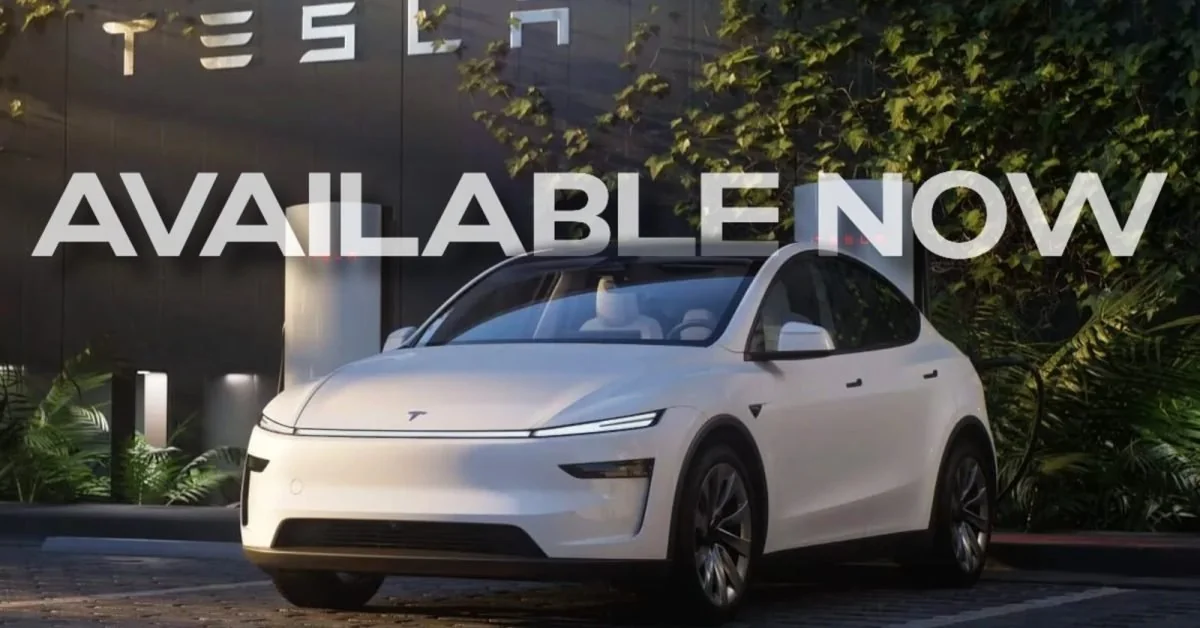
In October 2025, Norway—long seen as a poster child for electric vehicle (EV) adoption—announced a bold shift: it plans to phase out or substantially curtail the tax incentives that have made EVs dominant in its market. The changes include lowering the threshold for VAT exemption and eventually removing it entirely, which would bring mass-market EVs like the Tesla Model Y under taxation regimes formerly reserved for internal combustion engine (ICE) vehicles.
Given that Norway has been one of Tesla’s strongest European markets, this reversal carries outsized implications—not only for Tesla’s pricing, sales, and strategy in Norway, but for how other European countries might recalibrate their EV incentives. For European and U.S. Tesla owners, the move signals a maturing of the EV market and a shift from subsidy dependence toward more market-driven economics. This article explores Norway’s EV incentive history, the proposed changes, their effects on Tesla (and its customers), spillover to broader European policy, and strategic lessons in a changing EV subsidy environment.
We will cover:
-
The history and success of Norway’s EV incentive regime
-
Details of the 2025 reform proposals and their rationale
-
Impacts on Tesla’s pricing, demand, and customer behavior in Norway
-
Spillover effects: how this may influence other European markets
-
Strategic and industry-level consequences
-
Implications for European and U.S. Tesla owners
-
Recommendations for stakeholders
-
Conclusion
-
FAQ (frequently asked questions)
II. Norway’s EV Incentive History & Market Context
2.1 Why Norway Became a Global EV Leader
Norway’s transition to EVs has often been held up as the model to emulate. Key elements include:
-
Generous fiscal incentives: EVs were exempt from the 25 % value-added tax (VAT) on purchases, registration taxes, and many import duties. Because Norway is a high-tax society on ICE vehicles, the exemptions translated into large absolute discounts.
-
Usage incentives: Reduced tolls, lower or zero road tax, free or discounted parking, bus-lane privileges, ferry and bridge fee discounts.
-
Strong charging infrastructure: Widespread public charging network ensuring range anxiety was manageable even in rural and cold regions.
-
Political will & fiscal capacity: Norway’s sovereign wealth fund and oil revenues allowed the government to absorb substantial tax-revenue losses.
-
No domestic auto manufacturing: The absence of a legacy auto industry removed strong local opposition to aggressive EV policy.
-
Long-term policy stability: Incentives remained credible over multiple election cycles, offering buyers certainty.
These factors led to an EV adoption boom: by 2024, nearly 90 % of all new vehicles sold in Norway were fully electric. Tesla models—especially the Model Y—were among the best sellers.
2.2 Evolution & Gradual Phases of Incentive Adjustment
Over time, the government introduced modest adjustments:
-
Starting in 2023, Norway introduced a partial application of VAT to EVs above a price threshold (e.g. the portion of the price above NOK 500,000).
-
Some usage incentives (e.g. free parking, toll exemptions) were scaled back or made conditional in certain municipalities.
-
The incentive framework began to shift from “blanket incentives” to more targeted subsidy bands, especially for luxury or heavy EV models.
These incremental adjustments foreshadowed a broader policy rethink as EVs moved from niche to majority share.
III. Proposed 2025 Reform: What’s Changing & Why
3.1 Key Proposals & Phases
According to recent budget proposals:
-
Lower VAT-exemption threshold: The current cap (NOK 500,000) would be reduced to NOK 300,000 starting in 2026.
-
Phased removal: Beginning in 2027, the exemption may be eliminated altogether, meaning all EV purchases become subject to full VAT.
-
Registration and import taxes: The government plans to remove or narrow the exemptions on registration and import duties.
-
Compensating ICE tax hikes: To maintain incentives for EVs, the government proposes increased levies on ICE vehicles (higher registration or usage taxes).
-
Transitional rules & grandfathering: The proposal leaves open questions about handling orders placed before the changes, leasing contracts, used imports, and how to phase in changes gradually.
These reforms are subject to parliamentary approval; the government is a minority coalition and must negotiate with other parties.
3.2 Policy Rationale & Justifications
The government and its supporters advance several arguments:
-
Targeting limited public revenue loss: With EVs dominating new sales (nearing 98 % in recent months), tax exemptions are eroding a growing revenue base.
-
Equity and fairness: Allowing all EVs—especially mid-tier and premium ones—to benefit indefinitely is seen as regressive; higher-income buyers were disproportionately benefiting.
-
Market maturity argument: The government claims that Norway has effectively “reached the goal” of EV adoption, and incentives should be tapered.
-
Encouraging cost control & innovation: Removing subsidies may pressure automakers to reduce costs, increase value, and avoid overspecification.
-
Sustainability of subsidies: As EVs proliferate, blanket incentives become less justifiable financially.
Critics, especially EV associations, argue the move is too abrupt, risking consumer pull-back or slowing EV momentum.
IV. Impact on Tesla in Norway
4.1 Pricing and Cost Increases
Tesla’s pricing is particularly vulnerable. Under the proposed changes:
-
The Model Y price, currently often within the exemption threshold, would quickly become liable for a sizable portion of VAT.
-
A Tesla Model Y with base price ~NOK 550,000 could see tens of thousands of kroner in added VAT over time.
-
For example, some analyses estimate VAT of ~€5,400 in 2026 rising to ~€11,800 in 2027 for a mid-tier Model Y.
-
The removal of exemptions will effectively increase the delivered cost of many Tesla models by ~5–10 % or more in Norway, narrowing the price advantage over ICE or hybrid alternatives.
These cost increases may delay or suppress some purchase decisions.
4.2 Demand Elasticity & Buyer Behavior
Because many Norwegian EV buyers are price-sensitive—especially in the mid-market segment—this shift may produce:
-
A measurable slowdown in EV sales growth or temporary contraction
-
Migration to lower-cost EV models or used EVs that are exempt or taxed less
-
A possible return of some marginal buyers to high-efficiency ICE or hybrid vehicles if the tax differential narrows too much
-
Delays or cancellations of Tesla orders where buyers face uncertain future tax burdens
Tesla may see the impact disproportionately in its volume models—Model 3 and entry-level Model Y variants.
4.3 Competitive & Marketing Adjustments
Tesla may respond with:
-
Aggressive discounts or localized incentives (e.g. factory rebates, financing deals) to offset tax shocks
-
Trim adjustments to bring entry-level models below new thresholds
-
Strategic bundling: offering charging credits, service packages, or trade-in subsidies to preserve net cost competitiveness
-
Lobbying efforts with Norwegian and EU authorities to extend grace periods or adjustment support
How Tesla acts politically and tactically will influence its share retention or erosion.
4.4 Resale Value & Market Sentiment
-
Used Tesla models may depreciate more heavily if tax changes render new vehicles significantly more expensive, reducing buyer demand for used stock.
-
Buyers may anticipate future tax risk and discount purchase intentions or price offers.
-
Tesla’s brand premium vs cost sensitivity will be tested: whether buyers will still accept “Tesla brand value + feature benefit” to absorb added tax.
V. Spillover Effects Across Europe & Broader EV Market Dynamics
5.1 Norway as a Policy Bellwether
Norway is often a policy laboratory for EV incentives. Other European nations may see it as a template:
-
If Norway’s reform succeeds without collapse in EV uptake, it could embolden others to reduce incentives
-
Conversely, if the reform derails EV growth, it could caution governments to slow or moderate incentive withdrawal
-
Tesla and other manufacturers will watch Norway closely to gauge consumer response, which may influence cross-border pricing and incentive strategy
5.2 Comparative Incentive Environments in Europe
Across Europe, EV incentives vary widely:
-
Some countries maintain generous subsidies (purchase grants, tax credits, scrappage bonuses)
-
Others are already tapering, especially in markets where EV uptake is high (e.g. Netherlands, Germany)
-
States with weaker fiscal capacity may find it politically difficult to sustain subsidies
Norway’s decision may accelerate policy reviews in nations such as Germany, France, the UK, or the Netherlands.
5.3 Competitive Dynamics & Manufacturer Strategy
-
EV manufacturers may shift focus to lower-cost architectures to remain viable without heavy subsidy support
-
Tesla’s cost-cutting, platform modularization, and global scale become more critical in a subsidy-less environment
-
Brands that have already optimized under low-cost or no-subsidy frameworks (particularly Chinese automakers) may gain share
-
Governments may begin rewarding efficiency or minimalism over luxury features
In sum, the EV market may shift toward value, cost discipline, and feature rationality.
VI. Strategic & Industry Implications
6.1 From Subsidy Dependency to Market Maturity
Norway’s policy shift symbolizes EV markets maturing: incentives were fair and necessary early on, but long-term viability requires that EVs compete on cost, efficiency, and value without perpetual subsidy.
Tesla and other EV makers must pivot from incentives-driven growth to cost-led competitiveness.
6.2 Margin Pressures & Consolidation Trends
With reduced public support, margin tolerance shrinks:
-
Tesla must extract more margin from hardware, software, and services
-
Cost control (battery, manufacturing, logistics) becomes mission-critical
-
Consolidation may occur: weaker EV players may fail or be acquired
-
The barrier to entering or sustaining EV operations rises, favoring scale incumbents
6.3 Policy Risk as a Factor in Market Entry & Forecasting
Tesla and other automakers will have to incorporate policy risk into their modeling and market entry decisions more heavily. Predictable incentives may be harder to bank on. Scenario planning (i.e. how steeply subsidies are cut) will become standard in forecasting demand.
6.4 Consumer Behavior & Expectation Reset
Consumers gradually internalize that EV ownership benefits may recede:
-
The perception of “free riding” via tax exemptions may wane
-
Buyers will place more emphasis on total cost of ownership (TCO)
-
Incentives may shift from purchase support to infrastructure, charging subsidies, energy cost discounts, or usage-based incentives rather than upfront discounts
Tesla—and automakers generally—must anticipate and adapt to an EV market where subsidies are not a given.
VII. Implications & Recommendations for Tesla Owners and Buyers
7.1 For Norwegian Tesla Owners & Buyers
-
If planning a purchase before policy change, consider locking in incentives now or securing contracts before 2026
-
Evaluate trimming to lower-cost models that stay under the new exemption level
-
For prospective buyers, watch legislative developments closely; don’t overcommit under speculative pricing
-
For owners, maintain resale strategies flexible, accounting for potential downward price pressure
7.2 For European Taxi Owners & EV Enthusiasts Beyond Norway
-
Use Norway’s evolution as an indicator: subsidy removal may eventually spread to other European markets
-
In markets with shrinking incentives, prioritize models with lower capital costs, high efficiency, and durable resale value
-
Demand clarity in purchase contracts: incentives, tax exposure, and regulatory risk disclosure
7.3 For U.S. Owners / Investors / Observers
-
Norway’s experience offers a cautionary tale: incentives can be rolled back even in the most EV-favorable contexts
-
U.S. states or federal EV incentives may face similar pressures as EV penetration rises
-
Evaluate how Tesla’s Nordic strategy performance might presage its global cost-discipline trajectory
-
For Tesla stock or investment decisions, incorporate policy reversal risk in forecasting growth
7.4 For Tesla & Industry Executives
-
Prepare cost-competitive architectures that don’t rely on subsidies
-
Accelerate vertical integration, battery cost reductions, and platform modularization
-
Engage proactively with governments to propose gradual phase-out plans and transition support
-
Offer targeted incentives (e.g. charging credits, energy subsidies) rather than blanket tax discounts
-
Segment users: premium buyers may absorb tax shifts more easily than volume buyers
VIII. Conclusion
Norway’s announcement to phase out EV tax exemptions marks a paradigm shift: incentives that once served to catalyze adoption are now under reconsideration in a market that believes it has achieved its EV goals. For Tesla, this challenges one of its strongest European bastions. The effect on pricing, demand, resale, and consumer psychology could be profound—not just in Norway, but across Europe.
More broadly, the move signals the maturation of EV markets: subsidy-dependent growth gives way to cost-competitive viability. Tesla, its customers, and competitors must adapt to a future where EVs must earn their place without perpetual fiscal support.
For Tesla owners, potential buyers, and industry watchers, Norway serves as a real-time experiment: how the market responds—and whether Tesla weathers the tax storm—will offer critical lessons about the resilience of the EV transition.
IX. FAQ (Frequently Asked Questions)
-
Why is Norway rolling back EV incentives now?
Because EVs now dominate the new-car market, subsidy costs strain public finances, and the government believes the market is mature enough to bear tax burdens. -
How much more will a Tesla cost under the new regime?
Depending on model and price, tens of thousands of kroner may be added, translating to several percent in extra cost. Mid-tier models could see added VAT in the €5,000–€12,000 range over time. -
Will this kill EV adoption in Norway?
Not necessarily—but it could slow the growth curve or push demand to lower-cost models or used EVs unless mitigated by manufacturer or policy adjustments. -
Could this happen in other European countries?
Yes. Norway is a bellwether. If the policy succeeds without collapse, other governments might feel empowered to taper incentives. -
As a Tesla owner, what should I do now?
If you plan to buy, do so before changes take effect or pursue models likely to remain under thresholds. Monitor policy changes, factor tax risk into resale, and consider more efficient or cost-conscious vehicle options.