
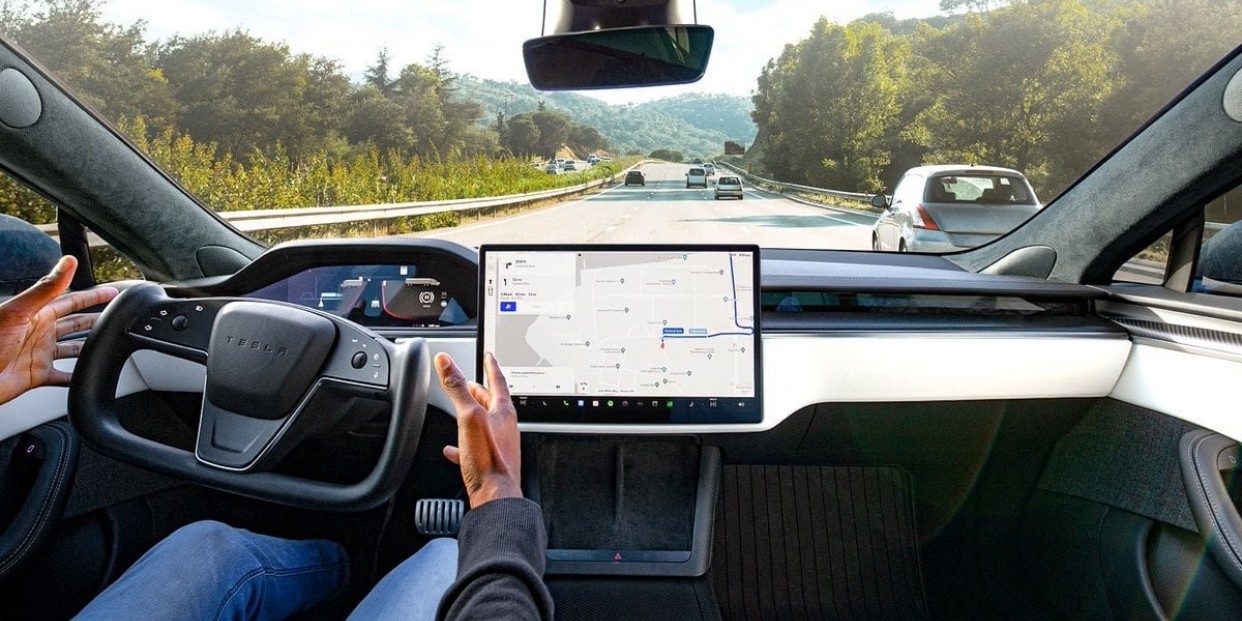
Tesla's Full Self-Driving (FSD) program represents one of the automotive industry's most ambitious technology initiatives. The company has invested billions in developing neural networks, computer vision systems, and autonomous driving algorithms with the stated objective of achieving full, Level 5 autonomous capability—where vehicles require no human attention whatsoever and can operate completely independently on any road in any weather condition.
The rollout of FSD v14 in 2025 represents a significant software update that incorporates meaningful safety enhancements, improved driving behavior, and expanded autonomous capabilities. This version represents an incremental but important step on Tesla's path toward genuine autonomy, even as the company continues to work toward next-generation versions that will deliver further capability improvements.
Understanding FSD v14's capabilities, limitations, safety data, and implications for Tesla's competitive positioning requires detailed examination of the technology, the regulatory landscape, and the practical outcomes emerging from real-world deployment.
FSD v14 Technology Architecture and Key Improvements
Tesla's Full Self-Driving system relies on a sophisticated stack of neural networks trained on vast quantities of real-world driving video data. The system processes video feeds from eight cameras positioned around the vehicle, runs sophisticated computer vision algorithms to identify lanes, vehicles, pedestrians, cyclists, and other relevant environmental features, and generates driving decisions communicated to steering, acceleration, and braking systems.
FSD v14 incorporates several meaningful improvements over previous versions, reflecting Tesla's continuous development and refinement process. The system has enhanced its ability to recognize and appropriately respond to vulnerable road users—pedestrians, cyclists, and motorcyclists—which have traditionally been challenging edge cases for autonomous driving systems.
One significant enhancement addresses the challenge of frontal collision mitigation. The system can now deploy frontal airbags using Tesla Vision-derived information, allowing the vehicle to provide advanced warning of potential frontal impacts and deploy protective systems earlier in collision scenarios. This capability represents a meaningful safety enhancement beyond traditional automated collision mitigation systems, which have historically deployed protection systems based on radar or ultrasonic sensor data.
The v14 implementation improves brake stabilization algorithms, addressing a known issue in previous versions where the system exhibited "brake stabbing" behavior—jerky, sudden brake applications during normal driving that created uncomfortable passenger experience and could potentially contribute to following-vehicle collisions. By implementing smoother brake modulation and more intelligent brake timing, v14 reduces these uncomfortable and potentially dangerous behaviors.
Stop sign and traffic light interaction has been refined in v14. The system now approaches stop lines more precisely, stops with better centering in lanes, and resumes driving with more natural acceleration profiles. These improvements address common user complaints about earlier FSD versions that often created uncomfortable or inefficient driving patterns at low speeds and intersections.
The system has expanded its capability for advanced navigation scenarios, including more complex lane changes in multi-lane traffic, highway on-ramps and off-ramps, and more sophisticated routing decision-making. The improved navigation capability reflects ongoing enhancement of Tesla's neural networks' ability to understand traffic patterns and predict vehicle motion.
Safety Data and Performance Metrics
Tesla publishes vehicle safety data in quarterly safety reports, providing statistics on crash rates for vehicles using Autopilot and Full Self-Driving technologies compared to vehicles without these systems and compared to national averages.
According to Tesla's Q2 2025 vehicle safety report, Tesla recorded one crash for every 6.69 million miles driven for vehicles using Autopilot technology. In stark contrast, vehicles without Autopilot recorded one crash for every 963,000 miles driven—a significantly higher crash rate. The most recent national data from NHTSA and FHWA indicates an average crash rate of one crash per 702,000 miles in the United States.
These statistics are frequently cited by Tesla advocates as evidence that Autopilot technology provides meaningful safety benefits compared to human-only driving. However, the comparison is complicated by several methodological factors that make straightforward interpretation problematic.
First, the crash rate comparison conflates Autopilot crash rates with FSD crash rates. While Tesla reports combined data for vehicles using Autopilot (which includes both Autopilot and FSD vehicles), the safety characteristics of vehicles actually using FSD in autonomous mode likely differ from vehicles primarily using Autopilot for highway driving. FSD operates in more complex environments (city streets, complex traffic patterns) than Autopilot, which is primarily designed for highway use.
Second, crash rates are influenced by multiple variables beyond driver assistance technology, including driver behavior, vehicle selection bias, road types, and weather conditions. Vehicles equipped with Autopilot or FSD may be driven by relatively safety-conscious drivers who selected vehicles with advanced safety systems. This selection bias may partially explain higher safety statistics regardless of whether Autopilot itself improves safety.
Third, crash reporting varies based on severity. Tesla's safety data are based on police-reported crashes, which tend to underreport minor fender-benders and low-speed collisions. This reporting bias may systematically undercount FSD-involved incidents if FSD systems generate more low-speed, low-severity accidents (which might not be police-reported) while avoiding high-speed, high-severity accidents that would definitely be reported.
Nevertheless, Tesla's safety data do not demonstrate that FSD makes driving significantly more dangerous than human driving, which is a meaningful threshold for public acceptance and regulatory approval. The company's crash rate for Autopilot-equipped vehicles appears to exceed national averages, suggesting the technology provides some meaningful safety benefit.
However, the existence of crashes involving FSD-equipped vehicles does raise important questions about the technology's limitations. In October 2024, the National Highway Traffic Safety Administration (NHTSA) opened an investigation into 2.4 million Tesla vehicles equipped with FSD following four reported collisions, including one fatal crash. NHTSA's investigation focused on whether FSD's engineering controls can adequately detect and respond to diminished roadway visibility situations, such as low-light conditions or poor weather.
This regulatory scrutiny highlights ongoing concerns about whether FSD handles edge cases and boundary conditions adequately. The technology's neural network-based approach means it generalizes from training data, and scenarios that are underrepresented in training data—low-light conditions, unusual weather, rare road configurations—may be handled less effectively than common driving scenarios.
Full Self-Driving Capabilities and Current Limitations
Despite the term "Full Self-Driving," the current FSD v14 implementation is best characterized as Level 2+ autonomous driving rather than Level 4 or Level 5 autonomy. The system provides meaningful autonomous driving capabilities but requires active driver supervision and is not legally or technologically ready for completely driverless operation.
Tesla explicitly states that FSD in its current form requires "active supervision" and that drivers must remain attentive and ready to take control at any moment. In practice, many FSD users report being able to take their hands off the wheel for extended periods and to generally relax supervision vigilance, which suggests practical usage patterns exceed Tesla's stated recommendations.
The system handles highway driving reasonably well, executing lane changes, managing complex traffic, and maintaining speed appropriately. However, navigating complex city streets with pedestrian traffic, intricate intersection patterns, complex traffic signal patterns, and unusual edge cases remains challenging. The system makes mistakes—sometimes subtle (awkward steering inputs) and occasionally significant (near-miss collisions with pedestrians).
The neural network approach means the system learns from its mistakes and continues to improve, but improvement is gradual and depends on accumulating sufficient training data for rare scenarios. Critical edge cases—intersection configurations that rarely occur, weather conditions that are extremely unusual in training data locations, cultural driving patterns that differ from US patterns—may take years to be adequately represented in training data and training processes.
FSD's capabilities also depend on the quality of GPS mapping, traffic light and stop sign databases, and other infrastructure data that feeds the system. In areas with poor mapping accuracy or incomplete traffic signal databases, FSD performance degrades noticeably.
Texting While Driving and Future Feature Expansion
In Q3 2025 earnings presentations, Tesla announced intentions to introduce a feature that would allow FSD users to text and send messages while driving, with the system handling vehicle control more independently. This announcement generated significant controversy because it appears to violate existing state distracted driving laws and raises serious safety concerns about driver engagement and attention.
The feature announcement reflects Tesla's increasing confidence in FSD's autonomous capabilities but also generates concern about whether the company is prioritizing feature marketing over genuine safety considerations. Even if FSD can safely drive in most scenarios, the introduction of driver distraction features risks situations where drivers are insufficiently attentive to respond to FSD failures that require immediate intervention.
This feature expansion illustrates the tension between Tesla's vision of near-complete autonomy and the current reality that FSD still requires meaningful driver supervision. The feature's rollout will be closely watched by regulators who are already skeptical of FSD's current level of autonomy and driver supervision requirements.
FSD Competitive Position and Industry Race
Tesla's Full Self-Driving technology is not the only autonomous driving system under development. Waymo operates commercial robotaxi services in multiple cities, leveraging sophisticated sensor suites and mapping technologies refined over more than a decade of development. Waymo's Robotaxi operates at Level 4 autonomy in defined operational design domains, meaning the vehicle can drive completely independently without human supervision within specific geographic areas and operational conditions.
Compared to Waymo's approach, Tesla's FSD relies more heavily on camera-based computer vision, less on expensive LiDAR sensors, and on neural networks rather than on detailed HD maps. Tesla's approach has potentially lower costs and could be more scalable, but Waymo's approach is arguably more robust and reliable in current deployments.
Baidu, China's technology giant, operates autonomous taxi services in Beijing and other Chinese cities, leveraging similar technological approaches to Waymo with sophisticated sensor suites and regional focus.
Traditional automakers including General Motors (Super Cruise), BMW, Mercedes-Benz, and others are developing autonomous driving technologies that currently focus on highway driving and traffic jam driving rather than comprehensive city street autonomy. These systems aim for more limited levels of autonomy in specific operational design domains rather than attempting to achieve comprehensive autonomy across all driving scenarios.
Tesla's advantage lies in its vast fleet of FSD vehicles generating real-world driving data. This fleet—millions of Tesla vehicles equipped with FSD or Autopilot—provides training data for Tesla's neural networks. If Tesla can translate this data advantage into significantly faster improvement rates than competitors, the data advantage could become decisive. However, competitors' approaches—Waymo's sensor richness, Baidu's regional focus, traditional automakers' integration with safety and liability frameworks—offer alternative paths that should not be underestimated.
Regulatory Landscape and Approval Timelines
Full Self-Driving remains subject to regulatory scrutiny and approval timelines. NHTSA's ongoing investigations and regulatory questions about FSD's safety mean that broad regulatory approval for Level 3 or Level 4 autonomy in FSD remains unclear.
Tesla has applied for FSD approval in Japan, with the company indicating that regulatory approval could be achieved by late 2025 or early 2026. However, Japanese regulators have been cautious about autonomous driving approvals, and timelines often exceed initial company projections.
China represents an important market for FSD deployment, with Tesla indicating that FSD could be deployed in China beginning Q1 2026. However, this timeline also depends on regulatory approval and integration with Chinese licensing requirements and safety standards.
Las Vegas, Phoenix, Dallas, Houston, and Miami represent priority markets for Robotaxi expansion, with gradual geographic rollout reflecting both technical refinement needs and regulatory coordination.
Future Roadmap and Technological Evolution
Tesla's stated roadmap for FSD involves continued improvements in current-generation systems (v14+), eventual progression to full driverless capability where the steering wheel is optional, and eventual integration into Robotaxi and autonomous fleet services.
The company has indicated that next-generation vehicles will include refined autonomous driving hardware, and that Gigafactory manufacturing will eventually focus on autonomous-first vehicle designs optimized for autonomous operation rather than retrofitting autonomy onto conventional vehicle architectures.
Technological evolution will likely involve:
-
Enhanced sensor systems and processing capabilities to improve edge case handling
-
Expanded neural networks trained on larger and more diverse datasets
-
Integration with vehicle-to-infrastructure communication systems
-
Improved vehicle-to-vehicle communication capabilities
-
Evolution toward centralized autonomous vehicle fleet management
Timelines for achieving true Level 4 autonomy enabling driverless operation remain uncertain. Tesla has repeatedly suggested that meaningful autonomous capability is "just around the corner" for years, leading to skepticism about near-term projections. However, the meaningful improvements evident in v14 and ongoing development suggest that additional capability improvements are achievable over time.
Implications for Tesla's Competitive Position
FSD represents Tesla's most significant differentiator versus traditional automakers. While Tesla's vehicle hardware and performance characteristics are increasingly matched or exceeded by competitors, FSD technology provides Tesla a potential advantage in capturing customer loyalty and justifying premium pricing.
If Tesla achieves meaningful FSD technological leadership where vehicles become demonstrably safer and more capable than competitors' vehicles, this advantage could support Tesla's premium positioning and drive customer preference shifts. Conversely, if competitors achieve comparable autonomous capabilities on faster timelines, Tesla's FSD advantage diminishes.
For investors, FSD's trajectory is critical to Tesla's long-term value proposition. In valuation models assuming Tesla becomes primarily an autonomous vehicle company (rather than primarily a traditional automotive company), FSD's success is existential to Tesla's valuation thesis. Current valuations appear to assume meaningful FSD success, implying that FSD failure would significantly impact Tesla's stock price.
Conclusion
Full Self-Driving v14 represents meaningful progress in Tesla's autonomous driving development, incorporating genuine safety and capability improvements. The system is approaching Level 3 autonomy in certain conditions, enabling increasingly sophisticated autonomous driving in defined operational scenarios.
However, the gap between current FSD capabilities and true Level 4 or Level 5 autonomy remains substantial. The system still requires meaningful driver supervision, handles edge cases imperfectly, and faces regulatory approval challenges that may constrain rollout timelines.
For Tesla, FSD success is central to justifying premium vehicle pricing and differentiating from traditional automakers' offerings. For the industry, FSD's trajectory will influence competitive dynamics and investors' assessment of which companies will be successful in autonomous driving markets.
FAQ: FSD Technology and Autonomous Driving
Q: Is FSD currently truly full self-driving?
A: No. Current FSD is Level 2+ autonomy requiring active driver supervision. "Full Self-Driving" is a marketing term; the actual capabilities are more accurately described as advanced driver assistance enabling autonomous driving in defined scenarios, but not true full autonomy.
Q: How does Tesla's FSD compare to Waymo's Robotaxi?
A: Waymo's Robotaxi operates at Level 4 autonomy within defined geographic areas and can drive completely independently. Tesla's FSD is less capable but potentially more scalable due to lower cost architecture. Waymo is more mature in current deployment; Tesla's approach may eventually reach broader deployment.
Q: Is FSD safer than human driving?
A: Tesla's published safety data suggest FSD-equipped vehicles have lower crash rates than human-driven vehicles, but methodology questions complicate interpretation. FSD appears at least comparable to human driving in terms of safety, but some edge cases remain concerning.
Q: When will Tesla achieve full Level 4 autonomy?
A: Tesla has not provided definitive timelines. Industry observers estimate 2-5 years minimum before true driverless capability, though Tesla's historical optimism on timelines suggests estimates should be viewed skeptically.
Q: What does the "texting while driving" feature mean for FSD's autonomy level?
A: This feature suggests Tesla believes FSD is increasingly capable of handling driving autonomously. However, the feature also highlights risks of inadequate driver attention during FSD failures. Regulatory scrutiny of this feature is likely.