
Introduction: Why This Earnings Report Matters More Than Ever
Tesla’s fourth-quarter earnings heading into early 2026 represent far more than a routine financial update. For the first time in years, Tesla is reporting results at a moment when vehicle growth is slowing, competition is intensifying, and the company’s future narrative has shifted decisively toward software, autonomy, and services.
For investors, this earnings cycle is about margins, guidance, and credibility.
For Tesla owners in the United States and Europe, it is about software pricing, long-term vehicle value, charging infrastructure, and the sustainability of Tesla’s ecosystem.
This article breaks down what matters most in Tesla’s Q4 earnings, how markets are reacting, and—most importantly—what these financial results mean for real Tesla drivers, not just Wall Street.
1. Tesla’s 2025 Vehicle Sales Performance: A Reality Check
Slower Growth in Core Markets
By the end of 2025, Tesla’s global delivery growth had clearly decelerated compared with the explosive expansion seen between 2019 and 2023. While Tesla still sells more electric vehicles than any Western automaker, the pace of growth in the U.S. and Europe has softened.
Key reasons include:
-
Market saturation in early-adopter regions
-
Increased EV competition from European and Chinese brands
-
Consumer sensitivity to interest rates and total vehicle cost
-
Fewer major new vehicle launches during the year
For U.S. buyers, Model Y and Model 3 remain dominant, but incentives and financing have played a larger role in sustaining demand. In Europe, Tesla continues to perform well in countries like Norway, the Netherlands, and Germany, but faces increasing pressure from local manufacturers offering competitively priced EVs with strong government backing.
Production vs. Demand Balance
Tesla’s production capacity continues to outpace immediate demand in certain regions. This has forced the company to rely more heavily on:
-
Price adjustments
-
Regional incentives
-
Inventory management strategies
While these tactics keep delivery numbers stable, they compress automotive gross margins, a key focus of this earnings report.
2. Automotive Margins: The Central Question for Investors
Why Margins Matter More Than Deliveries
In earlier years, Tesla was rewarded primarily for growth. In 2026, profitability and efficiency matter more than raw volume.
Automotive gross margin—excluding regulatory credits—is the most scrutinized metric this quarter. Investors are asking:
-
Can Tesla stabilize margins after repeated price cuts?
-
Has the cost reduction strategy reached its limit?
-
Is software revenue finally offsetting hardware pressure?
Tesla’s manufacturing efficiency remains industry-leading, but lower average selling prices mean that even small margin changes significantly impact profitability.
Cost Reduction vs. Brand Perception
Tesla has leaned aggressively into cost optimization:
-
Simplified manufacturing processes
-
Vertical integration
-
Supplier renegotiations
However, frequent price changes have introduced uncertainty for existing owners concerned about resale value. This tension between affordability and brand stability is a recurring theme among U.S. and European Tesla drivers.
3. Software Revenue: Tesla’s Most Important Long-Term Lever
Full Self-Driving (FSD) as a Financial Engine
Tesla’s Full Self-Driving software has evolved into a central pillar of the company’s financial strategy. While still controversial in terminology and regulation, FSD represents:
-
High-margin recurring revenue
-
A scalable product with minimal incremental cost
-
A pathway to autonomy-based services
Subscription adoption has increased steadily, especially after Tesla refined pricing and improved perceived performance in urban environments.
For Tesla owners, this matters because:
-
Software value increasingly defines the car’s usefulness over time
-
Hardware depreciation may be offset by feature expansion
-
Ownership becomes more similar to a platform experience
Other Software and Services Revenue Streams
Beyond FSD, Tesla continues to expand:
-
Premium connectivity subscriptions
-
Insurance services in select regions
-
Over-the-air feature unlocks
Although these segments are still smaller than automotive revenue, their gross margins are significantly higher, making them disproportionately important in earnings discussions.
4. Energy Generation and Storage: The Quiet Contributor
While not the headline driver, Tesla’s energy division has become increasingly relevant to earnings stability.
Energy Storage Growth
Megapack and Powerwall deployments continued to grow through 2025, especially in:
-
Grid-scale energy storage projects in the U.S.
-
Renewable integration initiatives in Europe
Energy storage provides:
-
Predictable, contract-based revenue
-
Less exposure to consumer demand swings
-
Strong alignment with government energy policy
For investors, this division offers diversification.
For Tesla owners, it reinforces the company’s positioning as an energy ecosystem provider, not just a car brand.
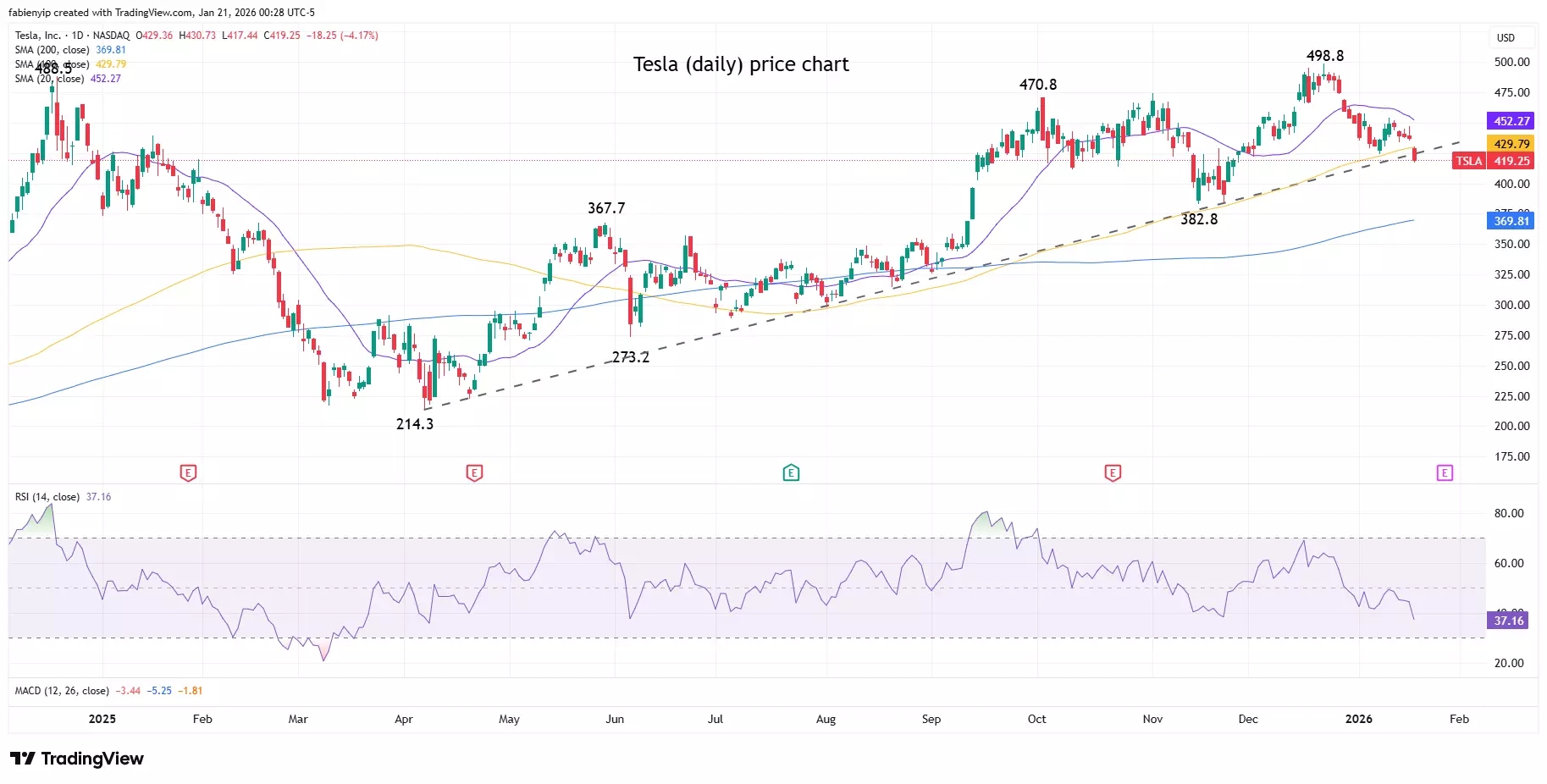
5. Stock Market Reaction: Volatility Ahead of Earnings
Why Tesla Stock Remains Highly Reactive
Tesla remains one of the most emotionally traded stocks in global markets. Ahead of earnings, volatility reflects uncertainty around:
-
Margin stabilization
-
Autonomy timelines
-
Management credibility
Even small changes in guidance can trigger large price movements.
European markets often react more conservatively, while U.S. markets tend to amplify sentiment—both positive and negative—around earnings calls.
Long-Term vs. Short-Term Perspectives
Short-term traders focus on:
-
EPS surprises
-
Margin changes quarter-to-quarter
Long-term holders—and many Tesla owners—focus on:
-
Product roadmap
-
Software capability progression
-
Infrastructure expansion
This divergence explains why Tesla stock can drop sharply even when long-term fundamentals remain intact.
6. Competitive Pressure: BYD, Legacy Automakers, and Pricing Wars
Global Competition Is No Longer Hypothetical
Tesla no longer operates in a lightly contested EV market. Chinese manufacturers, European legacy automakers, and new EV startups all compete aggressively on:
-
Price
-
Design
-
Local incentives
In Europe, especially, domestically produced EVs benefit from political and regulatory support, narrowing Tesla’s advantage.
Tesla’s Differentiation Strategy
Tesla’s response is not purely price-based. Instead, it emphasizes:
-
Software superiority
-
Charging infrastructure scale
-
Vertical integration
For owners, this means Tesla vehicles remain technologically differentiated, even if price leadership fluctuates.
7. Guidance for 2026: What Tesla Is Signaling
Conservative Tone, Strategic Confidence
Tesla’s guidance entering 2026 is expected to remain cautious on volume growth while emphasizing:
-
Autonomy development
-
Software monetization
-
Energy business expansion
This signals a company transitioning from hyper-growth to platform optimization.
What Owners Should Pay Attention To
Tesla owners should listen closely for commentary on:
-
FSD feature rollout timelines
-
Hardware upgrade paths
-
Charging network access policies
-
Long-term vehicle support commitments
These factors influence ownership experience more than quarterly profit numbers.
8. What Tesla’s Earnings Mean for Existing Owners
Vehicle Value and Software Longevity
Financial pressure does not necessarily mean reduced owner benefits. In many cases, Tesla doubles down on software value to maintain customer loyalty.
Potential implications include:
-
More frequent OTA updates
-
Expanded subscription features
-
Greater emphasis on long-term usability
Service and Infrastructure Stability
Strong cash flow remains critical for:
-
Supercharger expansion
-
Service center availability
-
Parts supply consistency
Earnings performance directly influences Tesla’s ability to maintain and expand these services in the U.S. and Europe.
Conclusion: A Turning Point, Not a Crisis
Tesla’s Q4 earnings entering 2026 represent a strategic transition point, not a collapse or a triumph. The company is moving from explosive growth toward sustainable, software-driven profitability.
For investors, this earnings cycle tests patience and belief in Tesla’s long-term vision.
For owners, it confirms that Tesla is no longer just selling cars—it is building a connected, evolving platform.
The key takeaway is simple:
Tesla’s future value lies less in how many cars it sells next quarter, and more in how deeply those cars remain valuable over time.
Frequently Asked Questions (FAQ)
Q1: Should Tesla owners worry about slowing sales?
Not necessarily. Slower growth often leads to better software support and ecosystem investment.
Q2: Will FSD pricing increase in 2026?
Tesla historically adjusts pricing based on capability improvements, not earnings pressure alone.
Q3: Does a lower margin mean lower quality?
No. Tesla’s margin pressure is primarily pricing-driven, not quality-driven.
Q4: How does this affect resale value?
Short-term price volatility impacts resale, but long-term software relevance can offset depreciation.
Q5: Is Tesla still financially strong?
Yes. Tesla remains cash-generative with low debt relative to peers.