
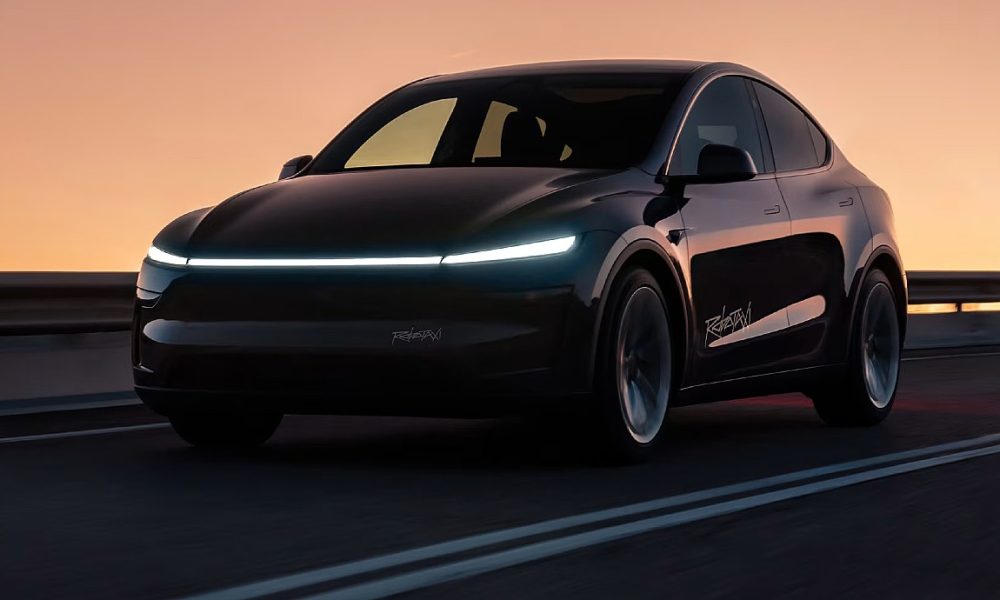
When Tesla CEO Elon Musk announced at the company's 2025 Annual Shareholder Meeting on November 6 that Robotaxi services would expand to five major American metropolitan areas—Las Vegas, Phoenix, Dallas, Houston, and Miami—he effectively signaled that the autonomous ride-hailing revolution is transitioning from boutique pilot project to commercial-scale deployment. These announcements arrived alongside the declaration that Austin would transition to fully driverless Robotaxi operations (without onboard safety monitors) before year-end 2025, effectively marking a shift from developmental proof-of-concept to genuine commercial transportation service.
For Tesla owners in the United States, these developments carry immediate relevance beyond mere corporate announcements. Tesla has signaled that existing vehicle owners might participate in Robotaxi fleets, transforming personal vehicles into revenue-generating autonomous assets. For consumers in expansion cities, Robotaxi availability could fundamentally reshape daily transportation economics. For investors, Robotaxi represents a potentially enormous new revenue stream that could fundamentally alter Tesla's financial profile from automotive manufacturer to mobility services company.
The five-city expansion isn't random selection of markets. Rather, it represents careful geographic, regulatory, and demographic strategy. Las Vegas offers favorable weather, permissive regulation, and existing autonomous infrastructure through the Vegas Loop tunnel system. Phoenix has earned reputation as America's autonomous vehicle testing capital. Dallas and Houston provide sprawling metropolitan areas with complex highway networks ideal for testing autonomous driving at scale. Miami brings growing EV adoption, substantial tourism demand, and municipal leadership supportive of transportation innovation.
However, expectations for deployment speed deserve calibration. While the official announcements suggest rapid expansion, regulatory approval processes, safety validation requirements, and infrastructure preparation mean that these cities will likely see Robotaxi service availability progressing gradually through 2026 and beyond, not immediately in late 2025. Understanding the realistic timeline and operational model is essential for those following Tesla's autonomous transportation strategy.
CHAPTER 1: THE FIVE-CITY EXPANSION STRATEGY - GEOGRAPHIC AND REGULATORY LOGIC
Tesla's selection of specific cities for Robotaxi expansion reflects sophisticated analysis of regulatory environments, demographic demand, infrastructure readiness, and competitive dynamics. Each city offers distinct advantages and faces particular challenges.
Las Vegas: The Proven Partner Model
Las Vegas stands as perhaps the most strategically important expansion target, and for a specific reason: Tesla has already successfully deployed autonomous vehicles in the Vegas Loop, an underground tunnel system that transports passengers between major casino and entertainment venues. Since 2023, Tesla vehicles have been operating through the Vegas Loop with autonomous capabilities, generating operational data and establishing working relationships with local authorities and venue operators.
This existing infrastructure creates tremendous advantages. First, Vegas Loop experience has proven to local regulators that Tesla's autonomous systems work reliably in controlled environments. Second, Tesla has already trained dispatch systems, charging infrastructure, and maintenance operations tailored to Las Vegas. Third, the city government has shown itself willing to work with Tesla on autonomous vehicle deployment, suggesting smoother regulatory approval for expanded Robotaxi services.
From a demand perspective, Las Vegas represents an ideal market. The city receives approximately 40 million visitors annually, with tourism concentrated in the Strip and downtown areas. These visitors frequently seek ground transportation for short distances—from hotels to casinos to restaurants—precisely the use case where autonomous ride-hailing excels. Peak demand is highly concentrated temporally (nights and weekends) and spatially (casino areas and downtown), allowing Tesla to optimize fleet deployment and charging.
Weather provides another Las Vegas advantage. The area experiences 310 sunny days annually, with minimal precipitation and no snow or ice. These conditions are ideal for camera-based autonomous systems like Tesla's FSD, which perform optimally in clear visibility. This weather consistency means Tesla doesn't need to extensively validate cold-weather and snow operation in Vegas (unlike northern cities), potentially accelerating deployment.
Regulatory environment matters enormously, and Nevada has consistently positioned itself as autonomous vehicle-friendly. The state permits fully autonomous vehicles with no human operator, meaning Tesla can deploy vehicles without onboard safety monitors—potentially enabling lower operational costs than competitors limited to driver-based oversight. This regulatory flexibility alone could provide Tesla with competitive advantages that make Robotaxi economics viable in Vegas when they might not elsewhere.
Phoenix: The Autonomous Vehicle Capital
Phoenix, Arizona has earned recognition as America's autonomous vehicle testing hub. Multiple AV companies—including Waymo, Cruise (before recent setbacks), and others—have extensively deployed in Phoenix, creating regulatory infrastructure, public acceptance, and competitive dynamics that matter for Tesla's expansion.
Phoenix's regulatory framework is notably permissive. Arizona state law allows autonomous vehicle companies to operate without specified minimum testing periods, unlike California's more restrictive requirements. Municipal government in Phoenix has shown itself eager to support autonomous vehicle deployment, viewing it as economic development and technological leadership opportunity.
The metropolitan area itself presents attractive characteristics for autonomous ride-hailing. With 1.6 million people in Phoenix proper and 4.9 million in the greater metropolitan area, it represents a major market. The city features sprawling geography with relatively unconstrained urban development—highways penetrate extensively into residential areas, with complex multi-lane intersections and varied road conditions ideal for testing and proving autonomous capability at scale.
Phoenix summers are extremely hot (regularly exceeding 110°F), which presents specific challenges for vehicle electronics and battery systems. Tesla's experience with thermal management in Arizona heat positions the company favorably compared to competitors with limited hot-climate deployment.
Public sentiment matters critically. Phoenix has become accustomed to autonomous vehicles through years of Waymo operations. This familiarity means Tesla enters a market already accepting autonomous ride-hailing conceptually, reducing cultural barriers and regulatory uncertainty.
Dallas and Houston: Urban Sprawl and Complex Transportation Networks
Dallas and Houston represent different challenges and opportunities. Both cities feature sprawling metropolitan areas (Dallas-Fort Worth area includes approximately 7.6 million people; Houston metropolitan area includes approximately 7.1 million) with extensive highway systems, multiple employment centers, and challenging multi-lane highway navigation.
From a testing perspective, Dallas and Houston highway systems present genuine complexity. Interstate 635 through Dallas, Interstate 37 through downtown Houston, and surrounding highways involve aggressive driving patterns, congested corridors, and the kind of chaotic urban highway environment that has historically challenged autonomous systems. Successfully deploying Robotaxi in these environments would substantially validate Tesla's unsupervised capability claims.
Demographically, both cities show strong EV adoption trends. Texas offers tax incentives and federal tax credit eligibility, supporting EV ownership. Tesla Supercharger networks are well-established in both cities, suggesting readiness for electric autonomous fleet operations. Both cities have substantial business travel demand (major corporate headquarters, conference venues, airport transportation) that could drive near-term Robotaxi utilization.
Texas regulatory environment is moderately permissive but less explicitly supportive than Nevada or Arizona. The state lacks specific autonomous vehicle regulations in most municipalities, effectively creating a regulatory vacuum where Tesla must navigate local jurisdictions individually. This creates slower but potentially smoother deployment once approvals are secured—no statewide regulations to override local decisions.
Competitively, both cities currently lack strong autonomous taxi presence, meaning Tesla would enter relatively uncontested markets. Waymo has focused on West Coast operations, while Cruise's setbacks left ride-hailing service gaps. This market vacuum presents opportunity for Tesla to establish first-mover dominance before competitors expand.
Miami: Tourism Hub with Growing EV Market
Miami, with approximately 6.4 million people in the greater metropolitan area, represents both a high-demand tourism market and a major U.S. metropolitan region. The city attracts approximately 24 million visitors annually, with significant international tourism demand concentrated in specific areas (South Beach, Art Deco district, downtown).
Miami's appeal for Robotaxi includes strong tourism demand for ground transportation, substantial business travel to corporate headquarters and major firms, and a growing residential market with high EV adoption among affluent demographics. The city's geographic concentration (many attractions within driving distance) makes ride-hailing attractive.
Municipal government has demonstrated openness to autonomous vehicle projects. The city has previously collaborated with companies piloting emerging transportation technologies, suggesting favorable regulatory environment for Tesla expansion.
However, Miami presents challenges. Tropical weather includes frequent thunderstorms, heavy precipitation, and corrosive salt air that requires robust vehicle systems. Hurricane seasons (June-November) create operational disruption periods. These environmental factors mean Tesla must extensively validate systems under Miami-specific conditions before confident deployment.
Traffic patterns in Miami are complex, with congested corridors, aggressive driving behavior, and infrastructure constraints. This complexity requires mature FSD capabilities proven in real-world Miami conditions.
CHAPTER 2: AUSTIN AND BAY AREA - CURRENT DEPLOYMENTS AND LESSONS LEARNED
Understanding Tesla's future expansion strategy requires examining current Robotaxi operations in Austin and the San Francisco Bay Area. These pilots represent the proving grounds where Tesla validates technology, refines operations, and establishes relationships with local regulators.
Austin Robotaxi: Driverless Operations Model
Austin deployment began in June 2025 with initial operations conducted with onboard safety monitors—engineers ready to intervene if necessary. Rapid refinement of FSD capabilities allowed Tesla to transition to driverless operations in defined geofenced areas, where vehicles operate completely without human operators. This transition to driverless operation during 2025 represents genuine validation of capability maturity.
The Austin geofence encompasses specific areas where the company has extensively trained its neural networks, deployed redundant computing systems, and established charging infrastructure. Within this geofence, vehicles can request service calls, pick up passengers, navigate to destinations, and charge themselves—essentially complete autonomous operation. Outside the geofence, particularly on freeways, Tesla maintains human oversight requirements. This hybrid model reflects genuine capability (driverless in known areas) while acknowledging remaining limitations (highway autonomy requires additional validation).
Tesla has disclosed that the Austin fleet reached approximately 50-100 operational Robotaxi vehicles, with capacity to expand substantially. The company hasn't released detailed performance metrics, but anecdotal reports from early riders suggest competent operation in routine conditions with occasional unexpected behaviors (overconservative responses, unusual route decisions) that reflect ongoing development.
Operational challenges in Austin have illuminated critical insights. Charging logistics proved complex—vehicles must be positioned near chargers at specific times, creating constraint on fleet flexibility. Weather events, even minor ones, occasionally trigger conservative safety behaviors that reduce efficiency. Customer satisfaction appears generally positive, though pricing levels create questions about whether current economics are sustainable.
One critical insight: Austin's favorable regulatory environment, weather, and infrastructure allowed compressed deployment timeline relative to cities without these advantages. This suggests expansion to other geographies will require longer validation periods.
Bay Area Deployment: Safety Monitor Model
Concurrent with Austin's driverless transition, Tesla deployed Robotaxi to San Francisco Bay Area beginning late 2025. Bay Area regulations require a "safety monitor" in the driver's seat—an engineer capable of taking control if necessary. This requirement reflects California's more conservative regulatory approach compared to Nevada's permissive stance.
The safety monitor requirement significantly impacts economics. Each Robotaxi requires a trained operator capable of intervening, dramatically increasing operational costs. This model is fundamentally different from driverless operation and likely unsustainable at Robotaxi scale (companies can't employ millions of safety monitors). Therefore, Bay Area deployment serves primarily as technology validation and learning opportunity, not as final commercial model.
However, Bay Area represents a different challenge profile than Austin. The region includes complex urban streets, varying weather, and diverse traffic patterns more representative of nationwide conditions. Success in Bay Area better validates Tesla's capability for broader national deployment than Austin's relatively constrained conditions.
CHAPTER 3: TIMELINE AND ROLLOUT STRATEGY
Tesla's official timeline emphasizes rapid expansion, but realistic assessment suggests more measured progress. Several factors will constrain deployment speed.
Regulatory Approval Processes
Despite generally permissive regulatory frameworks in expansion cities, actual deployment requires multiple approval steps. Even in Texas, where statewide regulation is limited, individual cities maintain authority over ground transportation services. Dallas and Houston require city approval for new ride-hailing services. Regulatory approval processes typically require public comment periods, safety documentation review, and city council deliberation—processes measured in months rather than weeks.
Competitive regulatory dynamics matter too. If existing ride-hailing companies (Uber, Lyft) view Robotaxi as existential threat, they'll lobby cities to constrain Tesla expansion. This political dimension could significantly slow expansion timeline in cities where ride-hailing companies have political influence.
Safety Validation Requirements
Tesla will likely face demands for extended real-world performance data before city authorities grant full deployment approval. Regulators will require evidence of accident rates, safety incident analysis, and capability validation across diverse conditions. This validation requirement alone probably demands at least 6-12 months of demonstrable reliable operation before major city expansion.
Infrastructure Preparation
Each new city requires supporting infrastructure: charging stations, maintenance facilities, dispatch operations, customer support, and emergency response protocols. Tesla can't simply activate Robotaxi in new cities without local operational infrastructure. This infrastructure buildout, particularly charging station installation, requires advance planning and construction timelines measured in months.
Fleet Expansion
Tesla currently has approximately 50-100 Robotaxi vehicles deployed across Austin and Bay Area. Expanding to five new cities while maintaining existing operations would require expanding the fleet to perhaps 500-1000+ vehicles by end 2026. Current Tesla production capacity could theoretically support this (Tesla produces hundreds of thousands of Model Y vehicles annually), but allocating production to Robotaxi affects consumer vehicle availability.
Realistic Timeline Expectations
Based on these constraints, realistic expectations for expansion might be:
Late 2025-Early 2026: Austin transitions to scaled driverless operations (200-300 vehicles). Bay Area maintains safety monitor model pending regulatory pathway change.
2026: Phoenix and Las Vegas receive regulatory approval and begin limited Robotaxi operations (50-100 vehicles each), pending safety validation and infrastructure completion.
Late 2026-2027: Dallas, Houston, and Miami begin operations, initially with conservative service parameters (geofenced areas, limited hours).
2027+: Gradual expansion within cities and potential entry into additional markets.
This timeline is speculative but more realistic than optimistic announcements suggesting rapid nationwide deployment. Regulatory processes, infrastructure requirements, and validation needs simply can't be accelerated beyond these timescales without accepting unacceptable safety risks.
CHAPTER 4: OPERATIONAL MODEL AND SERVICE DETAILS
How Robotaxi actually operates—from customer experience to vehicle capabilities to pricing—deserves detailed examination.
Customer Interface and Pricing
Tesla Robotaxi operates through the Tesla app, creating seamless integration for Tesla owners and relatively straightforward adoption for non-owners. Passengers request rides through the app, specifying pickup and destination locations. The app then displays estimated arrival time and cost, with payment processed through the app.
Pricing announcements have been limited, but Musk has suggested Robotaxi costs would compete with Uber and Lyft while offering advantages through lower operational costs (no human driver). Early speculation suggests pricing might be 25-40% below current Uber/Lyft rates if Tesla achieves predicted operational efficiency.
The customer experience differs from traditional taxis in meaningful ways. Robotaxi vehicles arrive autonomously, communicate through the app rather than driver conversation, and operate without ability to negotiate routes (passengers see proposed routes but can't persuade driver to take alternatives). This impersonal quality appeals to some customers while frustrating others accustomed to human interaction.
Vehicle Specifications and Technology
Early Robotaxi operations use Tesla Model Y vehicles, the company's most refined FSD platform. Vehicles are equipped with Tesla's current sensor suite (cameras, radar, ultrasonic sensors), paired with onboard computing systems capable of processing FSD algorithms in real-time.
Tesla hasn't yet deployed its proposed Cybercab—a purpose-built autonomous vehicle without steering wheel or pedals. The Cybercab would be optimized for autonomous operation with two passenger seats and simplified interior design. However, Cybercab production timelines remain unclear, pushing actual deployment likely to 2027 or later. Near-term Robotaxi operations will rely on modified standard vehicles.
Passenger capacity, comfort, and safety features matter for commercial viability. Model Y interiors feature Tesla's minimalist design with sparse controls. Robotaxi vehicles undergo modifications including enhanced cleaning protocols, driver-seat removal (or placeholder seat unavailable to passengers), and reinforced interior elements to withstand commercial use. Climate control, audio systems, and seating comfort remain adequate but not luxurious compared to premium transportation services.
Operational Logistics
Fleet management represents a genuinely complex challenge at scale. Vehicles must be distributed geographically to meet demand, positioned near high-demand areas during peak times, and returned to charging stations for battery management. This requires sophisticated algorithms balancing demand prediction, vehicle state management, and charging optimization.
Maintenance operations also become complex at scale. With thousands of vehicles operating, mechanical issues, software bugs, and sensor calibration require rapid response and resolution. Tesla will need to establish service centers in each deployment city capable of rapid vehicle diagnostics and repairs to minimize downtime.
Cleaning and sanitization between passenger exchanges becomes necessary, adding operational expense and time. Each vehicle requires interior cleaning, potentially exterior cleaning, and system verification between passengers. If this process requires 10-15 minutes per vehicle, it substantially impacts throughput compared to Uber drivers who typically clean between passengers themselves informally.
Integration with Public Transportation
Long-term Robotaxi strategy likely contemplates integration with public transit systems. Autonomous ride-hailing could complement rather than replace public transit—providing first-mile/last-mile transportation to connect passengers with buses and trains. Cities increasingly view autonomous vehicles as transit system components rather than competitors.
This integration could drive demand significantly. If Robotaxi offers $3-5 rides from residential areas to transit stations, more people might use public transit for longer journeys. Conversely, if Robotaxi becomes primary transportation mode, it could cannibalize public transit. City planning and regulatory frameworks will increasingly address these dynamics.
CHAPTER 5: ECONOMIC AND MARKET IMPACT
The financial implications of Robotaxi expansion deserve careful examination.
Revenue Potential
Tesla's addressable market for Robotaxi services spans America's ride-hailing market—currently approximately 8 billion rides annually in the United States. At average fares of $12-15, annual market size approaches $100 billion. Tesla capturing even 10% of this market would generate $10 billion annual revenue, exceeding current Tesla revenue from many business lines.
However, capturing market share requires competing on price, reliability, and coverage. Capturing share also requires deploying tens of thousands of vehicles, requiring capital investment measured in tens of billions of dollars. The economics work only if operational costs per mile (excluding vehicle depreciation) are substantially lower than human-driven services.
Tesla's operational advantage rests on avoiding human driver salary, benefits, and management overhead. Tesla claims it can operate Robotaxi at 50-70% of Uber's total cost per mile through eliminating driver expenses. If sustainable, this cost advantage enables undercutting competitor pricing while maintaining profitability. However, this assumes very high fleet utilization (vehicles operating most hours of the day) and efficient charging/maintenance operations Tesla hasn't yet proven at scale.
Profitability Timeline
Early Robotaxi deployments will likely operate at losses or razor-thin margins while gathering operational data and establishing market presence. Profitability probably emerges only after fleet scale exceeds 10,000+ vehicles and operations mature to efficient steady-state. This suggests 2027-2028 before Robotaxi contributes meaningfully to Tesla bottom line, with major profit contribution probably 2029+.
Industry Disruption
Robotaxi success would fundamentally disrupt ride-hailing industry currently dominated by Uber and Lyft. These companies would face pressure to develop autonomous alternatives or accept market share loss. Interestingly, both Uber and Lyft have invested substantially in autonomous vehicle technologies but haven't yet deployed commercially. Tesla's early deployment puts competitive pressure on these platforms.
Beyond ride-hailing disruption, successful Robotaxi would impact transportation economics more broadly. Taxi companies, particularly in regions without Uber/Lyft penetration, face existential threat. Public transit systems would face competition, potentially undercutting bus ridership in profitable routes. Parking demand could shift as vehicles no longer park at destinations but instead circulate or return to charging facilities.
Employment Implications
Robotaxi success creates obvious employment disruption for professional drivers—taxi drivers, Uber drivers, Lyft drivers, and commercial drivers. The U.S. employs approximately 3.5 million professional drivers. Transition from human-driven to autonomous fleets would displace substantial workforce, creating social policy challenges around retraining, income support, and economic transition.
Counterargument exists: Robotaxi growth would create new employment in fleet management, maintenance, software development, and supporting services. Historical technological transitions suggest new jobs emerge, though not always for displaced workers and often at different skill levels or compensation.
Consumer Impact
Successful Robotaxi would fundamentally transform personal transportation economics. Current car ownership costs (vehicle purchase, insurance, maintenance, parking, depreciation) average $10,000+ annually. Robotaxi rides at $3-5 per mile would make per-trip costs competitive with personal vehicle ownership for moderate-usage consumers.
This could drive shift away from personal vehicle ownership toward ride-hailing-dominant transportation model, particularly in urban areas. However, this outcome depends on multiple factors: Robotaxi reliability and coverage, cost competitiveness at scale, consumer preference for personal vehicles, and regulatory constraints on commercial operations.
CHAPTER 6: REGULATORY AND LIABILITY FRAMEWORK
The regulatory environment surrounding Robotaxi directly determines viability and deployment pace.
Current Regulatory Status by City
Nevada has embraced autonomous vehicles most explicitly, granting Tesla and others explicit regulatory permission to operate fully autonomous vehicles with no human operator. This clear framework accelerates deployment and enables most cost-effective operational models.
Arizona has created specific autonomous vehicle categories but requires insurance bonding and safety documentation. Phoenix regulation is permissive but less explicitly detailed than Nevada's.
California permits autonomous vehicles but imposes more stringent requirements including extensive testing periods, safety documentation, and local approval. Bay Area municipalities have implemented specific regulations accommodating safety monitor models (operator in driver's seat) but resisting fully autonomous operations.
Texas lacks statewide autonomous vehicle regulations, effectively delegating authority to cities. This creates city-by-city approval requirement but avoids statewide restrictions.
Florida has minimal autonomous vehicle-specific regulation, relying on general transportation rules. Miami municipal government will likely need to specifically authorize Robotaxi operations.
Insurance and Liability
Who bears liability if Robotaxi causes an accident? This question remains partially unresolved. Current framework likely places liability on Tesla when FSD is engaged, with insurance covering damages. This differs from ride-hailing where driver shares liability.
This liability allocation creates potential conflict: if Tesla bears accident liability, the company has incentive to be conservative about deployment in risky conditions. Conversely, if liability falls on passengers or vehicle owners, Tesla lacks incentive to prevent accidents through conservative operation. Regulatory framework will need to explicitly address this.
Insurance requirements for Robotaxi operations also remain partially unresolved. Commercial ride-hailing typically requires commercial auto insurance (much more expensive than personal coverage). As Tesla expands into commercial operations, insurance costs will rise, impacting operational economics.
Safety Standards Development
Standards for autonomous vehicle safety remain under development. SAE (Society of Automotive Engineers) continues refining standards, but these remain aspirational guidelines rather than legal requirements. NHTSA (National Highway Traffic Safety Administration) is developing federal standards, though implementation remains slow.
This standards vacuum creates regulatory uncertainty. Agencies may impose arbitrary requirements, leading to inefficient compliance or unnecessary restrictions.
Data Privacy and Collection
Robotaxi operations collect enormous amounts of driving data—video, location history, passenger information. Regulatory frameworks must address privacy, data ownership, and usage permissions. GDPR in Europe and emerging state privacy laws in America (California Consumer Privacy Act, etc.) will increasingly constrain how Tesla collects, stores, and uses Robotaxi operational data.
International Considerations
While this article focuses on U.S. expansion, regulatory differences create challenges for global Robotaxi. European regulations would likely be more restrictive than U.S., potentially delaying European deployment. Chinese regulations would require adaptation to local frameworks. This suggests Robotaxi remains primarily U.S.-focused business for near term, with international expansion following successful U.S. deployment.
CONCLUSION
Tesla's five-city Robotaxi expansion represents genuine progress toward autonomous mobility commercialization. Current Austin and Bay Area deployments demonstrate meaningful technical capability, with transition to driverless operations in Austin particularly significant. The selection of expansion cities reflects sophisticated strategy recognizing regulatory permissiveness, demand characteristics, and infrastructure readiness.
However, realistic assessment suggests deployment pace will be more gradual than optimistic rhetoric suggests. Regulatory approval processes, safety validation requirements, infrastructure development, and vehicle production constraints will all contribute to measured expansion through 2026 and beyond rather than rapid nationwide rollout.
For Tesla owners, particularly in expansion cities, the prospect of participating in Robotaxi fleets through vehicle sharing could generate meaningful income supplementing current vehicle costs. Evaluation of whether to participate requires understanding local regulations, insurance implications, and revenue potential in specific markets.
For consumers in expansion cities, Robotaxi offers potential transportation alternative providing cost advantages over current ride-hailing services, though initial deployments will likely feature limited coverage and availability. Adoption will grow gradually as fleet size expands and reliability improves.
For competitors, Tesla's early Robotaxi deployment creates first-mover advantages in perception and market share. Waymo and other autonomous vehicle companies will feel pressure to accelerate deployment or risk being perceived as lagging Tesla technologically.
For investors, Robotaxi represents a potential enormous new revenue and profit stream, though timelines for profitability remain years away. The market opportunity is undeniably large, but execution risk remains substantial.
The autonomous taxi revolution is genuinely underway, with Tesla leading charge. But the actual transformation of urban transportation will be gradual process unfolding over years, not overnight disruption.