
I. Introduction
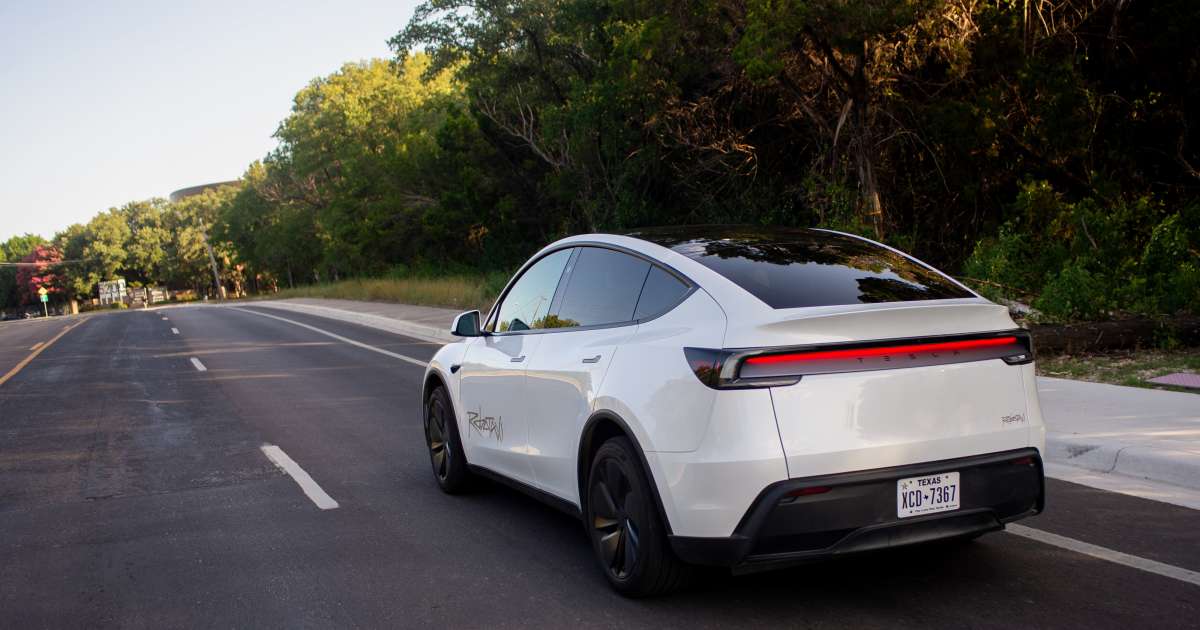
Tesla’s Robotaxi initiative represents one of the most ambitious moves in the automotive and mobility industry today. After years of development and incremental progress in autonomous driving technology, Tesla officially launched its Robotaxi pilot service in Austin, Texas, in June 2025. This milestone marks the beginning of Tesla’s transition from purely manufacturing electric vehicles to offering autonomous ride-hailing services.
The Austin pilot, initially limited to a small fleet of Tesla Model Y vehicles equipped with Full Self-Driving (FSD) software, has already demonstrated promising capabilities. Now, Tesla is preparing to expand this service both geographically and operationally. The company has announced plans to broaden the Austin service area to include more complex urban environments and to scale the fleet size. More importantly, Tesla is actively pursuing regulatory approvals to launch Robotaxi services in Arizona’s Phoenix metropolitan area and California’s San Francisco Bay Area, two critical markets for autonomous mobility.
This article will provide an in-depth examination of Tesla’s Robotaxi program, focusing on the current operations in Austin, the strategic expansion into Arizona and California, the technical and safety considerations of the fleet, competitive positioning, and the challenges ahead. Understanding these facets is essential for Tesla owners, investors, and enthusiasts who are keen to follow how Tesla is reshaping urban transportation.
II. Austin Pilot Program Analysis
The Austin pilot program serves as Tesla’s real-world testing ground for its Robotaxi ambitions. Initially launched with a modest fleet of approximately 20 Model Y vehicles, the service operates in a defined geofenced area in South Austin. These vehicles run without a human driver behind the wheel, but a Tesla employee occupies the front passenger seat as a safety monitor and backup driver.
The pilot’s success is measured by its ability to safely navigate Austin’s streets, handle complex traffic scenarios, and provide a comfortable ride experience. Early reports indicate that Tesla’s vision-based FSD system—relying solely on cameras and neural network processing—has performed well in these conditions. User feedback has been positive, noting smooth acceleration, confident lane changes, and reliable obstacle avoidance.
Tesla is now expanding the service area to include denser urban zones such as the South Congress Bridge and downtown Austin. This expansion introduces more challenging driving conditions, including heavy pedestrian traffic, intricate intersections, and unique road layouts. Successfully operating in these environments will be a major demonstration of Tesla’s autonomous driving capabilities.
Alongside the geographic expansion, Tesla plans to increase the fleet size to between 30 and 50 vehicles. This scaling will allow more users to access the service and provide Tesla with a richer dataset to improve its FSD algorithms. The company is also hiring additional Vehicle Operators and increasing the ratio of supervisors to vehicles, ensuring safety and operational oversight as the fleet grows.
The Austin pilot is not only a technical test but also a market experiment. Tesla is gauging consumer acceptance of driverless ride-hailing and refining the user experience through its vehicle interface and app. The pricing model, currently a flat fee of $4.20 per ride, aims to be competitive with traditional ride-hailing services while highlighting the convenience and novelty of autonomous vehicles.
III. Arizona Expansion Strategy
Arizona has emerged as a key target for Tesla’s Robotaxi expansion due to its favorable regulatory environment and growing metropolitan areas. Tesla has formally applied for permits to test and operate autonomous vehicles in the Phoenix metro area. The Arizona Department of Transportation (ADOT) has confirmed that Tesla has requested certification for both autonomous vehicle testing with a safety driver and fully driverless operation.
The state’s regulatory framework is more permissive than California’s, with streamlined approval processes and proactive support for autonomous vehicle development. This makes Arizona an attractive market for Tesla to scale its Robotaxi service rapidly.
Tesla’s regulatory team, led by senior counsel Casey Blaine, has engaged with ADOT officials, Maricopa County government, and local law enforcement to prepare for the service launch. These early communications aim to ensure compliance with safety standards, public awareness, and coordination with emergency services.
Phoenix’s urban layout, characterized by sprawling suburbs and busy arterial roads, presents a different set of challenges compared to Austin. Tesla’s vision-only FSD system will be tested on longer highway stretches, varied traffic densities, and diverse weather conditions typical of the desert Southwest.
A decision on Tesla’s permit applications is expected by the end of July 2025. Approval will enable Tesla to begin limited testing and eventually open the Robotaxi service to the public in Phoenix, further validating its autonomous driving technology in a new environment.
IV. California Market Entry
California is Tesla’s home market and a global hub for automotive innovation, making it the most strategically important location for Robotaxi deployment. However, it is also the most challenging due to stringent regulatory requirements and intense competition.
Tesla has applied for a transportation charter-party carrier permit from the California Public Utilities Commission (CPUC), which is necessary for operating a commercial autonomous ride-hailing service. Additionally, the company must secure multiple permits from the California Department of Motor Vehicles (DMV) to test and deploy driverless vehicles.
The regulatory process in California is complex and involves rigorous safety evaluations, data reporting, and public transparency. Tesla’s approach includes a phased rollout, initially offering rides to employees with safety drivers present, before scaling to fully driverless operations for the general public.
Elon Musk has indicated that a San Francisco Bay Area launch could occur within one to two months, contingent on regulatory approvals. This timeline reflects Tesla’s confidence in its technology and its desire to compete directly with Waymo, which operates an extensive autonomous fleet in the region.
California’s dense urban environment, with its complex intersections, high pedestrian volumes, and diverse traffic scenarios, will be a demanding test for Tesla’s vision-only FSD system. Moreover, Tesla must navigate local political and public safety concerns, which have historically slowed autonomous vehicle deployments.
Despite these challenges, Tesla’s ability to scale quickly and its integrated vehicle-software approach provide it with a competitive edge. The company’s vision-only system eliminates the need for expensive lidar sensors and detailed pre-mapping, potentially enabling faster geographic expansion than competitors.
V. Technical and Safety Considerations
Tesla’s Robotaxi fleet is powered by its proprietary Full Self-Driving software, which relies exclusively on cameras and neural networks for perception and decision-making. This contrasts with competitors like Waymo, which use lidar and radar sensors alongside cameras.
The vision-only approach reduces hardware costs and simplifies vehicle design, facilitating rapid fleet expansion. Tesla’s software continuously learns from real-world driving data collected from its global fleet, improving its autonomous capabilities over time.
Safety remains the paramount concern. During the pilot phase, Tesla vehicles operate with a safety driver or supervisor onboard to intervene if necessary. The company collects extensive telemetry and video data to monitor performance and identify edge cases.
Tesla aims to transition to fully driverless operation once it achieves a safety performance that meets or exceeds human drivers. This includes rigorous testing of emergency maneuvers, pedestrian detection, and complex urban driving.
The upcoming Cybercab, a two-seater robotaxi without a steering wheel or pedals, is expected to enter production in 2026. This vehicle is designed specifically for autonomous operation and will further reduce costs and increase efficiency.
Tesla’s safety protocols also include remote monitoring and over-the-air software updates to address issues quickly. The company’s ability to push software improvements directly to vehicles in the field is a significant advantage in maintaining and enhancing safety.
VI. Market Impact and Competition
Tesla’s Robotaxi service has the potential to disrupt the traditional ride-hailing market by replacing human drivers with autonomous vehicles, reducing costs, and increasing availability.
Waymo remains Tesla’s primary competitor in autonomous ride-hailing, with a larger fleet and longer operational history. Waymo’s service area in cities like Phoenix and San Francisco exceeds Tesla’s current geofence size, but Tesla’s rapid expansion plans aim to close this gap.
Tesla’s vision-only system offers scalability advantages, as it does not require the extensive mapping and sensor infrastructure that lidar-based systems demand. This could enable Tesla to deploy Robotaxis in more cities faster and at lower cost.
Beyond competition, Tesla’s Robotaxi program represents a new revenue stream that could significantly impact the company’s financials. As vehicle sales face growing competition, autonomous ride-hailing could become a major contributor to Tesla’s profitability.
The service also aligns with broader trends toward sustainable urban mobility, reducing emissions and congestion by promoting electric, shared autonomous vehicles.
VII. Challenges and Future Outlook
Tesla’s Robotaxi expansion faces several notable challenges:
-
Regulatory hurdles: Each state and city has unique requirements, and California’s stringent rules may delay full deployment.
-
Safety validation: Achieving and proving safety parity with human drivers in complex urban environments is difficult.
-
Public acceptance: Consumer trust in fully autonomous vehicles remains a barrier, especially following high-profile incidents involving autonomous systems.
-
Technical limitations: Edge cases in perception and decision-making require ongoing software refinement.
-
Competition: Established players like Waymo and emerging Chinese companies are aggressively developing their own autonomous fleets.
Despite these challenges, Tesla’s integrated approach, continuous software improvement, and aggressive expansion plans position it well for success. The company’s vision of millions of autonomous vehicles operating globally by 2026 is ambitious but increasingly plausible.
VIII. Conclusion
Tesla’s Robotaxi program is a transformative initiative that could redefine urban transportation. The expansion from Austin to Arizona and California marks a critical phase in the company’s journey from electric vehicle manufacturer to autonomous mobility provider.
Success will depend on navigating regulatory landscapes, ensuring safety, scaling technology, and gaining consumer trust. If Tesla achieves these goals, it will establish a dominant position in the autonomous ride-hailing market and unlock significant new revenue streams.
For Tesla owners and enthusiasts in the US and Europe, the Robotaxi program offers a glimpse into the future of mobility—safer, cleaner, and more convenient transportation powered by cutting-edge technology.
IX. FAQ Section
Q1: How soon will Tesla’s Robotaxi service be available beyond Austin?
Tesla plans to expand service areas in Austin immediately and aims to launch in Arizona and California within the next few months, pending regulatory approvals.
Q2: Are Tesla Robotaxis fully driverless now?
Currently, Robotaxis operate with safety drivers or supervisors onboard during the pilot phase. Fully driverless operation is planned after safety validation.
Q3: What vehicles are used in the Robotaxi fleet?
The initial fleet uses refreshed Tesla Model Y vehicles equipped with FSD hardware. The Cybercab, a purpose-built robotaxi without controls, is expected in 2026.
Q4: How does Tesla’s Robotaxi compare to competitors like Waymo?
Tesla uses a vision-only system that is more scalable and cost-effective, while Waymo relies on lidar and detailed mapping. Tesla’s rapid expansion plans aim to close the service area gap.
Q5: Will Tesla’s Robotaxi service come to Europe soon?
While Tesla is currently focused on US expansion, European deployment is likely in the future, subject to regulatory and market conditions.
If you would like me to proceed with the next article on Tesla’s Grok AI integration or any other topic, please let me know your preference.