
1. Introduction
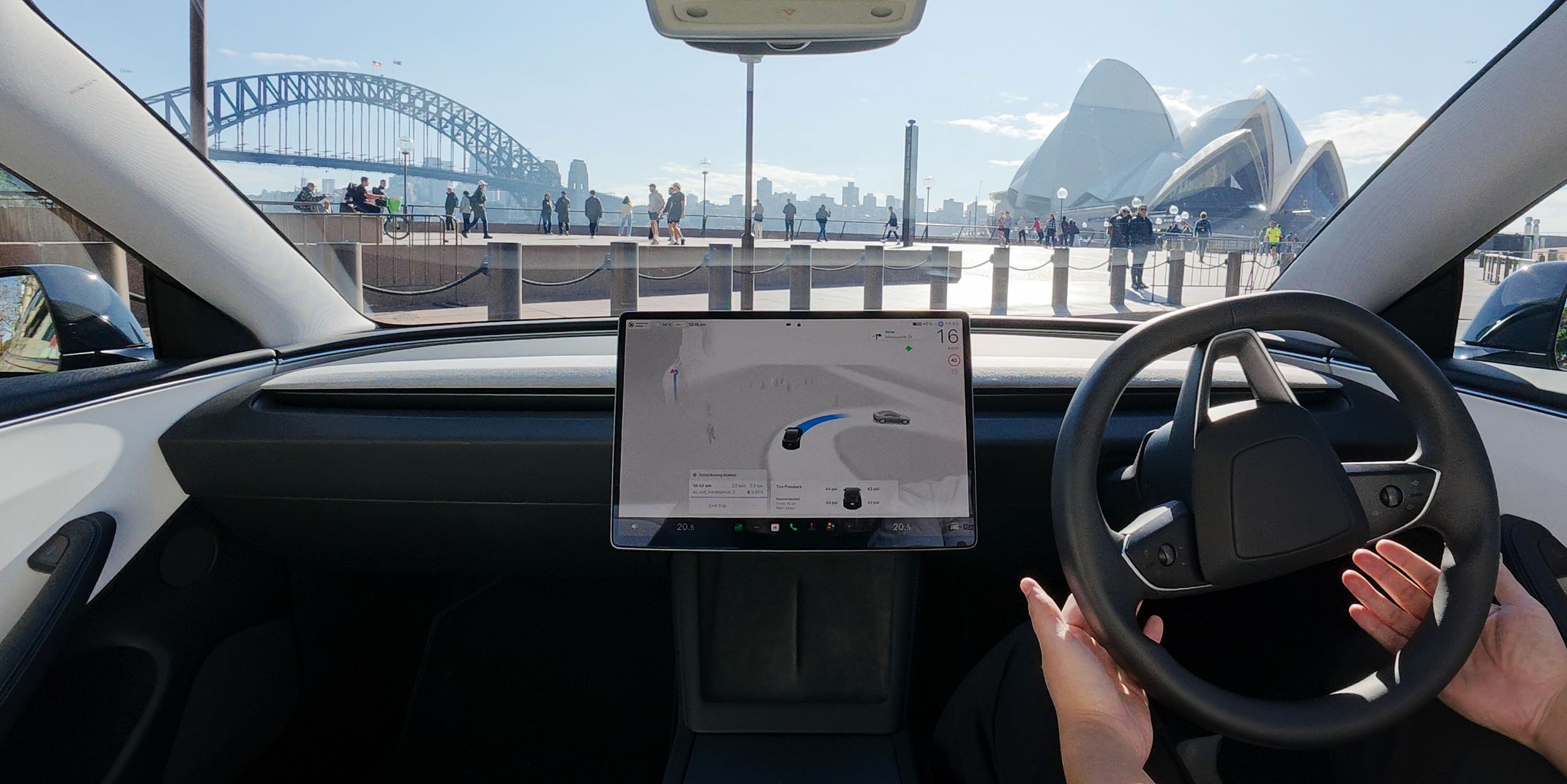
Tesla has always been at the forefront of electric vehicle (EV) innovation, but one of its most ambitious projects is its Full Self-Driving (FSD) technology. This autonomous driving system, available for a select number of Tesla vehicles, is designed to enhance safety, convenience, and driving experience by taking over tasks such as steering, braking, and lane changes. With every update, Tesla inches closer to achieving fully autonomous driving, a goal that could reshape how we think about driving.
For Tesla owners in the US and Europe, the recent FSD updates have brought significant advancements. However, this progress is met with mixed reactions—while many are excited by the potential of this technology, others remain skeptical about its reliability and safety. In this article, we’ll explore the latest Full Self-Driving update, its features, the regulatory challenges it faces, and how it affects Tesla owners in both regions.
2. Tesla’s Full Self-Driving Progress: A Brief History
Tesla’s journey toward Full Self-Driving has been a blend of rapid progress and controversial setbacks. The initial release of Tesla's Autopilot in 2015 was a groundbreaking step in semi-autonomous driving technology. Over the years, Tesla has pushed the boundaries with several iterations, introducing features such as Navigate on Autopilot, Auto Lane Change, and Autopark.
Despite the success of these features, Tesla’s goal of achieving true FSD has been riddled with challenges. In the US, Tesla has had to navigate a complex regulatory environment, while in Europe, stricter laws and public sentiment around autonomous driving have made its widespread adoption more difficult.
Nevertheless, Tesla’s commitment to FSD has never wavered. The company has continued to release software updates, improving the system’s reliability, and advancing toward the dream of a fully autonomous vehicle. The latest update, which includes crucial improvements in object recognition, intersection handling, and city street driving, marks a major step forward.
3. The Latest FSD Update
The latest Full Self-Driving update released by Tesla introduces several exciting features aimed at improving the user experience and bringing Tesla closer to achieving Level 5 autonomy, where the car can drive itself in almost any environment without human intervention.
New Features in the Latest FSD Update
-
Enhanced Object Recognition: Tesla vehicles now have the ability to recognize pedestrians, cyclists, and even small objects like trash cans with greater accuracy. This is a critical improvement for driving in urban environments, especially when navigating narrow city streets.
-
Improved Intersection Handling: The system’s ability to navigate complex intersections and handle unprotected left turns has been significantly improved. This is crucial in regions like Europe, where intersections can often be more intricate due to historical city layouts.
-
Better City Street Navigation: Tesla FSD can now better predict the behavior of other drivers and pedestrians in city environments, reducing the need for manual intervention from the driver.
-
Automatic Lane Merging: Tesla’s FSD now allows for more natural lane merging, especially in traffic-heavy situations, which improves the overall driving experience and reduces driver stress.
These updates, particularly in handling city streets and intersections, have been a point of contention for many Tesla owners. While they represent huge advancements, they also highlight the limitations of the system, especially in areas with heavy pedestrian and cyclist traffic, common in European cities.
4. Impact of Regulatory Changes
In both the US and Europe, the deployment of autonomous driving technologies is heavily regulated. Tesla faces unique challenges depending on the region, with differing approaches from regulators regarding FSD’s safety, its ability to operate on public roads, and the need for human oversight.
US: A Regulatory Maze
In the US, Tesla’s FSD has been slowly rolling out to drivers through the company’s beta program. The National Highway Traffic Safety Administration (NHTSA) and other federal and state agencies have scrutinized Tesla’s FSD technology, and the company has faced several investigations into incidents involving its autonomous driving system. Despite this, Tesla continues to expand the availability of FSD to more customers, although it still requires a human driver to remain alert and ready to take control at any time.
Europe: Stricter Standards
In Europe, regulatory approval for Tesla’s FSD system has been slower. The European Union has strict laws on the deployment of autonomous driving systems, and for a vehicle to be classified as fully autonomous, it must meet rigorous standards. As a result, Tesla has had to adjust its FSD features to comply with European regulations, which sometimes means more restrictive features. For instance, Tesla vehicles in Europe may be limited to lower-speed autonomous driving or fewer city-based features.
Tesla has recently lobbied to ease these restrictions, arguing that their technology can significantly reduce accidents and traffic congestion, but the process remains slow.
5. FSD and Tesla's Global Vision
Tesla sees Full Self-Driving as an essential part of its long-term vision for sustainable transportation. By making driving more autonomous, Tesla believes it can enhance safety, lower transportation costs, and free up time for individuals. The company envisions a world where fully autonomous Teslas not only transport passengers but also become part of an autonomous taxi network, enabling car-sharing on a global scale.
However, for Tesla’s FSD to fully realize its potential, several hurdles need to be overcome:
-
Public Trust: Many consumers are still wary of fully autonomous vehicles, and convincing the general public that FSD is both safe and reliable will take time.
-
Legal and Regulatory Approval: Tesla must continue to work with governments in both the US and Europe to ensure its system meets legal standards for public roads.
6. Conclusion
The latest FSD update is an exciting step forward, offering Tesla owners in the US and Europe new capabilities to enhance their driving experience. However, there is still a long road ahead before Tesla achieves true autonomy. The regulatory hurdles, combined with public concerns, mean that Tesla’s vision of a fully autonomous future will take time to materialize.
For Tesla owners, the key takeaway is that while the technology is improving at a rapid pace, full autonomy is still a few years away. In the meantime, Tesla’s regular updates continue to push the boundaries of what’s possible, offering a glimpse of the future of transportation.
7. FAQ
-
What is the expected timeline for FSD in Europe?
Tesla is working with regulators in Europe, and while no official timeline has been provided, it is likely that a full rollout will occur in the next 2–3 years, pending regulatory approval. -
How do FSD updates differ by region?
In the US, FSD features are more widely available, but in Europe, certain features are limited due to local regulations on autonomous driving. -
Will FSD increase Tesla’s sales in the US and Europe?
Yes, many consumers are excited about the potential of FSD, and its continued improvement will likely make Tesla vehicles even more appealing, especially for those who value cutting-edge technology.