
Introduction: The Geopolitical Battery
The electric vehicle revolution is fundamentally a story about batteries, and the stability of the battery supply chain is a strategic imperative for any automaker. In recent years, Tesla has been taking aggressive steps to reduce its reliance on a global supply chain and move toward a more localized, resilient model. This strategy is driven by a desire to insulate the company from geopolitical volatility and to position its vehicles to qualify for government incentives. The new battery deal with LG Energy Solution is the latest, and most significant, example of this long-term vision in action.
Chapter I: The LG Energy Partnership
The new $4.3 billion contract with LG Energy Solution is a landmark deal that solidifies Tesla's commitment to onshoring its battery supply. Under the terms of the three-year agreement, which runs from 2027 to 2030, LG will supply Tesla with lithium iron phosphate (LFP) batteries from its factory in Michigan.
The primary motivation behind this move is to mitigate the financial risk posed by a rapidly changing trade landscape. For years, Tesla sourced its LFP batteries from China, where they were subject to a modest 7.5% tariff. However, the U.S. government has recently imposed new, universal tariffs on Chinese imports, raising the rate to a range of 25% to 145% on battery components. This sudden and unpredictable increase created a massive financial incentive for Tesla to shift its procurement strategy. By securing a long-term, domestic supply of LFP batteries, Tesla is creating a strategic "tariff hedge," insulating itself from the financial volatility of international trade policy. This move is not merely a business decision; it is a political one, demonstrating a direct response to a protectionist trade policy that has been heavily impacting the cost of critical imports.
Chapter II: The 4680 Cell: An In-House Advantage
Complementing its external partnerships, Tesla is simultaneously executing an aggressive internal battery production strategy. A recent milestone for the company’s Giga Texas team was becoming the "lowest cost per kWh battery cell producer for Tesla". This achievement is particularly notable because it was accomplished despite the company's relative inexperience in large-scale battery manufacturing compared to its dedicated suppliers. This success demonstrates that Tesla’s in-house 4680 cell production is not just a research project but a viable and cost-effective alternative to its traditional supply chain.
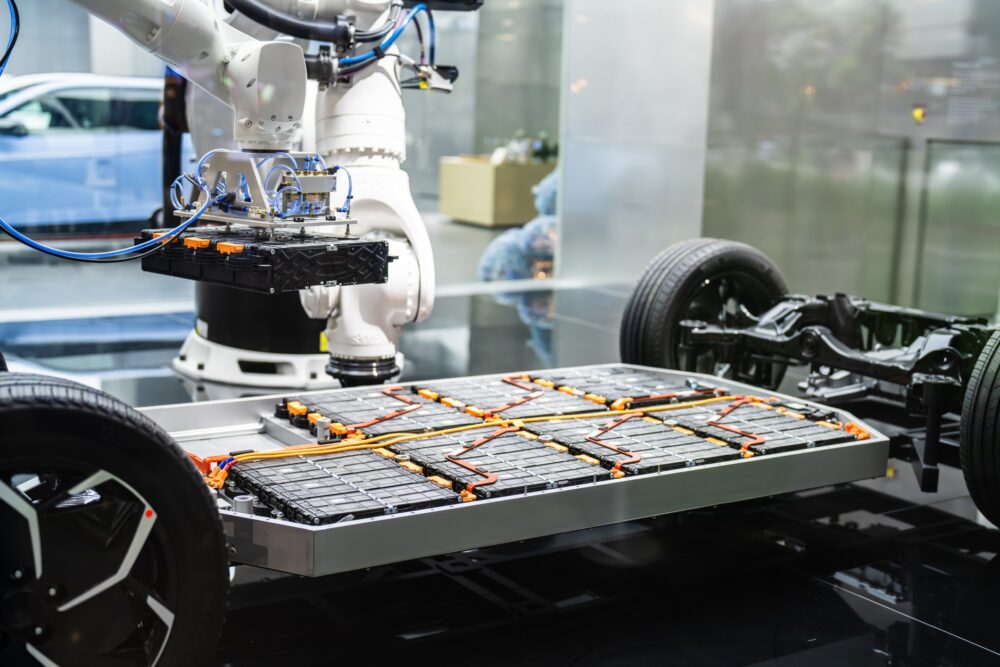
The company is actively scaling up its 4680 cell manufacturing at both its Texas and Fremont factories. This is a strategic move to secure a stable supply of its most advanced battery technology for its future vehicle lineup, particularly for high-performance and long-range models. The 4680 cell is not just a new battery; its design is intrinsically linked to the "unboxed" manufacturing process, as it allows for a structural battery pack and a cell-to-chassis (CTC) design that reduces vehicle weight and manufacturing complexity. This integration of battery and vehicle architecture highlights a cohesive, system-level design philosophy that aims to control every critical component of the company's ecosystem.
Chapter III: Battery Chemistry: A User’s Guide
For the average owner, the complex world of battery chemistry can be confusing. The research highlights three main cathode chemistries used by Tesla: nickel-cobalt-aluminum (NCA), nickel-cobalt-manganese (NCM), and lithium iron phosphate (LFP). The company's strategic decision to use LFP chemistry in its standard range vehicles is driven by its many benefits.
This longevity has led to a counterintuitive recommendation from the company: owners of LFP-equipped vehicles are advised to keep their charge limit set to 100% for daily use and to fully charge the battery at least once a week. This guidance, which seems to "flip conventional wisdom on its head," is necessary for the battery management system (BMS) to accurately calibrate itself due to the LFP battery's unusually flat voltage curve. This practical advice is an invaluable piece of information for owners and serves as a prime example of how understanding the underlying technology can directly impact the user experience.
The research reveals that Tesla is not putting all its eggs in one basket. By simultaneously scaling its own innovative 4680 cell production and securing a long-term supply of cheaper, durable LFP cells from a domestic partner, the company is creating a two-pronged strategy. This strategic duality allows Tesla to reduce risk, lower costs, and enable a wider range of vehicles for different markets and price points. The goal is to move from a supplier-reliant model to a more self-sufficient, resilient one.
Conclusion: From Supplier-Reliant to Self-Sufficient
Tesla's recent battery-related announcements signal a pivotal shift in its long-term strategy. The company is actively building a more localized, flexible, and resilient supply chain to navigate a turbulent global environment. By both onshoring its LFP battery supply and aggressively ramping up its own 4680 cell production, the company is moving toward a future where it has direct control over every critical component of its ecosystem. The LG deal is a political and economic hedge, while the 4680 is a core technological innovation. Together, they represent a cohesive and comprehensive plan to accelerate the world's transition to sustainable energy by ensuring a stable, cost-effective, and safe power source for its vehicles and energy storage products.
FAQ: Batteries & Charging
Q: What type of battery does my Model Y have? A: The battery type depends on the model and the factory it was built in. Standard Range and base Model Y vehicles often have a lithium iron phosphate (LFP) battery, while Long Range and Performance models typically use nickel-based chemistries (NCA/NCM). Some Texas-made Model Y vehicles also have 4680-type cells. To check, you can navigate to the "Additional Vehicle Information" screen on your car's display to see the high-voltage battery type.
Q: Why is the new LG deal important for Tesla owners? A: The deal helps secure a stable, long-term supply of batteries for Tesla's vehicles, which reduces the company's reliance on a single region and helps mitigate the cost increases from rising tariffs. This supply chain stability is a crucial factor in the company's ability to produce vehicles at a competitive price point, which ultimately benefits consumers.
Q: Will the new 4680 cells be in all future Teslas? A: The company is aggressively ramping up 4680 cell production and is using them in some of its vehicles, but it is not expected to replace all other battery types. The company's strategy is to use a variety of battery chemistries and form factors to optimize for different vehicle applications, such as using LFP for affordability and nickel-based cells for long range and high performance.