
I. Introduction
Tesla’s manufacturing operations have long been a cornerstone of its success, enabling rapid innovation and cost reduction in the electric vehicle (EV) market. In 2025, Tesla continues to evolve its production capabilities with the launch of the refreshed Model Y Performance variant and ongoing efforts to scale Cybertruck production. These developments are critical not only for Tesla’s growth but also for maintaining its competitive edge in the increasingly crowded EV landscape.
This article provides an in-depth analysis of Tesla’s latest manufacturing advances, including the technical and design updates in the Model Y Performance, the challenges and realities of Cybertruck production, factory capacity expansions, and the strategic implications for Tesla’s global manufacturing footprint. For Tesla owners and enthusiasts in the US and Europe, understanding these manufacturing dynamics offers insight into Tesla’s product availability, quality, and future prospects.
II. Model Y Performance Development and Launch
The Model Y Performance variant, unveiled through recent spy shots and testing at Germany’s Nürburgring circuit, represents Tesla’s commitment to blending performance and everyday usability. Expected to be available in the US and European markets by late 2025, this variant boasts significant upgrades over the standard Model Y.
Performance Specifications
-
Power and Acceleration: The Model Y Performance is projected to deliver approximately 510 horsepower, enabling a 0-60 mph sprint in around 3.2 seconds. This performance level positions it competitively against premium electric SUVs from other manufacturers.
-
Design Enhancements: The vehicle features distinctive Arachnid-style wheels, a rear spoiler for improved aerodynamics, and red brake calipers that visually differentiate it from lower trims.
-
Range and Efficiency: Despite the performance upgrades, Tesla aims to maintain a competitive electric range, estimated at roughly 320 miles (515 kilometers) on a single charge, balancing power with efficiency.
Testing and Validation
Tesla’s decision to test the Model Y Performance at the Nürburgring—a track renowned for its demanding conditions—demonstrates confidence in the vehicle’s handling and durability. These tests provide valuable data on chassis dynamics, thermal management, and software calibration, ensuring the vehicle meets Tesla’s high standards before market release.
Market Positioning
The Model Y Performance refresh adopts design cues inspired by the Cybertruck, including sharper lines and a more aggressive stance, signaling Tesla’s evolving design language. This refresh aims to attract performance-oriented buyers in the US and Europe, markets where sporty electric SUVs are increasingly popular.
III. 2025 Model Y Refresh Overview
Beyond the Performance variant, Tesla’s 2025 Model Y refresh introduces several updates that enhance the vehicle’s appeal and production efficiency.
Design and Aerodynamics
The refreshed Model Y incorporates design elements influenced by the Cybertruck’s angular aesthetics, including revised front and rear fascias, updated lighting signatures, and improved aerodynamic features. These changes contribute to a modest increase in range and a modernized look aligned with Tesla’s broader design strategy.
Interior and Technology
Tesla has upgraded the interior materials and infotainment system, integrating the latest hardware compatible with Grok AI and enhanced Full Self-Driving capabilities. Improvements include a redesigned center console, updated seats for increased comfort, and expanded connectivity options tailored to US and European customers.
Production Improvements
The 2025 refresh benefits from Tesla’s “unboxed” manufacturing process, which emphasizes modular assembly and automation. This approach reduces production times and costs while maintaining quality, enabling Tesla to meet growing demand more effectively.
IV. Cybertruck Production Status and Challenges
The Cybertruck, Tesla’s futuristic electric pickup, has been one of the most anticipated vehicles in the EV market. However, its production and sales trajectory in 2025 reveal significant challenges.
Production Volume and Sales Data
Despite initial plans to ramp production to 250,000 units annually by 2025, Tesla’s actual production and sales figures fall short. As of Q2 2025, Tesla is producing approximately 13,400 “other models” per quarter, which includes the Cybertruck, Model S, Model X, and Semi. Cybertruck deliveries are estimated at around 5,000 units per quarter, translating to roughly 20,000 units annually—only a tenth of Musk’s original projection.
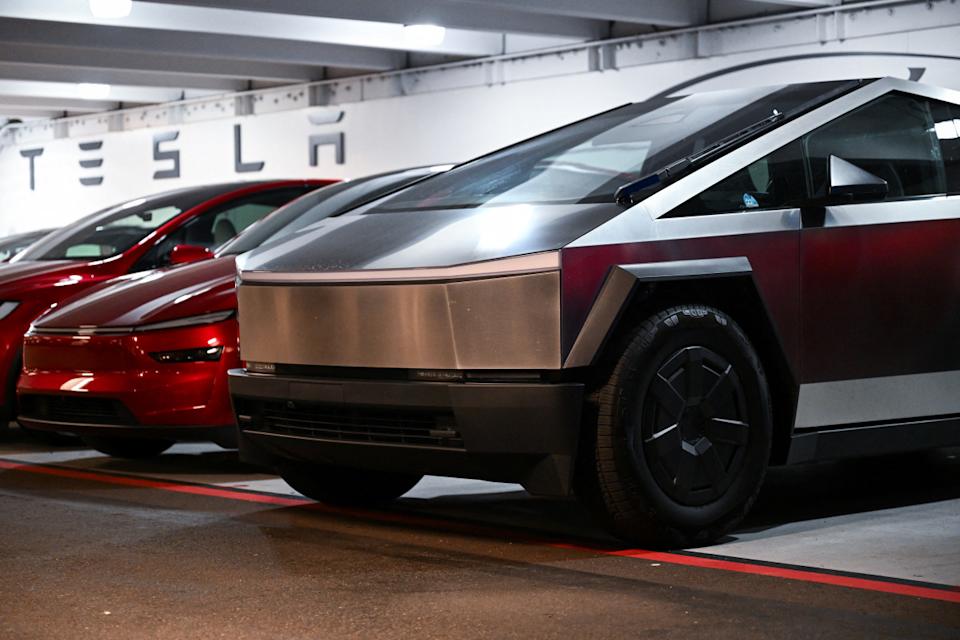
Tesla currently faces a substantial inventory backlog, with over 10,000 unsold Cybertrucks parked across the US, representing nearly $800 million in stock value. This inventory includes older 2024 model year trucks that are not eligible for the federal tax credit, further complicating sales efforts.
Production Bottlenecks and Quality Control
Scaling Cybertruck production has been hampered by technical and logistical challenges. Tesla’s novel “unboxed” manufacturing process and extensive use of stainless steel exoskeletons require new tooling and assembly techniques. Early production runs have faced quality control issues, prompting multiple recalls and software updates.
Tesla has responded by throttling production rates to manage inventory levels and improve quality. Discounts and incentives have been introduced to stimulate demand, but these measures have not fully offset the production slowdown.
Market Competition
Tesla’s Cybertruck faces stiff competition from established automakers. Ford’s F-150 Lightning continues to outsell the Cybertruck, with 5,842 units sold in Q2 2025 despite a year-over-year sales decline. General Motors also outpaces Tesla with combined deliveries of over 9,000 electric pickups across its Silverado EV, GMC Sierra EV, and Hummer EV models.
Delivery Delays and Customer Impact
Tesla’s website now indicates that new Cybertruck orders will not be delivered until 2025, reflecting ongoing production constraints. The wait times have led some customers to consider the upcoming single-motor Rear-Wheel Drive Cybertruck variant, priced at $60,990, which Tesla plans to introduce in 2025. This entry-level model promises 250 miles of range and a 0-60 mph time of 6.5 seconds, potentially broadening the Cybertruck’s appeal.
V. Manufacturing Technology Advances
Tesla continues to innovate in manufacturing technology, aiming to reduce costs and increase output.
“Unboxed” Manufacturing Process
This process emphasizes the use of large, modular components assembled with minimal fasteners, streamlining production and reducing complexity. The approach has been applied to the Cybertruck and is being adapted for the Model Y refresh.
Automation and Labor Efficiency
Tesla reports achieving approximately 80% automation in new vehicle lines, significantly reducing labor costs. Automation includes robotic welding, painting, and final assembly operations. These efficiencies are crucial for maintaining Tesla’s competitive pricing and profitability.
Supply Chain Localization
Tesla is investing in localized supply chains, especially in the US and Europe, to mitigate risks from global disruptions. This includes sourcing battery materials and components closer to manufacturing sites, improving logistics and reducing lead times.
VI. Global Manufacturing Strategy
Tesla’s manufacturing footprint continues to expand and adapt to market demands.
Gigafactory Texas
The Austin factory remains Tesla’s primary hub for Model Y and Cybertruck production. While Cybertruck production is currently below expectations, Tesla is investing in capacity expansion and process improvements to reach planned volumes.
Nevada and Other Facilities
The Nevada Gigafactory focuses on battery and Semi truck production, targeting 50,000 Semi units annually by the end of 2025. European manufacturing, including the Berlin Gigafactory, supports Model Y production for the European market, with gradual capacity increases planned.
Future Production Plans
Tesla aims to start Cybercab production—a compact, two-seater robotaxi without manual controls—in 2026. This vehicle will leverage lessons learned from Cybertruck and Model Y production to optimize autonomous ride-hailing services.
VII. Quality Control and Recalls
Tesla has faced quality challenges, particularly with the Cybertruck.
-
Multiple recalls have addressed software glitches, battery management issues, and hardware defects.
-
Tesla’s over-the-air update capability allows rapid deployment of fixes, minimizing customer inconvenience.
-
Quality improvement initiatives focus on supplier audits, enhanced testing protocols, and employee training.
VIII. Competitive Manufacturing Landscape
Tesla’s manufacturing advantages include vertical integration, software-driven production, and rapid innovation cycles. However, traditional automakers and new entrants are closing the gap with significant investments in EV manufacturing.
Chinese manufacturers, in particular, have demonstrated rapid scale-up capabilities and cost efficiencies, challenging Tesla in both US and European markets.
IX. Financial Impact
Manufacturing efficiencies and product mix improvements are critical for Tesla’s profitability.
-
The Model Y refresh and Performance variant are expected to improve margins through higher pricing and production cost reductions.
-
Cybertruck’s production shortfall and inventory buildup pressure financial performance, necessitating careful inventory management.
-
Investments in automation and supply chain localization aim to sustain long-term cost advantages.
X. Conclusion
Tesla’s manufacturing evolution in 2025 reflects both impressive progress and ongoing challenges. The Model Y Performance launch and refresh showcase Tesla’s ability to innovate and meet market demands. Meanwhile, Cybertruck production struggles highlight the complexities of scaling novel vehicle designs.
Tesla’s continued focus on automation, modular manufacturing, and supply chain resilience positions it well for future growth. For Tesla owners and enthusiasts in the US and Europe, these manufacturing developments will shape vehicle availability, quality, and the company’s competitive standing in the dynamic EV market.
XI. FAQ Section
Q1: When will the Model Y Performance be available?
Late 2025, with deliveries initially focused on the US and European markets.
Q2: Why are Cybertruck production and sales lower than expected?
Production bottlenecks, quality control issues, and inventory backlogs have limited output.
Q3: What is Tesla’s “unboxed” manufacturing process?
A modular assembly approach that reduces complexity and speeds production.
Q4: How does Tesla’s manufacturing compare to competitors?
Tesla leads in automation and vertical integration but faces increasing competition from traditional and Chinese automakers.
Q5: Will Tesla’s manufacturing improvements reduce vehicle prices?
Cost savings may improve margins but could also enable more competitive pricing over time.