
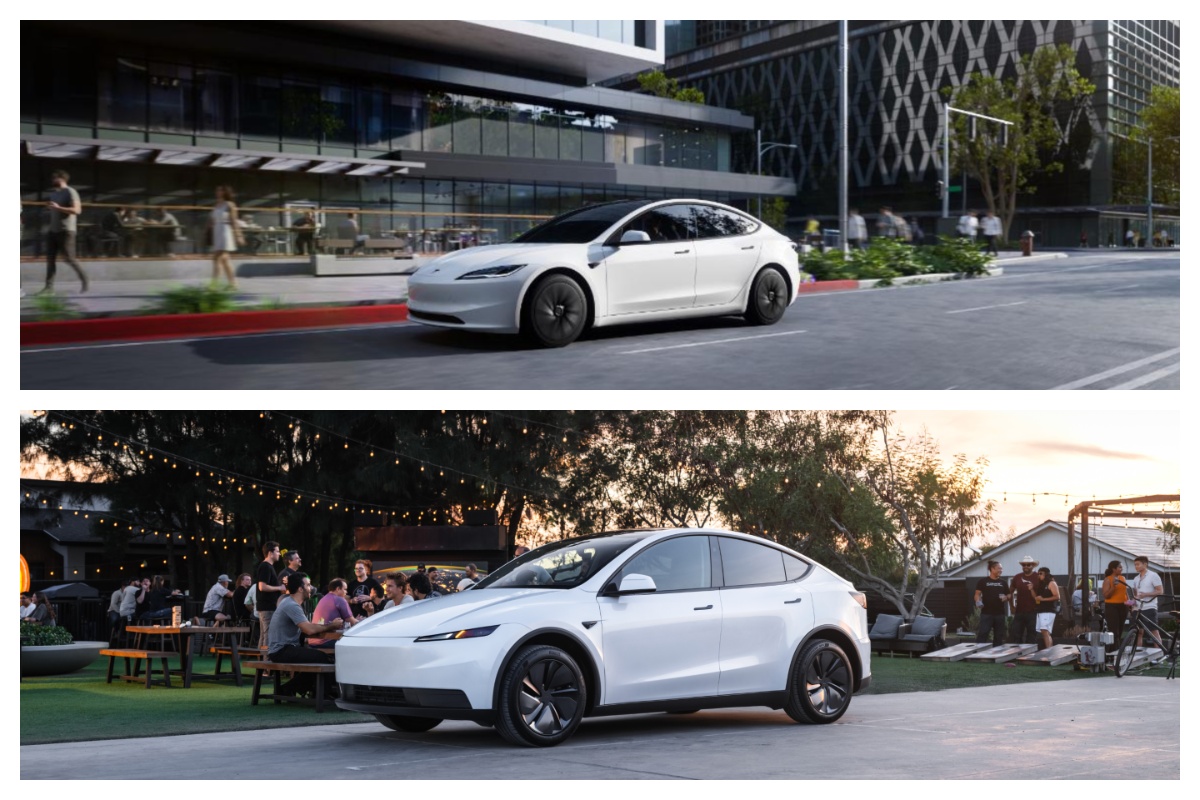
Introduction: The Strategic Pivot
In October 2025, Tesla introduced a pivotal new product offering that signals a fundamental shift in the company's market strategy: the Model Y Standard and Model 3 Standard edition vehicles. Priced at approximately $5,000 to $5,500 less than the previous generation base models, these vehicles represent Tesla's most aggressive entry into the mass-market electric vehicle segment. The product launch reflects management's recognition that Tesla faces a critical inflection point—the company can either continue reducing prices to capture volume in an increasingly commoditized EV market, or cede the emerging mass-market EV segment to competitors while focusing exclusively on premium positioning.
The introduction of the Standard variants is not without controversy. The aggressive cost-cutting required to achieve $5,000+ price reductions has necessitated the elimination of numerous convenience and comfort features, raising questions about whether the vehicles represent a genuine value proposition or simply a stripped-down offering designed to inflate unit sales at the expense of customer satisfaction and brand positioning. Tesla executives have carefully walked a line between promoting the affordability of these new variants while acknowledging that the Standard editions sacrifice features that customers expect in modern vehicles. This balancing act reflects the fundamental tension inherent in Tesla's new pricing strategy: How low can prices go while maintaining customer satisfaction, and at what point does excessive feature elimination damage Tesla's premium brand positioning?
Market Dynamics and Competitive Context
The Price Compression Reality
The U.S. electric vehicle market is experiencing a significant compression in average selling prices and consumer willingness-to-pay. In 2020 and 2021, when EVs remained a niche product category with limited consumer adoption, average selling prices for electric vehicles exceeded $60,000 annually. By 2024-2025, as EV options proliferated and Chinese manufacturers entered markets with aggressively priced vehicles, the average EV selling price has declined substantially. This price compression reflects both competitive intensity and the reality that mass-market EV adoption requires vehicles priced within $10,000 to $15,000 of comparable internal combustion engine vehicles.
Tesla, as the market leader in the U.S. EV segment, has borne the brunt of this price compression. The company has implemented multiple price cuts over the past 18 months, with cumulative reductions sometimes exceeding 20 to 30 percent from 2021 peak prices. Each price cut improved market demand and volume but simultaneously reduced the gross margin per vehicle sold. The Model Y Standard and Model 3 Standard offerings represent an extension of this pricing strategy—Tesla is doubling down on volume growth and market share defense even as per-vehicle profitability declines.
Competitive Landscape: Chinese and Traditional Automaker Threats
Tesla's decision to introduce aggressively priced Standard variants reflects competitive pressure from multiple sources. Chinese EV manufacturers, including BYD, Li Auto, and Xpeng, have successfully introduced competitively priced electric vehicles with increasingly sophisticated technology, attractive styling, and reliable performance. BYD, in particular, has leveraged its battery manufacturing expertise and domestic cost advantages to offer electric vehicles at price points significantly below Tesla's previous base model pricing. While many of these Chinese vehicles are not yet available in the U.S. market due to tariff and import restrictions, their existence in other global markets demonstrates that the mass-market EV segment is becoming increasingly price-competitive.
Additionally, traditional automakers including General Motors, Ford, Volkswagen, and Chevrolet have begun launching mass-market electric vehicles designed to compete directly with Tesla on price and accessibility. The Ford Mustang Mach-E, Volkswagen ID.4, and Chevrolet Equinox EV all offer competitive value propositions at price points approaching or competing with Tesla's new Standard variants. The used EV market is also becoming more competitive, with increasing inventory of second-hand electric vehicles from companies like Tesla, Nissan, Chevy, and others creating a viable alternative for price-sensitive consumers who might otherwise purchase a new Standard variant.
Tesla's Standard variant offering, therefore, reflects management's determination to defend market share in the mass-market EV segment and prevent customer attrition to competitors. By offering a vehicle priced competitively with alternatives, Tesla seeks to maintain its dominant market share position and capture volume that might otherwise be lost to competitors.
The Tax Credit Deadline Impact
The introduction of the Model Y Standard and Model 3 Standard variants also reflects strategic timing around the expiration of the federal EV tax credit on December 31, 2025. The $7,500 federal credit makes electric vehicles significantly more affordable for consumers, with an $X-priced vehicle effectively costing $X minus $7,500 after the credit. Once the credit expires, the same vehicle becomes $7,500 more expensive, potentially pricing it out of the reach of budget-conscious consumers.
Tesla's decision to introduce Standard variants with lower base prices increases the likelihood that these vehicles will remain within the reach of mainstream consumers even after the tax credit expires. A Model Y Standard priced at perhaps $40,000 to $42,000 may be more accessible to a broader consumer demographic than the $50,000+ pricing of the Long Range variants. This strategic positioning suggests Tesla expects post-credit demand to deteriorate significantly and is preemptively expanding its addressable market at the entry level to mitigate the demand cliff.
Product Specifications and Cost Structure Analysis
Battery and Motor Optimization
The Model Y Standard and Model 3 Standard variants achieve their price targets through multiple cost reduction levers, with the battery and motor representing the most significant components. According to analysis from AutoForecast Solutions, approximately 40 percent of the overall price reduction comes from battery and motor downgrades, while the remaining 60 percent comes from elimination of features, components, and material upgrades. The battery downsizing strategy maintains the 321-mile EPA estimated range target, suggesting Tesla has optimized battery chemistry and thermal management to achieve acceptable range with a smaller total energy capacity.
This battery optimization likely involves a combination of strategies: (1) use of more energy-dense battery chemistry or manufacturing processes; (2) thermal management improvements that reduce battery degradation and extend range; (3) software optimization of power management and energy consumption; and (4) acceptance of somewhat lower performance (maximum power output) while maintaining adequate daily driving capability. The motor downgrades similarly reflect a trade-off where the Standard variants sacrifice peak acceleration and maximum power while maintaining sufficient torque and performance for mainstream driving scenarios.
The 321-mile EPA estimated range represents adequate daily driving capability for most U.S. consumers, whose average daily driving is approximately 40 miles (64 kilometers). The range adequately covers most daily driving scenarios with weekly Supercharging, addressing range anxiety concerns for consumers considering their first electric vehicle purchase. This demonstrates that Tesla has carefully optimized the Standard variants to meet mainstream customer needs despite the aggressive cost reduction targets.
Feature Elimination and Interior Downgrades
While the battery and motor represent approximately 40 percent of the price reduction, the elimination of convenience and comfort features accounts for the remaining 60 percent. Removed features include ventilated vegan leather seats, ambient interior lighting, power-folding exterior mirrors, seat-side position adjustment buttons, seat-back pockets, and waterproof frunk (trunk) lining. These features, while not essential to vehicle function, contribute substantially to the user experience and perceived quality and luxury of the vehicle.
The feature elimination strategy reflects an apparent Tesla design decision to make the Standard variants feel noticeably less premium than higher-trim variants, with the presumed intention of encouraging customers to upgrade to the Long Range or Performance variants. This strategy creates an uncomfortable dynamic where Tesla essentially manufactures customer dissatisfaction with the intentional goal of motivating trade-ups. While this approach may increase average selling price and per-customer revenue, it carries risks of damaging customer satisfaction, negative word-of-mouth, and brand reputation harm among first-time Tesla buyers who may feel that Tesla is deliberately providing an inferior experience to squeeze additional revenue.
Manufacturing Implications
The introduction of Standard variants with distinct component lists and manufacturing processes introduces additional complexity into Tesla's production system. Rather than a single Model Y or Model 3 production line producing all trim variants, Tesla likely needs to maintain parallel production lines or at least discrete assembly configurations to accommodate the different battery packs, motors, interior components, and feature sets. This production complexity increases per-unit manufacturing overhead and potentially reduces manufacturing efficiency relative to a scenario where Tesla produced only premium variants.
However, the volume gains from the Standard variant strategy may offset the manufacturing efficiency loss. If Standard variants enable Tesla to increase total Model Y and Model 3 volume from 450,000+ annual units to 500,000+ or higher annual units, then the total gross profit across the Model Y/3 portfolio may improve despite the lower per-unit margin on Standard variants. This scenario reflects Tesla's apparent strategic calculation that volume growth and market share defense justify the complexity and margin sacrifice required to support the Standard variant strategy.
Customer Value Proposition and Market Reception
Target Customer Demographics
The Model Y Standard and Model 3 Standard variants are explicitly designed to attract first-time electric vehicle buyers and price-conscious consumers for whom a $5,000+ price reduction represents a material decision factor. The target customer typically falls into one or more of the following categories: (1) young professionals with limited budgets seeking to purchase their first vehicle; (2) budget-conscious families prioritizing total cost of ownership and minimizing vehicle expense; (3) fleet and commercial buyers seeking to electrify their transportation operations at the lowest total cost of ownership; and (4) technologically-oriented consumers interested in electric vehicle benefits (zero emissions, instant torque, access to Supercharging) but unwilling to pay premium prices for luxury features.
These customer segments represent sizable addressable markets, particularly as government EV adoption targets and consumer environmental consciousness drive mainstream EV adoption. The second-time and third-time electric vehicle buyer market—consumers who previously purchased an EV and seek to replace or augment their existing vehicle—may also represent a customer segment willing to consider the Standard variants despite the feature compromises, particularly if these customers' primary motivation is cost minimization rather than luxury feature accumulation.
Total Cost of Ownership Calculus
Despite the feature compromises, the Model Y and Model 3 Standard variants likely offer compelling total cost of ownership economics relative to comparable internal combustion engine vehicles. The combination of the lower purchase price, $7,500 federal tax credit (until December 31, 2025), low operating costs due to minimal maintenance requirements, and low fuel costs (electricity at roughly one-third the effective cost of gasoline on a per-mile basis) creates a compelling value proposition for consumers prioritizing financial optimization. A consumer purchasing a Model 3 Standard at $40,000-$42,000 after applying the federal tax credit effectively pays $32,500-$34,500, making the vehicle substantially more affordable than a comparable entry-level sedan from traditional automakers while offering superior acceleration, lower operating costs, and access to Tesla's Supercharging network.
This total cost of ownership advantage becomes even more pronounced if the consumer factors in reduced insurance costs (some insurers offer EV discounts), avoided gasoline purchases, and near-zero maintenance requirements over the vehicle's ownership period. For budget-conscious consumers and fleet operators, this total cost of ownership advantage may prove more persuasive than the feature compromises inherent in the Standard variants.
Manufacturing and Production Scaling
Giga Texas Production Ramp
Tesla has begun production of the Model Y Standard at Gigafactory Texas, the newer manufacturing facility near Austin that already produces the Model Y, Cybertruck, and semi-truck for global markets. The facility has been operating for approximately three years and has achieved meaningful production scale, with reports suggesting the facility recently exceeded 500,000 cumulative vehicle production. The production ramp for the Standard variants represents an opportunity to utilize additional production capacity at the facility, increase total throughput, and optimize manufacturing processes through increased volume.
The decision to concentrate Model Y Standard production at Giga Texas rather than distributing production across multiple facilities (Berlin, Shanghai, etc.) reflects Tesla's apparent strategy of optimizing each facility's production mix based on local market demand and manufacturing efficiency considerations. Giga Texas, with its newer manufacturing equipment and processes, may offer lower per-unit production costs than older facilities, making it an efficient location for producing the cost-sensitive Standard variants.
Supply Chain and Component Sourcing
The cost reductions required to support the Standard variants' aggressive pricing likely necessitate adjustments to Tesla's supply chain and component sourcing. For features that are being eliminated entirely (ventilated seats, ambient lighting, power-folding mirrors), sourcing becomes irrelevant. However, for components that remain in the vehicle but at lower cost (battery pack, motor, standard seats, exterior materials), Tesla likely has negotiated reduced-cost arrangements with suppliers or pursued alternative suppliers offering lower-cost alternatives.
The scale of Standard variant production—potentially 100,000+ units annually—may provide Tesla with sufficient negotiating leverage to secure meaningful cost reductions from suppliers, further enabling the aggressive pricing targets. Alternatively, Tesla may pursue vertical integration opportunities, manufacturing additional components in-house rather than sourcing externally, to further reduce costs. The company's history of strategic vertical integration in batteries, motors, and other critical components suggests management may pursue this approach.
Financial and Profitability Implications
Gross Margin Impact and Sustainability Questions
The introduction of Standard variants with significantly lower pricing and reduced feature content will materially impact Tesla's gross margin. If the Standard variants eventually represent 20-30 percent of Model Y/3 sales volume (as might be anticipated if they achieve meaningful market adoption), the blended gross margin across the entire Model Y/3 portfolio would decline materially from current levels. Current estimates suggest the gross margin percentage on Standard variants may be 10-15 percent, compared with 18-22 percent on Long Range and Performance variants, implying a sizable margin drag at the portfolio level.
The fundamental question for investors is whether the volume gains from the Standard variant strategy sufficiently offset the margin dilution to improve total gross profit dollars despite the lower percentage margin. If Standard variants remain niche products representing less than 10 percent of Model Y/3 volume, the margin impact would be manageable. However, if Standard variants capture 20+ percent of volume, the portfolio margin compression becomes substantial and raises questions about long-term profitability sustainability.
Tesla management faces a strategic dilemma: aggressive pricing and Standard variant offerings drive volume and market share, but simultaneously compress profitability and raise questions about whether the business model remains sustainable at lower price points. The company's ability to restore margins through manufacturing efficiency improvements, raw material cost reductions, or beneficial volume leverage on fixed costs will likely determine whether the Standard variant strategy represents a viable long-term business model or a transitional strategy that ultimately proves unsustainable.
Capital Allocation and Investment Priorities
The production scaling required to support Standard variant manufacturing—and more broadly, the volume growth ambitions embodied in the Standard variants—will require substantial capital investment in manufacturing facilities, equipment, and supply chain development. Tesla's capital expenditure requirements have been trending upward, and the company continues to invest in production capacity expansions at existing facilities and potential new manufacturing locations. The Standard variant strategy, while generating volume growth, simultaneously consumes capital and returns on that capital face pressure due to lower margins.
Shareholders may question whether Tesla's capital allocation toward Standard variant production scaling represents the optimal use of company resources. Alternative uses of capital—investing in autonomous driving technology development, expanding energy storage manufacturing, developing next-generation vehicle platforms, or returning cash to shareholders through dividends or share buybacks—might generate superior long-term returns. The strategic capital allocation tension between pursuing volume growth through Standard variants versus investing in higher-margin strategic initiatives will likely be debated among shareholders and analysts throughout 2026.
Market Positioning and Brand Implications
Premium Brand Dilution Risk
One of the subtler risks associated with the Standard variant strategy involves potential brand dilution. Tesla has historically positioned itself as a premium technology brand, offering advanced autonomous driving features, distinctive styling, and superior performance relative to mass-market competitors. The introduction of aggressively stripped-down Standard variants, with eliminated features and reduced capability, risks degrading Tesla's brand positioning and confusing consumers regarding the company's identity and market positioning.
A first-time Tesla customer who purchases a Model 3 Standard due to its attractive pricing may feel disappointed by eliminated convenience features and potentially attribute the disappointment to Tesla's quality or design rather than their choice of the lowest-price variant. This customer's experience could translate into negative word-of-mouth and reduced brand loyalty, potentially damaging Tesla's brand perception among a broader customer demographic. Traditional luxury brands from Porsche to BMW manage this brand risk by maintaining relatively small entry-level product segments and ensuring that even their lowest-price vehicles maintain premium positioning and feature content commensurate with brand expectations.
Market Segmentation Strategy
The introduction of Standard variants also reflects a strategic shift toward market segmentation, with Tesla explicitly offering different vehicles targeted at different customer segments. Previously, Tesla's model line was relatively simple: higher trim levels of the Model 3 and Model Y for customers willing to pay more, and lower trim levels for budget-conscious customers. The Standard variant strategy represents a more aggressive market segmentation approach, explicitly designing different variants for different customer demographics and willingness-to-pay levels.
If executed effectively, this market segmentation strategy could improve Tesla's overall revenue and market share by capturing customers across a wider income spectrum. However, the strategy also introduces complexity in manufacturing, marketing, and customer support, as Tesla must manage multiple variants with distinct feature sets and potentially different quality expectations.
Competitive Response and Market Dynamics
Legacy Automaker Positioning
Traditional automakers including Ford, General Motors, Volkswagen, and Chevrolet are unlikely to passively accept Tesla's Standard variant pricing without competitive response. These companies have substantial manufacturing cost advantages in mass-market vehicle segments, strong brand recognition, and extensive distribution and service networks. A Ford, GM, or Volkswagen can likely match or beat Tesla's Standard variant pricing while offering vehicles with proven reliability, extensive warranty support, and local service convenience.
However, Tesla's cost structure advantages, deriving from simpler vehicle architecture, fewer moving parts, and optimized manufacturing processes, may prove difficult for legacy automakers to match. Legacy automakers' vehicles typically include more complex drivetrains, traditional suspension systems, and numerous mechanical components that Tesla vehicles lack. Tesla's advantage in manufacturing cost structure may prove sustainable even in mass-market pricing contexts, potentially allowing the company to offer competitive pricing while maintaining better margins than competitors.
Chinese EV Manufacturer Competition
The most significant competitive threat to Tesla's Standard variant strategy likely comes from Chinese EV manufacturers already operating at scale in price-sensitive markets. BYD, Li Auto, NIO, and other Chinese manufacturers have demonstrated an ability to develop competitive electric vehicles at lower cost structures than Tesla can achieve. While these vehicles are not yet broadly available in the U.S. market due to tariffs and regulatory barriers, the potential for tariff reduction or trade policy changes could suddenly expose Tesla to direct competition from Chinese manufacturers operating at significantly lower cost structures.
If Chinese EV manufacturers successfully overcome tariff barriers and enter the U.S. market with competitively priced vehicles, Tesla's Standard variant strategy may prove insufficient to defend market share against rivals with fundamentally lower manufacturing cost structures. This competitive threat represents a strategic risk factor for Tesla's long-term business model and suggests that the company's success depends partially on maintaining tariff protection against Chinese EV imports.
Looking Ahead: Adoption and Long-Term Viability
First Customer Delivery and Reception
The success of the Model Y Standard and Model 3 Standard variants will ultimately be determined by actual customer adoption, satisfaction, and long-term reliability performance. Early customer feedback regarding feature elimination, perceived quality, and driving experience will provide important signals regarding whether the Standard variants represent a viable mass-market offering or a misguided strategy that damages Tesla's brand positioning without generating meaningful volume or profit benefits.
Tesla's investor community is watching closely to understand whether Standard variants can achieve meaningful market penetration and whether the gross margin implications prove sustainable. If Standard variants generate disappointing sales, Tesla will likely quietly reduce emphasis on these vehicles and return focus to higher-margin variants. Conversely, if Standard variants achieve strong adoption and satisfy customers despite feature compromises, the strategy will likely be expanded to other markets and potentially other vehicle platforms.
Broader Market Implications
The introduction of Model Y Standard and Model 3 Standard variants signals Tesla's recognition that the mass-market electric vehicle adoption is progressing rapidly and that the company must be positioned across multiple market segments to maintain market leadership. Rather than remaining exclusively positioned as a premium technology brand, Tesla is broadening its positioning to encompass the mass market, potentially sacrificing some brand prestige to maintain volume dominance and market share.
This strategic shift reflects Tesla's maturation from startup to established manufacturer and the realities of competing in established automotive markets where volume is critical to profitability and competitiveness. The success of this strategy will likely determine Tesla's competitive position and profitability trajectory for the next several years.