
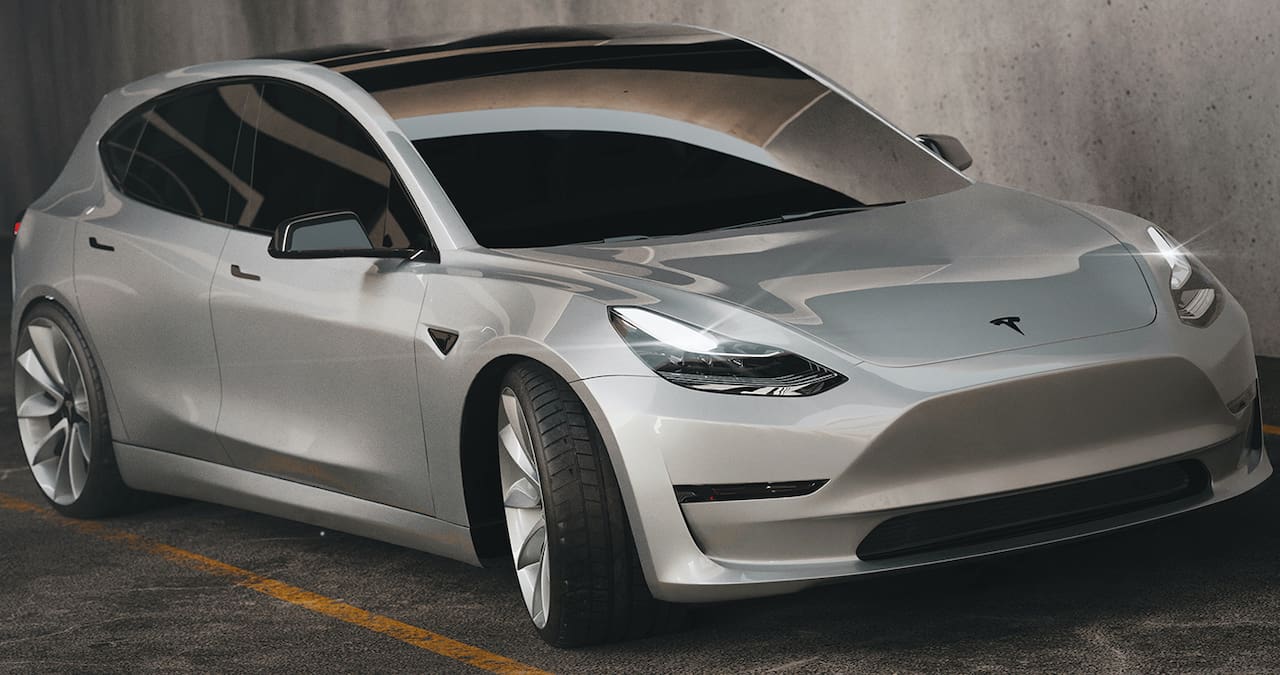
More than just a new model, Tesla's long-rumored affordable car is the key to unlocking true global market domination and fulfilling the final, most crucial step of its original master plan. Codenamed "Project Redwood," Tesla's upcoming ~$25,000 compact vehicle is poised to be its most significant product since the Model 3. But the real story isn’t just the price tag; it's the revolutionary manufacturing process behind it—a system designed to slash costs, rethink the very idea of an assembly line, and accelerate production to unprecedented levels.
From the moment Elon Musk published his "Secret Master Plan, Part Deux" in 2016, the world has been waiting for the final piece of the puzzle: a truly affordable, mass-market electric vehicle. The Model 3 brought Tesla to the premium masses, but a car priced at around $25,000 would put it in direct competition with the best-selling vehicles on the planet, both electric and gasoline-powered. Recent whispers from suppliers and insights from industry insiders suggest this vehicle is closer than ever, moving from a concept to a tangible project with a clear, radical strategy. "Project Redwood" is not just about building a cheaper car; it's about reinventing how cars are built.
Decoding "Project Redwood": What We Know So Far
The journey to Tesla's affordable EV has been a long one. Initially dubbed the "Model 2," the concept has evolved significantly. Early speculation centered on a simple, scaled-down version of the Model 3. However, the latest information surrounding "Project Redwood" points to a far more ambitious, ground-up redesign based on a next-generation platform.
The vehicle itself is expected to take the form of a compact crossover or hatchback. This segment is the sweet spot of the global automotive market, especially in Europe and Asia, where smaller, practical vehicles reign supreme. The target audience is vast: first-time car buyers, young families in urban environments, and drivers looking to switch to electric without the premium price tag of current offerings. It's a direct assault on the territory of the Toyota Corolla, Volkswagen Golf, and, most importantly, the wave of low-cost, high-tech EVs emerging from China.
While official designs remain under wraps, the vehicle is expected to incorporate learnings and aesthetic cues from the Cybertruck. This doesn't mean it will be a stainless-steel wedge, but rather that it will embrace simplicity and manufacturing efficiency in its design. Think fewer complex curves, more straight lines, and a focus on minimizing the number of individual parts. Recent engagements with suppliers, who were reportedly asked to bid on components for "Project Redwood," have ignited speculation that Tesla is targeting a production start as early as mid-2025, an incredibly aggressive timeline.
The "Unboxed" Revolution: Building a Car Like a Lego Set
The most revolutionary aspect of "Project Redwood" is not the car itself, but how it will be made. The traditional automotive assembly line, pioneered by Henry Ford over a century ago, is fundamentally sequential. A car's frame moves down a line while thousands of parts are added in a specific order. This process is linear, complex, and creates massive, sprawling factories.
Tesla aims to shatter this paradigm with what it calls the "unboxed" manufacturing process. Imagine building a car not in a line, but in parallel. The concept is to break the vehicle down into its major sub-assemblies and manufacture them simultaneously in different, specialized areas of the factory. The front body section, the rear body section (both created with massive gigacasting presses), the left and right sides with doors and windows pre-installed, and the structural battery pack (which serves as the car's floor) are all built and fully outfitted at the same time.
In this model, there is no single "assembly line." Instead, these large, completed modules come together only at the very final stage of production, much like snapping together a few large Lego bricks. This parallel assembly allows for more work to be done in a smaller space with more people and robots working on the different sub-components at once, without getting in each other's way.
The benefits of this "unboxed" method are staggering. Tesla projects a reduction in factory footprint by over 40% and a decrease in manufacturing costs by as much as 50% compared to the already-efficient Model 3/Y production line. This translates to lower capital expenditure for new factories, a dramatically higher production density, and an unprecedented speed of assembly. It is this manufacturing innovation, more than anything else, that makes the $25,000 price point feasible while maintaining a healthy profit margin.
Gigafactory Texas: The Cradle of the Revolution
The proving ground for this new era of manufacturing will be Gigafactory Texas. The Austin facility is the perfect incubator. It has the physical space for expansion, and the Tesla team there is already battle-hardened from the production ramp of the Cybertruck, another vehicle that challenged manufacturing conventions. The learnings from producing the Cybertruck's unique exoskeleton and utilizing the 9,000-ton Giga Presses will be directly applicable to "Project Redwood."
The timeline is ambitious. A production start in mid-2025 means that initial production lines are likely already being planned and constructed within the Texas facility. Once the "unboxed" process is perfected and running smoothly in Austin, the plan is to clone it. This production model will be the blueprint for new lines at Gigafactories in Berlin and Shanghai, allowing Tesla to rapidly scale production of its affordable EV to millions of units per year, serving regional markets with locally built cars.
Market Impact: Can "Redwood" Redefine the Automotive Landscape?
The successful launch of "Project Redwood" would send a shockwave through the global auto industry. At a $25,000 price point, it would not just compete with other EVs; it would become a direct competitor to the most popular internal combustion engine vehicles on the planet. For many consumers, the final barrier to EV adoption—cost—would be eliminated.
This poses an existential threat to legacy automakers who are already struggling to make their EVs profitable. It also meets the challenge from Chinese automakers like BYD head-on. BYD has found immense success with its lineup of affordable, well-built EVs, and "Project Redwood" is Tesla's clear answer.
For the stock market, a successful launch would re-ignite Tesla’s hyper-growth narrative. After years of its valuation being debated, demonstrating the ability to profitably produce a mass-market car at this scale would provide a powerful new catalyst for growth.
"Project Redwood" is arguably Tesla's most important and ambitious gamble yet. Its success doesn’t just depend on designing an appealing car. It hinges on the flawless execution of a manufacturing paradigm shift that has not been seen in the industry for over a hundred years. If Elon Musk and his team can pull it off, they won’t just be launching a new car; they will be launching a new era for how all cars are made.