
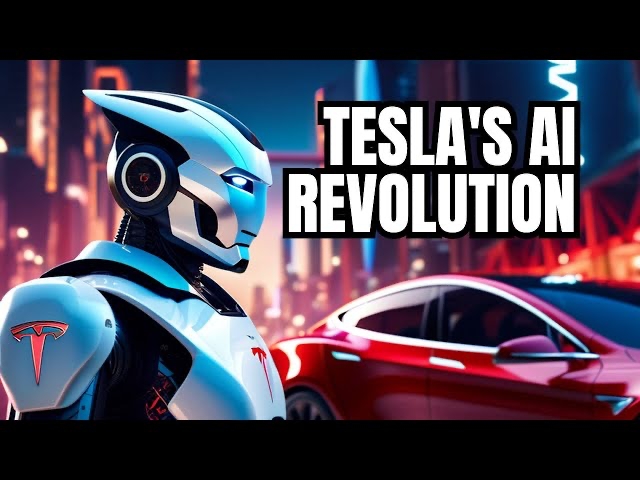
Introduction: A Turning Point in Tesla’s History
For more than a decade, Tesla has been synonymous with electric vehicles. The Model S redefined what an EV could be, the Model X pushed boundaries in design and technology, and the Model 3 and Model Y turned electric mobility into a mass-market reality. Yet in 2026, Tesla finds itself at a pivotal crossroads.
Recent strategic signals from Tesla indicate a profound transformation underway: a gradual departure from low-volume flagship luxury vehicles and a decisive pivot toward artificial intelligence, autonomous driving, robotaxis, and humanoid robotics. This shift represents not merely a product strategy adjustment but a fundamental redefinition of what Tesla aims to be as a company.
For Tesla owners in the United States and Europe, this transition raises important questions. What does this mean for existing vehicles? Is Tesla still a car company at its core, or is it evolving into something entirely different? And how will this transformation shape the future of mobility, ownership, and transportation ecosystems?
This article explores Tesla’s strategic evolution in depth—examining why legacy models are being phased out, how AI and robotics have become central to Tesla’s future, and what this means for consumers, investors, and the broader automotive industry.
1. Tesla’s Original Identity: How Model S and Model X Built the Brand
When the Tesla Model S launched, it shattered long-held assumptions about electric vehicles. It proved that EVs could be fast, luxurious, technologically advanced, and desirable. Shortly afterward, the Model X introduced features that no mainstream automaker had dared to commercialize at scale, including falcon-wing doors and advanced driver-assistance systems.
Why Model S and X Mattered
-
Technology Demonstrators: These models served as rolling laboratories for battery technology, software-defined vehicles, and over-the-air updates.
-
Brand Elevation: They positioned Tesla as a premium innovator rather than a niche EV startup.
-
Market Disruption: Traditional luxury automakers were forced to accelerate their electrification plans.
However, despite their influence, Model S and Model X were never Tesla’s volume leaders. As the company matured, scale and efficiency became increasingly critical.
2. The Shift to Scale: Model 3, Model Y, and Operational Reality
Tesla’s long-term mission—accelerating the world’s transition to sustainable energy—required mass adoption. That mission could not be achieved through low-volume luxury vehicles alone.
Why Scale Changed Everything
The Model 3 and Model Y fundamentally reshaped Tesla’s business:
-
Higher Production Volumes: Millions of units globally
-
Simplified Manufacturing: Shared platforms and components
-
Stronger Margins Through Efficiency: Despite lower prices
As production scaled, Tesla increasingly prioritized:
-
Manufacturing simplicity
-
Software leverage across platforms
-
Capital efficiency
In this context, maintaining separate production lines for aging luxury models became harder to justify.
3. Why Tesla Is Phasing Out Legacy Flagship Models
Tesla’s decision to end or significantly de-prioritize Model S and Model X production is not a rejection of their legacy—it is a recognition of strategic reality.
Key Drivers Behind the Decision
1. Manufacturing Complexity
Low-volume vehicles disrupt highly optimized production lines. Tesla’s future factories are designed around speed, automation, and repeatability.
2. Diminishing Strategic Value
Many innovations once exclusive to Model S/X—large touchscreens, OTA updates, advanced driver assistance—are now standard across Tesla’s lineup.
3. Capital Reallocation
Every dollar invested in maintaining legacy platforms is a dollar not invested in autonomy, AI training, and robotics.
For Tesla, the opportunity cost became too high.
4. Tesla’s New Core: Artificial Intelligence as the Central Asset
Tesla increasingly defines itself not as an automaker, but as an AI company that happens to build vehicles.
AI as Tesla’s Competitive Moat
Tesla’s advantage lies in:
-
Real-world driving data at scale
-
Vertically integrated AI development
-
Custom training hardware
-
Unified software architecture
Vehicles are now viewed as data-generating nodes feeding Tesla’s neural networks. This data-first mindset fundamentally changes product priorities.
5. Full Self-Driving: From Feature to Platform
Full Self-Driving (FSD) is no longer positioned as a premium driver-assistance option. It is becoming the foundation of Tesla’s future business model.
Strategic Implications of FSD
-
Software Margins: Recurring revenue through subscriptions
-
Network Effects: More vehicles → better AI → more adoption
-
Platform Expansion: FSD powers robotaxis, logistics, and robotics
In this framework, the specific vehicle model matters less than its ability to support autonomy at scale.
6. Robotaxis: Redefining Vehicle Ownership
Tesla’s robotaxi vision challenges one of the most fundamental assumptions of modern society: that cars must be privately owned.
How Robotaxis Change the Equation
-
Vehicles become revenue-generating assets
-
Utilization rates increase dramatically
-
Urban transportation costs decline
-
Parking infrastructure becomes less critical
For Tesla, robotaxis represent a shift from one-time vehicle sales to long-term service revenue.
7. Optimus and Humanoid Robotics: Beyond Transportation
Perhaps the most radical element of Tesla’s transformation is Optimus—the humanoid robot initiative.
Why Optimus Matters Strategically
-
Uses the same AI stack as FSD
-
Leverages Tesla’s manufacturing expertise
-
Targets labor-intensive industries
If successful, Optimus could become larger than Tesla’s automotive business itself.
8. What This Means for Current Tesla Owners
Tesla owners often worry that strategic shifts could leave them behind. In reality, the opposite may be true.
Support and Software Longevity
-
Tesla continues to support vehicles long after production ends
-
OTA updates extend vehicle capabilities over time
-
Service networks remain operational globally
Resale Value and Long-Term Use
Discontinued models may gain collector interest, while software updates continue to enhance functionality.
9. Implications for the U.S. and European Markets
Tesla’s transformation will not impact all regions equally.
United States
-
Faster autonomy deployment due to regulatory flexibility
-
Strong infrastructure for robotaxi trials
-
Higher adoption of subscription-based mobility services
Europe
-
More complex regulatory environment
-
Strong public transportation competition
-
Slower rollout but higher long-term urban impact
10. Risks and Challenges Ahead
Tesla’s strategy is ambitious—and not without risk.
Key Challenges
-
Regulatory approval for autonomy
-
Public trust in AI-driven systems
-
Competition from other AI-first mobility companies
-
Execution complexity at a global scale
Failure in any one area could slow or derail progress.
Conclusion: Tesla Is No Longer Just an Automaker
Tesla’s evolution marks one of the most significant transformations in modern industrial history. What began as a bold electric car company is rapidly becoming a vertically integrated AI, autonomy, and robotics platform.
For Tesla owners, this shift brings both uncertainty and opportunity. Vehicles are no longer static products but living systems within a larger intelligent network. Ownership, mobility, and transportation are being redefined in real time.
Whether Tesla ultimately succeeds in this transformation remains to be seen, but one thing is clear: the company is no longer competing solely with automakers. It is competing with technology giants, AI labs, and the very structure of modern transportation itself.
FAQ: Tesla’s Strategic Transformation
Is Tesla stopping car production entirely?
No. Tesla is streamlining its lineup while focusing on scalable platforms and autonomy-ready vehicles.
Will Model S and Model X owners lose support?
No. Tesla has a strong track record of long-term service and software support.
Is Tesla now an AI company?
Tesla increasingly positions AI as its core asset, with vehicles acting as data platforms.
When will robotaxis become widely available?
Deployment depends on regulatory approval and technical milestones, which vary by region.
How does Optimus relate to Tesla vehicles?
Optimus uses the same AI systems developed for autonomous driving, extending Tesla’s technology into robotics.