
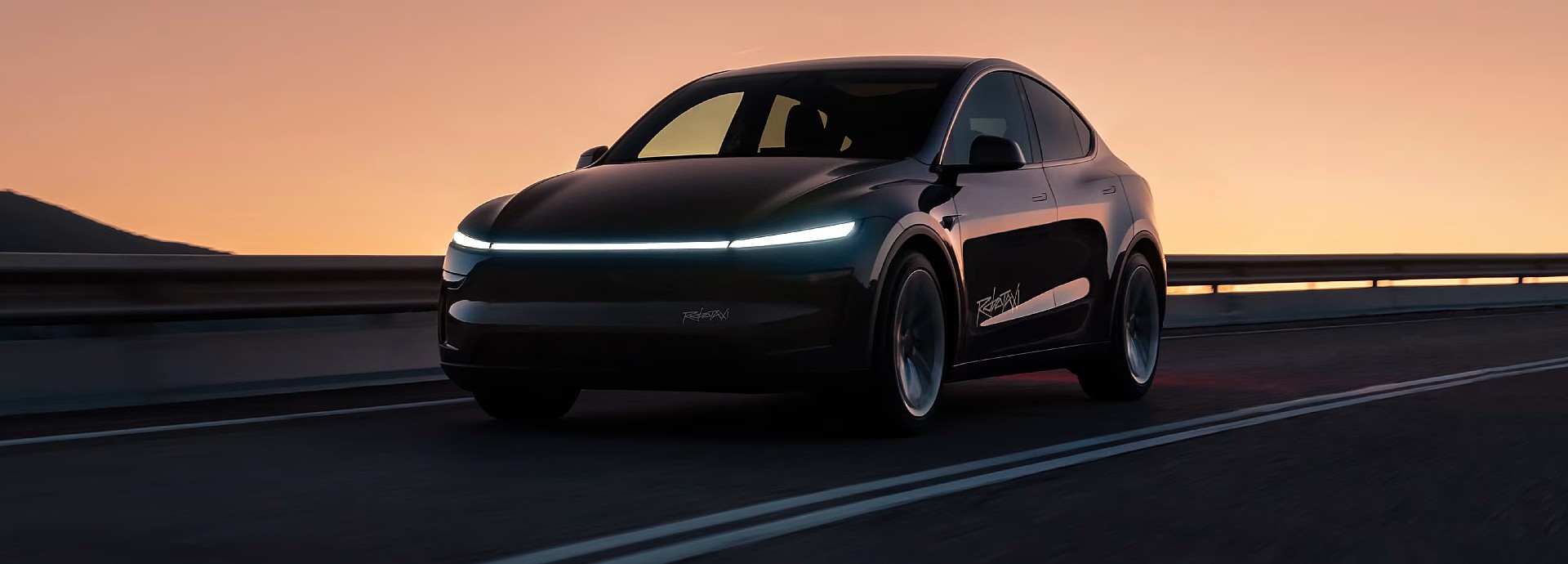
Tesla has announced an aggressive expansion of its Robotaxi fleet, with plans to deploy 500 autonomous vehicles in Austin and 1,000 in the Bay Area by the end of 2025. This represents a dramatic acceleration from the company's current operations and signals a pivotal shift in autonomous vehicle technology from controlled testing environments to scaled commercial deployment. More significantly, CEO Elon Musk has stated that Tesla expects to remove safety drivers from large portions of its Austin fleet within the next few months, marking a critical milestone in the journey toward fully autonomous ride-hailing services.
The Massive Fleet Expansion: From Hundreds to Thousands
Current Robotaxi Operations
Tesla's Robotaxi pilot has been operating in limited form for several months. The company has been running a service in San Francisco and Austin, with a safety driver positioned behind the wheel at all times. These operations have been invite-only and primarily limited to Tesla employees and select customers, allowing the company to gather data on real-world performance while maintaining a safety net for unexpected situations.
The current fleet is believed to number in the hundreds—perhaps 50 to 150 vehicles across both locations—but precise numbers have not been disclosed by the company.
The 2025 End-of-Year Targets
Tesla's announcement represents a roughly tenfold increase in fleet size within a two-month window. Specifically, the company plans to deploy:
-
500 Robotaxis in the greater Austin area
-
1,000 Robotaxis in the Bay Area
-
Total of at least 1,500 vehicles
When Elon Musk announced these targets during an appearance on the All-In Podcast, he framed them matter-of-factly: "Probably we'll have a thousands cars or more in the Bay Area by the end of this year, probably 500 or more in the greater Austin area." This casual framing belies the complexity of what's actually being attempted.
Why These Numbers Matter
The significance of these targets extends far beyond simply the number of vehicles:
Technical validation: Scaling from dozens to thousands of vehicles across multiple geographic locations requires that the underlying technology actually works reliably in diverse real-world conditions. If Tesla can execute this expansion successfully, it provides concrete evidence that its FSD technology has reached a functional level of maturity.
Market signal: The announcement sends a powerful message to investors, competitors, and regulators. It signals Tesla's confidence that its technology is ready for commercial deployment at scale.
Competitive pressure: For traditional automakers and other autonomous vehicle developers, Tesla's rapid scaling creates competitive urgency.
The Safety Driver Transition: From Active Control to Monitoring
Current Safety Driver Model
Under Tesla's current Robotaxi operations, a safety driver sits behind the wheel of each vehicle. This person is a Tesla employee trained in the specific procedures, ready to take control if the autonomous system encounters a situation it cannot handle safely.
The safety driver is distinct from a customer—they are an employee with specialized training and responsibilities. This model is similar to what other autonomous vehicle companies have deployed, providing critical safety redundancy while the company gains confidence in its systems.
Transition to Safety Monitors (Not Drivers)
The next phase of Tesla's Robotaxi operation represents a subtle but crucial distinction: the transition from safety drivers to safety monitors. A safety monitor is not in the vehicle; they are remotely overseeing multiple vehicles simultaneously, capable of taking control if needed, but not directly present in each vehicle.
This transition was reportedly already underway in parts of Austin in recent months. Instead of a person physically in the driver's seat, the vehicle operates autonomously with the ability for a remote operator to intervene if necessary.
The Ultimate Goal: Fully Driverless Operations
The end goal, as Musk has articulated it, is to remove safety monitoring entirely. The vehicle would operate completely autonomously without any human oversight. This represents the true robotaxi vision—a vehicle that can operate continuously without human intervention, making multiple trips throughout the day with no human driver or monitor required.
For this fully autonomous model to work, several prerequisites must be met:
-
Technical achievement: The FSD system must reliably handle the vast majority of driving scenarios without human intervention
-
Regulatory approval: Jurisdictions would need to provide explicit legal permission for fully autonomous operations without any human monitoring
-
Insurance and liability frameworks: The insurance and legal liability structure for fully autonomous vehicles is still being developed
-
Public acceptance: The public must accept riding in vehicles with no visible human control
Business Model and Operating Economics
Revenue Model and Pricing
Tesla's Robotaxi service would operate as a ride-hailing service competing with Uber and Lyft. The company has not officially announced pricing, but analysts have suggested that autonomous ride-hailing could be priced significantly lower than current human-driven options due to the elimination of driver costs.
Current Uber prices in major cities typically range from $2-5 per mile depending on surge pricing, time of day, and location. Autonomous vehicles could potentially operate at 50-70% of these prices while still generating positive returns, since driver compensation typically represents 60-75% of total operating costs for ride-hailing services.
Cost Structure and Profitability
The key question is at what volume these economics work. The significant costs with robotaxi operation are:
-
Vehicle acquisition: Manufacturing or acquiring sufficient vehicles
-
Operational infrastructure: Dispatch systems, remote monitoring centers, maintenance facilities, charging infrastructure
-
Insurance and liability: Full insurance coverage for the fleet and liability coverage for autonomous operations
-
Monitoring and support: Even fully autonomous vehicles may require occasional remote intervention and support
Regulatory and Operational Challenges
Regulatory Status and Approvals
As of November 2025, Tesla has not yet completed necessary regulatory paperwork to begin offering Robotaxi rides in Arizona and Nevada, according to reports. This suggests that despite Musk's ambitious announcements, regulatory approval is a significant limiting factor.
Different states have different approaches to autonomous vehicle regulation. California, where the Bay Area operations are located, has relatively developed frameworks through the Department of Motor Vehicles. Texas (where Austin is located) has fewer regulations.
Safety and Liability Concerns
One of the major challenges with scaling autonomous vehicle operations is ensuring safety and managing liability. When an autonomous vehicle is involved in an accident, who is liable?
Current US law is still developing clear frameworks for autonomous vehicle liability. This creates uncertainty that could impact insurance costs and regulatory approval timelines.
What This Means for Tesla Owners and Investors
Robotaxi Revenue for Owners
One of Tesla's proposed models is to allow Tesla owners to participate in the Robotaxi service, potentially earning money when their vehicle is not in use. An owner could enable Robotaxi on their vehicle, and the vehicle would be dispatched to serve passengers.
If this model works, a Tesla owner could potentially earn $5,000-15,000 annually by allowing their vehicle to operate as a Robotaxi during periods when they're not using it.
Investment Perspective
Tesla is currently valued at a significant premium to traditional automakers. Much of this premium is based on investor expectations regarding autonomous driving and robotaxi operations rather than current vehicle sales.
A successful scaling of Robotaxi operations would validate this valuation premium and could potentially support further valuation expansion.
Conclusion: A Critical Inflection Point
Tesla's plan to deploy 1,500 robotaxis by year-end 2025 and remove safety drivers from Austin represents a critical inflection point for autonomous vehicles and for Tesla as a company. The plan is audaciously ambitious and faces significant technical, regulatory, and operational challenges.
Success would validate Tesla's autonomous driving approach, create a significant new business line, potentially disrupt the entire ride-hailing industry, and confirm investor confidence in Tesla's long-term vision.
FAQ: Common Questions About Tesla's Robotaxi Expansion
Q: When will Robotaxi service be available in my city?
A: Tesla has announced operations in Austin and the Bay Area by end-of-2025. The company has not announced specific timelines for other cities. Expansion to additional markets will likely depend on regulatory approvals and operational success in initial markets.
Q: Can I earn money by letting Tesla use my vehicle for Robotaxi?
A: Tesla has proposed this model, but specific details about compensation, participation requirements, and timelines have not been fully detailed. If you own a Tesla with FSD capability, you may eventually be able to opt in to Robotaxi service and earn a percentage of ride revenue.
Q: Is it safe to ride in a Robotaxi?
A: Safety records from early pilots have been reasonable. However, the long-term safety record of fully autonomous vehicles will not be known until more extensive real-world deployment occurs.
Q: How does Tesla's Robotaxi compare to Waymo and Cruise?
A: Tesla's approach leverages data from existing deployed vehicles and prioritizes rapid scaling. Waymo has taken a more methodical approach with potentially more advanced technology in certain domains but slower commercialization. Cruise faced significant setbacks in 2023-2024.
Q: What happens to Robotaxi if autonomous driving technology doesn't improve as expected?
A: If autonomous driving technology plateaus or faces unexpected limitations, the aggressive timelines would need to be extended or abandoned.
Q: Will Robotaxi put rideshare drivers out of work?
A: If successful, autonomous ride-hailing would likely reduce demand for human rideshare drivers. However, the transition might be gradual, and new employment opportunities in related areas might partially offset displacement.