
1 | Introduction
When Tesla first launched its Supercharger network over a decade ago, the underlying promise was simple but powerful: give Tesla drivers access to a fast-charging network that worked seamlessly, was reliable, and enabled long-distance travel without anxiety. For many owners in the U.S. and Europe, that infrastructure became part of the Tesla ownership experience—part technology, part lifestyle, and part community.
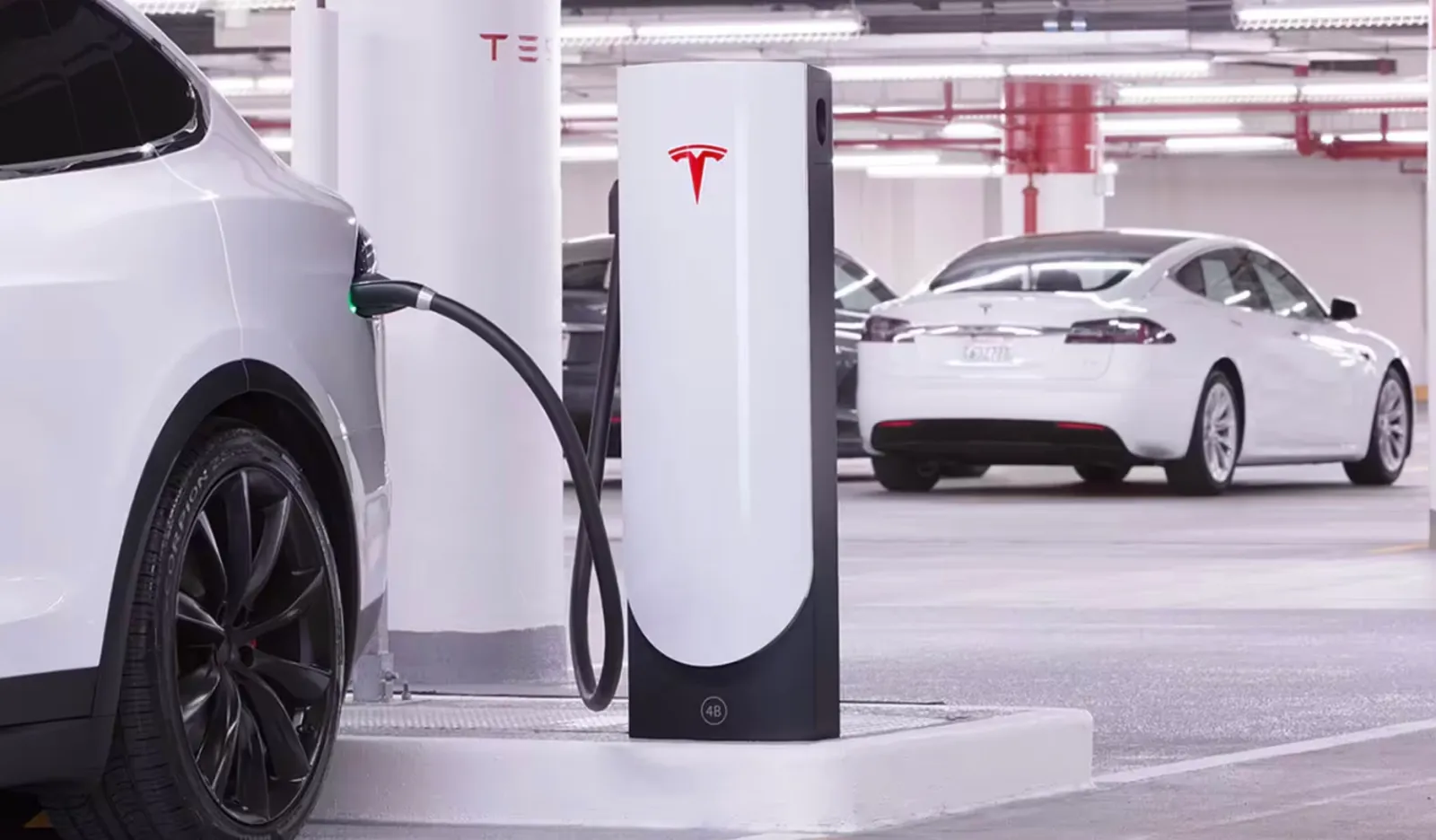
Now, in late 2025, Tesla is rewriting the rules of that network. It is gradually opening its Supercharger network to non-Tesla vehicles—third-party EVs—across North America and Europe, via the industry’s newly adopted North American Charging Standard (NACS) plug, adapter solutions, and dedicated stalls. This shift signifies a strategic pivot: Tesla is turning its proprietary advantage into an ecosystem-play.
Why does this matter for Tesla owners and prospective buyers in the U.S. and Europe? Because the charging network is a key piece of the ownership value chain: convenience, resale value, brand differentiation, and long-term utility all tie into network strength. This article examines how the network is opening up, what it signals for the EV market and for Tesla specifically, how it affects owners, what risks lie ahead, and how to read the future implications for purchase, ownership, and service decisions.
2 | The Evolution of Tesla’s Charging Network
2.1 From Tesla-Only to Open Access
Tesla’s Supercharger network began as an exclusive benefit for Tesla owners: proprietary plug, proprietary stations, closed ecosystem. Over time, the company built thousands of charging posts across North America and Europe, aiming to deliver high reliability (99.95 % uptime claims) and high convenience. Tesla itself states the ambition to “open our charging network to other EVs” as part of its mission to accelerate the transition to sustainable energy.
In North America, Tesla has officially enabled select Supercharger stalls for vehicles outside Tesla that have the NACS connector or that use adapter solutions. The shift has been gradual: agreement with other automakers to adopt NACS, adapter roll-outs, and station changes. For example, as early as spring 2025, brands like Hyundai, Kia, Genesis and others were shipping complimentary adapters to their owners to access Tesla Superchargers.
In Europe the process takes a somewhat different shape: since Tesla vehicles sold in Europe have used the Combined Charging System (CCS) connector for years (per regional regulation), Tesla’s Supercharger network in Europe has been built with CCS2 instead of NACS (in many cases). The open-access strategy in Europe has involved selectively opening CCS2-equipped Tesla Supercharger stalls to non-Tesla EVs.
2.2 The Role of NACS and Adapters
The NACS plug, once proprietary to Tesla, has become an industry standard pivot. According to Tesla’s own site, many major automakers are listed as “supported” for access to its Superchargers in North America via NACS or adapter solutions. Non-Tesla EVs equipped from factory with NACS require no adapter; those with older CCS ports may need a NACS adapter (or equivalent) to plug into Tesla Superchargers.
Adapters—and Tesla’s “Magic Dock” concept—provide transitional path to allow vehicles with non-NACS plugs to use the network. This evolution matters because for owners, charging compatibility is moving from “Tesla only” to “Tesla + all EVs”, changing both competitive dynamics and user experience.
3 | Why This Shift Is Happening Now
3.1 Strategic Business Imperatives
For Tesla, opening the network has multiple strategic benefits:
-
Additional revenue stream: Non-Tesla vehicles using the Supercharger network pay for access; as utilization increases, infrastructure cost is better amortised.
-
Ecosystem leadership: Tesla wants its Supercharger network to be the de facto universal fast-charging network, even for non-Tesla cars, reinforcing brand leadership indirectly.
-
Data advantage: More vehicles using its network—regardless of brand—gives Tesla valuable real-world insights into EV charging patterns, vehicle behaviours, and grid demand.
-
Competitive defence: As more EV manufacturers emerge and infrastructure becomes more crowded, Tesla secures its advantage by owning the network rather than just the vehicles.
3.2 Market Pressure & External Factors
-
EV adoption scale: As electric vehicles proliferate, charging infrastructure becomes key differentiator. Tesla aims to lock in its network advantage as the market scales.
-
Standardisation of plugs: With many automakers committing to NACS, the plug standard war is shifting, and Tesla is steering this transition
-
Regulations and subsidies: In Europe especially, public funding and regulatory requirements incentivise open networks (i.e., chargers must be available for all EVs). Tesla’s selective opening of Superchargers to non-Tesla EVs allows it to tap into public funds in some markets.
-
Competitive networks: Other charging networks are scaling, but Tesla still has reliability and site density advantages. Opening the network allows queueing scale and reinforces its network dominance.
4 | What This Means for Tesla Owners and Prospective Buyers
4.1 Benefits for Tesla Owners
-
Greater infrastructure robustness: With more users plugged into the Supercharger network, utilisation improves, more sites may be added, and economies of scale may reduce per-use cost.
-
Improved charger availability: Opening to third-party EVs can reduce Tesla owners’ range anxiety because the network may expand more rapidly.
-
Future-proofing: If Tesla continues to own the dominant fast-charging network, Tesla owners may enjoy longer-term support and better infrastructure than competitors.
4.2 Impacts & Considerations for Prospective Buyers
-
Charging network remains a strong ownership proposition: For a U.S. or European buyer considering a Tesla, knowing the Supercharger network is being bolstered by third-party access adds value.
-
Potential competition for stalls: More vehicles using the network means possible congestion or wait times; buyers should consider station location and peak-time use.
-
Cost dynamics: Tesla may adjust pricing (for non-Tesla users and/or Tesla owners) to reflect changed utilisation; ownership cost assumptions should account for potential shifts.
-
Resale value: The strength of Tesla’s network is a differentiator in resale markets. If the network becomes more universal, some of Tesla’s exclusivity advantage may diminish slightly—but the flip side is the network baseline is strengthened.
4.3 Differences between U.S. and Europe
-
In the U.S., the plug standard war is pivoting around NACS, and Tesla’s network opening and adapter strategy matter. Tesla owners in the U.S. benefit from being early adopters of a network that is evolving to universal access.
-
In Europe, since Tesla’s Superchargers already use CCS2, the opening to non-Tesla EVs focuses more on utilisation, volume and public-funded site expansion. Tesla European owners stand to benefit from improved site density and network reach. However, the competitive landscape is stronger in Europe, so Tesla’s network advantage is relatively smaller than in the U.S.
-
Ownership behaviour: In Europe, many buyers value charging network access differently—local cities, short-haul travel—and Tesla’s opening of sites to non-Tesla EVs means more public-accessible fast chargers overall, which benefits all EV owners (including Tesla).
5 | Risks, Challenges, and Potential Downsides
5.1 Network Congestion & User Experience
If the Supercharger network becomes crowded with non-Tesla EVs, Tesla owners may face more competition for charging spots, longer wait times during peak travel periods, and potential degradation of the “premium” charging experience.
Tesla needs to ensure that site expansion keeps pace with increased demand, and maintain reliability and uptime. A failure in this could erode one of Tesla owners’ key value points.
5.2 Pricing & Cost Implications
Opening the network to non-Tesla users could shift cost structures. Tesla may adjust pricing (charging per kWh or per minute) for all users to recover investment. For Tesla owners used to favourable or locked-in rates, future costs may shift upward.
Potential differential pricing (Tesla vs non-Tesla) could raise fairness or perception issues among owners, and may affect resale expectations if cost of charging becomes less advantageous.
5.3 Brand Dilution & Ownership Perception
One of Tesla’s ownership selling points has been the “club” of Tesla owners supported by a proprietary network. As that network becomes open to others, the exclusivity advantage diminishes. For resale value and brand perception, this could be a mild headwind in the long run if competitors gain similar charging reliability.
For owners who selected Tesla for network exclusivity, this may feel like a shift in the value proposition.
5.4 Infrastructure & Technical Complexity
Adapting stations for non-Tesla EVs, managing billing, and coordinating with myriad automakers complicates operations and may slow rollout. Technical compatibility (especially in Europe with different connector / plug standards) and regulatory/regional permitting remain challenges.
Tesla must maintain its hallmark reliability (>99 % uptime) even as user base diversifies; any increase in faults or downtime could hurt owner experience.
6 | Strategic Implications for Tesla’s Vehicle Strategy
6.1 From Car Company to Charging Ecosystem Owner
By opening its network, Tesla is evolving from being primarily an automaker to being an ecosystem operator. It is leveraging infrastructure as a strategic asset that supports its vehicle business, software services, energy business and more. For owners, this means Tesla’s long-term value proposition is deepening beyond just the vehicle—they benefit from infrastructure investments.
6.2 Supporting Future Products & Services
A robust open network positions Tesla well for future products—robotaxi services, fleet services, autonomous vehicles, subscription models. If future Tesla models make greater use of its own charging network, the opening to others builds scale and protects investment. Owners who hold Tesla vehicles long-term may benefit if new services (like vehicle-to-grid, shared charging, autonomous taxi) build on the network.
6.3 Competitive Advantage vs Rival Networks
Other automakers and charging network operators are investing heavily—but Tesla opening its network and standard (NACS) gives it a head start in interoperability and scale. For owners, this means the infrastructure they depend on may stay ahead of the pack, preserving a key competitive advantage.
6.4 Ownership Value & Resale Landscape
Charging infrastructure is increasingly a key input into vehicle resale values. A vehicle brand backed by strong, accessible infrastructure tends to hold value better. As Tesla’s network expands to non-Tesla vehicles, the network’s scale poses both upside (larger reach, better usability) and potential downside (less exclusivity). Owners should monitor how resale premiums evolve.
6.5 Geographical Implications: U.S. & Europe
In the U.S., Tesla’s move integrates with the NACS push and with federal/ state infrastructure expansion programmes (e.g., NEVI funding). For European owners, Tesla’s selective opening of CCS2 sites to non-Tesla EVs means better site coverage and processing of public infrastructure funds. In both cases, owners in those regions should benefit by improved charging access, but must still evaluate how local network rollout is progressing in their area.
7 | Advice for Current Owners and Prospective Buyers
7.1 If You Are a Tesla Owner
-
Take advantage of network growth: Use Tesla’s app and site to monitor newly opened stations, especially those designated for all-EV access—these often include longer cables (for ease-of-use across brands) and newer logic.
-
Monitor wait-times: As third-party EVs begin using stations, you may want to time travel or charging times differently (e.g., avoid peak holiday travel).
-
Review your cost of charging: If Tesla revises pricing or rate structures, keep track of your charging cost over time; factor that into your ownership cost equation.
-
Consider resale timing: As network access becomes more universal, the unique charging advantage of Tesla may erode slightly; if you plan to sell or trade in in 2–4 years, monitor how residuals evolve.
-
Explore new features: With broader network utilisation, Tesla may introduce enhanced site features (higher power, integrated energy storage, solar canopies)—owners should check if their vehicle supports upcoming network-based services.
7.2 If You Are a Prospective Buyer (U.S. & Europe)
-
If charging network was a key factor in your decision to buy a Tesla: you are still getting a strong proposition—now arguably with deeper infrastructure. However evaluate local station coverage and access.
-
If you were considering a competitor EV with “open network” promise: note that Tesla is opening its network too—so the relative differentiation narrows. That means lower-cost EVs and competitor brands become more competitive on charging support.
-
If fast charging for long-distance travel matters a lot to you: research station density, charger power (V3/V4), cable length/connector compatibility (especially in Europe) in your region.
-
Factor in cost: With more users on the network, charging cost dynamics might shift—get a sense of cost-per-kWh or cost-per-minute in your area.
-
Consider future resale value: Being an early owner of Tesla remains a strength; but with charging access becoming broader, focus on vehicle features, software updates, and ownership experience beyond just network access.
7.3 Regional Advice
-
U.S. Buyers/Owners: Keep an eye on the NACS transition in your region. If your vehicle is non-Tesla but supports NACS (or will via adapter) you may benefit from Tesla’s network too. Tesla owners benefit from increased scale of network use.
-
European Buyers/Owners: Check whether your local Supercharger stations are “open to all EVs” or remain Tesla-only. Tesla’s move to open CCS2-equipped stations helps—but local rollout timing matters. Also evaluate linkages with domestic charging networks (Ionity, Fastned, etc) since competition is strongest here.
-
In both regions, travel corridors (major highways) benefit strongly from Tesla’s network expansion; if you frequently long-distance drive, check map coverage and stall availability along your route.
8 | Conclusion
Tesla’s decision to open its Supercharger network to third-party EVs across North America and Europe is a significant milestone—one that transforms a formerly proprietary network into an ecosystem anchor. For Tesla owners, this expansion brings greater infrastructure strength, improved utilisation, and long-term network relevance. For prospective buyers, the proposition remains compelling—but the competitive gap on charging is shrinking, meaning decisions will increasingly hinge on vehicle features, software, performance and brand experience beyond just charger access.
The risks are real—but manageable: more competition for stalls, escalating charging costs, and potential dilution of the exclusive “Tesla network” advantage. However, Tesla is positioning itself not just as an automaker, but as an infrastructure leader in the EV era. Owners who understand this shift stand to benefit; those who ignore it may be surprised as the EV market evolves.
As a Tesla blog owner catering to U.S. and European owners, it is an exciting moment: your audience is witnessing the network that made Tesla unique become the network that benefits nearly all EV drivers—and by extension, potentially a stronger value proposition for Tesla owners themselves.
9 | FAQ
Q1: Can non-Tesla EVs use all Tesla Supercharger stalls now?
A1: No. While Tesla has begun opening its Supercharger network to non-Tesla EVs, access depends on region, stall type (some stalls still Tesla-only), connector compatibility (NACS vs CCS), and whether an adapter is required. Owners should check via Tesla’s app or website to see which stations are “open to all” or suitable for their vehicle.
Q2: Does this change mean Tesla owners lose priority at chargers?
A2: Not necessarily—but as utilisation by non-Tesla EVs grows, wait times could increase at certain sites, especially along busy travel corridors. Tesla owners should monitor station usage and consider less-busy time windows for charging.
Q3: Will charging costs for Tesla owners increase because of this network openness?
A3: Possibly. With more users and higher utilisation, Tesla may adjust pricing structures over time. Owners should keep track of their charging history, cost-per-kWh or cost-per-minute, and compare with previous years.
Q4: My vehicle is a Tesla with CCS2 plug (Europe). Should I worry about compatibility?
A4: In Europe, Tesla vehicles already use CCS2, and Tesla’s station opening to non-Tesla EVs largely hinges on CCS2 compatibility rather than NACS. Owners should check which stations in their country are listed as “open to non-Tesla EVs” to gauge future density.
Q5: Does this mean the Tesla charging network advantage is gone?
A5: Not at all. Tesla’s network remains among the largest, most reliable and best-integrated networks. What is changing is the exclusivity. The advantage is evolving from “only Tesla cars can use” to “Tesla built the best network that many cars use”. For owners, this can mean stronger infrastructure long-term—but also more competition for stalls and possibly lower exclusivity premium for resale value.