
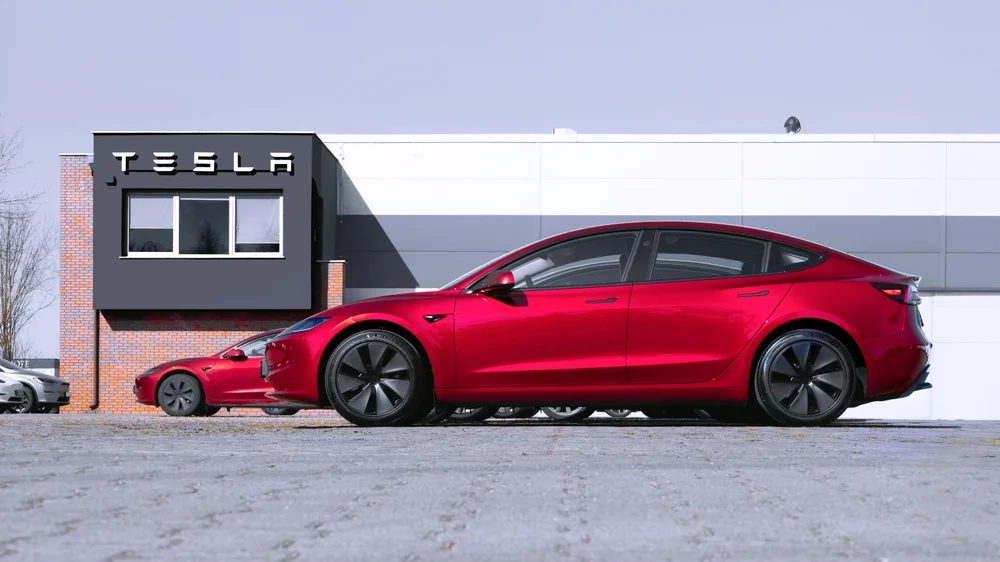
Tesla's stock has long been a subject of intense scrutiny and admiration. On October 1, 2025, Tesla reached a significant milestone, surpassing a market capitalization of $1.5 trillion for the first time in its history. This achievement highlights the immense confidence investors have in Tesla's future, driven by the company’s performance in the electric vehicle (EV) market, technological advancements, and the broader push toward renewable energy.
In this article, we will analyze the factors contributing to Tesla's record market cap, examine the role of its stock performance, and explore the implications for Tesla's future in the EV industry and beyond.
Section 1: Financial Performance Analysis
Tesla’s impressive market cap of $1.5 trillion is not the result of speculative hype alone. The company's financial performance has steadily improved, providing a solid foundation for its stock price surge.
1.1. Quarterly Earnings and Revenue Growth
Tesla’s revenue and earnings have grown significantly in recent years, with the company posting record profits in Q3 2025. The company reported $29 billion in revenue for the quarter, driven by strong vehicle deliveries, increased demand for its energy storage products, and growth in its services and other segments.
Tesla’s profitability has also been a key factor in bolstering investor confidence. As of Q3 2025, Tesla’s operating margin reached 18%, an impressive figure for an automaker. These strong financial results have translated into increased earnings per share (EPS), which, in turn, has contributed to the rising stock price.
1.2. Record Vehicle Deliveries
Tesla’s vehicle deliveries have continued to set new records, with the company delivering nearly 500,000 vehicles in Q3 2025 alone. This marked a 7% increase from the previous quarter and a 25% increase compared to the same period last year. This consistent growth in deliveries has been a key driver of Tesla's stock performance.
The continued demand for Tesla’s electric vehicles, particularly the Model 3 and Model Y, has been a major factor in the company’s ability to meet its ambitious production goals. The company's ability to scale production and meet rising demand is one of the reasons Tesla's stock has been on an upward trajectory.
Section 2: Investor Sentiment and Market Perception
Tesla’s stock has seen significant volatility in the past, but investor sentiment has remained overwhelmingly positive in recent years. Several factors have contributed to this sustained confidence in Tesla’s future growth prospects.
2.1. Confidence in Tesla’s Leadership
Much of Tesla’s investor sentiment can be attributed to the leadership of Elon Musk. Musk’s visionary approach, coupled with his track record of transforming industries, has led many investors to view Tesla not just as an automaker but as a technology company with immense potential in areas like artificial intelligence (AI), energy storage, and autonomous driving.
Musk’s ability to push Tesla to the forefront of innovation and deliver on ambitious goals has made him one of the most influential figures in the tech and automotive industries. This trust in Musk’s leadership has played a significant role in Tesla’s high valuation.
2.2. Market Perception of the EV Industry
Tesla has positioned itself as the leader in the electric vehicle market, and investors have increasingly seen the company as the standard-bearer for the future of transportation. As governments around the world implement stricter emissions regulations and as consumer demand for sustainable alternatives grows, the market for electric vehicles is expected to expand dramatically in the coming years.
This market growth has bolstered investor confidence in Tesla, as the company is widely seen as well-positioned to capitalize on the shift toward electric mobility. Tesla’s dominance in EV technology, coupled with its growing infrastructure network (such as Superchargers and Gigafactories), has reinforced its position as the market leader.
2.3. Tesla’s Role in Renewable Energy
In addition to its success in the automotive sector, Tesla’s growing involvement in renewable energy and energy storage solutions has further solidified its market cap. Tesla’s energy products, such as Powerwall, Powerpack, and Megapack, have contributed significantly to its overall growth, diversifying the company’s revenue streams beyond just electric vehicles.
Investors are increasingly viewing Tesla as not only a leader in EVs but also as a company that is driving the transition to clean energy. This broader vision has enhanced Tesla's attractiveness to investors, leading to sustained confidence in the company’s long-term prospects.
Section 3: Competitive Landscape
Tesla’s record market cap also reflects its strong position in the increasingly competitive electric vehicle market. While Tesla has maintained its leadership position, the company faces rising competition from both legacy automakers and new entrants in the EV space.
3.1. Competition from Traditional Automakers
Major automakers such as Ford, General Motors, Volkswagen, and BMW have ramped up their EV production efforts in recent years, seeking to challenge Tesla’s dominance. Many of these companies have introduced or plan to release electric models in various segments, from compact cars to luxury SUVs and trucks.
However, Tesla’s ability to innovate, scale production, and maintain profitability has helped it stay ahead of the competition. Tesla’s Supercharger network, advanced battery technology, and autonomous driving capabilities continue to set it apart from rivals.
3.2. The Rise of New EV Startups
In addition to traditional automakers, Tesla also faces competition from a new wave of electric vehicle startups, such as Rivian, Lucid Motors, and Fisker. These companies are targeting specific segments of the market, including luxury electric vehicles and electric trucks.
While these startups have generated significant interest, they are still in the early stages of production and distribution. Tesla, on the other hand, has already established itself as a global leader in EV production, giving it a significant advantage over these emerging competitors.
3.3. The Importance of Innovation
Tesla’s ability to maintain its market leadership will depend on its ongoing commitment to innovation. The company’s focus on autonomous driving technology, energy storage, and advancements in battery technology will be critical in maintaining its competitive edge in the years to come.
Tesla’s rapid expansion into new markets, such as China and Europe, and its ability to continuously improve its vehicles and technology will be key factors in staying ahead of the competition.
Section 4: Regulatory and Economic Factors
Tesla’s financial success and market cap growth are not only a result of its internal performance but also due to favorable regulatory and economic factors.
4.1. Government Policies and EV Incentives
Government policies around the world have played a significant role in promoting the adoption of electric vehicles. In many countries, including the U.S., European Union, and China, governments have introduced tax incentives, subsidies, and stricter emissions regulations to encourage the transition to electric vehicles.
These policies have boosted consumer demand for EVs and helped make Tesla’s products more attractive. As governments continue to push for greater adoption of electric vehicles, Tesla stands to benefit from these policies in the form of higher sales and market share.
4.2. Economic Conditions and Consumer Confidence
While Tesla’s growth has been remarkable, its performance is also influenced by broader economic conditions. Economic factors such as interest rates, inflation, and consumer confidence can impact consumer spending on high-ticket items like electric vehicles.
However, despite economic challenges, Tesla’s brand strength, growing consumer demand for sustainable transportation, and innovative technology have helped the company weather economic fluctuations. The shift toward electric mobility, driven by both environmental concerns and government incentives, is expected to continue regardless of broader economic conditions.
Conclusion
Tesla’s achievement of a $1.5 trillion market cap is a testament to the company’s strength, innovation, and leadership in the electric vehicle and renewable energy sectors. Tesla’s impressive financial performance, coupled with strong investor confidence, has helped the company reach new heights, positioning it as a global leader in the transition to sustainable energy.
As the company faces increasing competition and external economic and regulatory challenges, Tesla's ability to continue innovating and scaling its operations will be key to maintaining its leadership position. With a clear vision for the future, Tesla is poised to remain at the forefront of the electric vehicle and clean energy revolution for years to come.
FAQ
1. What factors contributed to Tesla reaching a $1.5 trillion market cap?
Tesla's financial performance, record vehicle deliveries, growing investor confidence, and its leadership in the EV and renewable energy markets all contributed to the company’s $1.5 trillion market cap.
2. How has Tesla’s stock performed in recent years?
Tesla’s stock has shown significant growth, fueled by the company’s strong earnings, increasing demand for EVs, and its expansion into renewable energy markets. The company’s stock price has surged, particularly in 2025, helping push its market cap to new heights.
3. Who are Tesla’s main competitors in the EV market?
Tesla faces competition from traditional automakers like Ford, General Motors, and Volkswagen, as well as new EV startups such as Rivian and Lucid Motors.
4. How have government policies impacted Tesla’s growth?
Government policies, including tax incentives and stricter emissions regulations, have played a significant role in driving demand for electric vehicles and making Tesla's products more attractive to consumers.
5. What is Tesla’s strategy for maintaining its leadership in the EV market?
Tesla’s strategy includes continued innovation in autonomous driving, energy storage, and battery technology. Additionally, the company plans to expand its global footprint, increase production capacity, and improve vehicle performance to stay ahead of the competition.