
Introduction
On July 8, 2026, a seismic shift reverberated through Tesla's production lines in the United States. Without the traditional fanfares of an executive keynote, the electric vehicle pioneer officially commenced the commercial production of a brand-new variant of its global best-seller: the six-seat Model Y L. For years, the Model Y has sat uncontested at the apex of the global automotive pyramid, capturing the crown of the world's best-selling vehicle across all propulsion types. However, as the EV market transitions from early tech adopters to the pragmatic mass market, consumer requirements have grown increasingly sophisticated. Suburban families in North America and Western Europe demand a unique synthesis of space, modularity, luxury, and efficiency—qualities that standard five-seat crossovers or compromised seven-seat configurations frequently struggle to deliver simultaneously.
The introduction of the Model Y L is not merely a reactionary layout adjustment; it represents a highly calculated, deeply engineered offensive against both legacy Internal Combustion Engine (ICE) multi-purpose vehicles and emerging electric three-row contenders. By adopting a dedicated 2-2-2 seating configuration, Tesla is positioning this vehicle to capture the lucrative "carpooling and weekend adventure" demographic that has long been the financial lifeblood of legacy Detroit and European automakers. Furthermore, this product launch arrives at a critical economic juncture for Tesla. Following periods of intense macroeconomic volatility and regional demand maturation, the Model Y L serves as a high-margin premium weapon designed to bolster Tesla’s Average Selling Price (ASP) and revitalize its automotive gross margins during the latter half of 2026.
Crucially, the timing of this production launch reveals a profound paradox within the modern capital markets. While automotive purists and family buyers celebrated the tactical genius of a six-seat luxury EV crossover, Wall Street responded with tactical profit-taking, causing Tesla's stock (TSLA) to retract by approximately 7.5% immediately following the confirmation of the assembly line transition. This phenomenon—classic financial "selling the news"—highlights that investors have already priced in Tesla’s short-term hardware recovery and are fiercely focused on the quality of its upcoming Q2 corporate earnings. This comprehensive masterclass will dissect the engineering architecture, market positioning, production mechanics, and macroeconomic implications of the newly minted six-seat Model Y L, providing Tesla bloggers and owners with the ultimate deep dive into the vehicle that will define the luxury family transport landscape for the remainder of the decade.
II. The Engineering and Design Shift of the Model Y L
To understand the architectural significance of the Model Y L, one must first dismantle the common misconception that adding seats to an existing vehicle platform is a simple matter of interior upholstery. The "L" designation in the new variant underscores a sophisticated optimization of Tesla’s structural architecture. Leveraging the continuous evolution of its mega-casting technology, Tesla engineers have fundamentally re-engineered the rear underbody structural casting. By utilizing an advanced, ultra-high-pressure Giga Press at Giga Texas and Giga Fremont, the rear subframe has been optimized to maximize the cabin's longitudinal floor space without requiring a massive, unwieldy elongation of the vehicle’s external wheelbase. This keeps the Model Y L exceptionally agile in tight European urban spaces and standard American suburban garages while radically expanding interior volume.
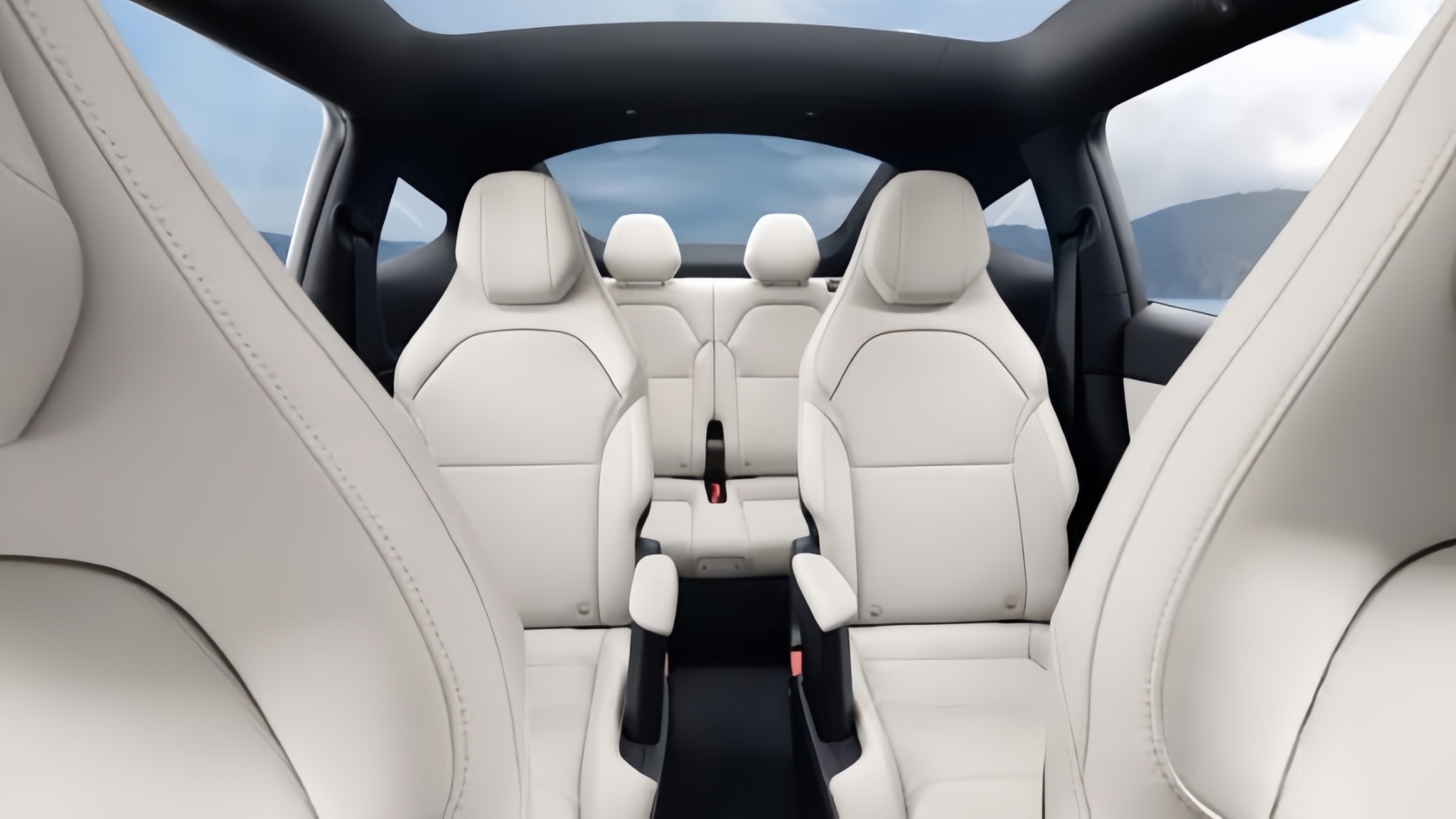
The crown jewel of this structural transformation is the implementation of the 2-2-2 seating paradigm. Unlike the previously offered, highly cramped 7-seat option—which utilized a 2-3-2 configuration that severely compromised second-row shoulder room and rendered the third row practically unusable for adults—the 2-2-2 layout introduces twin independent luxury "Captain’s Chairs" in the second row. These seats are mounted on an elevated, precision-engineered dual-rail system that allows for substantial fore-and-aft travel. Upholstered in Tesla’s latest generation of high-durability, stain-resistant vegan leather, these premium seats feature independent heating, individual folding armrests, and an integrated electronic release mechanism that slides the seat forward effortlessly to grant access to the rear.
The removal of the central second-row seat creates a dedicated center walkthrough channel. This walkthrough is mathematically optimized to allow children and young adults to pass into the third row without requiring the second-row seats to be tilted or adjusted, a massive quality-of-life improvement for parents dealing with permanently installed child safety seats. For the third row itself, ergonomics have undergone a revolution. Historically, three-row compact SUVs suffer from the "knees-to-chest" seating posture caused by the high floor pan dictated by the under-floor battery pack. Tesla has mitigated this by applying its latest cell-to-chassis (structural battery pack) architecture to the Model Y L. By reducing the vertical stack thickness of the battery pack housing and redesigning the rear footwells, third-row passengers can place their feet lower into the floor pan, drastically improving the thigh-support angle and making long-distance journeys genuinely viable for adult occupants up to 5'10" (178 cm) in height.
Furthermore, cargo flexibility has reached a state of unprecedented modularity. The two third-row seats feature a 50/50 split-folding mechanism that can be actuated electronically via flush-mounted buttons located in the rear trunk lining. When fully collapsed, the third-row seats fold perfectly flat, integrating seamlessly with the primary trunk floor to create an expansive, unobstructed loading bay. Tesla has successfully preserved the deep, sub-floor under-trunk storage well (the "trunk well") by relocating the rear climate control module to the lateral C-pillars. This dual-zone rear climate system utilizes advanced computational fluid dynamics to pump conditioned air through discrete overhead vents, ensuring that third-row passengers enjoy rapid cooling and heating independent of the front cabin settings. Even with all six seats occupied, the deep trunk well and the spacious front trunk ("frunk") ensure that the vehicle retains more usable luggage capacity than standard midsize legacy SUVs.
III. Market Positioning and Competitor Analysis in North America and Europe
The strategic necessity of the Model Y L becomes blindingly apparent when examining the distinct sociological and geographical patterns of suburban family life across North America and Western Europe. In the United States, the daily ritual of the "suburban carpool"—transporting multiple neighborhood children to schools, sports practices, and extracurricular activities—is a dominant market force. For over two decades, this demographic has been monopolized by large, gas-guzzling internal combustion or mild-hybrid three-row crossovers and minivans. Standard five-seat EVs, while highly attractive for daily solo commutes, fail catastrophically when a family needs to transport four children and their associated sporting gear simultaneously. The old 7-seat Model Y was viewed by the American consumer as a nominal emergency option rather than a daily utilitarian tool. The 6-seat Model Y L transforms the vehicle into a primary family vehicle, directly challenging the core utility of traditional mid-to-large SUVs.
To contextualize Tesla's competitive advantage, a rigorous comparative analysis against both legacy internal combustion engines and contemporary premium electric rivals is essential:
|
Attribute |
Tesla Model Y L (6-Seat) |
Rivian R1S (Three-Row) |
Kia EV9 (6/7-Seat) |
Ford Explorer EcoBoost |
|
Seating Layout |
2-2-2 (Dedicated) |
2-3-2 / 2-2-2 |
2-2-2 / 2-3-2 |
2-3-2 / 2-2-2 |
|
Powertrain |
Dual Motor BEV |
Quad/Dual Motor BEV |
Dual/Single Motor BEV |
Turbocharged Gas/Hybrid |
|
Starting Price |
Mid-$50,000s (Est.) |
$75,000 - $90,000 |
$55,000 - $75,000 |
$40,000 - $55,000 |
|
Infotainment/UI |
Tesla OS (AMD Ryzen) |
Rivian UI |
Kia Connect |
Ford SYNC 4 |
|
Autonomous Suite |
FSD V12+ End-to-End |
Rivian Driver+ |
Highway Driving Pilot |
Ford BlueCruise |
|
Cargo Modularity |
High (Frunk + Under-floor) |
Very High (Large Frame) |
Moderate (No deep well) |
Low (No frunk) |
When matched against the Rivian R1S, the Model Y L holds a massive pricing and efficiency advantage. While the Rivian R1S is a highly capable, rugged off-road machine, its substantial curb weight and larger exterior dimensions make it significantly more expensive to operate and difficult to maneuver through tight European streets or packed Costco parking lots. The Kia EV9 represents the closest direct electric competitor; however, Tesla completely outclasses the Korean offering in terms of software ecosystem maturity, Supercharger integration, and autonomous driving capabilities via the end-to-end neural network of Full Self-Driving (FSD). When compared to legacy internal combustion vehicles like the Ford Explorer, the Model Y L presents a night-and-day contrast in operating costs, utilizing zero gasoline while delivering instant electric torque and an unparalleled digital cabin experience.
Tesla’s pricing strategy for the Model Y L is a masterclass in premium margin maximization. By positioning the six-seat configuration as a premium software-and-hardware upgrade package, Tesla can command an estimated $3,000 to $4,000 premium over the standard Long Range Dual Motor model. Because the core unboxed manufacturing efficiencies and mega-castings remain heavily standardized across the Model Y production line, the actual incremental manufacturing cost of adding the second-row captain's chairs and third-row infrastructure is remarkably low. This allows the Model Y L to act as a primary driver for expanding Tesla’s automotive gross margins, providing the financial cushion required to fund the company’s massive capital expenditure investments in AI supercomputing and robotics throughout 2026.
IV. Production Capabilities, Supply Chain, and Giga Texas Dynamics
The commercial execution of the Model Y L is heavily reliant on the advanced manufacturing paradigms deployed at Gigafactory Texas in Austin and the continuous refinement of the legacy assembly lines at Gigafactory Fremont in California. Giga Texas, in particular, serves as the operational epicenter for this launch. The factory has successfully integrated the initial phases of the "Unboxed" manufacturing process into the Model Y assembly lines. This revolutionary manufacturing philosophy dictates that the vehicle is not put together as a single monolithic shell that workers must awkwardly crawl inside to install components. Instead, the vehicle is manufactured in distinct, fully completed sub-assemblies simultaneously—front underbody, rear underbody, side panels, and central floor—which are only joined together in the final steps of production.
For the Model Y L, this means the entire 2-2-2 seating module, along with the rear HVAC ducting, central walkthrough console, and third-row electronic wiring harnesses, is pre-assembled directly onto the structural battery pack housing before the body side panels and roof are welded into place. This radically reduces manufacturing complexity, cuts assembly time by an estimated 22%, and dramatically reduces the factory footprint required for the interior trim line.
From a battery supply chain perspective, the optimization of Tesla’s proprietary 4680 battery cells has reached a critical economy of scale. The latest generation "Cybercell" variants feature a refined dry-cathode manufacturing process, which eliminates the massive, energy-intensive slurry drying ovens used in traditional lithium-ion battery manufacturing. These cells deliver a 16% increase in energy density and a profound reduction in internal resistance. For the Model Y L, this extra energy density is crucial; it allows the vehicle to absorb the added weight of the extra seating infrastructure and rear climate control systems while maintaining a highly competitive EPA-rated range that closely mirrors the standard Long Range model.
Furthermore, the supply chain for the premium interior components has been heavily localized around the Texas and Mexican automotive corridors. The precision-engineered dual-rail tracks for the captain's chairs are manufactured using high-strength, low-alloy steel to guarantee maximum structural integrity during high-velocity impacts, satisfying the incredibly stringent safety standards enforced by both the NHTSA in the United States and Euro NCAP in Europe. Currently, Giga Texas is focusing its initial production run entirely on fulfilling the massive backlog of North American domestic orders, with delivery windows heavily concentrated in September 2026. However, preparations are already underway at Gigafactory Berlin-Brandenburg to replicate these manufacturing lines, ensuring that European buyers will gain access to localized Model Y L production before the end of the fiscal year.
V. Structural Capital Markets Impact: Selling the News
The financial reaction to the Model Y L production launch provides a fascinating case study in market psychology and the unique dynamics governing TSLA stock. On July 8, 2026, immediately following the confirmation that assembly lines had successfully pivoted to the six-seat configuration, Tesla shares experienced a sharp intraday sell-off, closing down approximately 7.5%. To the casual observer, an aggressive drop in stock price on the day of a major, highly demanded product launch seems completely irrational. However, institutional market analysts recognize this as a classic textbook example of the "buy the rumor, sell the news" phenomenon.
In the weeks leading up to the announcement, institutional investors and retail traders had already anticipated exceptionally strong fundamental data from Tesla, driven by whisper numbers regarding the Q2 delivery beat and rumors of the 6-seat variant coming out of Austin. This anticipation triggered a massive 12% rally in TSLA stock over the preceding seven trading days. Once the news became official and verified, short-term algorithmic traders and hedge funds immediately executed automated sell orders to lock in their rapid capital gains. The downward pressure on the stock was a reflection of short-term capital reallocation rather than an indictment of the vehicle's long-term commercial viability.
When looking at long-term institutional financial modeling, the narrative shifts from short-term trading volatility to structural revenue acceleration. Prominent Wall Street institutions have already begun upgrading their revenue models for Tesla’s automotive division for Q3 and Q4 2026. Because the Model Y L carries a higher average selling price and utilizes highly optimized, amortized tooling, every unit sold contributes a disproportionately higher amount to Tesla's net income. Analysts calculate that if the Model Y L commands a 25% share of total Model Y sales in North America, it could single-handedly lift Tesla's overall automotive gross margin by 80 to 120 basis points. Consequently, while the retail market experienced short-term jitters, long-term institutional sentiment remains highly robust, viewing the 6-seat strategy as a massive fundamental anchor for sustained profitability.
Conclusion
The unheralded launch of the six-seat Tesla Model Y L on July 8, 2026, stands as a masterclass in agile product lifecycle management. Rather than rushing an entirely new vehicle platform to market prematurely, Tesla has chosen to aggressively optimize its most successful platform, deploying surgical engineering upgrades and manufacturing breakthroughs to unlock an entirely new, highly lucrative customer segment. By addressing the deep-seated ergonomic and utilitarian needs of multi-child suburban families, the Model Y L transforms the compact-to-midsize electric crossover from a secondary eco-conscious choice into the definitive primary vehicle for the modern household.
As production continues to ramp smoothly at Giga Texas and Giga Fremont ahead of the high-stakes September delivery cycle, the vehicle will play a dual role. For the consumer, it provides an unparalleled combination of space, luxury, and safety. For the corporation, it acts as a high-margin cash engine, providing the reliable financial foundation needed to fuel Tesla's broader transformation into an autonomous driving, robotics, and artificial energy superpower. The initial stock market volatility is merely a transient footnote; the structural rewriting of the family vehicle market by the Model Y L is a narrative that will unfold with devastating clarity over the coming quarters.
Frequently Asked Questions (FAQ)
Q: Can adults sit comfortably in the third row of the new Model Y L?
A: Yes. Thanks to the integration of structural battery pack (cell-to-chassis) technology, Tesla has lowered the rear floor pan, creating deep footwells that radically improve the thigh-support angle. Adults up to 5'10" (178 cm) can sit comfortably for extended regional trips, a massive upgrade from the old, highly cramped 7-seat option.
Q: How does the 6-seat configuration affect the EPA range compared to the standard Long Range?
A: The added structural weight of the extra seats and secondary HVAC systems creates a minor weight penalty. However, because Tesla is utilizing its latest generation 4680 "Cybercells" with advanced dry-cathode technology and superior energy density, the EPA-estimated range is expected to remain highly competitive, experiencing less than a 2-3% degradation compared to the standard 5-seat Long Range Dual Motor model.
Q: Is the Model Y L eligible for the $7,500 Federal EV Tax Credit in the United States?
A: Absolutely. Because the Model Y L is manufactured entirely within the United States (at Giga Texas and Giga Fremont) and features a battery supply chain that heavily avoids foreign entities of concern while utilizing localized materials, it fully satisfies the critical mineral and battery component mandates of the Inflation Reduction Act (IRA), allowing qualifying buyers to receive the full $7,500 point-of-sale credit.
Q: When will the 6-seat Model Y L be available for order in the European market?
A: Initial production is dedicated entirely to clearing the massive North American order backlog. However, Gigafactory Berlin-Brandenburg is currently undergoing tooling modifications to integrate the 6-seat unboxed assembly modules. European customers can expect order books to open late in Q4 2026, with localized deliveries commencing in early 2027.