
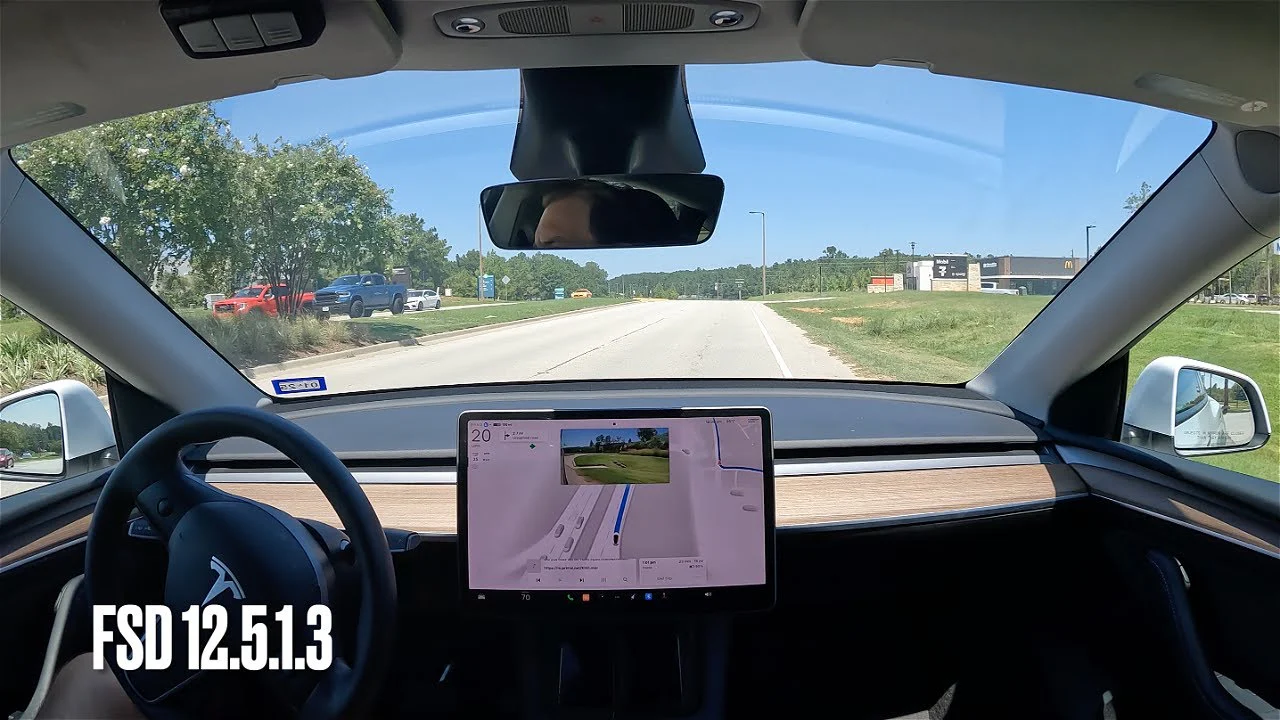
Driving Towards Autonomy – Tesla's FSD Vision
In the rapidly accelerating world of electric vehicles, Tesla has consistently positioned itself not just as an automaker, but as a pioneer in artificial intelligence and autonomous driving. At the heart of this ambition lies Full Self-Driving (FSD), a software suite designed to transform the driving experience. As of August 2025, FSD is undergoing a profound evolution, marked by significant AI upgrades and a cautious, yet determined, expansion into European markets. For current and prospective Tesla owners, understanding these developments is crucial, as they promise to redefine convenience, safety, and the very nature of vehicle ownership. This article delves into the latest advancements, the challenges of global deployment, and the strategic implications of Tesla's relentless pursuit of autonomy.
Chapter 1: The September FSD Update: A "Step-Change Improvement"
The automotive world is buzzing with anticipation for Tesla's upcoming Full Self-Driving (FSD) software update, slated for release in September 2025. Tesla CEO Elon Musk has not shied away from hyping this release, describing it as a "major step-change improvement for rare conditions". This bold claim signals a significant leap in the system's capabilities, moving beyond mere incremental enhancements to address some of the most complex and unpredictable scenarios encountered on the road.
At the core of this monumental update is an extensively upgraded AI model. This new iteration boasts approximately ten times the parameter size of the current FSD system, a staggering increase that translates directly into a more sophisticated and nuanced understanding of the driving environment.To put this into perspective, imagine a brain that can process ten times more information, recognize patterns with greater precision, and make decisions based on a vastly richer dataset. This expanded parameter size allows the AI to learn from an unprecedented volume of real-world driving data, enabling it to identify and interpret a wider array of variables, from subtle road markings to complex interactions with other vehicles and pedestrians. Complementing this larger AI model is enhanced video compression technology, which ensures that the vast amounts of visual data captured by Tesla's cameras can be processed more efficiently and effectively.This is critical for real-time decision-making, as it minimizes latency and allows the system to react instantaneously to dynamic driving conditions.
The overarching objective of these technological advancements is to "substantially reduce the need for driver attention". For Tesla owners, this means a more relaxed and less fatiguing driving experience. The vehicle is designed to autonomously manage a broader array of driving tasks, allowing the driver to shift from active control to a supervisory role. While the system is not yet fully autonomous, the intent is to minimize the instances where human intervention is required, particularly in routine driving scenarios. This reduction in cognitive load can make long commutes or road trips significantly more comfortable, transforming the cabin into a more productive or leisurely space.
The specific focus on "rare conditions" in this September update is particularly telling. "Rare conditions" refer to those unusual or infrequent driving scenarios that often pose the greatest challenge for autonomous systems. These can include navigating complex construction zones with shifting lane configurations, encountering unexpected road debris, dealing with erratic driver behavior, or operating in severe weather conditions like heavy rain, snow, or dense fog.By targeting these less frequent but often highly complex situations, Tesla's AI is being trained on more diverse and challenging datasets. This indicates a maturation of the FSD system, moving beyond perfecting routine highway driving or simple urban navigation to addressing the difficult edge cases that frequently necessitate human intervention. This marks a crucial progression towards higher levels of autonomy, as the system becomes more robust and capable of handling unforeseen circumstances.
This accelerated development of a more advanced FSD system is not merely a technical pursuit; it is a critical strategic move for Tesla in an increasingly competitive electric vehicle market. With growing pressure from Chinese manufacturers and traditional automakers rapidly expanding their EV lineups, a more capable and efficient FSD model is expected to significantly enhance Tesla's appeal to consumers. By offering superior driving safety and convenience, FSD can serve as a powerful differentiator, potentially boosting sales and market share. The promise of a vehicle that can handle more driving tasks autonomously is a compelling value proposition for many buyers, aligning with the broader industry trend towards intelligent, connected cars.
Despite these significant AI upgrades and the promise of reduced driver attention, a consistent and crucial message from Elon Musk and Tesla is that drivers must remain prepared to take control. Musk has explicitly cautioned that "some complex intersections, heavy weather, or unusual events" will continue to require active driver oversight.This reiterates that FSD, in its current iteration, remains a partial automation system. It is a sophisticated driver-assist feature, not a fully autonomous one, and therefore requires continuous driver vigilance.This pragmatic stance is likely influenced by ongoing regulatory and liability challenges surrounding autonomous driving. A class-action lawsuit has already been filed, accusing Tesla of overstating the safety and readiness of its self-driving technology, and the legal landscape regarding fault in AV-related crashes remains unsettled.This cautious approach serves to manage user expectations, ensure safety, and maintain compliance with current regulations, emphasizing that the human driver remains the ultimate supervisor.
Chapter 2: FSD Beta's European Journey: Regulatory Hurdles and Tailored Performance
The journey to bring Tesla's Full Self-Driving (FSD) Beta program to Europe has been considerably more intricate than its rollout in North America. As of August 2025, the FSD Beta program, running on the latest V12.5 software build, has officially commenced for a select group of customers in Germany, the United Kingdom, the Netherlands, and Norway.This carefully orchestrated, phased rollout is a direct consequence of the complex and deeply entrenched web of national and international regulations that govern autonomous driving technologies across the European continent.
Europe presents a unique set of challenges for autonomous driving systems. Its diverse languages, varied road infrastructures, and distinct legal frameworks create a regulatory maze that requires meticulous navigation. Unlike the relatively more unified regulatory environment in North America, European countries often have their own specific rules regarding vehicle autonomy, data privacy, and liability. For instance, the EU Data Act, effective September 12, 2025, mandates data sharing for connected vehicles, balancing user consent, transparency, and competition.This means Tesla must ensure its FSD system complies not only with general safety standards but also with stringent data governance policies, which can vary significantly from those in the U.S.
Consequently, significant adaptations to the FSD software were necessary for its European deployment. This is not a simple "copy-paste" of the American software.Tesla's engineers had to re-engineer core aspects of the system to ensure it could accurately recognize and react to the vastly different array of European road signs, which often differ in shape, color, and symbolism from their North American counterparts. Furthermore, a new logic was specifically developed for roundabout navigation, a common feature of European road networks that requires a nuanced understanding of yielding rules and traffic flow that prioritizes vehicles already in the circle.The system also adopted a noticeably more conservative approach when approaching pedestrian crossings, reflecting stricter European laws and a deeply ingrained pedestrian-first culture.These adaptations highlight Tesla's commitment to tailoring its technology to local driving environments, ensuring both compliance and optimal performance.
Initial feedback from the first cohort of European users has been largely positive, albeit with important caveats. Users have reported that on motorways, such as the M25 in the UK or the A2 in the Netherlands, the system often performs with a confidence that can be comparable to, or even surpass, a human driver.This suggests that FSD is proving its capability in high-speed, relatively predictable environments. However, users are consistently reminded that FSD is "not a finished product" and mandates "hands on the wheel, eyes on the road".This reinforces the regulatory reality that, despite advancements, the driver retains ultimate responsibility. The system can and will make mistakes or disengage with little warning, particularly in adverse weather or poorly marked construction zones.This cautious approach is paramount for safety and aligns with the legal frameworks that still place the onus of control on the human driver.
The strategic importance of the European market for FSD’s long-term growth cannot be overstated. Europe represents a massive and influential automotive market, and successful FSD deployment here could significantly enhance Tesla's appeal and potentially help reverse the trend of shrinking European sales.By demonstrating the system's adaptability and reliability in diverse European conditions, Tesla aims to solidify its technological leadership and attract a broader customer base. The phased rollout allows Tesla to gather a massive amount of high-quality data on local road conditions, driver behavior, and unique European edge cases, which will further refine the system and pave the way for broader expansion across the continent.This methodical approach is crucial for building trust and securing further regulatory approvals, ultimately shaping the future of autonomous driving in one of the world's most complex automotive landscapes.
Chapter 3: FSD Transferability and Insurance Incentives for Owners
In a strategic move designed to incentivize new vehicle purchases and foster customer loyalty within its ecosystem, Tesla has introduced a limited-time Full Self-Driving (Supervised) transfer program. Commencing April 24, 2025, this program allows eligible customers taking delivery of a new Tesla vehicle to transfer their FSD (Supervised) capability from their current vehicle to the new one.This is a significant benefit, as FSD represents a substantial investment, whether purchased outright or subscribed to.
To qualify for this program, customers must meet specific eligibility criteria. They must be the legal owner and registrant of the current FSD-equipped vehicle, ensuring that the FSD feature can be properly removed from the old vehicle (a process that typically takes about 48 hours after delivery of the new vehicle).Both the current and the new vehicle must be on the same Tesla Account, streamlining the transfer process and maintaining the integrity of the customer's digital ecosystem. Furthermore, customers must agree to all additional terms and conditions prior to the delivery of their new vehicle.This program is designed to be a seamless transition for loyal Tesla owners looking to upgrade their vehicles without losing their valuable software investment.
However, it's important to note that certain exclusions apply. FSD cannot be transferred from Foundation Series Cybertrucks, Model Y Launch Series vehicles, or any vehicle under an active lease.Additionally, used vehicle, business, or commercial orders are not eligible for this transfer program.These exclusions likely aim to manage the program's scope and prevent potential misuse, focusing the benefit on individual owners upgrading their primary personal vehicles. A key advantage of this transfer program is that once FSD (Supervised) is transferred to the new vehicle, it remains with that vehicle even if it is subsequently sold to a third party.This significantly enhances the resale value of the new Tesla, as the FSD capability is a highly sought-after feature that adds considerable market appeal. This program serves as a powerful retention strategy, encouraging existing FSD users to upgrade their vehicles within the Tesla brand, rather than considering other manufacturers and losing their substantial software investment.
Further enhancing the value proposition for FSD users, Tesla Insurance offers a tangible discount to owners who have purchased or are subscribed to Full Self-Driving (Supervised).This initiative directly links safe FSD usage to financial benefits, creating a compelling incentive for owners to utilize the system. The discount is directly proportional to the percentage of miles driven with FSD (Supervised) enabled.Tesla Insurance collects data on total miles driven and total miles driven with FSD (Supervised) enabled over a 30-day period. This data is then used to calculate the next monthly premium. Customers can earn up to a maximum discount of 10% on certain coverages when they drive 50% or more of their miles with FSD engaged over this 30-day period.
This incentive became available for new policyholders on or after February 1, 2025, and for renewing policyholders on or after March 8, 2025.It's a clever mechanism that not only provides a financial benefit to FSD users but also subtly encourages greater utilization of the system. The more FSD is used, the more valuable driving data Tesla collects, which in turn feeds into the continuous refinement and improvement of the FSD software. This creates a virtuous cycle where user engagement directly contributes to technological advancement. Moreover, this insurance discount reinforces the perception of FSD as a safety-enhancing feature, potentially influencing broader insurance risk assessments and demonstrating Tesla's confidence in the system's ability to reduce accident rates. For Tesla owners, this means that their investment in FSD can yield not only an advanced driving experience but also tangible savings on their vehicle insurance, making the overall cost of ownership more attractive.
Chapter 4: The Future of Autonomy: Beyond Current Capabilities
While Tesla's Full Self-Driving (FSD) system continues its rapid evolution, the company's long-term vision extends far beyond the current "supervised" capabilities. The ultimate goal, as articulated by Elon Musk, is to reach a point where drivers can truly become "passengers, not drivers".This ambitious objective underpins Tesla's ongoing investments in artificial intelligence and robotics, aiming for a future where vehicles operate with minimal to no human intervention.
A significant component of this future vision is the development and scaling of the Robotaxi service. While still in its nascent stages, with a pilot program slowly expanding to new testers in Austin, the Robotaxi represents Tesla's commitment to a fully autonomous ride-hailing network. The concept is simple yet revolutionary: a fleet of self-driving Teslas that can operate without human drivers, providing on-demand transportation. This would not only generate substantial revenue for Tesla but also fundamentally transform urban mobility, reducing traffic congestion, parking needs, and the overall cost of transportation. However, the path to widespread Robotaxi deployment is fraught with significant regulatory and technological hurdles. Achieving true unsupervised autonomy requires overcoming complex challenges related to perception, decision-making in unpredictable environments, and ensuring absolute safety in all conceivable scenarios. The legal frameworks for liability in a fully autonomous world are still being developed, and public trust in driverless technology remains a critical factor.
The continuous improvement of FSD, and by extension, the realization of the Robotaxi vision, relies heavily on Tesla's unique data collection capabilities and its iterative approach to AI refinement. Every mile driven by a Tesla vehicle with FSD engaged, whether in supervised mode or during beta testing, contributes invaluable data to the company's neural networks.This vast dataset, encompassing a myriad of driving conditions, road types, and unexpected events, allows Tesla's AI models to learn, adapt, and become progressively smarter. The "major step-change improvement" expected in the September FSD update, with its 10x parameter size and enhanced video compression, is a direct result of this data-driven feedback loop. Tesla's engineers continuously feed this real-world data into their training algorithms, refining the system's ability to handle "rare conditions" and reduce the need for driver attention.This iterative development process, where software updates are pushed over-the-air, allows for rapid improvements and ensures that Tesla vehicles are constantly evolving in their autonomous capabilities.
The implications of this relentless pursuit of autonomy extend beyond individual vehicle ownership. Tesla's push to expand FSD capabilities could accelerate the broader adoption of semi-autonomous and eventually fully autonomous vehicles across the industry.This influences the competitive landscape, as other automakers are compelled to invest more heavily in their own autonomous driving technologies to keep pace. Furthermore, it shapes the regulatory environment, as governments and policymakers grapple with the challenges and opportunities presented by increasingly intelligent vehicles. While the journey to full autonomy is complex and ongoing, Tesla's advancements in FSD are undeniably paving the way, setting new benchmarks and pushing the boundaries of what's possible in the future of driving. The vision of a world where cars drive themselves is slowly but surely becoming a reality, with Tesla at the forefront of this transformative shift.
Conclusion: Tesla's Autonomous Ambition – A Continuous Journey
Tesla's Full Self-Driving system, as of August 2025, stands as a testament to the company's ambitious vision for the future of mobility. The impending September FSD update, with its significant AI enhancements targeting "rare conditions" and promising reduced driver attention, represents a crucial leap forward in the journey towards greater autonomy. This technological advancement is not merely about convenience; it is a strategic imperative for Tesla in a fiercely competitive global EV market, aiming to bolster sales and solidify its technological leadership.
The cautious yet determined expansion of the FSD Beta program into European markets highlights Tesla's commitment to global deployment, even as it navigates a complex web of diverse regulations and adapts its software to unique regional driving environments. The positive initial feedback from European users, coupled with the ongoing emphasis on driver supervision, underscores the pragmatic approach Tesla is taking to ensure safety and compliance while gathering invaluable real-world data.
Furthermore, Tesla's initiatives like the FSD transfer program and insurance discounts demonstrate a clear strategy to incentivize customer loyalty and integrate the FSD experience more deeply into the ownership lifecycle. These programs not only provide tangible benefits to owners but also contribute to the continuous refinement of the FSD system through increased usage and data collection.
While the ultimate goal of fully unsupervised autonomy and widespread Robotaxi deployment remains a long-term vision, the progress made in FSD is undeniable. Tesla's data-driven iterative development process ensures that its vehicles are constantly learning and improving, pushing the boundaries of what's possible in autonomous driving. For Tesla owners, this means an ever-evolving and increasingly capable driving companion, albeit one that still requires their vigilant supervision. The road ahead for FSD is complex, marked by both technological breakthroughs and regulatory challenges, but Tesla's unwavering ambition continues to drive the industry towards a more autonomous future.
FAQ: Full Self-Driving
-
What is the "September FSD update" and what does it change? The September 2025 FSD update is a major software upgrade featuring an AI model with 10 times the parameter size and enhanced video compression. It aims to significantly reduce the need for driver attention, particularly in "rare conditions," making the system smarter in complex scenarios. However, drivers must still be ready to intervene in challenging situations.[1, 2, 3]
-
Is FSD fully autonomous in Europe? No, FSD in Europe remains a partial automation system. While the FSD Beta program is active in select European countries (Germany, UK, Netherlands, Norway) with adaptations for local road conditions, drivers are still required to keep their hands on the wheel and eyes on the road, ready to take control.[4]
-
Can I transfer FSD to a new Tesla? Yes, for a limited time, customers taking delivery of a new Tesla vehicle (after April 24, 2025) may qualify to transfer FSD (Supervised) from their current vehicle to the new one, provided certain eligibility criteria are met. Once transferred, FSD stays with the new vehicle even if sold.[5]
-
How does FSD affect my insurance? Tesla Insurance offers a discount to FSD (Supervised) users. The more miles driven with FSD (Supervised) enabled, the larger the discount on certain insurance coverages, up to a maximum of 10% for those driving 50% or more of their miles with FSD engaged.[6]
-
What are "rare conditions" in FSD? "Rare conditions" refer to unusual or infrequent driving scenarios that are more challenging for autonomous systems, such as complex intersections, heavy weather, or unexpected road events. The September FSD update specifically targets significant improvements in handling these situations.