
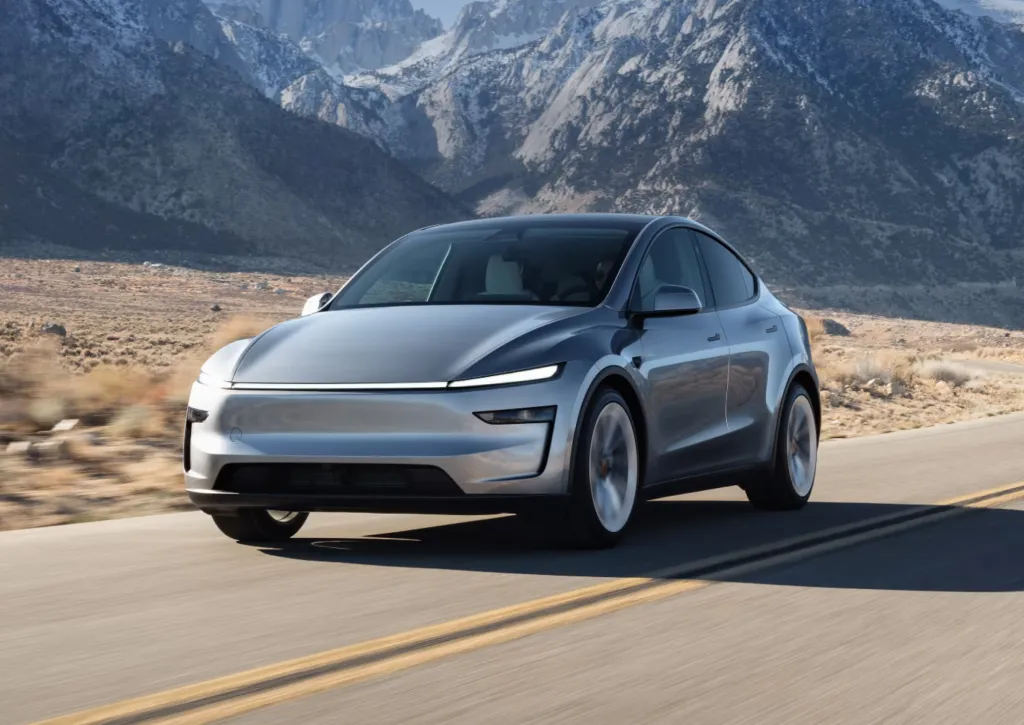
In the automotive world, big model launches — complete redesigns of a vehicle’s architecture, styling, hardware, and drivetrain — are typically a cornerstone of a brand’s cycle. Many legacy automakers follow a 4- to 7-year major-refresh rhythm, with substantial investment to keep their line-up fresh and competitive.
But Tesla, Inc. appears to be breaking from that convention. While its early models like the Tesla Model S, Tesla Model 3 and Tesla Model Y made waves, the company now seems to emphasise incremental upgrades — especially in software — rather than launching a series of all-new platforms.
For Tesla owners in the U.S. and Europe, this shift has concrete implications: how future-proof is your vehicle? What does this mean for resale value, upgrade paths, competition from other brands? This article dives into Tesla’s strategic pivot, why it’s doing it, how it affects you as an owner, and what you should consider going forward.
Chapter 1: Tesla’s Model Cycle vs Industry Norms
1. The Typical Auto-Industry Refresh Rhythm
-
Most established automakers release full redesigns every few years: a new generation with new platform, new body, new interior, often significant changes to performance or efficiency.
-
The reason: keeps products competitive, sustains customer interest, supports higher margins, and combats depreciation.
-
Historically, for example, you might see Model X → Model X Gen2 after ~6 years, and so on.
2. How Tesla’s Pattern Differs
-
Tesla’s core models (Model S / 3 / Y) haven’t seen full generational re-launches at the traditional cadence.
-
Instead: relatively minor hardware tweaks, more focus on software updates, and reliance on existing platforms. For example, Tesla announced it will upgrade Model S and Model X in the U.S. and simultaneously raise their prices by US$5,000 — but this is more of a mid-life upgrade than a full new generation.
-
Reports indicate Tesla “is gambling that introducing new models no longer matters” — meaning Tesla may believe its competitive edge lies elsewhere than in frequent new model launches.
-
For example, Tesla has ceased stating the goal of delivering 20 million vehicles per year by 2030 — a hint that its focus is shifting away from sheer volume of car models.
3. Comparison with Chinese / European EV Players
-
Many newer EV brands (especially in China) are aggressively launching refreshed platforms, new models, low-cost alternatives, etc., to capture market share.
-
Tesla’s relative avoidance of frequent new model launches means it may risk being perceived as less “fresh” in the competitive landscape. For instance, in Europe Tesla’s registrations have been shrinking even while the overall BEV market grows.
4. Risks for Owners When Hardware Gets “Stale”
-
If a model remains essentially the same over many years, hardware may begin to lag competition (e.g., battery tech, range, design, new features).
-
Resale value could be impacted if other brands launch new generations that look/feel markedly different and better.
-
Owners might feel they have “yesterday’s car” in what is a very fast-moving market (especially in EVs).
-
Service life, parts quality and support may stretch, but customers expect future-proofing and software updates to fill the gap.
Chapter 2: Tesla’s Strategic Considerations and Logic
1. Software-First and Margins Over Hardware
-
Tesla appears to believe the value proposition for its vehicles lies increasingly in software, over hardware redesigns. For example, continuous over-the-air (OTA) updates, Full Self-Driving (FSD) features, performance tweaks, new UX. Industry commentary notes Tesla’s strategy to enhance vehicles via software is “challeng[ing] conventional notions of hardware superiority”.
-
From a cost standpoint: hardware redesigns are expensive, time-consuming, require tooling, new production lines. Software updates are comparatively lower cost and can be deployed across the fleet.
2. Cost Structure / Risk Management
-
By stretching the life of an existing platform, Tesla can amortize its investment over a longer period, reduce per-unit costs, benefit from scale.
-
Avoiding frequent completely new platforms reduces risk of launch glitches, delays, cost overruns.
-
Tesla reportedly cancelled or delayed its low-cost model efforts, signalling a deliberate shift away from frequent new model rollout. For example it reportedly scrapped the plans for a $25,000 EV that had been expected earlier.
3. Brand / Ecosystem Focus
-
Tesla may be placing increasing strategic emphasis on its broader ecosystem: charging infrastructure, software updates, autonomous driving, robotaxi vision. In other words: the car hardware is “just a platform” to deliver software/service value.
-
For instance, Tesla’s robotaxi effort is central to its long-term vision rather than just another new model launch.
4. External and Competitive Pressures
-
Tesla faces intensifying competition (especially from Chinese EV makers) that are launching new models fast, with lower cost, strong features. This changes the competitive dynamic. For example: Chinese competitors offering advanced driver-assist in lower-cost EVs.
-
Tesla may feel that chasing every new hardware generation risk distraction from its longer-term bets (software, autonomy, service).
-
But this trade-off carries risk of falling behind in hardware benchmarks (range, features, price) which may impact brand perception.
Chapter 3: Impact on U.S. & European Tesla Owners
1. Resale Value and Depreciation Considerations
-
For owners in the U.S. or Europe, the longer hardware cycle means your vehicle may face stronger competition from newer platforms launched by other brands. This may affect resale value.
-
However: Tesla’s strong brand and software update strategy may offset some depreciation risk — owners may benefit from improved features over time without buying a new vehicle.
-
Key question: If a competitor releases a substantially new generation with better range/tech/design, will Tesla owners feel they are “behind the curve”?
2. Ownership Experience: Hardware vs Software
-
Owners still benefit from Tesla’s OTA updates, new features, improved performance without swapping cars, which is a plus.
-
But hardware limitations may start to become more visible: battery architecture, thermal management, range, charging speeds, interior design/comfort.
-
In Europe especially, where EV choice is expanding rapidly and new generations are appearing, owners may compare more directly.
3. Upgrade/Replacement Timing
-
If you’re a U.S. or European Model 3 or Model Y owner, what’s the right time to consider upgrading?
-
If you value the latest hardware (range, design, features), you may prefer to wait for Tesla’s next big leap or consider competitor brands.
-
If you are satisfied with your car’s capability and value the Tesla ecosystem (charging, OTA, brand), you may be comfortable holding.
-
-
For prospective buyers: recognize Tesla’s strategy means less frequent “new generation” leaps, so if being “freshest” is a priority, you might consider competitor brands launching new platforms.
4. Software & Ecosystem Implications
-
For U.S./European owners, Tesla’s ecosystem (Supercharger network, updates, brand) remains strong.
-
Life-cycle software improvements mean even older models may get new features, which is a differentiator versus many legacy automakers.
-
But owners should keep an eye on compatibility: e.g., whether older hardware will fully support future software or whether newer functions may be limited to later hardware. (See Chapter 4).
-
Decisions about subscriptions (FSD, premium connectivity) may become more prominent — if hardware doesn’t change much, service features might become a larger differentiator (and cost element for owners).
Chapter 4: Forward Look — Will Tesla Change the Rhythm?
1. External Triggers That Might Force a Hard-New Model Launch
-
Market pressure: If Tesla’s competitors dramatically leap ahead in hardware (range, price, design), Tesla may feel obliged to launch a true next-gen vehicle.
-
New regulations or market dynamics (e.g., in Europe) could open the need for a new platform (e.g., more efficient architecture, different battery tech).
-
Production/technology inflection points: For example, Tesla is working on new batteries (in-house) and may need a new platform to incorporate them.
-
Owner sentiment: If many Tesla owners begin to feel their cars are outdated relative to newer competitor models, brand perception could suffer.
2. What Tesla Owners Should Watch For
-
Announcements of new architecture (e.g., a “Model 2” or “affordable car” project) that signal true new model launch rather than “refresh”.
-
Battery or drivetrain breakthroughs: If Tesla rolls out substantial new battery tech (e.g., next-gen cell), a new model may accompany it.
-
Hardware upgrade compatibility: If Tesla indicates older models won’t receive certain features because of hardware limitations, that’s a sign of divergence. For example, reports indicate that vehicles with Hardware 3 (HW3) may lag future FSD updates compared to newer Hardware 4 (HW4) units.
-
Europe/U.S. regional planning: Since you focus on U.S./Europe car owners, watch how Tesla addresses those markets: e.g., whether a lower-cost model will be introduced in Europe, or whether the company introduces a new platform there first.
3. Bottom Line for Owners
-
If you already own a Tesla in the U.S./Europe and you are happy with the car’s range, performance, charging, and you value Tesla’s ecosystem — then there’s no urgent need to panic.
-
If you are thinking of upgrading soon and want “next-generation” hardware, you may want to monitor Tesla’s announcements and consider whether competitor brands may be ahead in some respects.
-
From a buy decision perspective: Recognise that Tesla may not give you a radical new model in the next 1-2 years, so your choosing of “today’s Tesla” may carry more of a carry-forward mindset (software improvements) rather than “new car smell”.
Conclusion
Tesla’s decision to slow down the cadence of major new model launches is a strategic bet. The company appears to believe that its competitive edge resides less in hardware generation leaps and more in software, ecosystem, autonomous capabilities, and scale economics. For U.S. and European owners, this has mixed implications: on the one hand, the car you buy today may stay relevant longer through updates; on the other hand, you may face increasing competition from brands launching fresher hardware, and your car’s resale value might be more vulnerable.
As a car owner, your key takeaways should be: know your priorities (hardware vs ecosystem), monitor Tesla’s future announcements (battery tech, new architecture), and make your upgrade or holding decision accordingly. Tesla may well change its rhythm if external pressures mount — in which case early adopters will benefit, but if the company holds its current course, the value shift may come more from software than metal.
FAQ
Q1. When might Tesla launch a true next-generation model?
There’s no official date for a fully new generation (platform + architecture) in the U.S./Europe. Tesla is reportedly working on lower-cost models and new battery tech, which may precede a full new generation. If you see structural announcements (new chassis, new cell chemistry, radically different design) that’s your signal.
Q2. I own a Model 3 or Model Y — should I upgrade now or wait?
If you’re satisfied with performance, range and Tesla’s ecosystem, holding may be perfectly fine. If being on the cutting edge (hardware, design, features) matters to you, consider waiting until Tesla or a competitor launches something markedly new — or explore a competitor’s new-generation EV.
Q3. Will Tesla’s software updates make up for the lack of new hardware?
To some extent — Tesla’s strong OTA update program means your vehicle may gain new features or improvements over time. However, hardware limitations (battery, motors, cooling system) may eventually limit what software can achieve, so there is a catch-up limit.
Q4. How does Tesla’s slower hardware cycle compare with other EV brands in the U.S. and Europe?
Other brands are increasingly competitive with new platforms, improved range, refreshed interiors, and lower cost models. In Europe especially the competition is heating up. Tesla’s advantage remains its ecosystem, brand, software — but its hardware lead may shrink over time if the slower cycle persists.
Q5. Could this strategy impact Tesla’s resale values?
Yes — if newer competitor models out-shine older Tesla cars in hardware, owners may face stronger depreciation. But if Tesla successfully maintains ecosystem advantages and brand desirability, the impact may be mitigated. One way owners can minimise risk is by remaining active in software subscriptions, caring for battery health, and staying aware of how forthcoming models could shift the market.