
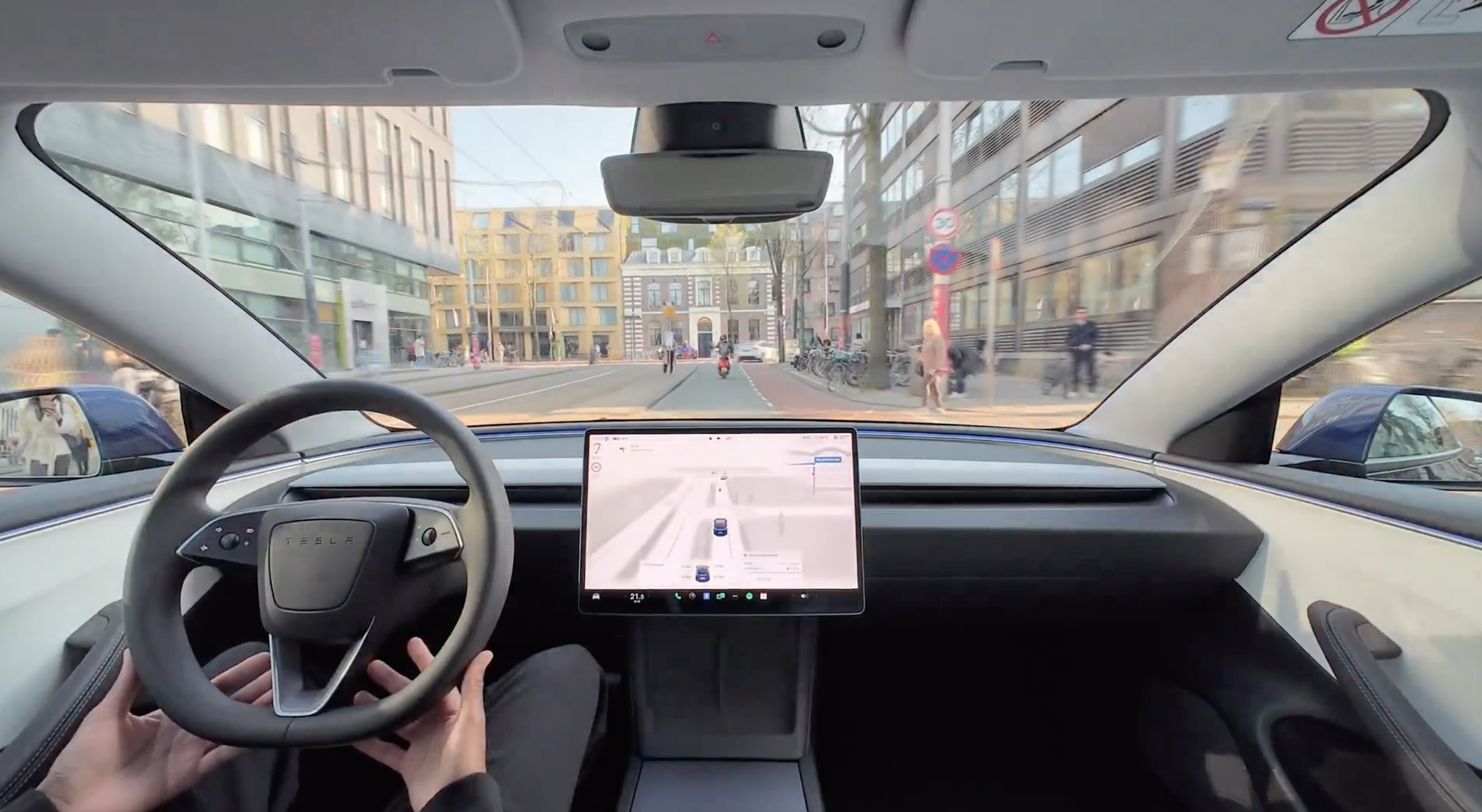
Introduction — why this release matters
Tesla’s Full Self-Driving (FSD) program has been one of the most consequential — and controversial — developments in automotive software over the last decade. On August 2025 signals from company leadership and Tesla-focused reporting indicate the automaker is preparing a substantial update, branded internally as FSD v14, that Tesla says will use roughly ten times the neural-network parameters of previous releases. For owners in the United States and Europe, that’s not just a numerical label: a bigger model can mean materially different behavior, new capabilities, and different demands on hardware, safety monitoring, and regulation. This article breaks down what v14 appears to be, what owners should expect, how to prepare, and how to test safely once your car gets the update.
What we know so far: signals, timeline, and context
Public signals about FSD v14 are a mix of official statements, executive commentary, and reporting from Tesla-focused outlets. Those signals say that Tesla is aiming to deliver a major increase in the neural-network model scale — roughly an order of magnitude more parameters — and that the company expects to begin controlled rollouts in the weeks following the announcement window. That timeline is tentative: Tesla typically stages FSD rollouts (internal alpha → invite-only beta → broader supervised release), and regulators or safety gates can delay availability in specific regions.
Why does the parameter count matter? In modern deep-learning systems for perception and behavior, more parameters typically mean the model can represent more complex relationships and longer context windows. Practically, this can improve performance on rare scenarios, reduce brittle failure modes, and allow the system to learn more nuanced behaviors from fleet data. But higher capacity also brings engineering trade-offs: more compute, memory bandwidth, and the need for careful training and validation to avoid unexpected behaviors.
The technical meaning of “10× parameters” (plain-English explainer)
When news outlets and insiders say “10× parameters,” they’re summarizing an engineering change in the neural network that powers FSD. Here’s what that means in practical, owner-relevant terms:
-
Parameters = representational capacity. Think of parameters as the number of knobs a model can twist to fit patterns in data. More parameters usually allow models to encode subtler distinctions — like distinguishing a cyclist’s intent at an intersection from their body language or recognizing unusual construction patterns earlier.
-
Longer temporal context. Larger models can process and remember longer sequences of camera frames and other sensor history. That’s helpful for decisions that depend on what happened over many seconds (e.g., predicting a pedestrian’s path after repeated glances).
-
Better generalization — but only if trained right. Bigger models can generalize better across unusual scenarios, but only with high-quality, representative training data and robust validation. If a model is scaled up without appropriate data or validation, it can simply become “bigger and more confident” in the wrong things.
-
Compute & latency trade-offs. Bigger models require more compute. Tesla can handle that by running heavy compute in the cloud for offline training and optimizing runtime models on car hardware (HW4-capable units). For older hardware, Tesla may deliver a trimmed version or block some features.
In short: the 10× claim signals potential for notable improvements in decision quality, but it also implies more complex rollout and validation needs.
Hardware compatibility: which cars will benefit?
Tesla’s vehicle hardware has evolved rapidly over the last several model years. Key points for owners:
-
HW4-capable vehicles: Newer Tesla models equipped with the latest compute stacks (commonly referred to as HW4) are best positioned to run larger neural networks natively and thus extract the most benefit from v14. Features that require large on-device models — such as enhanced scene prediction and immediate low-latency control decisions — will likely be prioritized for these cars.
-
Older hardware (HW3 and earlier): Vehicles with HW3 may still receive improvements, but the most advanced capabilities could be scaled back if the car cannot meet real-time latency or memory requirements. Tesla has historically provided software improvements to older hardware through optimization; expect some features to remain software-only or run with constrained models.
-
Firmware and peripheral compatibility: Some features tied to new sensors, radar changes, or diagnostics may require new firmware in the car or app. Owners should watch Tesla’s update notes for hardware-dependent feature notes.
Practical owner takeaway: check your car’s hardware version (Settings → Software / About). If you have newer hardware, you’re more likely to see the full list of v14 improvements; if you own an older car, expect a more conservative, safety-first rollout.
What behavior changes should drivers expect?
Tesla’s public commentary suggests two headline behavior changes owners may notice: meaningfully improved scene understanding and reduced “nagging” (fewer frequent driver attentiveness prompts). Here’s how that might translate into daily driving:
-
Fewer false alerts — a model with better context understanding may reduce unnecessary nudges for drivers to touch the wheel, when the system correctly sees the driver is monitoring or the situation is safe.
-
Smoother handling of complex intersections — more data context and scene modeling can improve negotiation at multi-lane roundabouts, unprotected lefts, and complex merges.
-
Different emergency reactions — improved perception could reduce unnecessary hard braking or unexpected evasive maneuvers; conversely, a model change could sometimes produce new edge-case reactions that differ from prior versions.
-
Edge-case improvement, but watch for regressions. Larger models tend to improve rare-case handling, but firmware updates can also create temporary regressions. Owners and fleet monitors often report regressions after large updates, which is why staged rollouts and telemetry checks matter.
Bottom line: expect better overall behavior over time, but verify performance in everyday scenarios yourself (see owner prep & testing below).
Safety, regulation, and geographical differences
FSD features live inside a complicated legal environment. Key points for US & EU owners:
-
Regional variance in permitted use. Some jurisdictions allow supervised testing but not unsupervised use. Tesla’s staged deployment will likely follow permissive regions first and roll out more cautiously in stricter jurisdictions.
-
Regulatory scrutiny grows with capability. Major model upgrades attract regulator attention. Expect safety gate reviews, data submission requests, and potentially differing allowed feature sets across states and EU countries.
-
Driver-in-charge laws remain central. In most places today, the human in the car remains legally responsible. Even if Tesla tunes down attentiveness nags, that does not remove driver responsibility.
-
Insurance & liability. As capabilities shift, insurers may adjust premiums. Owners should proactively check how their insurer treats FSD-equipped vehicles and disclose software activation where required.
Owners in the US and EU should closely monitor local regulatory announcements and be cautious about using new autonomy features in unfamiliar or legally ambiguous contexts.
How Tesla is likely to roll out v14 (practical expectations)
Tesla’s historical approach: internal alpha testing → invite-only beta → incremental wider release with telemetry monitoring and forced rollback gates if needed. For v14 expect:
-
Staged invites in US first, then other regions depending on regulatory posture and telemetry. Some features may remain US-only at first for months.
-
Telemetry-based gates. Tesla will monitor a combination of fleet metrics (intervention rates, safety-critical events per mile) and hold rollout until thresholds are met.
-
Early adopter experience matters. If you’re an invitee or part of the FSD Beta pool, be prepared for frequent updates, possible rollbacks, and the need to submit logs when you see anomalies.
How owners should prepare & safely test the update
Owner safety checklist before and after a major FSD update:
Before update
-
Verify vehicle backup and Sentry/Dashcam recordings are functioning (good for post-update diagnosis).
-
Update your Tesla app and link it to the car. Ensure your phone key works.
-
Read release notes carefully when the update appears for your car.
-
If you rely on your car for long trips, delay a non-essential long-trip until after you’ve driven a few local miles post-update.
After update
-
Start with short, familiar roads at low speed; verify lane-keeping, braking, and turn handling.
-
Test on quiet residential streets and known highway stretches before trusting it for complex tasks.
-
Don’t disable required driver-monitoring features, and keep both hands ready even if “nagging” is reduced.
-
If you notice safety regressions, document (time, location, scenario) and submit logs to Tesla; share constructive detail on owner forums if you want community insight.
Owners should treat major autonomy updates like new-car handling changes: learn the system’s new boundaries gradually.
Community signals: what early users often report
When Tesla rolls out large software updates, early adopters and owner forums are the first place to see real-world patterns. Recent cycles show:
-
Rapid iteration: issues found by early users often get addressed quickly in follow-up patch updates.
-
Anecdotal noise vs. signal: social feeds amplify both true regressions and user error; evaluate reports carefully and cross-check with multiple owners.
-
Telemetry can hide issues. Some problems manifest only in rare conditions; Tesla’s fleet-scale data collection is meant to capture those events but it takes miles and time.
Practical advice: use objective logs (dashcam / Sentry / telemetry) to support any safety concerns you report.
Ownership implications: insurance, resale, and fleet use
A big increase in autonomy capability affects the economics of ownership:
-
Resale value: cars that receive and demonstrate well-performing FSD upgrades may command a premium; conversely, if a feature is removed or restricted, market perceptions can shift.
-
Insurance: insurers are still adapting their actuarial models for autonomous features. Expect a mix of programs that reward reduced-risk behavior and caution from those concerned about liability.
-
Fleet and ride-hailing: big autonomy steps accelerate fleet-level opportunities (robotaxi pilots, fleet services). Owners who plan to later sell to fleets should note warranty and feature-transfer rules.
Conclusion — a measured approach for owners
FSD v14 looks like a significant technological step with the potential for meaningful improvements in daily driving. But greater model size and capability bring complexity: varying hardware compatibility, regulatory variance, and the ordinary software-release risks of regressions. Owners in the US and Europe should approach this update with optimism — and caution: prepare your car, read the notes, and re-test familiar routes slowly. Track official release notes and prioritize safety first.
FAQ (owner-focused)
Q1: Will every Tesla owner get v14?
A: Not immediately. Tesla usually stages rollouts; newer HW cars and invited FSD Beta participants will see it first. Some legacy hardware may receive a limited or optimized subset.
Q2: Is v14 unsupervised driving?
A: No — public signals indicate staged supervised releases and that driver-in-charge rules remain. Always follow local laws and Tesla guidance.
Q3: Should I delay installing v14?
A: If you depend on your car for long critical drives right away, consider waiting a few days to test it locally first. For enthusiastic testers, install and cautiously evaluate.
Q4: How will insurance change?
A: It depends on the insurer and region. Notify your insurer if you activate FSD features and ask about coverage; some carriers may offer discounts for safe-driving telematics.
Q5: What if I see a safety regression?
A: Document the scenario (time, location, a short description), preserve dashcam footage, and submit logs to Tesla through the app. If it’s a serious safety issue, stop using the feature and seek official guidance.
Q6: Will EU regulators block features?
A: They may restrict specific functions if safety thresholds aren’t met locally. Tesla will likely adapt rollouts to meet regional regulatory requirements.
Q7: Can I opt out of automatic updates?
A: You can delay installation, but Tesla often prompts users. Check Settings → Software for options, and review release notes before acceptance.
Q8: How will v14 affect everyday features (like lane changes or traffic lights)?
A: Expect incremental improvements in complex scenes, smoother lane changes, and better behavior at intersections over time — but owners should verify these improvements in controlled settings first.