
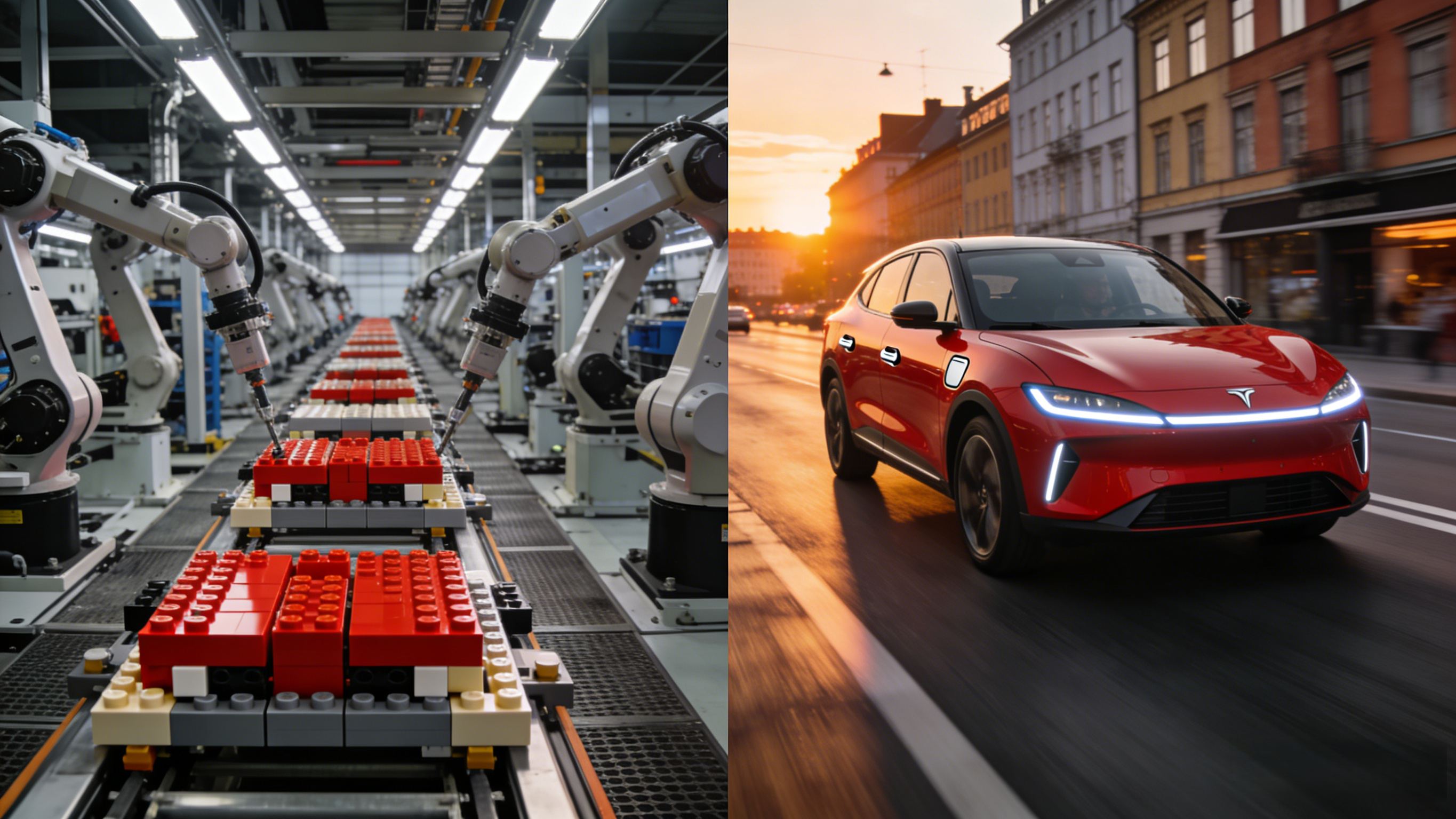
Introduction: The Decade’s Most Anticipated EV
For over a decade, the "affordable Tesla" has been the automotive industry’s equivalent of a ghost story—often discussed, occasionally glimpsed in leaks, but never quite manifesting. However, as of January 29, 2026, the specter has taken a solid, metallic form. Codenamed "Project Redwood," this next-generation compact vehicle represents more than just a lower price point; it is Elon Musk’s "Master Plan" coming to its ultimate fruition.
In today’s high-inflation, high-interest-rate environment, the demand for a sub-$20,000 electric vehicle in Europe and the United States has reached a fever pitch. With Chinese rivals like BYD and Xiaomi rapidly scaling their global footprints, Tesla’s "Redwood" is no longer a luxury project—it is a survival imperative. This article dives deep into the engineering, economics, and strategic impact of the car that aims to put the world on wheels, again.
Chapter 1: The Strategic Pivot—Why Now?
The "2025 Slump" and the Need for Volume
Tesla’s 2025 fiscal year was a period of introspection. While the Model Y remained a global bestseller, the overall delivery growth slowed as the premium EV market hit a saturation point. Western consumers in the "mass-market" segment—those looking for a vehicle under $30,000—remained largely on the sidelines, deterred by price and perceived complexity.
Project Redwood was accelerated in late 2025 to address this gap. Tesla realized that to achieve its goal of 20 million vehicles per year by 2030, it could not rely on the $45,000 Model 3. It needed a "Model T" moment.
Countering the "Great Wall" of EVs
In Europe, the influx of affordable Chinese hatchbacks has begun to erode the market share of legacy giants like Volkswagen and Stellantis. In the U.S., while tariffs have slowed the Chinese advance, the pressure is mounting for a domestic, high-tech alternative. Redwood is Tesla’s shield and sword in this geopolitical economic war.
Chapter 2: The "Unboxed" Revolution—How $16,000 is Possible
The most frequent question from skeptics is: How can Tesla sell a car for $16,000-$20,000 and still make a profit? The answer lies not in cheaper materials, but in a radical reimagining of how a car is put together.
Parallel Assembly (The Unboxed Process)
Traditional car manufacturing involves a "linear" line where the car frame moves through various stations, and parts are stuffed into it. This is inefficient; workers are often cramped, and much of the car’s interior space is "dead" during assembly.
The Unboxed Process, which will debut at Giga Texas and the upcoming Giga Mexico for Redwood, breaks the car into sub-assemblies. The doors, seats, and dashboard are built as separate modules and fully finished before they ever meet the chassis.
-
Efficiency Gains: This reduces the factory footprint by 40%.
-
Labor Reduction: It allows more robots and workers to access the vehicle simultaneously without getting in each other's way.
The Death of the Wiring Harness: 48V Architecture
Following the lead of the Cybertruck, Redwood will utilize a full 48-volt architecture. Most modern cars use 12V systems, which require thick, heavy, and expensive copper wiring. By quadrupling the voltage, Tesla reduces the current, allowing for thinner wires and saving dozens of pounds of weight and hundreds of dollars in material costs per vehicle.
Giga-Casting 2.0
Tesla is moving toward a "three-piece" chassis. The front, middle (battery pack), and rear are cast in massive Giga Presses. Redwood is expected to use an even more integrated casting method that eliminates hundreds of individual parts, reducing the "bill of materials" (BOM) to levels previously unthinkable for a high-performance EV.
Chapter 3: Design, Specs, and the "Mini-Y" Aesthetic
While Tesla has kept the final design under wraps, pilot production mules spotted near Giga Texas and data from supply chain leaks suggest a Compact Crossover form factor.
Exterior: Function Over Flair
Redwood is designed for the city. It is shorter than the Model 3 but retains a high seating position, catering to the global preference for SUVs. Expect a "Kamm-back" rear for aerodynamic efficiency and a minimalist front fascia without a traditional grille.
-
Drag Coefficient: Aiming for below 0.21 Cd to maximize range from a smaller battery.
-
Wheels: Specialized aero-covers to reduce turbulence.
Interior: Extreme Minimalism
To hit the price target, Tesla is taking its "less is more" philosophy to the extreme.
-
Single Screen: A central 13-inch display will handle everything—there is no instrument cluster and likely no physical stalks, using the steering-wheel-based controls seen in the Model 3 Highland.
-
Sustainable Materials: Extensive use of recycled textiles rather than "vegan leather" to lower costs and appeal to eco-conscious Gen Z buyers in Europe.
Performance: The "Small" Battery, High Efficiency
The Redwood will likely utilize a 53 kWh Lithium Iron Phosphate (LFP) battery pack.
-
Range: Estimated at 250 miles (400 km) EPA. While lower than a Model S, this is more than sufficient for the target demographic of urban commuters.
-
Efficiency: Thanks to the lightweight chassis, the vehicle is expected to achieve over 4.5 miles per kWh.
Chapter 4: Software, Autonomy, and the AI5 Integration
Tesla refuses to make a "dumb" cheap car. Redwood will come standard with AI5 (formerly Hardware 5), the latest suite of cameras and processing power.
FSD for the Masses
By making Redwood "FSD-ready" from day one, Tesla turns every $16,000 car into a potential source of high-margin software revenue. For the owner in London or Los Angeles, this means the car can potentially pay for itself via the Tesla Robotaxi Network (Cybercab fleet integration) while they are at work.
V2G (Vehicle-to-Grid) Capabilities
Redwood is expected to be the first mass-market Tesla to fully embrace V2G. In Europe, where energy prices are volatile, a Redwood owner could use their car’s battery to power their home during peak hours or sell energy back to the grid, further reducing the "Total Cost of Ownership" (TCO).
Chapter 5: Market Impact—US vs. Europe
The "Redwood" effect will be felt differently across the Atlantic.
The European Hatchback Killer
In Europe, cars like the VW ID.3, Renault 5, and Fiat 500e are the benchmarks. A $16,000-$20,000 Tesla with superior software and Supercharger access could effectively "clean out" the B and C segments of the European market. It aligns perfectly with the EU’s 2035 ban on internal combustion engines.
The "Second Car" in America
In the US, Redwood will likely become the ultimate "second car" for families or the primary vehicle for students and first-time buyers. It challenges the dominance of used gas cars, making the switch to electric a financial "no-brainer."
Conclusion: The Final Piece of the Puzzle
Project Redwood is the culmination of twenty years of engineering lessons. It is not just a car; it is a manufacturing machine. If Tesla successfully ramps production in late 2026, it will have achieved what no other automaker has: a high-tech, profitable, autonomous-ready EV that the average person can actually afford. The era of the "EV for the 1%" is officially over. The era of Redwood has begun.
FAQ: Common Questions About Project Redwood
-
When can I actually buy one?
-
Pilot production has begun. Mainstream deliveries in the US and Europe are expected to start in Q3 or Q4 of 2026.
-
-
Will it have a steering wheel?
-
Yes. Unlike the "Cybercab" (Robotaxi), the Redwood is a passenger vehicle designed for human drivers, though it will have advanced FSD capabilities.
-
-
Is it safe?
-
Tesla is aiming for 5-star ratings in all categories. The structural battery pack and Giga-castings provide a rigid safety cell that often outperforms traditional frame-and-panel cars.
-
-
What about the name? Will it be called Model 2?
-
Elon Musk has stated he dislikes the "Model 2" name as it implies it's "lesser" than Model 3. "Redwood" is the internal code; the final marketing name is still a closely guarded secret.
-
-
Will it use the Supercharger network?
-
Absolutely. It will likely come with a native NACS (North American Charging Standard) port in the US and CCS2 in Europe.
-