
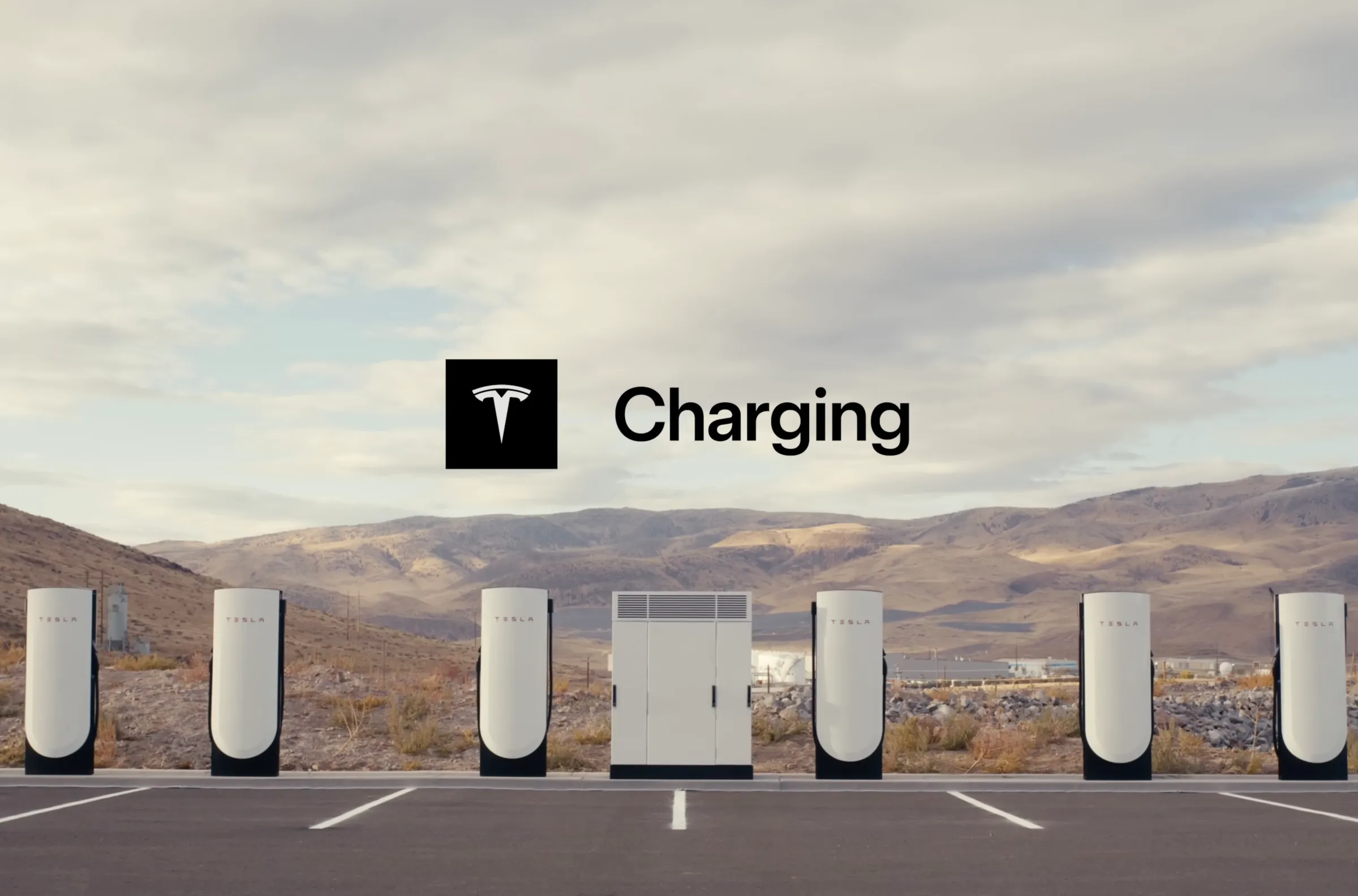
In 2025 Tesla accelerated a strategic shift for its Supercharger network: rolling out next-generation V4 hardware capable of much higher peak power (targeting up to ~500 kW per stall in production cabinets), adding longer cables and on-post payment terminals, and expanding access to non-Tesla EVs through adapter and native-port pathways. At the same time Tesla is reshaping station design (higher-density cabinets, more stalls per site) and piloting policy changes to manage congestion and monetize idle time. For owners in the U.S. and Europe these changes matter for three practical reasons: (1) faster chargers shorten long-distance trip times for many EVs, (2) broader access means non-Tesla drivers can increasingly use the Supercharger network (with different experience/limits), and (3) new hardware, software and pricing changes will affect queuing, charging speeds, and the economics of long trips. This article explains the technical evolution (V3 → V4), who gets access and how, operational and policy implications for congestion and pricing, differences between the U.S. and Europe, and concrete, owner-focused advice to get the best real-world charging experience.
1. Why 2025 is a turning point for Supercharging
Tesla’s Supercharger network has been a central competitive advantage since 2012: a proprietary, reliable fast-charging network tightly integrated with Tesla vehicles and navigation. Historically, the network used V1/V2 hardware, then V3 (~250 kW capability) to reduce head-to-head contention and improve throughput. In 2024–2025 Tesla publicly outlined plans for the next step — V4 — designed to support much higher peak power, more stalls per cabinet, and features to make the network practical for non-Tesla EVs at scale.
Two market forces pushed Tesla here in 2025:
-
Industry convergence to NACS and adapter pathways (North America) — many automakers chose Tesla’s connector standard (NACS) or provided adapters, making Superchargers a natural focal point for cross-brand charging. That increased demand pressure and made network openness commercially attractive.
-
Europe’s CCS environment and non-Tesla pilots — in Europe Tesla already produced cars with CCS in many regions and opened select Superchargers to non-Tesla CCS vehicles in pilots. Opening more sites, standardizing payment terminals and deploying longer cables are logical next steps to convert Supercharger density into a public charging utility for many EVs.
Beyond raw power, V4’s design philosophy is operational: more efficient cabinet architecture (power sharing across 8 stalls rather than 4), integrated payment and queuing systems, and longer cables for convenience. Those changes aim to reduce friction for non-Tesla users while increasing per-site throughput for all users. The practical outcome for owners: shorter waits on long trips in many corridors — but only if deployment, pricing and congestion management are done well.
2. What V4 hardware changes — the technical picture
2.1. Peak power and cabinet architecture
V4 is being marketed as a substantive upgrade from V3. Where V3 sites typically deliver peak outputs around 250–325 kW depending on pack and cable, V4 cabinet designs in planning and early deployment target up to ~500 kW peak per stall (and much larger aggregate capability to support future vehicles like the Semi). Key hardware enablers include:
-
Higher-power switching and cooling in the cabinet electronics.
-
Reworked busbar and power distribution to allow more efficient energy sharing among stalls.
-
Ability to scale cabinets to supply eight stalls from a single power module rather than fewer stalls per cabinet, which reduces footprint and cost per stall.
2.2. Cables, connectors and physical ergonomics
Practical usability improvements matter as much as raw kW. V4 posts feature longer hoses/cables that let cars of different sizes and charger port positions pull in without awkward parking positions. In North America, Tesla’s Magic Dock approach or integrated adapter solutions reduce the friction of using Superchargers for CCS-equipped vehicles. In Europe (where CCS2 is standard), V4 posts increasingly support CCS directly or provide simple workflows for non-Tesla cars. Longer cables and better docking reduce the time people spend plugging/unplugging — a small but important operational win for throughput.
2.3. Payment terminals & user flow
V4 posts are being rolled out with on-post payment terminals in many locations. This means visiting non-Tesla EV drivers can pay at the stall (or via their OEM app) without requiring a Tesla account or a separate adapter step in the Tesla app, which is critical for consumer adoption. Payment terminals also enable direct pricing models (per kWh, per minute, or reservation fees) that Tesla can tune to manage demand and discourage long idle times after charging completes.
2.4. Charging speed realities — vehicle limits and thermal dynamics
Peak charging numbers are only half the story. Real charging speed depends on:
-
The EV’s battery pack acceptance curve (C-rate and thermal limits). Many current non-Tesla EVs cannot sustain 500 kW because of pack design; they heat up and taper. But next-generation EVs and updated battery architectures (wider thermal capacity, larger cell chemistry changes) can make much higher peaks meaningful.
-
Cable and connector thermals — beefier cables reduce resistive heating but add weight; manufacturers must balance cable thickness and flexibility.
-
State of charge (SOC): ultra-high power is most useful from ~10–20% up to ~50–60% SOC — after that batteries taper rapidly, making high peak power less impactful for the last mile of charge.
In practical terms: on corridors where Tesla installs V4, many EVs will see a meaningful reduction in “effective trip charging time” (time spent in the 10–60% window) — but older vehicles will still be constrained by their battery chemistry and thermal management.
3. Who gets access and how
3.1. Three technical paths to access
-
Native NACS port on new vehicles (NA focus): Many North American EV makers announced migration to NACS or to offer NACS as an option so their cars can directly accept Tesla plugs without adapters. For those cars, Supercharger access becomes native and smoother.
-
Adapters (owner-fitted): Existing vehicles can use physical adapters (NACS→CCS or CCS→NACS depending on region) to connect. Early adapters had supply and performance issues, but both OEM-supplied and third-party solutions have matured. Adapters are a stopgap for legacy cars.
-
CCS-equipped V4 posts (Europe) or Magic Dock workflows (NA): In Europe, Tesla’s CCS-equipped stalls allow many non-Tesla cars to plug directly into certain Supercharger locations. In North America, Magic Dock and integrated terminals reduce adapter friction by enabling the adapter to be captive and share between users in managed ways.
3.2. Pilot programs and staged rollouts
Tesla has historically piloted non-Tesla access in limited geographies (e.g., the Netherlands, Norway, handfuls of UK/European sites) before broadening access. Rollouts tend to be cautious: select low-congestion, high-capacity sites first; then expand if congestion and payments are manageable. Expect continued phased expansion in 2025 and 2026, with some regions prioritized due to regulatory incentives, grant funding, or corridor importance.
3.3. Reservation, permissioning and app integration
For non-Tesla drivers, the ideal experience is: locate station in OEM nav (or public maps), pull in, authenticate and pay and begin charging without friction. Many OEMs committed software updates to show Tesla stations and enable seamless payment flows. That integration will vary by vendor and by region during the transition period. Tesla’s own app also now lists which stalls are open to non-Tesla cars and, in many cases, allows reservations or payments from non-Tesla users.
4. Operational changes: pricing, congestion management and fairness
4.1. Pricing levers Tesla can use
-
Per kWh pricing — simple and favored where meters support accurate kWh billing (more common in Europe).
-
Per minute / tiered time pricing — useful at ultra-fast DC sites with varied power delivery: billed by session duration or minutes at top power vs. minutes at trickle.
-
Reservation fees & idle penalties — to discourage plug-and-wait behavior and reduce effective parking of stalls after charging completes.
-
Dynamic, network-aware pricing — prices that adjust by congestion and local DNO constraints. Tesla can optimize price signals in near real time to shape customer behavior.
Each lever has tradeoffs: per-kWh aligns cost with energy moved but can be gamed by vehicles that charge inefficiently; per-minute discourages lingering but can seem unfair for cars with lower charge acceptance curves. Expect Tesla to experiment with mixes of these models across regions.
4.2. Reservation systems — friend or foe?
Reservations guarantee users a stall but can reduce overall throughput if they lead to empty reserved stalls when that user cancels or is delayed. Tesla’s approach is likely to combine short-term reservations for high-demand urban hubs with first-come/first-serve in corridor stations. Heavy use of reservations requires strict cancellation penalties or short reservation windows (15–30 minutes) to avoid wasted capacity.
4.3. Idle fees and enforcement
Idle fees (charging a per-minute fee after charging completes) can significantly reduce stall occupation time and increase throughput. Enforcement mechanisms can include escalating fees and app warnings; however enforcement must be delicate in Europe where parking rules and local enforcement differ across municipalities.
4.4. Equity and access concerns
Opening the network to non-Tesla EVs raises equity issues: if Tesla charges high premiums on its most reliable and fastest corridors, lower-income EV users or owners of older cars may be priced out. Regulators may step in to mandate transparency, non-discriminatory pricing or reserve a percentage of stalls for public access at capped rates. Expect national regulators and consumer groups to monitor pricing experiments closely.
5. Differences between the U.S. and Europe
5.1. Connectors and standards
-
North America: Historically Tesla used its proprietary NACS connector; from 2024–2025 many OEMs announced adoption or adapter programs, creating an easier path for non-Tesla cars to use Superchargers in the U.S. Tesla’s Magic Dock and later integrated NACS connectors simplify this.
-
Europe: CCS2 is the regulatory and marketplace norm. Tesla adapted by offering CCS2 ports on European vehicles for years and by adding CCS hardware to Superchargers in pilot locations. Rolling out more CCS-capable posts is vital for broad European access.
5.2. Regulatory context
-
U.S.: Federal incentives and infrastructure grants encourage network expansion; states may adopt differing rules on interoperable access and payments. OEMs’ collective move to NACS reduced hardware friction.
-
Europe: Stronger single-market regulations (e.g., interoperability mandates, consumer protections) and specialized incentives for public charging make Tesla’s approach more regulated but also more standardized once approved. Local DNO rules and permit hurdles can slow station buildout in densely populated areas.
5.3. Travel behavior & station density
Europe’s shorter trip distances and denser urban networks mean many EV owners rely on destination or workplace charging, making corridor Superchargers most critical for cross-country travel. In the U.S., longer intercity distances make Superchargers essential infrastructure for road trips. Tesla’s strategy reflects these differences: denser small-site rollouts in Europe and high-power corridor sites in the U.S. where longer cables and higher power reduce charge stops per trip.
6. Practical advice for Tesla owners — how to get the best experience today
6.1. Know your car’s acceptance curve
Understand how fast your particular Tesla (or non-Tesla) can accept charge. A hardware/pack-level acceptance chart (available in forums/documentation) informs whether a particular fast charger will meaningfully speed your trip. For many recent Teslas and next-gen EVs, V4’s higher peak power will cut trip time; for older cars the benefit is smaller.
6.2. Use the app & plan around reservation/idle rules
If Tesla offers reservation windows on a route, plan with those. Use the Tesla app (or your OEM’s navigation) to see station occupancy and to avoid peak congestion windows when possible.
6.3. Favor 10–60% charging stops for speed
For long trips try to avoid topping to 90–100% at DC stations — charging speed tapers at high SOC and increases time. Instead, plan shorter, more frequent stops (10–60%) to make best use of a high-power charger.
6.4. Be mindful of idle fees and local rules
Finish unplugging promptly when charging completes. Idle fees are increasingly common and penalize lingering. Also be respectful: don’t block multiple stalls or park in ways that make cables hard to use for the next user.
6.5. If you’re a non-Tesla EV owner, know adapter and software requirements
Confirm whether your car needs a hardware adapter or a software nav update to find and pay at Superchargers. If your OEM provides an adapter, verify recommended usage notes (some adapters are not designed for prolonged 500 kW charging and may degrade).
6.6. For owners of fast-charging non-Tesla EVs
Expect the best gains from V4 if your car has a modern battery pack and thermal controls (multiple models from 2023–2025 improved acceptance). Still, maintain realistic expectations: charging sessions still depend on pack chemistry, ambient temperature, and recent driving stress.
7. Impact on the broader charging ecosystem and competitors
Opening Superchargers and deploying V4 has ripple effects:
-
Third-party networks (Ionity, Electrify America/Fastned, etc.) will face increased competition on trunk routes and may respond with price, access partnerships or faster hardware. Some networks could become complementary: slower nodes for local top-ups, Superchargers for long trips.
-
OEMs & adapters: manufacturers migrating to NACS reduce adapter friction; some will include adapters or NACS ports as standard. This accelerates standardization but raises adapter supply and safety quality control issues that both Tesla and OEMs must manage.
-
Public policy: regulators will watch pricing, transparency and access equity. In some markets regulators may mandate minimum non-discriminatory access conditions for high-capacity national networks.
Longer term, a broadly accessible, high-power Supercharger network could normalize ultra-fast charging for many drivers — redesigning range expectations and enabling faster long-distance travel. But that outcome depends on balanced deployment, robust idle/pricing rules, and consistent interoperability.
8. Risks and unknowns
-
Hardware rollouts lag permits and supply chains: delivering V4 at scale requires cabinets, power connections and DNO agreements. Delays in any of these slow meaningful benefits.
-
Thermal limits of existing cars: many cars won’t fully exploit 500 kW; high peaks benefit future vehicles more than legacy fleets.
-
Adapter reliability & safety: early adapter programs experienced speed and compatibility problems; scaled use requires robust engineering and quality control.
-
Pricing backlash & regulation: aggressive pricing experiments or opportunistic surge pricing on vital corridors could provoke regulatory intervention.
-
Local congestion and parking enforcement differences: enforcement of idle fees and reservation no-shows depends on local laws; inconsistent enforcement can undermine pricing levers.
9. Conclusion — what owners should watch next
Tesla’s V4 ambitions and the campaign to open more Supercharger stalls to non-Tesla EVs represent a pivotal evolution of fast-charging infrastructure. For owners who plan long trips, V4 deployment on major corridors can reduce effective travel time significantly — provided your vehicle can accept higher power. For non-Tesla owners, increasing access is already improving travel options but will remain a phased, sometimes messy transition as adapters, native ports, and software integration catch up. The three practical signals to monitor over the coming months are: (1) V4 site deployments along your main corridors, (2) local pricing & idle-fee policies at nearby stations, and (3) OEM updates that enable native NACS/Seamless Supercharger payment integration. Actively checking Tesla’s station map, your OEM’s charging communications, and local charging forums will help you time trips to avoid congestion and maximize charging speed.
FAQ
Q1 — Will Superchargers actually reach 500 kW for my car?
A: Maybe — only if your car’s battery and thermal management can accept that peak. Many current cars will be limited by battery chemistry and heat, so real-world peak kW may be much lower.
Q2 —Can non-Tesla cars use Superchargers everywhere now?
A: Not everywhere. Access is being rolled out in phases. Some stations are open to non-Tesla CCS or NACS cars today; others remain Tesla-only until Tesla completes hardware and payment integration. Check your OEM and Tesla maps for site-by-site status.
Q3 —Do I need an adapter to use a Supercharger?
A: It depends on your car and region. Newer NA cars moving to NACS may not need adapters; older or CCS vehicles may require one in some locations. Some Supercharger posts now accept CCS directly in Europe.
Q4 —Will charging be cheaper or more expensive after the rollout?
A: Pricing experiments will vary. Tesla may charge a premium for the fastest corridors or implement dynamic pricing to manage congestion. Conversely, competition could push prices down. Expect regional variability.
Q5 —Are reservation systems reliable?
A: Early reservation pilots work best when cancellations and enforcement are strict. But poor enforcement or long reservation windows can reduce throughput. Watch each station’s policy and favor short-window reservations when offered.
Q6 —Should I upgrade to a newer Tesla to benefit?
A: Newer Teslas with better battery thermal management will see larger time savings from V4. If you do many long trips, upgrading could be worth it — but only after comparing costs and personal usage patterns.
Q7 —What should non-Tesla owners do to prepare?
A: Check whether your OEM offers a free or low-cost adapter or a NACS native port update; update your vehicle’s nav/infotainment to show Tesla stations; and verify payment workflows before relying on a Supercharger for a long trip.
Q8 —How will this affect third-party charging networks?
A: Expect stronger competition and faster innovation. Third-party networks may accelerate rollouts, add ultra-fast cabinets or compete on pricing and local coverage. The long-term effect should be better coverage for drivers, but there will be transitional friction.