
Executive summary
Tesla’s energy business is no longer a sidebar to its car operations. Large-scale Megapack contracts and deployments, an expanding Powerwall product line and VPP pilots, and a strategic push into retail electricity supply in the UK mark a company trying to knit together cars, batteries, solar and software into a single customer-facing energy ecosystem. These moves shift economics for EV owners (lower effective charging cost, resilience during outages), create new revenue opportunities (VPPs, time-of-use arbitrage), and change how cities and utilities manage grids. Key recent signals: major Megapack project wins and production milestones, a UK move to secure a domestic electricity supply license, the launch of virtual power plant initiatives, and new Powerwall hardware/software advances.
Why Tesla Energy matters to Tesla car owners (and why you should care)
If you own a Tesla (or plan to buy one), you’re part of a larger ecosystem: vehicle energy demand, home charging, rooftop solar adoption, and grid-level storage all interact. Here’s why Tesla Energy’s growth should matter to owners in the U.S. and Europe:
-
Lower total cost of ownership (TCO): paired solar + Powerwall + smart charging can reduce household electricity spend and lower the effective cost to charge your car.
-
Resilience: home batteries provide backup power during outages — important for owners in storm-prone or grid-constrained regions.
-
New income streams: virtual power plants (VPPs) and grid services allow Powerwall owners to be paid for stored energy and flexibility.
-
Network effects: the more integrated Tesla becomes across vehicles, home energy, and the grid, the more seamless the charging and energy experience — and the more leverage Tesla has to offer bundled services.
Those are the owner-facing stakes; below we unpack technology, deployments, market moves, and actionable guidance.
Today’s key developments
A cluster of developments over the past few months underlines Tesla Energy’s momentum:
-
Production and deployment scale: Tesla’s Megapack program and factory ramp efforts have produced major project wins and milestones in the last year, including big contract deliveries and factory expansions that aim to increase global stationary storage capacity. These large projects are being contracted in North America, Europe, Japan, and Australia.
-
Retail electricity ambitions (UK): Tesla applied to the UK energy regulator (Ofgem) for a licence to supply electricity to households — a sign Tesla is aiming to be an integrated supplier (generation + storage + retail) in some markets. That would let Tesla bundle Powerwall, solar, and EV charging in a single retail offering.
-
Virtual Power Plant (VPP) pilots: Tesla has been active with VPP programs that allow Powerwall owners to provide grid services or sell excess energy. The UK has seen one of Tesla’s first VPP launches outside the U.S., enabled by local partnerships.
-
Powerwall hardware & software evolution: the Powerwall product line has continued to iterate — newer Powerwall variants now include integrated inverters and improved software, making them more attractive as an all-in-one home energy solution.
These are the big, load-bearing facts that shape everything else below. I’ll now unpack how Megapack and Powerwall work, the grid and market implications, and what owners should do.
Background: Tesla Energy product set and strategy
Tesla’s energy portfolio can be thought of in three tiers:
-
Home & small commercial: Powerwall — an integrated home battery (backup, self-consumption, peak shaving). Growing in popularity where residential solar is common.
-
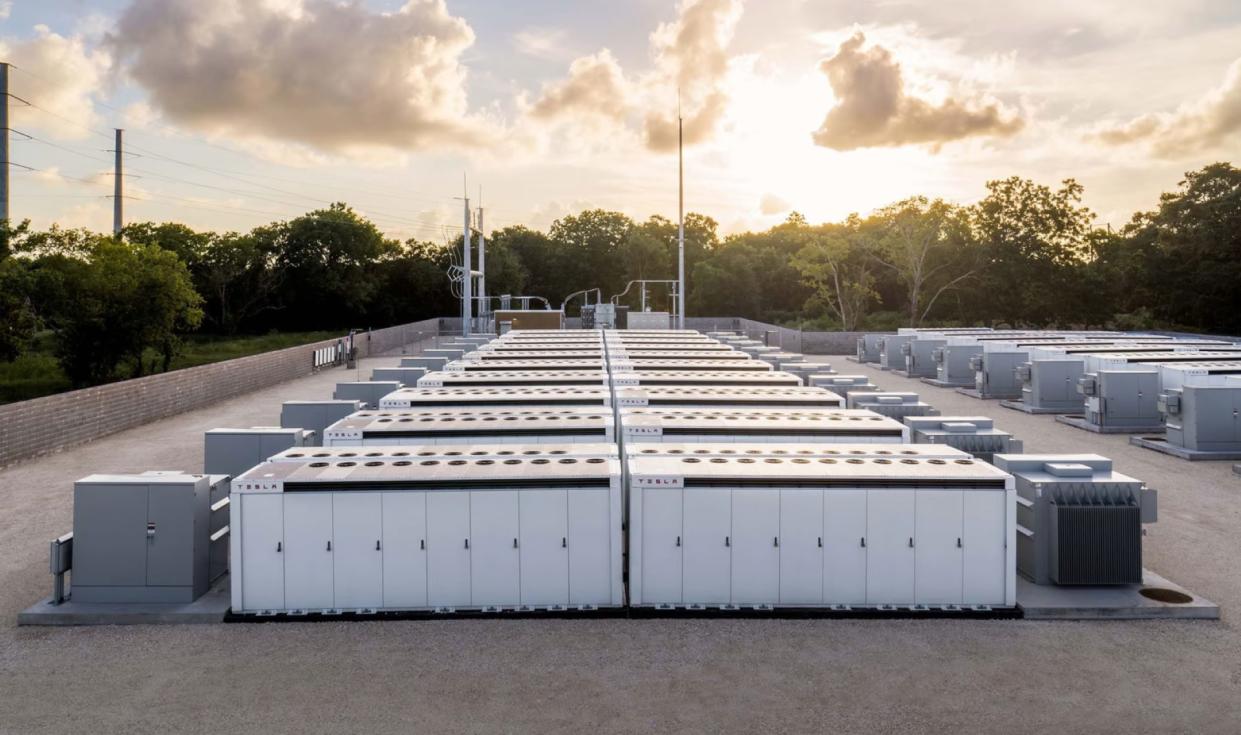
Commercial & utility-scale: Megapack — containerized, pre-integrated battery systems designed for utility applications (frequency regulation, capacity, renewable firming, blackstart). Megapack systems are modular and can be combined into multi-MWh and even GWh-scale projects.
-
Software & services: Autobidder (and other software tools), Virtual Power Plant orchestration, energy trading and market participation tools that monetize flexibility and stored energy.
Tesla’s strategy ties these pieces together: manufacture batteries at scale, sell integrated hardware, and use software (Autobidder, VPP orchestration) to create recurring revenue and operational optimization.
Technical deep dive — Megapack & Powerwall: what’s under the hood
Understanding the tech helps owners and fleet managers evaluate benefits and safety.
Megapack — grid-scale design
-
All-in-one architecture: Megapack ships pre-assembled with battery modules, power conversion (inverters), thermal management, safety systems and grid interconnection gear, reducing on-site integration time. This modular container approach simplifies deployment for utilities and developers.
-
Scalability: individual Megapacks can be combined to create systems from a few MWh up to multiple GWh at a single site. Customers (utilities and large developers) buy multiple Megapack units to meet capacity and power requirements.
-
Use cases: frequency response, peak shaving, renewable firming (absorbing midday solar and discharging in evening peaks), blackstart capability, and capacity market participation.
Powerwall — residential edge
-
Integrated inverter: newer Powerwall variants integrate battery and inverter, simplifying installation and increasing home adoption. This avoids the need for a separate solar inverter in some configurations and can reduce hardware complexity.
-
Backup & self-consumption: Powerwall can provide seamless backup during outages and time-shift solar production to match evening EV charging load, reducing grid dependence and potentially lowering charging costs.
Software — Autobidder and VPPs
-
Market orchestration: Autobidder (Tesla’s energy-market software) and VPP orchestration allow fleets of batteries to bid into energy and ancillary services markets, dynamically optimizing revenue via arbitrage and services. For residential users, VPP participation can yield payments or bill credits for shared flexibility.
Grid & market impacts — why Megapack deployments matter for regions
Large Megapack deployments change local grid economics and reliability in several ways:
1) Smoothing renewable generation
Solar and wind are variable. Megapack systems absorb excess generation (reducing curtailment) and discharge when generation drops, increasing effective renewable utilization at system scale.
2) Reducing peak demand and deferring upgrades
By shaving peaks, large batteries can reduce the need for expensive grid upgrades (new transmission or peaker plants), which lowers overall system costs over time.
3) Improving resilience
In places prone to storms, fires, or heat waves, Megapack deployments provide fast-acting capacity and can help prevent rolling outages or support blackstart operations.
4) Creating new market revenue streams
Batteries participate in capacity, energy arbitrage, and ancillary services markets — making them financially viable beyond just reliability benefits. Large buyers (utilities, developers) sign multi-year contracts with battery providers to secure these services. Evidence of large-scale contracts and deployments shows utilities and developers increasingly trust Megapack technology for these functions.
Regional differences: U.S. vs Europe (what owners and policymakers should expect)
Tesla’s energy footprint and strategy differ by region. Owners should be aware of local market structures and regulatory realities.
United States
-
Market structure: U.S. power markets are heterogeneous (ISOs/RTOs in some regions, vertically integrated utilities in others). Batteries make money differently in the PJM, CAISO, ERCOT, and other markets. Operators increasingly use batteries for frequency response and capacity commitments.
-
Policy incentives: Federal tax incentives (e.g., investment tax credits and manufacturing incentives) and state-level programs can materially affect project economics.
-
Megapack scale projects: Several large projects (GWh-scale) have been commissioned or announced in the U.S., demonstrating broad utility interest in grid-scale battery stacks.
Europe
-
Grid integration & policy emphasis: Europe’s push for renewables and increasing cross-border markets create strong demand for grid-scale batteries to firm renewables and provide balancing services.
-
VPP and residential market: Residential adoption of Powerwall + solar is growing faster in markets with supportive feed-in tariffs or dynamic tariffs. Tesla’s VPP pilots in the UK reflect early adoption of aggregation models for residential batteries in Europe.
Owner-facing services & economics — how Tesla Energy affects your household or fleet
Here’s what matters to you as a Tesla owner or prospective buyer in practical $$$ and service terms.
1) Charging cost optimization
By pairing a Powerwall with solar and scheduling EV charging during low-price windows (or using stored solar), owners can reduce the per-mile charging cost — particularly where time-of-use rates or demand charges make daytime charging expensive.
2) Backup power & resilience
Powerwall can power essential loads during outages (kitchen appliances, heat pumps, communications). This is especially valuable for owners in regions with frequent outages or long outage durations.
3) Participation in VPPs and revenue share
Where VPPs exist, Powerwall owners can earn payments or bill credits by allowing aggregated dispatch of stored energy. The value depends on local market rates and the VPP’s revenue-sharing model. Tesla’s VPP in the UK is an example of this model being rolled out outside the U.S.
4) ROI examples — simple templates
Below are simplified, conservative scenarios to illustrate potential payback ranges. Real outcomes depend heavily on local prices, solar incentives, electricity tariffs, and installation costs.
Scenario A — Sun-rich market with high electricity prices (example: California)
-
Upfront: Solar + Powerwall install $18,000 (after incentives)
-
Annual savings: $1,800 (lower grid energy + export credits)
-
Payback: ≈10 years (simple payback) — plus resilience and home value benefits.
Scenario B — Moderate solar market + VPP participation (example: parts of UK/EU)
-
Upfront: Solar + Powerwall €16,000 (after incentives)
-
Annual: €1,200 savings + €300 VPP credits
-
Payback: ≈10–11 years — VPP payments shorten payback if stable.
Notes: Incentives (tax credits, rebates), local net-metering rules, and electricity rate structures can drastically change these numbers. Use local installers’ calculators for precise ROI.
Case studies — real projects that show the scale and promise
These examples illustrate how Megapack and Powerwall are being used in practice.
Large-grid project: GWh-scale deployments in U.S. Southwest
Massive projects combining many Megapacks provide hundreds of MW and several hundred MWh of capacity to balance large renewable portfolios, shave regional peaks, and provide ancillary services. Such projects demonstrate that battery technology can substitute for peaker plants in many scenarios.
National-scale VPPs: UK residential aggregation
Tesla’s UK VPP pilot allows Powerwall owners to join an aggregated market response program, selling flexibility into the grid. This represents a path for homeowners to monetize demand flexibility while supporting national grid stability.
Industrial/utility partnerships: multi-GWh supply agreements
Long-term contracting between utilities/developers and OEMs (including Tesla) for many GWhs of planned storage demonstrates market confidence and the scaling of supply chains (production facilities and factory ramps). These backbone agreements enable grid modernization at speed.
Safety, reliability, and environmental considerations
Battery systems raise legitimate concerns — thermal safety, recycling, supply chains.
-
Safety design: Megapack and Powerwall include active thermal management, fire suppression systems and integrated monitoring. Large-scale projects use additional site-level controls and continuous monitoring to minimize risk. Still, fire-safety and emergency response planning are essential for large installations and densely populated areas.
-
Materials & recycling: Lithium-ion battery production carries environmental costs. However, energy storage enables greater renewable integration, which reduces lifecycle emissions associated with fossil generation. Battery recycling and second-life programs will become increasingly important as deployments scale.
-
Supply-chain impacts: Tesla has invested in local production capacity (e.g., multiple Megapack plants) to shorten logistics and secure supply for large projects — a strategic move that affects global availability and pricing.
What owners should do now — practical checklist
If you own a Tesla and are considering Powerwall or simply want to be ready for Tesla Energy developments, here’s a prioritized action list:
-
Assess your energy profile: Get current electricity bills, identify peak hours and demand charges, and estimate your home’s rooftop solar potential.
-
Consider Powerwall if you value resilience or cost optimization: Get quotes and request simulations of bill savings. Ask for VPP participation terms if available in your area.
-
Prepare for VPPs: If you’re open to joining a VPP, clarify dispatch rules, payments, and override options — you should be able to keep battery capacity for emergencies.
-
Ensure proper installation & fire-safety planning: Use certified installers and confirm local emergency services know about your battery installation.
-
Track Tesla Energy announcements: If Tesla begins retail supply in your market, compare bundled offers (electricity + energy storage + vehicle charging credits) to local tariffs.
Risks and caveats owners should know
-
Variable economics: ROI depends on local tariffs, incentives, and how much solar you can self-consume.
-
Policy changes: Net-metering rules and tariff design can change, altering the economics of solar + storage.
-
Vendor lock-in & integration: Bundled services can be convenient but beware of lock-in clauses and long-term contractual terms. Always read VPP participation and retail-supply contracts carefully.
-
Operational tradeoffs: Participating in VPP can reduce available stored energy for home backup during dispatch events — ensure your provider guarantees minimum reserve for outages if you need it.
Conclusion — the practical outlook for U.S. & European owners
Tesla Energy is scaling fast and pursuing a vertically integrated approach: producing hardware (Megapacks, Powerwalls), offering software orchestration (Autobidder/VPPs), and moving into retail supply where feasible. For owners, that trend means more integrated, potentially cheaper EV charging and resilient home energy — but the exact benefit depends on local markets, tariffs and incentives.
If you value resilience or want to lower charging costs, pairing solar and Powerwall is increasingly attractive—especially where VPPs or dynamic tariffs provide additional upside. If you’re a fleet operator, utility decision maker, or local policymaker, Megapack projects offer a credible route to decarbonize and stabilize grids. In the short term, expect transitional hiccups in supply and policy; in the medium term, a more resilient, flexible, and renewable-friendly system.
FAQ
Q1 — Is Powerwall worth it for EV owners who only charge at night?
A: It depends. If your electricity pricing is flat and cheap at night, pure overnight charging may not justify Powerwall. But if you have time-of-use rates, frequent outages, or solar, Powerwall can meaningfully reduce costs and provide resilience.
Q2 — Will Megapack deployments make grid electricity cheaper for me?
A: Large-scale storage can reduce peak-driven prices and defer expensive grid upgrades, which can lower system costs over time. The local effect depends on market design and whether utilities pass savings to customers.
Q3 — Can I join a Tesla VPP and get paid?
A: Where Tesla offers VPP programs (examples include pilots in the UK and the U.S.), homeowners can participate and receive payments or bill credits. Terms vary by program and country.
Q4 — Is Tesla entering energy retail markets beyond the UK?
A: Tesla has already operated retail-like services in Texas and applied for a UK licence; whether it expands retail supply further will depend on regulatory approvals and strategic decisions.
Q5 — Are Megapacks safe? Have there been incidents?
A: Megapack designs include comprehensive thermal management and monitoring, and deployments use additional site-level safety systems. Any large-scale battery system requires careful site design, local permits, and emergency planning. Tesla highlights its safety processes in product materials.