
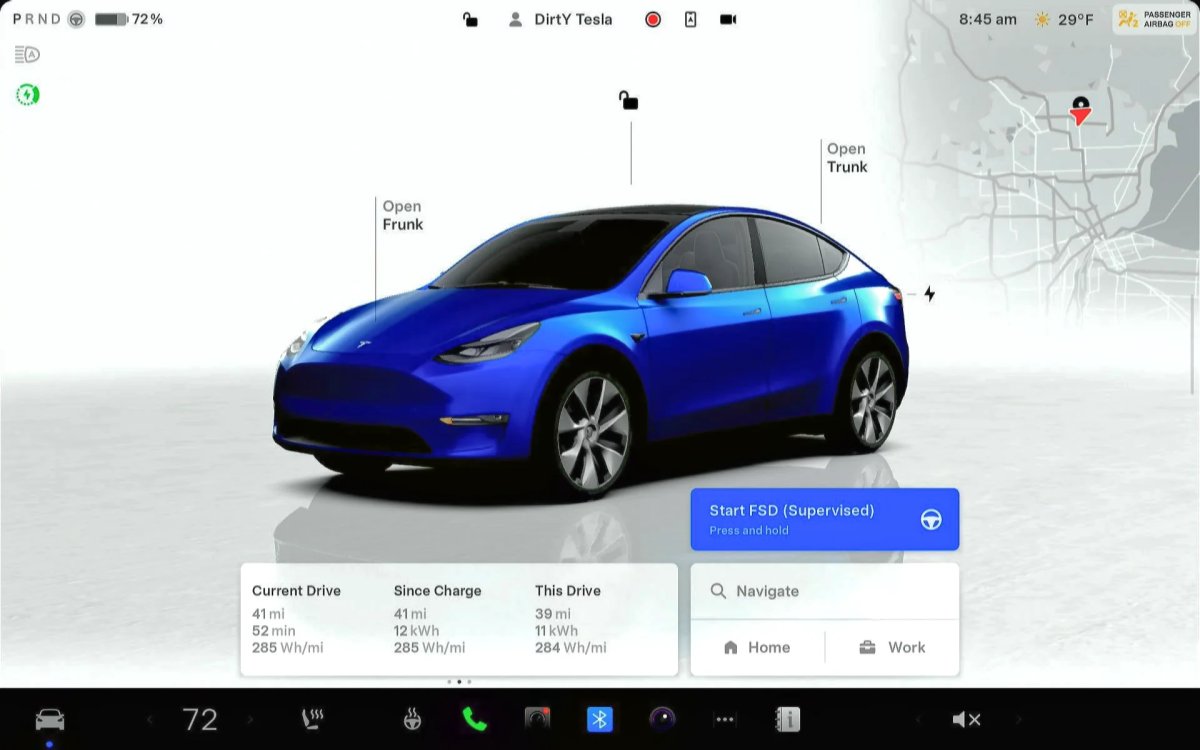
Tesla’s over-the-air (OTA) software updates have been a key differentiator in the EV market, allowing cars to improve over time, long after the initial sale. Drivers regularly expect enhancements: better safety features, performance tweaks, UI improvements, and occasionally brand-new capabilities. For owners in the U.S. and Europe, these updates matter for both daily use and long-term usability.
On September 15, 2025, Tesla began rolling out software version 2025.32.6, a point release in the 2025.32 family. This update has garnered attention because it includes several new safety-oriented features, important security improvements, and a range of minor but useful quality-of-life tweaks. Among the most significant additions is the expansion of the “Child Left Alone Detection” feature into European territories. Combined with global security fixes and upgrades, 2025.32.6 reflects Tesla’s ongoing strategy: ensure that safety, security, and reliability remain core even as new flashy features grab headlines.
In this article we will examine what 2025.32.6 includes, how broadly it is rolling out, the new safety features (especially Child Left Alone Detection), the security dimensions, what this means for Tesla owners, and how this update compares with past ones. The goal is to give you a clear understanding of what to expect, whether you have just received it or are waiting.
What 2025.32.6 Contains
Here are the confirmed and well-documented elements of Tesla’s 2025.32.6 update:
Key New Features
-
Child Left Alone Detection (Europe expansion)
This is a major safety feature that was previously available in the U.S. Tesla vehicles with the right sensors/camera systems now in Europe are getting this ability. If an unattended child (or small person / pet) is detected inside a locked car, the car will flash its external indicator lights, play an alert tone, and send push notifications via the Tesla mobile app. The alerts repeat at intervals until someone returns to the vehicle. Cabin data is processed locally, and no images or video are transmitted to Tesla. The feature is enabled by default. Users can disable it via Controls → Safety → Child Left Alone Detection. -
Security Improvements
Tesla states this update includes “important security fixes and improvements.” The precise vulnerabilities or bugs addressed have not been fully disclosed. The term “security improvements” generally includes fixes to possible software loopholes, network, connectivity, authentication / access, or other subsystems. These are global in scope. -
Frontal Airbag System Enhancement
For Model 3 and Model Y (Model Year 2023+ and some 2022 vehicles), Tesla has enhanced its frontal airbag system using its Tesla Vision (camera + sensor) architecture to better detect frontal crash conditions earlier and trigger protection more proactively. This is intended to modestly improve occupant safety in frontal collisions. -
Rave Cave
A more playful but appreciated minor feature: under certain configurations, when the car is in Park, the Light Sync / Toybox features now “remember your setting.” In short, if you like LED light sync or ambient lighting modes, the “Rave Cave” (a Tesla term for the light show / ambient lighting effect) will persist or behave in ways that require less manual reset. -
Low Power Mode
For folks parking for longer times, Tesla has refined or extended its Low Power Mode: some features that draw energy while the car is parked are limited, helping reduce battery drain. Owners can enable it manually or set thresholds for when it activates automatically. -
Minor Fixes and Undocumented Changes
Several smaller tweaks:-
Dog Mode minimum temperature lowered to ~64°F (≈ 18°C) so that pets inside are safer in moderate heat.
-
Improvements in estimated range calculations that factor in battery aging for older Model S / X vehicles.
-
Bluetooth audio improvements (reducing lag or improving stability).
-
Some UI polish: improved visualizations, reminders for Grok (Tesla’s voice/AI assistant), “Start FSD from Park” now works even if PIN-to-Drive is enabled for compatible models.
-
Rollout & Adoption Statistics
Knowing what’s in an update is useful, but equally important is understanding how widely it is available.
-
As of a few days after September 15, TeslaFi data reports that about 8.7% of the fleet had installed 2025.32.6. For example, 1,255 cars are recorded at that version in one sample snapshot.
-
Another tracker (Tessie) estimates about 9.5% global fleet adoption a few days in.
-
The update is rolling out in many countries: in Europe the United Kingdom, France, Netherlands, Norway are among those where “Child Left Alone Detection” is seen. On the hardware side, it seems available on vehicles with newer cabin hardware (camera / sensor sets) and suitable MCU / AP hardware.
-
The release was first noticed on September 15, 2025, and is a point release (2025.32.6). It is a smaller jump than a major version but still contains enough new features to draw attention.
Because OTA updates happen in waves, there is variation by region and model: some cars receive it earlier; others may lag due to hardware compatibility or Tesla’s rollout scheduling.
New Safety-Related Features & Improvements
Safety features are perhaps the most crucial parts of this update for many owners. Here are the key ones and how they work or matter.
Child Left Alone Detection
-
How it works: Uses cabin sensors (ultrasonic heartbeat sensors, or motion / occupant detection), plus the cabin camera. When all doors are locked and the system detects a child, small person, or pet seated alone, alerts begin. The alert chain includes flashing of exterior indicator lights, an audible alarm inside, and a push notification to the Tesla app. The alerts repeat at intervals until someone returns to the vehicle.
-
Privacy assurances: Cabin data remains processed locally. Tesla claims no video or images are transmitted off-vehicle.
-
Default status & control: The feature is enabled by default. Owners who wish can disable via Controls → Safety → Child Left Alone Detection.
-
Regions & models: Europe (UK, France, Netherlands, Norway) among first to receive it. Applicable to Model Y (some variants) and likely other Tesla vehicles with compatible hardware.
Frontal Airbag Enhancement
-
The update builds on Tesla Vision (camera-based sensing) to better predict frontal crash conditions. That means airbags can begin deployment earlier or with better timing under certain crash dynamics. This is especially relevant in relatively newer Model 3/Y (2023+; some 2022). Helps improve occupant protection.
Security Implications for Owners
Security isn’t always “headline something flashy,” but it’s vital. Here’s what this update’s secure improvements mean in practice.
-
Addressing vulnerability risk: Software systems in connected cars are under constant threat. Bluetooth stacks, networked connectivity (WiFi, cellular), authentication/authorization layers are often entry points for attackers. When Tesla writes “security fixes,” it implies patches to known or potential bugs. Even if Tesla does not always enumerate each vulnerability publicly, the fastest way to mitigate risk is apply patches quickly once released.
-
Data security & user trust: Features like “Child Left Alone Detection” require sensors and cameras inside the cabin. The promise that cabin data is processed locally is essential for maintaining user privacy, especially under European regulations (GDPR etc.). Ensuring the data is not transmitted helps reduce risk of misuse or hacking.
-
Hardware compatibility: Some older vehicles may not have all the sensors or modules required to support the new detection features or enhancements. In such cases, owners may not receive those functions, or they may be partially available. Also, battery health (12V battery etc.) might impact whether certain features function correctly.
-
Update on risk vs stability: New software sometimes introduces unintended bugs. With security patches, the risk is usually low but exists (e.g. regressions, conflicts with other components). Tesla’s OTA system allows rollback or fixes via follow-ups, but for owners, it is wise to wait a little (or ensure backups) if you depend heavily on your car for daily use.
Impact on Tesla’s Software Strategy and Competition
This update is small in version number but reflects larger trends in Tesla’s software & business strategy.
-
Steady cadence: Tesla is doubling down on its pattern of frequent, incremental updates rather than waiting for large version leaps. This helps maintain safety and reliability, which customers increasingly expect.
-
Balancing new features with safety/security: The inclusion of “fun” features (like Rave Cave) alongside serious safety/security upgrades shows Tesla wants to keep owners engaged while also addressing the more serious latent risks in connected car technology.
-
Regulatory alignment: In Europe, car software safety, privacy, and occupant protection are under stricter regulation than sometimes in the U.S. Features like Child Left Alone Detection and locally processed camera / sensor data address both safety and privacy concerns, which helps Tesla stay ahead of coming regulatory requirements.
-
Competition angle: Other automakers are also introducing advanced safety features, over-the-air security patches, and occupant detection. By rolling out these features globally, Tesla retains an advantage in software sophistication. However, to maintain it, Tesla must ensure reliability and low bug incidence. Without that, competitor brands may catch up, especially in Europe where consumer expectations and regulation push safety features.
Challenges & Risks
Even with a strong release, 2025.32.6 has challenges and potential downsides.
-
Hardware limitations
Not all Teslas have the necessary sensor suite or cabin camera configuration to support every feature. Older models or those with limited hardware may not receive some safety features right away—or ever. -
Regional variation & slow rollout
The update is rolling out over time, region by region. Some markets will receive it later; some models may see delays. For users anxiously waiting, this can create perception issues: “Why isn’t my car getting it yet?” -
Potential bugs or performance regressions
As with any software change, unexpected side effects may arise—e.g. false alerts, interface glitches, increased battery draw, etc. Tesla will need to patch responsive issues quickly. -
User acceptance & feature fatigue
Some users may not like new alerts; repeated notifications (Child Left Alone Detection) may annoy owners, or may be triggered erroneously. Tesla must balance sensitivity vs false positives. -
Privacy and regulatory scrutiny
Even when cabin data is processed locally, the presence of cameras and sensors may raise concerns. Regulators or privacy advocates may test whether Tesla truly respects data minimization, or whether consent and transparency are sufficient.
Practical Impact for Owners
Here are tangible things Tesla owners should do, know, or expect with 2025.32.6.
-
Check for update availability: Navigate to your car’s software menu, see if version 2025.32.6 is available. If so, ensure your car is in a location with good connectivity (WiFi or cellular) to download / install.
-
After installing, verify features:
• In Europe, see if Child Left Alone Detection is active (default on).
• Check if frontal airbag enhancements are working (though this is subtle and likely only noticeable in crash-tests).
• Test Low Power Mode settings and whether you can configure automatic thresholds. -
Adjust settings if desired: Some features are enabled by default (Child Left Alone Detection). If you prefer, you can turn them off via safety settings. Also review Dog Mode temperature minimum, Bluetooth audio behavior, etc.
-
Monitor battery health: Especially 12V battery condition (older battery modules) because some features rely on stable power supply.
-
Stay aware of future patches: If issues appear (bugs, performance problems), likely there will be a follow-up point release (2025.32.7 etc.). Keep Tesla service / owner forums in view.
Conclusion
Tesla’s 2025.32.6 update may not be a blockbuster version number, but it is significant. For U.S. and European Tesla owners, it delivers meaningful safety improvements, especially through Child Left Alone Detection (now in Europe), and bolsters security with global fixes. Minor enhancements such as airbag responsiveness, low power mode, and Bluetooth audio polish contribute to improved user experience and daily safety.
The rollout statistics show that about 8-10% of the fleet has already installed 2025.32.6, with usage rising steadily. Owners with compatible hardware will benefit sooner; others may need to wait. The update underscores Tesla’s direction: improving safety and security continuously, not just adding flashy new features.
If there’s one takeaway for owners, it’s this: when Tesla pushes updates, install them reasonably promptly, especially those that include security or safety fixes. The technology inside your car keeps improving—and with updates like 2025.32.6, your car becomes safer, more reliable, and more future-capable.
FAQ
-
What exactly does “security improvements” in 2025.32.6 mean?
It refers to a set of patches addressing vulnerabilities or weaknesses in the vehicle’s connected systems, network interfaces, sensors, firmware, or authentication layers. Tesla has not disclosed all the details; owners should assume this includes improving safety and resistance to unauthorized access. -
How can I tell if my car has been updated to 2025.32.6?
Go to your vehicle’s Controls → Software screen. If you see version 2025.32.6 listed, and that the update is complete, then it has been applied. Also, features like Child Left Alone Detection (if your vehicle supports it) should be visible in your safety settings. -
Which Tesla models are eligible for the new features (especially Child Left Alone Detection)?
Typically, the newer Model 3 and Model Y with certain sensor / camera hardware. Also there are signs that Model S/X may be included in some security improvements. Older models or hardware-limited versions may not get certain features. -
Can I disable features like Child Left Alone Detection or “Start FSD from Park with PIN-to-Drive” if I don’t want them?
Yes. Child Left Alone Detection is enabled by default but can be turned off via Controls → Safety. Other features like PIN-to-Drive compatibility with Start FSD from Park may have toggle settings or require specific configurations. Always check your car’s settings after updating. -
Are there any known issues or bugs with 2025.32.6 so far?
As of now, no widespread serious problems reported. Some owners may experience minor glitches (Bluetooth audio lag, interface quirks, etc.). It’s typical for OTA updates to have incremental fixes following rollout; Tesla generally responds to reports and issues via follow-ups.