
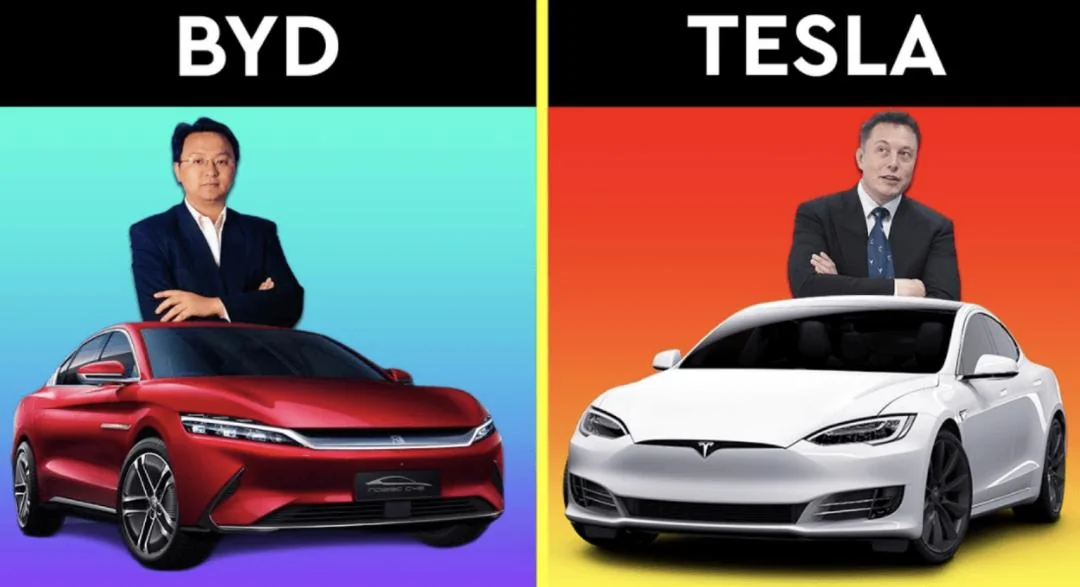
Lately, the EV world feels like a battlefield. Tesla has been cutting prices, introducing stripped-down versions of its flagship models, and defending margins — all while Chinese EV giant BYD and other challengers sharpen their claws. The question now: how far will Tesla push down its pricing to stay competitive — and can it keep its margins alive?
In this article I’ll walk through:
-
The competitive landscape & BYD’s growing threat
-
Tesla’s price cuts and response strategy
-
Cost levers and margin control — how Tesla might protect itself
-
Regional dynamics: U.S., Europe, China
-
Strategic paths Tesla might follow
-
Implications for owners and buyers
-
Conclusion & outlook
-
FAQ
Let’s jump in.
1. The Competitive Landscape & BYD’s Rising Challenge
1.1 BYD’s growth and global ambition
BYD (Build Your Dreams) has transformed from a Chinese domestic powerhouse into a global EV juggernaut. Its ability to scale, vertical integration (battery production, etc.), aggressive cost structure, and strong product pipeline have allowed it to compete not just at home but in Europe, Latin America, and beyond.
Notably:
-
In recent months, BYD has cut prices on select models by up to 34% to stimulate demand amid rising inventory pressure.
-
BYD’s expansion into South America (e.g. Argentina) and Europe is accelerating, leveraging favorable import policies or localization.
-
BYD recently reported a first monthly sales decline in 19 months (September sales down ~5.5% YoY), highlighting the stress of aggressive competition.
-
In 2025, BYD revised its sales target downward (from an earlier aggressive target) to about 4.6 million units, possibly acknowledging margin stress or market saturation.
-
Despite that, forecasts suggest BYD will end 2025 with higher BEV deliveries than Tesla (e.g. ~2.17M vs ~1.61M). (MexicoBusiness report)
These dynamics confirm that BYD is not just a competitor — it’s reshaping the pricing environment globally.
1.2 Tesla’s relative position & vulnerabilities
Tesla retains strengths: brand, software / OTA updates, Supercharger network, autonomy ambitions, and global recognition. But it also has vulnerabilities:
-
Aging product designs vs rapidly refreshed BYD lineups
-
Higher production / material costs relative to Chinese OEMs
-
Margin pressure if discounts grow
-
Brand expectations: buyers expect premium performance, comfort, and features — Tesla cannot simply “go cheap” without diluting its identity
For Tesla, the challenge is to fight price wars without losing what makes it unique.
2. Tesla’s Price Cuts & Response Strategy
Tesla has already begun to lean aggressively into pricing as a lever — not just once, but repeatedly.
2.1 Recent price cuts & new “Standard” trims
Tesla has introduced Model Y Standard and Model 3 Standard trims in the U.S., priced approximately $5,000 to $5,500 below the premium trims. These versions have reduced features (textile seats, fewer speakers, simpler lighting, no rear seat displays, etc.) to make the lower entry point possible.
These trims are also offered with ~321 miles of range — still solid by EV standards, but with performance / premium trade-offs.
In many markets, Tesla had already cut prices on existing trims to respond to competitive pressure and preempt demand decline after the end of U.S. federal EV incentives.
But some analysts argue that the cuts aren’t deep enough: dropping to ~$36–40k still leaves Tesla above many global EVs in the €25–35k range.
2.2 Psychological / marketing positioning
Price cuts do more than move units — they reset buyer expectations. Tesla is signaling that it’s serious about competition and not above sacrificing margin to maintain sales momentum.
However, Tesla must manage perception: the cuts must feel strategic — not desperation or collapse. Maintaining premium branding while cutting price is a delicate balancing act.
Tesla also relies on software, OTA features, and “unlockable add-ons” to retain upsell potential: buyers may opt for base versions, then later pay for features.
2.3 Risks: margin erosion & brand dilution
Each price cut eats margin, especially if material, production, and logistics costs don’t decline proportionally. If Tesla leans too hard, it risks moving from premium to “volume at low margin” — a dangerous place for a capital-intensive company.
Frequent price cutting can also alienate early buyers who paid more, and breed a feeling that buying Tesla is a gamble on future discounts.
Tesla must ensure that every pricing move is compensated by scale gains, cost reductions, or revenue from software / services.
3. Cost Levers & Margin Control — How Tesla Might Protect Itself
To survive a price war, Tesla must master cost discipline.
3.1 Vertical integration & supply chain control
Tesla’s strength lies in controlling battery design, cell production (especially 4680), in-house software stacks, and manufacturing integration. This gives it potential cost advantage over OEMs reliant on external suppliers.
Reducing dependence on third-party parts, optimizing logistics, and catching supply chain efficiencies are key.
3.2 Simplification, modular architectures & feature cuts
The Standard trims already cut features, but Tesla could go further:
-
Reduce variant complexity (fewer trim options, parts commonality)
-
Streamline electronics (simpler wiring harnesses, fewer sensors where possible)
-
Use lower-cost materials in interior, lighting, trim
-
Design for modular upgrades (e.g. parts can be added later)
This helps Tesla maintain lower production cost baseline, enabling more aggressive pricing without complete margin collapse.
3.3 Scale economies and factory efficiency
Operating gigafactories at high utilization helps spread fixed costs. Tesla must maximize throughput, reduce defects, and cut per-unit manufacturing costs.
Automation, yield improvements, predictive maintenance, and lean manufacturing are central.
3.4 Monetizing software, services, and recurring revenue
To buffer thinner vehicle margins, Tesla can push revenue from software and services:
-
FSD / autonomy subscriptions
-
In-car services (music, streaming, connectivity)
-
Supercharger premium / membership models
-
Premium features unlockable via software
-
Energy business (storage, solar) that offsets automotive shortfall
If Tesla can generate robust recurring income streams, that may subsidize lower margins in hardware.
4. Regional Dynamics: U.S., Europe, China & What Tesla Must Do
Price war strategies and dynamics differ by region. Let’s examine how Tesla must adapt.
4.1 United States: fighting the incentive cliff
In the U.S., the expiration of the $7,500 federal EV tax credit removes key leverage. To maintain sales, Tesla may need continued discounts, financing incentives, or loyalty programs.
Tesla’s lower-cost trims may help capture buyers who previously were deterred, but only if the perceptual and financial difference is compelling enough.
Still, Tesla’s domestic strength (brand, charging, awareness) gives it a better buffer vs imports or emerging domestic EVs.
4.2 Europe: intense cost pressure & local competition
Europe is a tougher battleground. Many EVs in Europe now exist in the €20,000–€35,000 band (some Chinese imports, local EVs). Tesla’s base trims still often exceed those baseline prices.
Tesla must contend with:
-
Import duties, VAT, homologation, and localization costs
-
Subsidy caps: in many European countries, EV subsidies are only valid for vehicles under a certain price threshold — Tesla’s base may miss eligibility
-
Local brands and Chinese EVs making inroads (BYD, NIO, Xpeng)
-
Tight margin climates and higher cost structures (labor, regulatory compliance)
To succeed, Tesla might need localized factories, region-specific trim definitions, and more aggressive cost cutting in Europe.
4.3 China & Asia: defender territory but pressure mounting
In China, Tesla faces stiff competition from BYD, NIO, Xpeng, Li Auto, and others — all with cost advantages, local supply chains, and government backing.
Tesla has already cut prices in China; reports suggest Tesla is considering a lower-cost Model Y variant (“E41”) by 2026 to better compete. (NY Post report)
But BYD has already been cutting prices and bundling advanced features (e.g. their “God’s Eye” ADAS) at aggressive prices.
To defend China, Tesla must maintain differentiation (brand, software, charging) while also matching cost advantages.
If Tesla loses ground in China, its global position weakens significantly.
5. Strategic Paths Tesla Might Follow
Given the pressures, what are plausible strategic trajectories Tesla could adopt?
5.1 Tiered strategy: premium core + base volume models
Tesla could double down on a two-tier brand approach:
-
Premium models (Plaid, high-end trims) with maximum margins
-
Base “standard / volume” models with lower margins but higher market penetration
This allows Tesla to maintain aspirational flagship identity while expanding addressable market.
Tesla may intentionally undercut itself on base models while preserving profit from premium tiers.
5.2 Use of software / services to subsidize low-margin cars
Tesla may lean more into monetization of FSD, subscription features, OTA upgrades, in-car content, and energy integration. If recurring revenue becomes a larger slice, Tesla can accept thinner margins on hardware.
Essentially, the car becomes the distribution device for software.
5.3 Localized manufacturing and market-specific tuning
To reduce cost structures, Tesla may build more factories near demand centers (Europe, Asia) to avoid import burdens and logistics costs.
Additionally, Tesla could tailor models, features, and pricing per region to match local cost / competitive constraints.
5.4 Selective feature decontenting and optional upsell
Tesla may push further “decontenting” — remove nonessential features in base trims — but enable many as optional upgrades or software unlocks. That gives flexibility and preserves upgrade margin.
However, Tesla must balance the risk of making base versions too bare to attract.
5.5 Pricing floor and controlled discounting
Tesla may establish a price floor and avoid aggressive ongoing discounting. Instead, use limited promotions, loyalty incentives, or financing incentives to maintain brand stability.
Too much discounting erodes expectation and prestige — Tesla must appear selective.
6. Implications for Owners & Prospective Buyers
As we ride this price war, how does it impact you — the Tesla owner or buyer?
6.1 Resale and depreciation risk
If Tesla cuts prices deeply, the resale value of earlier Tesla models may suffer. Base trims or future discounts could reprice the used market downward.
However, well-equipped or premium versions might hold up better — buyers may pay a premium for “full spec” vehicles.
Documenting your car’s features, maintenance, and history becomes more important as a differentiator.
6.2 Timing your purchase
Now is a tricky time to buy. If possible, wait and observe how deep price cuts go or whether Tesla offers incentives or loyalty discounts in Q4 or 2026.
If you must buy now, carefully choose features you truly need — avoid paying for extras you may later regret.
6.3 Upgradability & “future-proofing”
Prefer configurations that allow software / hardware upgrades later, especially for features Tesla may push as upsell. That way, you can start with base and add later.
Also monitor Tesla’s announcements — certain new trims or local models may undercut your expected window.
6.4 Ownership experience as differentiation factor
In a low-cost EV world, Tesla’s remaining differentiators (charging network, software updates, customer service, brand cache) matter more. If Tesla maintains care, reliability, charging, and software value, it may retain loyalty despite pricing pressure.
As an owner, your satisfaction and word-of-mouth become even more critical.
Conclusion & Outlook
Tesla sits in a high-stakes match: price war or premium identity. The stakes are enormous. If Tesla succumbs too deeply, margins could collapse, reputation erode, and the company may drift into commoditization risk. If it holds, it must rely on its vertical strengths, software leverage, and cost discipline to defend its place.
I expect the following:
-
Tesla will continue trimming prices cautiously, with refinements, but avoid fully going to “budget EV” status
-
More modular and upgradeable options will emerge, supporting base buyers and upsell paths
-
Tesla will push harder into non-vehicle revenue (FSD, services, energy) to mitigate margin erosion
-
Europe and China will see more localized versions and features to match lower-cost challengers
-
If BYD or Chinese EVs push further into global markets, Tesla will have to respond rapidly or lose share
For fans, owners, and future buyers: this is a pivotal time. Tesla’s next few moves may determine whether it remains a premium innovator or becomes just another volume EV maker.
Let me keep tracking pricing, regional model launches, margin disclosures, and competitive dynamics.
FAQ
-
Q: Are Tesla’s price cuts permanent or promotional?
A: Likely a mix. Some cuts will become base pricing for trimmed models; others may be time-limited incentives tied to inventory / season. Tesla will try to avoid running perpetual “sales” to protect brand. -
Q: Can Tesla ever match Chinese cost structures?
A: Not fully — Chinese OEMs benefit from local supply chain, lower labor costs, government support. But Tesla can partially bridge the gap via scale, vertical integration, efficient factories, and software monetization. -
Q: If I bought a Tesla earlier, will I lose out?
A: There’s risk your car depreciates faster relative to newer discounted models. But well-preserved, premium-spec vehicles may hold value better. Early adopters often accept volatility for brand, experience, and prestige. -
Q: How low can Tesla practically go?
A: Realistic floor might be in the high $30,000s (U.S.) or mid-€30,000s in Europe for trimmed models. Going much lower may require new platform or drastic cost innovation (e.g. Tesla’s next-gen vehicle platform). -
Q: Will this price war force Tesla to sell in new markets or scale faster?
A: Possibly. Tesla may accelerate launching in markets where margin thresholds allow competitive pricing, expand factories, or push further into emerging markets to absorb volume pressure.