
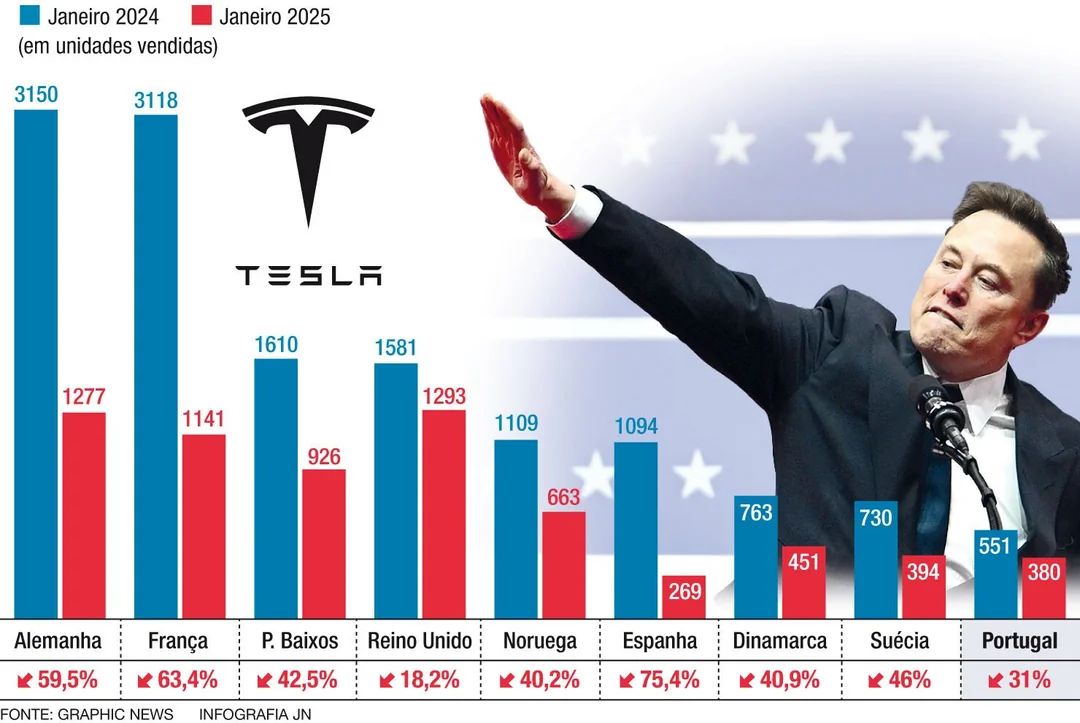
In 2025 Tesla experienced a notable slowdown in deliveries across key European markets — a development that has attracted attention because Tesla previously dominated Europe’s electric vehicle (EV) market. The dip is not a single-cause story: it reflects a mix of aggressive competitor launches (notably regionally adapted models from legacy automakers and fast-moving entrants like BYD), evolving consumer sensitivity to price and incentives, logistic and production dynamics, and local regulatory and charging infrastructure friction. For current Tesla owners and prospective buyers in Europe (and for U.S. owners watching global market signals), the implications are immediate and practical: changes in resale value trajectories, altered waiting times and options for new orders, pressure on aftersales service, and shifts in broader EV adoption incentives.
This article untangles the data and drivers behind the sales dip, explains how country-level differences shape owners’ experiences, and — most importantly — gives Tesla owners and buyers concrete, tactical advice: how to time trades or purchases, what to expect for service and parts, and how to position a Tesla purchase or sale in a more competitive, price-sensitive European market. The analysis also considers how this European weakness could ripple into Tesla’s global strategy and what owners should watch over the next 3–12 months.
1. Introduction — why Europe matters
Europe is a strategic market for EV adoption. European consumers’ interests, regulatory strictness, and city-focused driving patterns have pushed automakers to design region-specific EVs and local production solutions. For Tesla, Europe has been a key growth region — a place to convert urban drivers to EVs and to scale Model Y and Model 3 sales volume. The company’s Grünheide gigafactory (near Berlin) was explicitly built to localize production and cut delivery times for Europe.
A notable dip in Tesla’s European sales is therefore more than a temporary headline — it is a market signal. It says something about how Tesla’s value proposition is being perceived in Europe today: pricing, product fit, service quality, and competition all matter. For owners and buyers, the stakes are practical: resale prices, delivery windows, and aftermarket service levels can change quickly when demand patterns shift.
This article unpacks five main axes explaining the sales dip: (1) intense local competition with better-tailored European products; (2) aggressive pricing and expanding model ranges from Chinese manufacturers such as BYD; (3) changing incentive structures and consumer sensitivity to price; (4) Tesla operational issues (deliveries, service capacity, regional logistics); and (5) macroeconomic and regulatory factors (e.g., VAT, import rules, and local EV policy changes). Each axis has different short- and medium-term implications for owners — which we detail in later sections.
2. Data snapshot — what the dip looks like and where it’s concentrated
A careful look at the numbers shows the sales weakness isn’t uniform across Europe. Key points:
-
Core Western European markets (Germany, France, UK, Netherlands): These countries historically drove the largest volumes. Recent months show slower growth or outright declines in Tesla registrations compared to the same months in the prior year. The degree varies: in some markets the Model Y still sells well but faces headwinds in new orders; in others the Model 3 and smaller segments have been more hit by competition.
-
Southern Europe (Spain, Italy): Price sensitivity is higher here; when incentives shrink or price cuts are limited, demand softens faster. Tesla’s premium positioning — previously mitigated by strong brand momentum — is under more pressure in these markets.
-
Nordics: Norway and Sweden remain EV-forward, and Tesla still sells strongly in many segments; however, local models from established OEMs that are optimized for cold climates and Scandinavian charging networks have narrowed Tesla’s advantage.
-
Eastern Europe: Lower EV penetration and varied incentives mean Tesla loafs in market share; Chinese brands and European small EV makers often compete more on price and value.
What does this look like numerically? The sales dip is typically measured as a percentage drop in registrations or deliveries year-over-year (YoY) or month-over-month (MoM). In the most affected countries, Tesla’s YoY registrations declined in the low-to-mid single-digit percentage points; in pockets with intense competition, drops were larger. Importantly, the decline is not necessarily a sign of structural collapse but rather a recalibration: Tesla is no longer the only compelling choice for many European buyers.
Implications of this data snapshot:
-
Short-term: inventories and delivery times — mixed: some inventory available for immediate delivery in certain countries, while orders may still face factory-specific build timelines.
-
Used market — the dip can pressure near-term used-car prices, especially for immediately available vehicles; however, longer-term value retention depends on product updates, battery longevity, and perceived reliability.
(Throughout this section, the precise country-level percentages and month names will vary as new registration data rolls in; maintain a data dashboard with monthly updates if you publish this as an evergreen piece.)
3. Competitive landscape — who eating Tesla lunch and why
Tesla’s earlier dominance in Europe came from a combination of early entry, a compelling product (range + Supercharger ecosystem), and a superior software-first ownership experience. But the competitive field matured quickly. The main categories of competition are:
A. Traditional European OEMs gone electric (VW Group, Stellantis, Mercedes-Benz, BMW)
European legacy automakers launched regionally optimized EVs that address local buyer preferences (interior materials, ride comfort, charging partnerships with local networks, and often more dealer-service options). VW’s ID family and the new electric SUVs (including lower-cost, high-volume models) have hit the market with familiar dealer networks and financing packages tailored to European customers — features some buyers still prefer over direct-sales models. Stellantis and Renault have followed with affordable BEV options with competitive range and good local service footprints.
Why this matters for Tesla owners and buyers:
-
Model fit: European buyers often prioritize rear-seat comfort, ride refinement, and interior ergonomics more than the minimal Tesla interior. Local OEMs emphasize those qualities.
-
Service network: Dealer networks offer in-person sales and a broad after-sales footprint; some buyers still value that convenience.
B. Chinese entrants (BYD, Nio, Xpeng, Zeekr)
Chinese manufacturers have leapt forward in cost competitiveness, battery chemistry innovations, and feature sets. BYD — in particular — has expanded rapidly in Europe, offering models at lower price points with attractive feature lists, strong warranties, and aggressive financing. Battery tech (blade cells, different chemistries) and localized partnerships have made Chinese EVs price-competitive without sacrificing range or equipment.
Why this matters:
-
Price disruption: Chinese cars compress the pricing band for EVs, forcing legacy OEMs and Tesla to re-evaluate pricing. Buyers who were previously willing to pay a premium for Tesla’s brand and Supercharger convenience now have lower-priced, capable alternatives.
-
Rapid release cycles: Chinese firms iterate quickly and bring new features relatively fast, increasing consumer expectations for content-per-euro.
C. New European EV specialists and budget EVs
Niche European EV brands and startups (and rebadged local models) have targeted city and mid-size segments. Their advantage often lies in price and local marketing. For urban buyers seeking compact EVs optimized for city driving, these offerings can be more attractive than the larger Model Y or Model 3.
D. Charging & infrastructure competition
Tesla’s Supercharger network was a core advantage. But in Europe, third-party fast-charging networks have proliferated; roaming agreements and Tesla’s gradual opening of its network to non-Tesla EVs shifted the ecosystem. While Superchargers remain excellent for Tesla owners, the uniqueness of that advantage has diminished. Moreover, some OEMs partner with regional charging providers to offer better seamless billing and local coverage.
E. Software & features parity
Early on, Tesla’s software and updates were a differentiator. But competing OEMs now offer useful OTA updates, digital cockpits, integrated apps, and advanced driver-assistance suites. The software gap narrows as more manufacturers invest heavily in software stacks and UX.
Net effect: Buyers today can often get comparable range, style, warranty, and local service for lower prices or better financing — narrowing Tesla’s value premium and eroding the moat that fueled accelerated adoption.
4. Demand-side drivers — pricing sensitivity, incentives, and consumer sentiment
The European EV buyer has become more price sensitive and value-focused, for several reasons:
1) Incentives and policy shifts
Many European governments offered generous incentives at various times. As incentive programs mature or are reduced, buyers who previously depended on subsidies now reassess total cost of ownership. Where incentives are in flux, buyers tend to delay purchases or choose cheaper models.
2) Economic backdrop and households’ purchasing power
Post-pandemic, varied macro pressures (inflation, energy costs, and interest rate environment) have made households more cautious. EVs with lower upfront price points look more attractive to budget-constrained families.
3) Perception of Tesla pricing and price volatility
Tesla’s pricing has changed frequently — with periodic global price cuts and occasional regional adjustments. That unpredictability creates buyer hesitation: customers fear ordering today only to see material discounts weeks later. When alternatives are priced lower and more stably, consumers gravitate to them.
4) Feature trade-offs and consumer priorities
European buyers increasingly weigh features like build quality, interior fit-and-finish, brand familiarity, and in-person dealer experiences more heavily. Tesla’s minimalist interior and direct-sales model, once advantages, are no longer a universal fit.
5) Second-hand market dynamics
As immediate-delivery used Teslas become more available in certain regions, price-sensitive buyers may choose used models over new ones, further reducing new-car momentum. Expect used-Tesla listings to influence new-order decisions, especially when warranty and battery health of used cars are transparent and pricing competitive.
5. Supply-side factors and Tesla’s regional actions
Not all sales softness is purely demand-driven. Tesla’s operational choices and supply-side realities play a role.
A. Production localization and inter-factory logistics
Grünheide and other production nodes have been designed to serve regional demand, but temporary disruptions (factory incidents, supply rebalances, or regulatory constraints) can create localized inventory gaps. If specific trims or battery chemistries are prioritized for certain factories, that affects availability by market.
B. Pricing & inventory strategy
Tesla’s dynamic pricing — frequent global or regional adjustments — can temporarily depress demand as customers delay purchases. At the same time, Tesla often uses short-term inventory discounts in certain markets to move cars; these inventory moves can cause local supply imbalances affecting perceived demand metrics.
C. Service capacity and customer experience
As sales slow, owners’ expectations shift toward better aftersales service. Where service center capacity is constrained, owner frustration rises. European owners have, in some cases, experienced longer service waits than they expect, and negative service experiences can impact brand perception and new purchases.
D. Product cadence and model refresh timing
If Tesla staggers feature updates or delays local variants (e.g., certain configurations optimized for European conditions), buyers may postpone purchases. Competitor releases timed with attractive features can capture demand while Tesla waits to roll out equivalent updates.
6. Country-level variation — why Germany, UK, France differ
European markets are diverse; structural differences explain why Tesla’s dip is uneven:
Germany
-
Market size & competition: Germany is both Tesla’s largest European market and home to Tesla’s competitors (VW, Mercedes, BMW). Local OEMs adapted fast, offering well-priced SUVs and crossovers tailored to German buyers’ preferences. Leasing and corporate fleet channels matter too — and when OEMs offer attractive fleet deals, Tesla faces pressure.
-
Consumer expectations: German buyers give high weight to build quality, safety features, and local service — arenas where local OEMs compete strongly.
United Kingdom
-
Post-Brexit dynamics and incentives: Policy changes and VAT/import considerations create a unique price environment. The UK market favors certain vehicle sizes and feature sets. Local charging networks and dealer experience affect buyer choice.
France & Italy
-
Price sensitivity: These markets show higher price sensitivity; incentives and local tax breaks play a strong role. Affordable EV alternatives from local brands and imports are attractive.
Nordic & Benelux
-
High EV adoption & incentives: Norway and the Netherlands remain Tesla-friendly but competition from premium European models and strong local incentives for efficiency and range optimization have narrowed Tesla’s unchallenged lead.
Owner takeaway: If you live in a country with fierce local OEM competition and high price sensitivity, expect more immediate effects on resale values and order windows. If you live in EV-heavy markets with strong incentives, Tesla’s position is more resilient — but not immune.
7. Practical implications for current owners
What do these market shifts mean for people who already own a Tesla in Europe (or are watching from the U.S.)?
A. Resale value & timing
-
Near term: Expect some softening in resale prices for models that are widely available in used inventory or where competing new models undercut Tesla’s used pricing. If you’re planning to sell within the next 3–6 months, consider staging the sale carefully: highlight battery health, service history, and software version.
-
Medium term: If Tesla holds product lead (software, range, and Supercharger experience) and addresses service friction, resale values should stabilize. However, a sustained period of low demand could push prices down more broadly.
B. Service & parts
-
Wait times: In markets where Tesla’s service capacity is strained, expect possible longer waits for non-critical maintenance. If you own an older Tesla, schedule critical repairs proactively.
-
Parts availability: If battery pack production is localized and constrained, certain parts could see longer lead times — particularly in regional disruptions. Owners needing major battery work should confirm parts availability before scheduled repairs.
C. Upgrades and trade-ins
-
Trade-in leverage: Lower demand can slightly reduce trade-in offers. If you want a new Tesla, get multiple trade-in quotes or consider selling privately for better value.
-
Incentives & promotions: Watch for localized promotions and immediate-delivery discounts; these can be an advantage to buyers, but sellers should be mindful that such promotions can depress trade-in valuations.
D. Insurance and financing
-
Insurance pricing: No immediate systemic change expected, but local insurers may adjust offerings in response to shifting claim patterns and perceived market risk. Shop around after major market developments.
E. Owner community & aftermarket
-
Accessory & retrofit market: As competition increases, accessory markets may respond with more options (e.g., local-style trims or comfort upgrades) that appeal to European tastes. Owners should see more third-party solutions to bridge local preferences.
8. Practical guidance for prospective buyers in Europe
If you’re considering buying a Tesla or another EV in Europe today, here’s a tactical decision framework:
1) Decide whether you prioritize price or ecosystem
-
If price-sensitive: Compare total cost of ownership (TCO) over 3–5 years including incentives, insurance, charging costs, and maintenance. Consider competitively priced BYD or OEM models that offer strong warranties and local dealer service.
-
If ecosystem-focused (Superchargers, OTA updates, Tesla ownership experience): Factor in real-world charging convenience and expected OTA improvements. Tesla still leads in charging experience in many corridors.
2) Timing your purchase
-
If non-urgent: Wait for month-end or quarter-end promotions and inventory discounts; these can be meaningful. Also consider ordering after a product announcement if you want the latest features.
-
If urgent: Search local inventory for immediate-delivery options; confirm vehicle VIN and inspect the specific car if buying used.
3) New vs used choice
-
Used Tesla benefits: Often better value if battery health is verified. Tesla certification or warranty extensions can make used buys compelling.
-
New car benefits: Full warranty, factory configuration, and the newest software features. If you value the newest hardware (e.g., interior refreshes, battery updates), a new car may be preferable.
4) Negotiation & trade-in tips
-
Get multiple offers: Local trade-in vs private sale can yield materially different returns.
-
Lock finance rates: Interest rates may fluctuate — lock a competitive rate if possible.
5) Consider ownership costs beyond purchase price
-
Charging infrastructure (home vs public cost), insurance, potential battery replacement timelines, and expected service availability all influence TCO.
9. Strategic outlook — what Tesla might do and what owners should watch
How Tesla responds will shape medium-term outcomes.
Potential Tesla strategies
-
Localized models and pricing: Offer Europe-specific trims, better interior materials, or adjusted ride tuning to fit local tastes.
-
Service footprint investment: Add service centers, mobile fleet expansion, or local partnerships to improve aftersales.
-
Strategic pricing: Target selective price adjustments, short-term inventory moves, and leasing programs to stabilize demand.
-
Partnerships: Expand charging network partnerships and more flexible Supercharger access for non-Tesla cars in Europe to monetize infrastructure and support brand value.
What owners should monitor
-
Price moves and promotions: Watch for localized discounts or inventory sales.
-
Service center openings and wait times: Improvements will strengthen brand loyalty.
-
Model refresh announcements: New hardware or software features will re-energize demand and help resale values.
-
Regulatory or incentive changes: Government incentives can shift demand quickly; track local policy news.
10. Conclusion — practical summary for owners and buyers
Tesla’s dip in European sales is a wake-up call: the era of unchallenged EV dominance is over in many European segments. Competition is fiercer, price sensitivity is higher, and local expectations around service and product fit matter more than before. For owners, the implications are actionable: expect some near-term volatility in resale values, be proactive with service scheduling, and document vehicle health for future sale. For buyers, the market is currently favorable to those who seek bargains, but thoughtful timing and due diligence matter — especially if you prioritize service and resale value.
Ultimately, Tesla remains a powerful brand with distinct advantages (OTA updates, a strong charging network in many corridors, and an engaged owner community). But European buyers now have more—and often cheaper—choices that better fit local needs. The smartest owners and buyers will treat this as an opportunity: sellers optimize timing and documentation; buyers shop with clarity on TCO and local support. Watch the next 6–12 months for Tesla’s strategic responses — product refreshes, pricing moves, and service investments will tell you whether this dip is a temporary rebalancing or the start of a longer competitive landscape shift.
FAQ
Q1: Is Tesla failing in Europe?
A: No. A slowdown in sales does not mean failure. It means the market is maturing and competition is catching up. Tesla still holds strong positions in many segments and retains important advantages.
Q2: Will resale values drop sharply?
A: Short-term softening is possible, especially where immediate used inventory grows. Long-term value depends on software support, battery longevity, and overall market health. Document your car’s maintenance and battery health to preserve value.
Q3: Should I delay ordering a new Tesla in Europe?
A: If you are sensitive to price or a product refresh is expected soon, delaying can be sensible. If you need a car urgently, check available inventory and compare TCO with competitive models.
Q4: Is it better to buy used or new now?
A: Used Teslas can be excellent value if battery condition is clear and warranty options exist. New cars offer warranty and the latest hardware. Assess TCO and your tolerance for potential inventory-driven discounts.
Q5: Will Tesla cut prices further in Europe?
A: Tesla uses dynamic pricing; while further adjustments are possible, they depend on inventory, demand, and competitive moves. Keep an eye on month-end and quarter-end promotions.
Q6: How should I time my sale if I plan to sell my Tesla?
A: Sell when demand is stable and before model revisions that could depress certain trims. For immediate sales, private sale often yields more than trade-ins. If you can wait, monitor regional inventory trends.
Q7: Will service and parts become harder to get?
A: Not necessarily. Service constraints vary by region; if Tesla invests in expanded service capacity, things will improve. For major repairs requiring parts, confirm availability with your local service center.
Q8: What about Tesla’s Supercharger advantage?
A: The Supercharger network is still a strong asset, but third-party fast-charging expansions and roaming agreements have reduced its exclusivity. If you rely on long-distance travel, Supercharger access still makes Tesla a convenient choice in many corridors.
Q9: How will Chinese EVs affect Tesla in the long run?
A: Chinese EVs push price competition and faster feature cycles. Tesla’s response in pricing, localized features, and service will determine long-run effects. For owners, more competition can mean better buying opportunities.
Q10: As a U.S. owner reading this, should I worry?
A: Watch Europe as a preview of competition dynamics. The U.S. market has its own structural differences, but global competition and pricing moves can influence Tesla’s global strategy and software updates.