
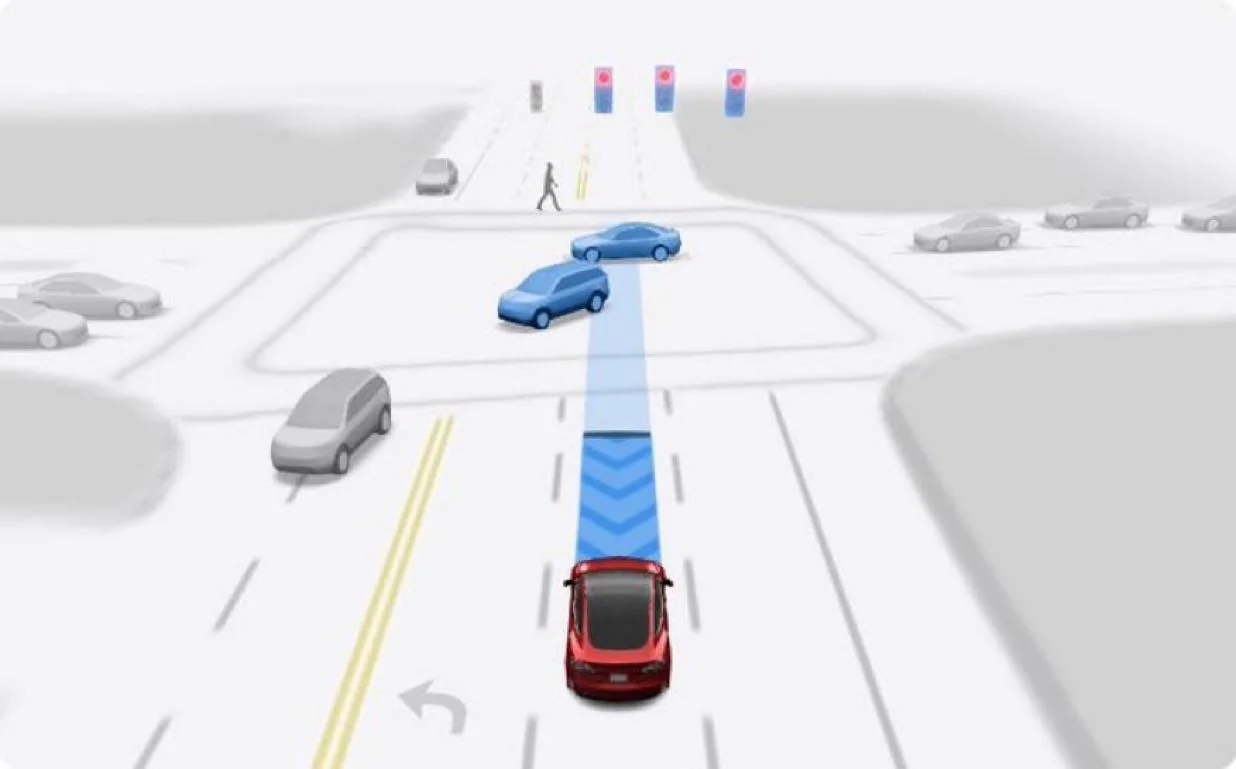
For any European Tesla owner who ticked the "Full Self-Driving Capability" option box, the journey has been one of immense patience. For years, you've watched your American counterparts experience the cutting edge of autonomous driving, navigating complex city streets through the FSD Beta program, while your own vehicle's capabilities have been largely limited to a highly competent but restricted version of Autopilot. The promise has always been there, shimmering on the horizon: one day, a simple software update will unlock the true potential of the hardware you already own. With the advent of FSD Version 12, that promise feels closer and more tangible than ever before.
Yet, the question that echoes from the fjords of Norway to the coast of Portugal remains: when will it be our turn? And more importantly, is this revolutionary technology, trained primarily on the wide, grid-like streets of North America, truly ready for the ancient, chaotic, and wonderfully complex roads of Europe? The answer, it turns out, is as multifaceted as the continent itself. While the full public rollout of FSD (Supervised) remains entangled in a web of regulatory hurdles, a fascinating and pivotal development has quietly taken place behind the factory gates in Germany. The recent deployment of a truly "Unsupervised FSD" system to navigate newly built cars within Gigafactory Berlin provides us with the most significant clues yet about its capabilities, its readiness, and the long road still ahead.
This article will embark on a deep dive into the current state and future prospects of FSD in Europe. We will begin by exploring the core AI revolution that makes FSD v12 a monumental technological leap over all previous versions. We will then traverse the continent, identifying the unique and formidable challenges—from Parisian roundabouts to Italian villages—that form the ultimate gauntlet for any autonomous system. We will decode the landmark deployment at Giga Berlin, analyzing what it truly signifies for the system's maturity. Finally, we will navigate the intricate regulatory maze that represents the last, and perhaps highest, barrier to a widespread European release.
Chapter 1: The AI Revolution: What Makes FSD v12 a "Mind-Blowing" Leap?
To understand the profound significance of FSD Version 12, one must first grasp the fundamental paradigm shift it represents. This is not merely an upgrade; it is a complete philosophical and architectural overhaul of how a car learns to drive. Previous iterations of FSD Beta, while impressive, were a hybrid system. They relied on a combination of neural networks for object recognition and a vast, complex library of C++ code—over 300,000 lines of explicit, human-written rules—to handle the decision-making process. Engineers had to manually code instructions for every conceivable scenario: how to handle a four-way stop, when to yield to a pedestrian, how to merge onto a highway.
This approach has a critical weakness, often referred to as the "long tail problem." While engineers can code for 99% of common driving situations, it's the remaining 1%—the infinite variety of strange, unpredictable "edge cases" that occur in the real world—that are nearly impossible to anticipate and program. A construction worker waving a flag in an unusual way, a flock of birds suddenly taking off from the road, a uniquely confusing intersection—these situations would often flummox a rule-based system.
FSD v12 throws that entire rulebook away. It is what Tesla calls an "end-to-end neural network" system. This is the revolution.
From Code to Neurons: A New Way of Learning
Imagine teaching a student driver. The old FSD approach was like giving them an impossibly thick textbook with millions of "if-then-else" rules to memorize for every situation. It's cumbersome, inflexible, and breaks down when faced with something not in the book.
The FSD v12 approach is like having the student watch millions of hours of footage from expert drivers. The system is not given explicit rules. Instead, a massive neural network is trained on vast datasets of video from Tesla's global fleet. It learns by observation, developing an intuitive understanding of the relationship between what it "sees" and what the human driver does. It learns the subtle cues, the unspoken rules of the road, and the muscle memory of driving, just as a human does.
This is the meaning behind Elon Musk's famous phrase, "photon in, controls out." The system takes the raw video input from the car's eight cameras (the photons) and, through a single, integrated neural network, directly outputs the commands for steering, acceleration, and braking (the controls). There are no intermediate steps where a human-coded rule dictates the action. The AI is making the control decisions directly, based on its learned experience.
The Power of Data and Compute: The Dojo Supercomputer
This approach is only possible with two key ingredients: an unprecedented amount of high-quality data and an almost unimaginable amount of computational power. Tesla's advantage is its fleet of millions of vehicles, which act as a global data-gathering network. The most interesting or challenging driving scenarios are uploaded to Tesla's servers, creating a constantly growing library of training data.
To process this data, Tesla built its own supercomputer, Dojo. Dojo is specifically designed for the massive task of AI training. It can process petabytes of video data, allowing Tesla's engineers to rapidly train and retrain new versions of the FSD network. They can create simulations of specific scenarios, feed the network millions of variations of a difficult intersection or a rare event, and allow it to learn and improve at a speed that would be impossible with traditional methods.
The result is a system that is potentially far more robust and adaptable. Instead of being brittle and failing when it sees something new, it has a generalized, almost human-like intelligence that allows it to reason about novel situations. When FSD v12 successfully navigates a complex, unmarked construction zone in the US, it's not because it was programmed for that specific layout; it's because it has learned the general concept of "construction zones" from countless examples and can apply that learning to a new environment. This ability to generalize is what makes v12 a "mind-blowing" leap and what gives it a fighting chance of one day conquering the roads of Europe.
Chapter 2: The European Gauntlet: Why Our Roads Are the Ultimate Test
If North American roads were the training ground for FSD, then Europe is the final exam—a comprehensive, grueling test of the system's intelligence, adaptability, and resilience. The sheer diversity and complexity of the driving environments packed into the continent present a set of challenges that are an order of magnitude greater than those found in most of the US. For FSD v12's vision-only, AI-based system to succeed here, it must master a "long tail" of edge cases that are, in Europe, simply the daily norm.
1. The Anarchy of the Roundabout
While roundabouts exist in the US, they are typically simple, single-lane circles. European roundabouts are a different species entirely. Consider the Place Charles de Gaulle (home to the Arc de Triomphe) in Paris. It's a twelve-lane, unmarked, chaotic vortex of traffic where the normal rules of yielding are replaced by a complex, unspoken dance of assertiveness and intuition. There are no lane markings, and right-of-way is a fluid concept. An AI must learn to read the "body language" of other cars, to be cautiously aggressive, and to merge into gaps that a rule-based system would deem impossibly small.
Then there is the infamous "Magic Roundabout" in Swindon, UK. It consists of five mini-roundabouts arranged in a circle, with traffic flowing clockwise around the inner circle and counter-clockwise in the outer lane. It is a masterpiece of traffic engineering that is utterly bewildering to many human drivers, let alone an AI. The system needs to process multiple, simultaneous traffic flows and decision points in a way that no standard intersection demands.
2. The Ancient City Center: Where Lanes Are a Suggestion
Venture into the historic center of Rome, Lisbon, or any countless medieval towns, and you enter a world that predates the automobile. The streets are incredibly narrow, often barely wide enough for one car, yet accommodate two-way traffic. They are lined with parked cars, delivery vans, and swarms of scooters that weave through traffic with their own set of rules. Lane markings are often faded into non-existence or absent altogether.
Here, the challenge is one of pathfinding and social navigation. FSD must be able to:
-
Navigate extreme narrowness: It has to precisely calculate its position with centimeter-level accuracy to avoid scraping parked cars or ancient stone walls.
-
Negotiate with oncoming traffic: It must be able to find informal pull-outs, reverse into side alleys, or communicate its intent to oncoming drivers in the absence of traffic lights or signs.
-
Handle "ZTLs" (Zone a Traffico Limitato): Many Italian cities have restricted traffic zones that are enforced by cameras. The system must be able to recognize the signage and times of operation to avoid hefty fines, a challenge that requires not just seeing the sign but understanding its complex context.
3. The Babel of Road Signs and Rules
While the EU has made efforts to standardize road signs, significant and potentially confusing variations persist between countries. A stop sign is universal, but signs for parking rules, speed limits in specific conditions (e.g., when raining), and priority can differ.
The most significant challenge is the "priority from the right" (priorité à droite) rule, common in France, Belgium, and elsewhere. This rule dictates that at an intersection with no other signs, you must yield to any vehicle approaching from the right. This is deeply counter-intuitive for drivers (and AIs) trained in systems where the main road has priority. An FSD system must not only recognize the absence of a sign but interpret that absence as a command to yield, even if it is on what appears to be a major road and the other car is emerging from a tiny side street. This requires a level of contextual understanding far beyond simple object recognition.
4. The Unforgiving Weather
Tesla's vision-only approach, which eschews radar and lidar, is put to its ultimate test by Europe's varied and often severe weather. While California's sunshine provides clear training data, Europe offers a full menu of visual obstructions. The system must be able to handle:
-
Heavy fog in mountain passes: Navigating the Alps or the Scottish Highlands in dense fog, where visibility can drop to a few meters, requires an almost superhuman ability to detect faint outlines and road edges.
-
Snow-covered roads in Scandinavia: When a blanket of snow completely obscures lane markings, the AI must rely on other cues, such as the tracks of cars ahead, snow poles on the side of the road, or a deep understanding of the road's likely path based on its map data and surrounding topography.
-
Torrential rain on the Autobahn: High speeds combined with heavy spray from trucks can temporarily blind cameras. The system must be able to handle these brief moments of data loss gracefully and safely.
Conquering these challenges is not a matter of adding a few more lines of code. It requires training the neural network on vast amounts of specific European driving data, allowing it to learn the unique rhythm, rules, and risks of the continent's roads until they become second nature.
Chapter 3: A Glimpse of the Future: Unsupervised FSD at Giga Berlin
Amidst the long wait and regulatory uncertainty, a significant and tangible sign of progress has emerged from the most logical of places: Tesla's own European home, Gigafactory Berlin-Brandenburg. In mid-2025, videos began to surface showing brand new Model Ys navigating the factory complex entirely on their own. This wasn't just an enhanced "Summon" feature; this was the first documented deployment of FSD v12 in Europe, operating in a fully "unsupervised" capacity.
Defining "Unsupervised FSD" in Context
It is crucial to understand what "unsupervised" means in this specific environment. It does not mean the car is a Level 5 autonomous vehicle ready for any road, anywhere. Instead, it refers to the system operating without a human safety driver behind the wheel, ready to intervene. The car is performing its task from start to finish on its own authority within a predefined, controlled area—the factory grounds. This controlled environment, often called a "geofenced" area, is the key. The factory is a private space where Tesla controls the infrastructure, knows the layout intimately, and can operate without needing to comply with public road regulations.
The task being performed is logistical: moving a newly assembled Model Y from the end of the production line to a holding lot, a charging station, or a staging area for transport trucks. While this may sound simple, the factory environment is a complex and dynamic "mini-city" of its own.
Analyzing the Observed Behaviors
Breaking down the footage from Giga Berlin reveals the system's impressive level of maturity in handling real-world logistical tasks. We can observe the vehicles performing several key behaviors:
-
Precision Navigation and Parking: The cars are seen maneuvering through tightly packed lots, reversing into designated parking stalls with millimeter precision. This demonstrates the system's excellent spatial awareness and control at low speeds, a critical skill for urban driving.
-
Interaction with Dynamic Obstacles: The factory floor is not static. The FSD-enabled cars must safely navigate around forklifts, human workers, and other moving vehicles. They are observed stopping, yielding, and proceeding cautiously when their path is obstructed, showing a robust ability to interact with an unpredictable environment.
-
Understanding Factory Infrastructure: The cars correctly navigate the factory's own road network, stopping at intersections, obeying internal speed limits, and executing turns. This suggests the system can quickly learn and operate within a new, mapped environment, even if its "rules" are different from public roads.
Why This Is a Landmark Step for Europe
The Giga Berlin deployment is significant for several reasons. First and foremost, it is a statement of technical confidence. Tesla is trusting its most advanced AI to handle valuable assets (brand new cars) in a busy industrial environment. This is not a public beta test; it is a core part of their production logistics. They are, in effect, "eating their own dog food," proving that they believe in the system's reliability for mission-critical tasks.
Second, it serves as a powerful data-gathering and training ground on European soil. While the factory roads are not public, the lighting conditions, weather (the factory has open-air lots), and even the types of obstacles provide valuable data that is specific to the European context. Every journey a car makes within the factory is another training run, another opportunity for the neural network to learn and refine its behavior.
Finally, and perhaps most importantly, it is a demonstration for regulators. By operating FSD in a controlled, safe, and highly documented environment, Tesla is building an enormous body of evidence to support the system's safety and reliability. They can show European authorities (like Germany's KBA, Kraftfahrt-Bundesamt) millions of hours of successful, incident-free autonomous driving. This data will be absolutely essential in the forthcoming negotiations to get FSD (Supervised) approved for use on public roads. It's a way of saying, "Look at what the system can already do safely in a complex environment. Now let's work together to bring it to the public." The quiet, diligent work of these autonomous cars within the factory walls may be the most powerful argument Tesla has for finally ending the long wait for European owners.
Chapter 4: The Regulatory Maze: Navigating the UNECE and National Authorities
The technological prowess of FSD v12, while astounding, is only half the battle. To reach the dashboards of European Tesla owners, it must first navigate a formidable and slow-moving labyrinth of laws and regulations. Unlike the United States, which has a more patchwork, state-by-state approach to autonomous driving rules, Europe's vehicle regulations are largely harmonized under the authority of the United Nations Economic Commission for Europe (UNECE). This body sets the technical standards that all cars sold in its member countries (which includes the EU and the UK) must adhere to.
The Main Hurdle: UN Regulation No. 79
The single biggest roadblock for FSD in Europe has historically been UN Regulation No. 79 (UN R79). This regulation governs the technical requirements for a vehicle's steering system. The critical point is that UN R79 was originally written in an era of basic driver-assist systems, like lane-keeping assist, not for a sophisticated AI capable of navigating city streets.
Its original text contained several key limitations that made a system like FSD Beta fundamentally illegal:
-
Restrictions on Automatic Steering: The regulation placed strict limits on how and when a system could automatically control the steering, primarily intending it for lane-keeping on well-marked highways. It explicitly forbade automatic steering maneuvers above 10 km/h that were not initiated by the driver, which effectively outlaws FSD's ability to make turns at intersections or navigate city streets.
-
"Hands-on-Wheel" Mandate: The rules were written with a "hands-on" philosophy, which is incompatible with the "supervised, but hands-off ready" approach of FSD.
The Slow Path to Modernization
The good news is that regulators are aware that these rules are outdated. The UNECE has been working on amendments to modernize its regulations to accommodate more advanced automated driving systems. This has led to new categories, such as the Automated Lane Keeping System (ALKS) regulation (UN R157), which allows for Level 3 "hands-off" driving in very specific scenarios (e.g., on a highway, in dense traffic, below 60 km/h).
However, Tesla's FSD is not a Level 3 system; it is a Level 2 "driver-assist" system that is designed to operate in a much wider range of environments. For FSD (Supervised) to be approved, Tesla must work with national approval authorities (like the KBA in Germany or the RDW in the Netherlands) and the UNECE to demonstrate that its system is safe and to argue for a framework that accommodates its unique capabilities.
The Likely Path to Approval for Tesla
The approval process will not be a simple flip of a switch. It will be a gradual, negotiated process. Here is the most likely path forward:
-
Data Submission and Demonstration: Tesla will present the vast trove of safety data from its North American fleet, now supplemented by the millions of kilometers driven autonomously within Giga Berlin. This data will be used to build a robust safety case for the system.
-
Initial Limited Rollout: It is highly unlikely that the first version of FSD Beta in Europe will have the exact same functionality as the US version. Regulators will likely grant approval for a more limited feature set first. This could mean it is initially restricted to certain types of roads (e.g., highways and major dual-carriageways) or that the automatic steering on city streets is "nerfed" or disabled until further proof of safety is established.
-
Geopolitical and National Nuances: Each country's type-approval authority has the final say. Germany's KBA is known for being particularly thorough and cautious. Tesla's strong industrial presence with Giga Berlin may help in discussions, but the authorities will not compromise on safety. The process will involve intense scrutiny of the system's performance, especially in the unique European scenarios discussed earlier.
-
Gradual Feature Parity: As the system accumulates more data and proves its reliability on European roads, Tesla will likely be able to apply for the gradual unlocking of more features, eventually bringing the European version closer to parity with the American one.
The timeline for this is uncertain, but it is a matter of "when," not "if." Experts predict that a first, possibly limited, version of FSD Beta could receive approval for some European markets in 2026. For owners, this means the wait is nearing its end, but it's important to set realistic expectations. The system will arrive, but it will do so cautiously, under the watchful eye of the continent's stringent regulatory bodies.
Conclusion
The story of Full Self-Driving in Europe is one of a technological marvel straining against the immense complexity of the real world. FSD Version 12 represents a genuine revolution in artificial intelligence, a leap from rigid, human-written code to a more fluid, intuitive form of machine learning. Its ability to navigate the unpredictable streets of America is a testament to the power of its end-to-end neural network approach.
However, the path to a European release is paved with challenges that are unique in their density and diversity. The continent's ancient city centers, chaotic roundabouts, and patchwork of regional driving rules form the ultimate final exam for any autonomous system. These are not mere "edge cases"; they are the fabric of the daily European driving experience. Conquering them requires more than just a clever algorithm; it requires a deep, learned understanding that can only come from immense exposure to local driving data.
This is why the quiet, relentless work of the unsupervised FSD vehicles within Gigafactory Berlin is so profoundly important. It is more than just a logistical optimization; it is a statement of confidence, a crucial data-gathering operation, and a powerful demonstration for the regulators who hold the keys to a wider release. It is Tesla's bridgehead on the continent, proving the system's capability in a controlled, European environment.
For the patient Tesla owner, the situation is one of cautious optimism. The wait has been long, but the evidence strongly suggests that the system you will eventually receive will be vastly more capable and robust than anything that could have been released years ago. Its arrival will not be a sudden floodgate opening, but a carefully controlled, gradual rollout, negotiated step-by-step with safety regulators. The technology is on the cusp of being ready. The final frontier is no longer about code, but about consensus—a consensus between a pioneering automaker and cautious guardians of public safety that the future is finally safe enough to be deployed.
FAQ
1. What's the difference between Autopilot, Enhanced Autopilot, and FSD in Europe today?
As of late 2025, the features are strictly tiered due to regulations.
-
Autopilot (Standard): This comes with every new Tesla. It includes Traffic-Aware Cruise Control (TACC), which maintains your speed and distance to the car ahead, and Autosteer, which keeps the car centered in its lane on well-marked roads like highways.
-
Enhanced Autopilot (EAP): This is an optional upgrade. It includes all standard Autopilot features plus: Navigate on Autopilot (suggests and performs lane changes on the highway, including navigating interchanges), Auto Lane Change, Autopark (for parallel and perpendicular parking), and Summon/Smart Summon. However, its functionality, especially for lane changes, is more restricted in Europe than in the US, often requiring driver confirmation.
-
Full Self-Driving (FSD) Capability: This is the top-tier option. Currently in Europe, it grants you all the features of Autopilot and EAP. Its main additional feature is Traffic and Stop Sign Control, which allows the car to recognize and respond to traffic lights and stop signs (after driver confirmation). The key thing to understand is that buying FSD in Europe today is primarily an investment in the future promise of receiving the full FSD Beta (City Streets driving) via an over-the-air update once it is approved by regulators. You are buying the hardware and the software license for a feature that is not yet enabled.
2. Will the European FSD Beta be the same as the US version when it's released?
It is highly unlikely to be identical at launch. European regulations, particularly concerning steering and driver monitoring, are stricter. The most probable scenario is a phased rollout. The initial European FSD Beta may be more "hesitant" than its US counterpart, may require more frequent driver interventions or confirmations, and may have its capabilities limited to certain road types or speeds. Features like navigating complex roundabouts or handling aggressive city traffic might be introduced in later updates as Tesla gathers more local data and gains further regulatory approval. The goal will be to eventually reach feature parity, but the starting point will likely be more conservative.
3. If I buy FSD today in Europe, what features do I actually get right now?
Right now, you get everything included in Standard Autopilot and Enhanced Autopilot, plus the Traffic Light and Stop Sign Control feature. This means your car can slow down for red lights and stop signs, but it will require you to confirm with a stalk push or accelerator tap to proceed. You are not getting the ability for the car to make turns on city streets, navigate roundabouts, or drive itself from point A to point B on urban roads. You are essentially paying for the future software unlock, and your vehicle is contributing to the data collection that will help make that feature a reality in Europe.