
Introduction
Tesla's growth in the European market has been a story of highs and lows. For several years, the electric vehicle (EV) manufacturer dominated sales in numerous countries, making strides in sustainable transportation across the continent. However, after a few challenging months marked by declining sales and growing competition, Tesla seems to be back on track in 2026. Notably, countries like France and Spain have seen significant gains in Tesla registrations and sales in the early months of 2026.
This article explores the reasons behind Tesla’s renewed success in these regions, looking at the factors that are driving this surge in sales. We’ll delve into recent registration data, the economic landscape, and strategic shifts by Tesla to regain consumer trust and market share. By examining these factors, we’ll understand the key drivers of Tesla's recovery in Europe, along with the challenges and competition that still lie ahead for the company.
I. Recent Registration Data & Country Details
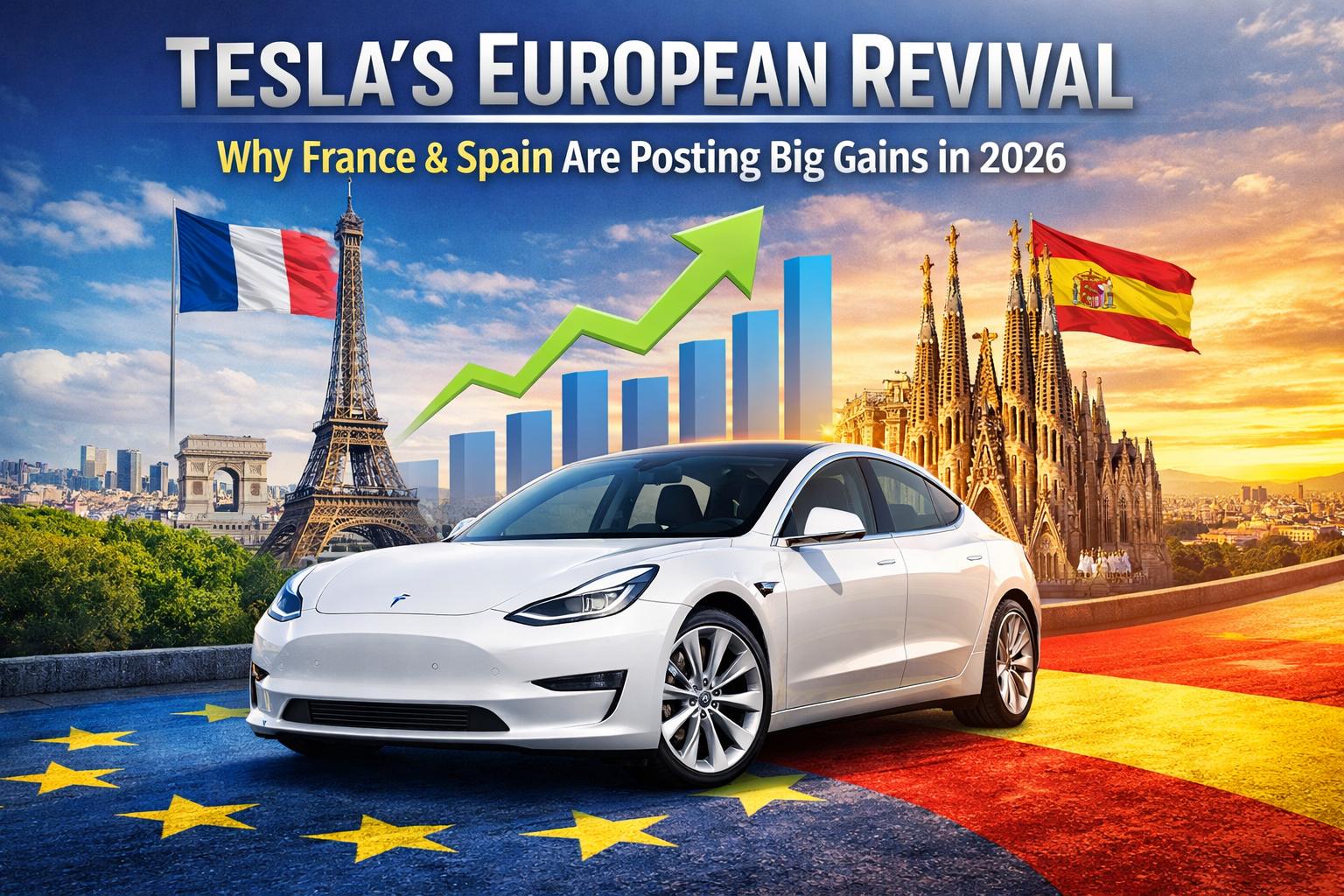
In early 2026, Tesla’s performance in Europe has demonstrated signs of recovery, particularly in markets that had previously seen declines. According to the most recent figures, France and Spain have reported notable growth in EV registrations, with Spain seeing a remarkable 74% year-on-year increase in Tesla sales for February 2026. Similarly, France has experienced a 55% increase in Tesla registrations, marking a significant improvement compared to the preceding months, when sales had dropped due to challenges like new competition and regulatory hurdles.
France’s Growth: A Key Indicator of Recovery
France, traditionally one of Tesla’s strongest markets in Europe, struggled in late 2025, with a slowdown in both sales and consumer interest. However, Tesla has managed to recover through several key strategies. One of the most notable factors is the aggressive pricing strategy employed by Tesla to stay competitive in a market increasingly crowded with both European and Chinese EV manufacturers.
Furthermore, France's strong support for sustainable transport has continued to benefit Tesla. Local government incentives, such as tax rebates and subsidies for purchasing EVs, have played a crucial role in driving demand. France's ambitious green policies have also contributed to heightened awareness and acceptance of EVs, with Tesla being a major beneficiary.
Spain’s Surge: An Unexpected Champion
Spain, on the other hand, has seen an even more remarkable rise in Tesla sales, with a 74% increase in year-on-year sales in February 2026. This growth is driven by several factors. Firstly, Spain's EV market has been rapidly evolving, with government support accelerating the transition to electric vehicles. The country's strong push toward carbon neutrality has resulted in favorable policies for EV buyers, making Tesla an increasingly attractive option.
Secondly, Tesla’s enhanced manufacturing and logistical capabilities in the region have enabled the company to meet the growing demand in Spain more efficiently. The Gigafactory in Berlin, which began operations in 2023, has played a key role in improving Tesla’s supply chain and distribution network in Europe. This factory’s proximity to Spain has reduced lead times, leading to faster deliveries and increased sales.
II. Market Challenges Behind the Rebound
While the rebound in sales is a welcome development for Tesla, it’s essential to examine the underlying challenges the company faced in Europe and how these were addressed. Tesla's struggle in the latter half of 2025 was partly due to increased competition, pricing pressures, and regulatory hurdles.
Increased Competition from European and Chinese Brands
Tesla has long been the leader in the European electric vehicle market, but the rise of other automakers, particularly from China and traditional European giants, posed significant challenges. Brands like BYD and XPeng have been aggressively expanding their presence in Europe, particularly in Germany and France, offering competitively priced models that rival Tesla’s offerings in terms of features, performance, and range.
In addition, Volkswagen and BMW have ramped up their electric vehicle production, making the market even more competitive. While Tesla’s premium pricing still sets it apart, these new entrants have created a competitive pricing landscape, compelling Tesla to adapt.
Pricing Pressures & Inflation
The economic context also plays a pivotal role in shaping Tesla's sales. Inflationary pressures, particularly in the second half of 2025, led to increased costs of raw materials, manufacturing, and logistics. Tesla, however, managed to mitigate these issues by implementing cost-cutting measures, streamlining production, and passing on price reductions to the consumer in select markets.
Tesla’s ability to reduce the price of their vehicles while maintaining high-quality standards was essential to regaining market share, especially in Europe, where economic pressures were particularly felt.
III. Tesla’s Strategy to Regain Share in Europe
As the European market became more competitive, Tesla quickly adapted with strategic moves aimed at regaining market share and increasing consumer loyalty. These strategies include adjusted pricing, new trims, localization, and improved customer engagement.
Aggressive Pricing Strategy
Tesla’s ability to adjust its pricing has been a key factor in its recovery. In the face of fierce competition, the company has reduced the prices of certain models, making them more accessible to a broader range of consumers. In France, Tesla cut prices on the Model 3 and Model Y to compete with BYD’s Atto 3 and Volkswagen's ID.4.
This aggressive pricing move not only helped Tesla stay competitive but also encouraged more consumers to make the switch to electric vehicles.
Localized Production and Supply Chain Optimization
The opening of the Gigafactory Berlin was a pivotal moment for Tesla's European strategy. The factory, which started producing vehicles in 2023, has allowed Tesla to meet local demand more efficiently. Local production has also helped the company mitigate supply chain disruptions caused by the pandemic and improve delivery times, further enhancing customer satisfaction.
Tesla's manufacturing plants in Europe have not only enabled faster deliveries but also reduced logistics costs, thus improving overall pricing flexibility.
Introduction of New Trims & Features
Tesla has also focused on adding new features and trims to cater to a wider range of European tastes and preferences. For instance, the introduction of a more affordable Standard Range version of the Model Y allowed Tesla to tap into the mid‑market segment, where competition has been fiercer. Additionally, the company has enhanced its vehicles’ performance features, offering dual‑motor all‑wheel drive (AWD) and longer battery ranges, which remain competitive in the EV market.
IV. What This Means for European Tesla Owners
Resale Value Implications
For current Tesla owners, the recent surge in Tesla sales could have several important implications for resale value. As demand for Tesla vehicles rises in markets like France and Spain, owners may find themselves in a more favorable position when selling their cars.
Charging Infrastructure Improvements
Tesla's focus on expanding its Supercharger network across Europe also bodes well for current owners. With more charging stations available, long road trips become less of a concern for European Tesla owners, further cementing Tesla’s position as a market leader.
V. Long-Term Outlook for Tesla in Europe
Forecasts from Analysts
Looking forward, the long‑term outlook for Tesla in Europe is mixed. Analysts predict that while Tesla will continue to dominate in key markets like France and Germany, competition will only increase as more automakers enter the market.
At the same time, Tesla’s innovations in autonomous driving, battery technology, and AI software may help it maintain a competitive edge in the EV space.
Policy Impacts and Sustainability Goals
Europe’s commitment to carbon neutrality by 2050 will continue to benefit companies like Tesla, whose products align with these sustainability targets. Government incentives for electric vehicle purchases, along with the phase‑out of combustion engine vehicles, will likely ensure a favorable market for Tesla for the foreseeable future.
VI. Conclusion
In conclusion, Tesla’s recovery in Europe in 2026 can be attributed to a combination of strategic pricing, improved production and supply chain capabilities, and strong demand for electric vehicles. While the company still faces significant competition, Tesla’s ability to adapt and innovate has positioned it for continued success in the European market. The coming years will likely see further growth for Tesla, especially as it continues to leverage its technological advantages and benefit from favorable European policies.
FAQs
-
Is Tesla really recovering in the European market?
-
Yes, Tesla has shown strong growth in key markets such as France and Spain, where sales have surged in 2026.
-
-
How does Tesla’s pricing strategy affect European buyers?
-
Tesla’s price reductions have made its vehicles more accessible, especially in countries facing high competition.
-
-
What’s the future of Tesla’s competition in Europe?
-
As traditional automakers and Chinese brands enter the European market, competition will intensify, but Tesla’s leadership in technology could help it maintain its dominance.
-