
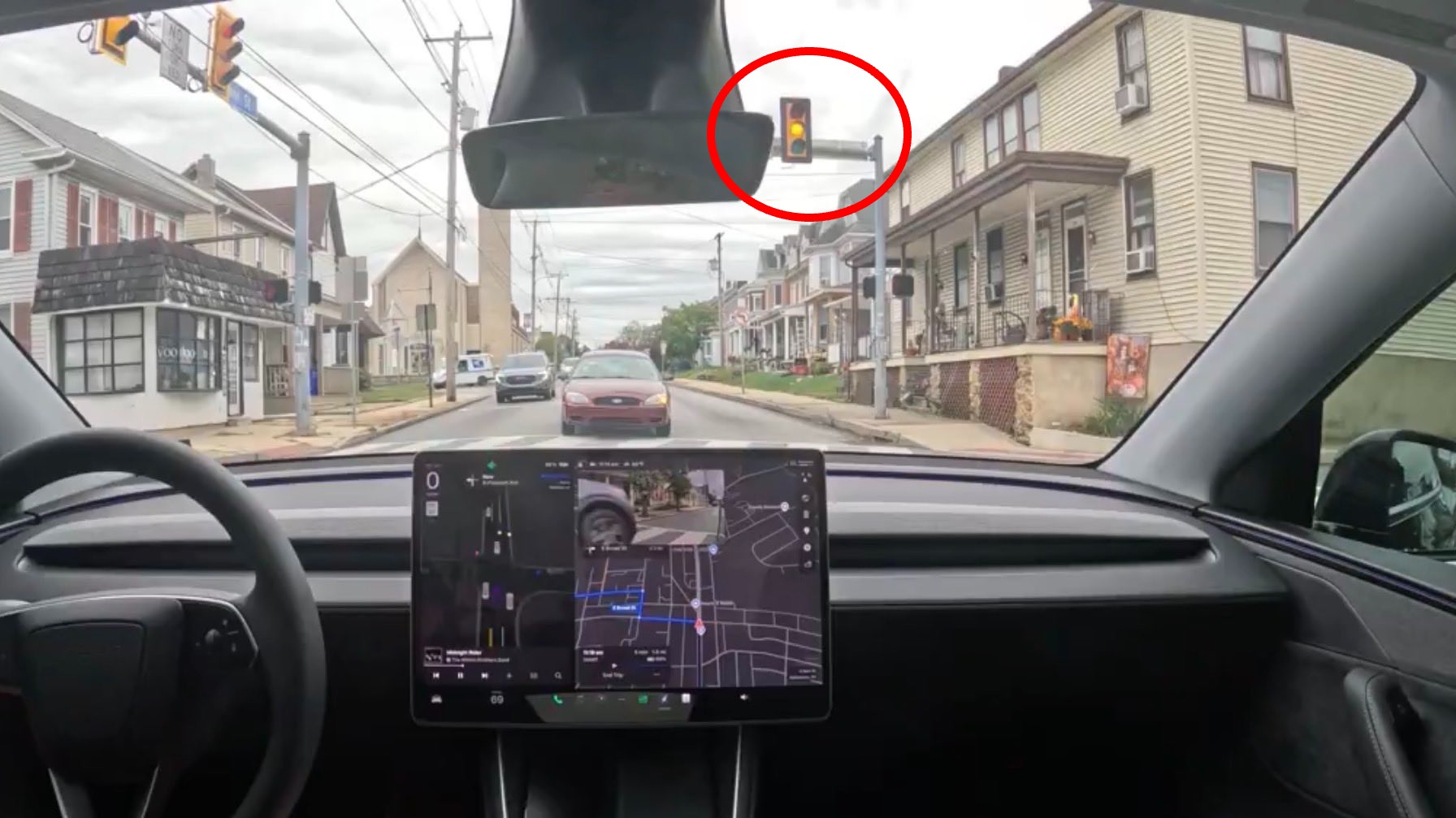
For owners of Tesla vehicles in the United States and Europe, few topics draw as much interest and concern as the company’s advanced driver-assist and “autonomous” features. Among these, the Full Self‑Driving (FSD) suite occupies a central place — marketed as the software that will eventually allow Tesla vehicles to navigate roads with minimal human intervention.
In 2025, FSD has again come into sharp focus: Tesla has rolled out version v14 and its incremental updates, while the U.S. regulator, the National Highway Traffic Safety Administration (NHTSA), has opened a large-scale investigation into millions of Tesla vehicles equipped with FSD, citing traffic violations, crashes and red-light incidents.
For Tesla owners in the U.S. and Europe, the combination of a major software push and regulatory scrutiny holds implications for vehicle usage, safety, upgrade paths, and resale value. This article takes a deep dive into the latest FSD update, the regulatory backdrop, and what it all means for you as owner or potential buyer.
Chapter 1: FSD v14 Latest Features & Software Evolution
1.1 What’s new in FSD v14
In its continuous update strategy, Tesla’s FSD v14 release builds on earlier versions with improvements in city-street navigation, smoother lane-changes, enhanced object detection and refined driver-supervision reminders. For many owners, these enhancements arrive via over-the-air (OTA) updates, meaning improvements without needing a car visit.
Some owners have reported new “Preview” UI changes, simpler steering assist on suburban roads, and improved response at intersections. Tesla has emphasised that these updates extend the vehicle’s capability even without full hardware changes.
1.2 Hardware compatibility & regional differences
While the software is being upgraded, owners in the U.S. and Europe should be aware of hardware compatibility issues. Tesla vehicles built with older hardware stacks (for example earlier versions of Hardware 3) may not unlock the full breadth of future FSD functionality compared to newer vehicles. In Europe especially, regulatory delays or localisation may mean feature rollout is slower or more restricted.
Also, Tesla has introduced certain “Premium Connectivity” or subscription-based services tied to advanced driver assistance. As the software evolves, owners should check whether their vehicle’s build date and region qualify for the new feature set.
1.3 Practical usage experiences & limitations
Despite the hype around “Full Self-Driving,” it is important for owners to recognise that FSD remains a driver-supervised system (Level 2/2+), not a fully autonomous system. The driver remains responsible at all times. Many owners in the U.S. and Europe have praised the increased convenience: smoother urban driving, better stop-and-go, improved highway merging. However, limitations persist: edge-cases in poor weather, narrow roads, complex intersections still challenge the system.
In Europe, legal/regulatory frameworks are stricter: driver assist systems are often subject to more conservative approvals, and Tesla owners may find fewer “fully enabled” features compared to U.S. counterparts.
Chapter 2: U.S. Regulatory Probe & What It Signals
2.1 Overview of the NHTSA investigation
In October 2025, the NHTSA initiated a preliminary evaluation (PE) into approximately 2.88 million Tesla vehicles equipped with FSD. The probe followed reports of 58 significant incidents involving alleged traffic law violations (such as running red lights or improper lane-changes) and at least 14 crashes with 23 injuries. These incidents were attributed to vehicles with FSD engaged.
In addition to this, other investigations have targeted Tesla’s “Summon” function and purported delay in crash-reporting, raising broader concerns about transparency and system reliability.
2.2 Key areas of concern for the regulator
The investigation focuses on several risk areas:
-
Instances where Tesla vehicles, while FSD was engaged, allegedly proceeded through red traffic signals.
-
Lane changes into on-coming traffic or wrong-way manoeuvres while FSD was active.
-
Failure to properly detect or respond at railroad crossings. Two U.S. Senators specifically urged investigation into FSD’s railroad-crossing performance.
-
Potential systematic reporting delays by Tesla of crashes or incidents involving its ADAS systems as required under federal orders.
These issues raise both safety and legal/regulatory risk for Tesla, and by extension, implications for owners.
2.3 Implications for Tesla’s strategy and owners
The regulatory scrutiny has several implications:
-
For Tesla: A finding of unreasonable safety risk by NHTSA could lead to mandated recalls, software restrictions (limiting FSD features), or regulatory enforcement that slows rollout of future autonomy features.
-
For owners: Software updates (even those beautifully marketed) may be delayed or rolled-back if regulators impose restrictions. Future feature availability may be region by region. The advertisement of FSD capability may face legal scrutiny, which indirectly may affect resale value and brand perception.
-
From a European viewpoint: Europe observes the U.S. regulatory approach closely. If NHTSA applies stringent limitations, local regulators (e.g., in Germany, France, UK) may impose their own barriers — meaning Tesla owners in Europe should remain cautious about “when and how” their cars will receive full features.
Chapter 3: What U.S. & European Owners Should Do
3.1 Safety-first mindset & usage best-practices
Regardless of software version, owners must maintain active supervision. FSD remains a convenience and driver-assistance tool, not full autonomy. Best practices:
-
Always keep hands on wheel and eyes on road, even when FSD is engaged.
-
Review your vehicle’s build date, hardware version and region-specific feature list to know exactly what version of FSD you have and what features are enabled.
-
Be ready for potential software restrictions or roll-backs. Keep abreast of Tesla’s update logs and regional announcements.
-
In Europe particularly, check local regulatory bulletins or national Safety Bodies in case certain functions are limited or disabled in your market.
3.2 Upgrade, subscription and resale considerations
-
If you own an older Tesla model (say built prior to 2022) you may want to verify whether your hardware supports future FSD features or whether you may face limitation.
-
If you’re thinking of upgrading or buying a Tesla in the U.S. or Europe: Check the vehicle’s FSD eligibility, whether subscription vs one-time purchase applies, and what the hardware version is.
-
Resale value is influenced not only by battery health or mileage but increasingly by expected software capability. If FSD is perceived as less reliable or restricted by regulation, this may impact value.
-
Subscription costs for FSD or related features may become more transparent and variable by region; owners should calculate the total cost of ownership, including future software/feature access.
3.3 Regional differences: U.S. vs Europe
-
In the U.S.: Tesla has a strong Supercharger network, many active software updates, and fewer regulatory constraints compared to Europe. Owners can potentially activate FSD features sooner, but also face stronger public/regulatory scrutiny now that NHTSA is deep in investigation.
-
In Europe: Regulatory approval for driver-assist features is often more conservative, and national safety authorities may impose local limits or delay feature activation. If Tesla faces regulatory action in the U.S., that may ripple into Europe, delaying or changing feature sets available to European owners.
-
Owners in Europe should especially watch for announcements from their country’s type-approval authority or local Tesla subsidiary regarding FSD features, subscription options or hardware upgrade programs.
Conclusion
The arrival of FSD v14, and the broad regulatory spotlight turned on Tesla’s autonomous-assist systems create both opportunity and caution for owners in the U.S. and Europe. On the positive side, Tesla’s software-centric model means your car may continue to improve over time via OTA updates. On the cautionary side, the large-scale investigation by NHTSA signals that the era of “we’ll just roll it out and iterate” may face tougher regulatory terrain, and this could impact feature availability, timeline, and ultimately vehicle value.
For Tesla owners or prospective buyers: keep your expectations realistic — FSD is advancing, but it’s not autopilot to full autonomy yet. Be aware of your vehicle’s hardware limits, your regional regulatory environment, and how software, subscription and resale dynamics may change. Staying informed and proactive will help you maximise value and minimise risk in the evolving Tesla ownership ecosystem.
FAQ
Q1. Does my Tesla support FSD v14, and how can I check?
Check your vehicle’s build date, hardware version (HW3 or newer), region-specific feature list, and your Tesla app/software update screen. Tesla’s official vehicle build documentation and forums often list which vehicles are eligible for which features.
Q2. Could the U.S. investigation mean that my FSD feature gets disabled or limited?
Yes — if NHTSA finds that FSD presents an unreasonable risk, there could be mandated recalls or software restrictions. Even absent recall, Tesla may impose region-specific limitations to stay compliant. As an owner, stay alert to software update release notes and Tesla communications.
Q3. Is FSD legal for fully autonomous driving in Europe?
Not yet. Most European countries treat FSD as a driver-assist system (Level 2) and require the driver to supervise. Full autonomy (Level 4/5) regulation is still evolving. So European owners may have fewer "full feature" activations or longer wait times compared to U.S.
Q4. Does this investigation affect the resale value of my Tesla?
Potentially yes. If FSD is seen as less reliable or regulators impose restrictions, resale value could be impacted. On the other hand, if your vehicle continues to receive software updates and is hardware-capable, you may be well positioned. Document your update history and hardware version to support resale.
Q5. Should I buy into FSD subscription now or wait?
Consider your priorities. If you value having the latest enabled features and your vehicle supports them, subscribing now may make sense. But given regulatory uncertainty, waiting until the next stable major release (after the investigation resolves) may reduce risk that early adopters face future limitations.