
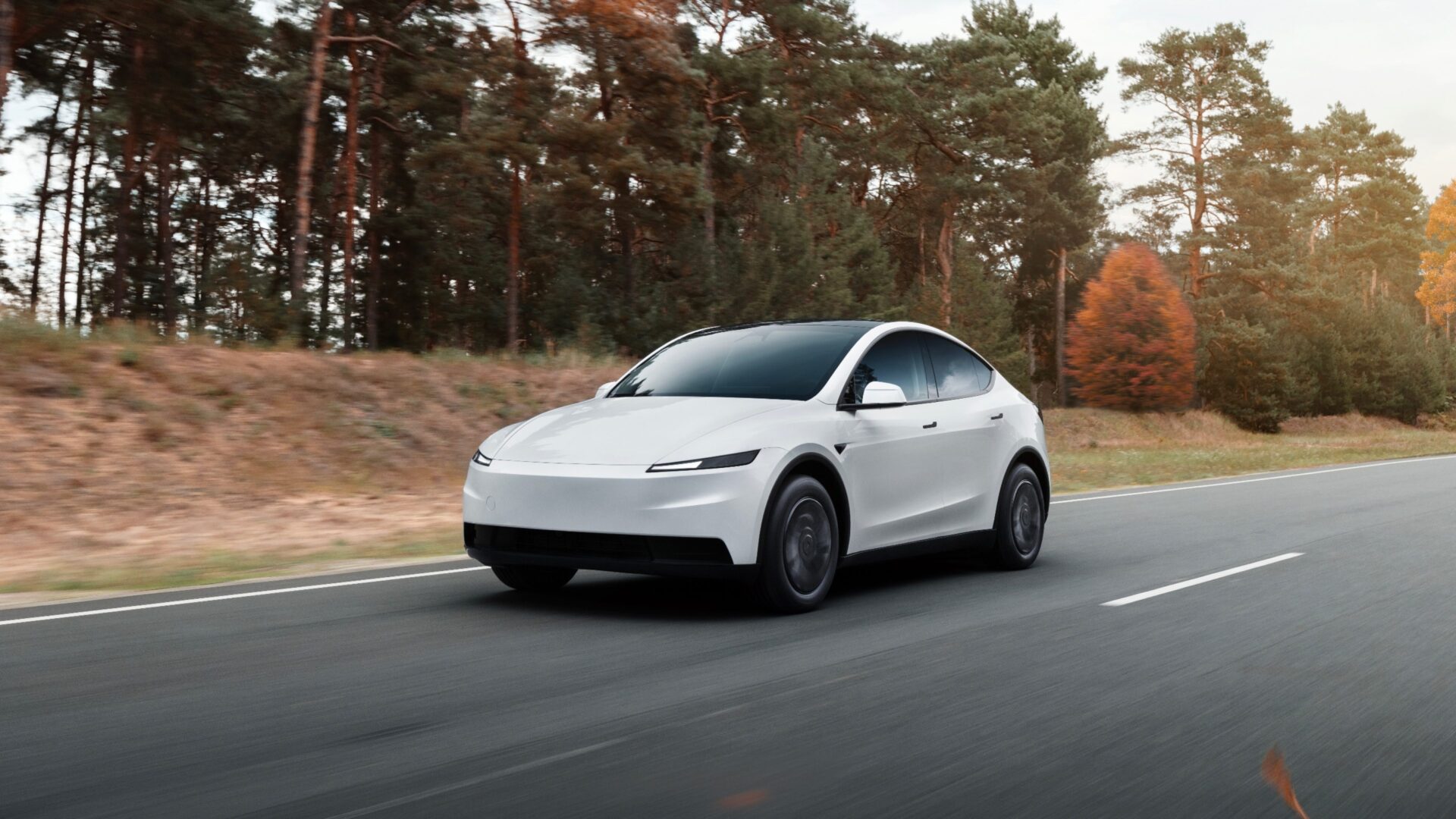
In November 2025, Tesla reached another turning point in its global manufacturing story. The company began producing the Model Y Standard—a new, more affordable variant—at its Gigafactory Berlin-Brandenburg (known as Giga Berlin). For Europe, this was not just another production milestone but a strategic realignment. It signaled Tesla’s decision to compete more aggressively on price, not just on technology or prestige.
The Model Y has long been Tesla’s best-selling vehicle, bridging luxury and mainstream EV ownership. Yet, as the European EV market matures—with rising competition from Chinese automakers and established European brands—Tesla has realized that premium positioning alone cannot sustain its dominance. The launch of the Model Y Standard is the clearest sign that Tesla intends to widen its customer base by lowering the entry barrier while retaining the performance, safety, and software sophistication that define its brand.
This in-depth analysis explores what the Model Y Standard means for European and American markets. We will break down its specifications, strategic purpose, market impact, production implications, and what it reveals about Tesla’s broader transition toward cost-efficiency and scalability.
1. What Is the Model Y Standard Trim?
1.1 Technical Overview
The Model Y Standard trim is Tesla’s new single-motor, rear-wheel-drive (RWD) version of its best-selling SUV. Unlike the Long Range and Performance trims, this model focuses on affordability and simplified design.
Key specifications include:
-
Powertrain: Single-motor RWD
-
Range (WLTP): Approximately 534 km (≈ 332 miles)
-
Battery: Estimated 69 kWh usable capacity
-
Charging speed: Up to 225 kW DC fast-charging peak
-
Acceleration: 0–100 km/h in 5.9 seconds
-
Top speed: 217 km/h (≈ 135 mph)
-
Price: ~ €39,990 (Europe) / ~ $39,990 (U.S.)
Though its performance figures are slightly less aggressive than the dual-motor trims, they remain competitive within the mid-range EV segment.
1.2 Design Simplification
To achieve its lower price, Tesla removed or simplified several non-essential premium features:
-
Replaced the panoramic glass roof with a solid fabric-lined headliner.
-
Removed the rear-seat touchscreen.
-
Reduced speaker count in the audio system.
-
Simplified interior materials (recycled textile and vegan leather).
-
Streamlined options list to minimize production complexity.
These design adjustments reduce weight, cost, and manufacturing time while improving Tesla’s production flexibility.
2. Production at Giga Berlin
2.1 Local Manufacturing Strategy
Producing the Model Y Standard in Germany allows Tesla to localize supply for the European market. This brings multiple advantages:
-
Reduced import tariffs compared with shipping from Shanghai or Fremont.
-
Lower logistics emissions and costs, aligning with Tesla’s sustainability mission.
-
Faster delivery timelines for European customers.
-
More stable supply chains—crucial in the post-pandemic and geopolitical environment.
Giga Berlin, situated near Grünheide, Brandenburg, currently has the capacity to produce around 375,000 vehicles per year and continues expanding battery and paint operations. By dedicating part of its lines to the Standard trim, Tesla signals long-term commitment to European manufacturing independence.
2.2 European Workforce and Regional Impact
Tesla’s growing German workforce—now exceeding 12,000 employees—benefits from the Standard trim’s ramp-up. The new production line increases operational efficiency, stabilizes employment, and strengthens Tesla’s image as an industrial player in Europe rather than just an American exporter.
Local suppliers across Germany, Poland, and the Czech Republic also benefit from more predictable contracts, boosting the regional EV ecosystem.
2.3 Environmental Efficiency
Tesla’s decision to manufacture the lower-trim Model Y in Europe also reduces shipping-related carbon emissions. Combined with the factory’s renewable-energy use (partly powered by on-site solar and renewable electricity contracts), the Model Y Standard may become one of Europe’s lowest-emission EVs from a production standpoint.
3. Implications for the European Market
3.1 Democratizing Tesla Ownership
Europe’s EV landscape is crowded and cost-sensitive. The Model Y Standard enters the market below €40,000 — a price point once dominated by Hyundai, VW, and BYD. For many middle-class buyers, this finally makes a Tesla attainable.
For example, in Germany and France, EV incentive programs make the Model Y Standard’s effective post-incentive price closer to €35,000. That’s within reach of mainstream family SUVs.
This democratization effect could meaningfully expand Tesla’s addressable market and strengthen brand penetration in regions where the company previously seemed elitist.
3.2 Competitive Landscape
The Model Y Standard now faces competition from vehicles such as:
-
VW ID.4 Pro Life (€43k)
-
Hyundai Ioniq 5 Standard Range (€41k)
-
BYD Atto 3 Extended Range (€38k)
-
Volvo EX30 Single Motor Extended Range (€36k)
Tesla’s edge lies in software, range efficiency, Supercharger access, and over-the-air updates. While competitors offer similar pricing, Tesla’s integrated ecosystem still provides unmatched convenience.
3.3 Potential Risks in Europe
The Standard trim may cannibalize sales of higher-margin trims. Tesla must therefore monitor demand carefully to maintain profitability. Additionally, European drivers who expect luxury may find the simplified version underwhelming, potentially harming Tesla’s premium perception.
Still, early data suggests that affordability outweighs luxury loss for most first-time EV buyers—especially amid economic pressures and rising energy costs.
3.4 Supply Chain Localization
Producing locally could shield Tesla from currency fluctuations and import duties. Over time, Tesla could even adapt regional configurations—such as right-hand drive models or specific interior fabrics—for individual markets like the UK or Nordics.
Such flexibility gives Tesla a long-term advantage against competitors bound by slower European manufacturing cycles.
4. Implications for the U.S. Market
4.1 Possible Re-Exports or U.S. Production
Although this trim launched in Europe, its existence influences Tesla’s global strategy. If demand surges, Tesla may replicate the model at Giga Texas to offer a similar $39,990 price point in the U.S.
That would undercut many domestic competitors, such as the Ford Mustang Mach-E Select or Chevrolet Blazer EV LT, while qualifying for some federal or state incentives.
4.2 Market Positioning
The Model Y Standard could serve as Tesla’s re-entry into the sub-$40k U.S. price tier, which it briefly exited after removing the Model 3 RWD from several regions. The psychological threshold of $39,990 places it directly in the mass-market EV segment.
This is crucial for Tesla’s goal of maintaining U.S. sales leadership while protecting margins as the EV tax credit landscape evolves.
4.3 Aftermarket and Accessory Ecosystem
In the U.S., accessory demand often spikes when owners buy base models and then seek personal upgrades. Businesses like TESMAG can capitalize on this by offering interior luxury upgrades, premium audio kits, or retrofit roof solutions.
Essentially, the simpler the base car, the greater the aftermarket opportunity—a phenomenon Tesla’s ecosystem has historically amplified.
4.4 Brand Perception in the U.S.
Unlike Europe, where affordability is key, Tesla’s U.S. audience is split between innovation enthusiasts and luxury consumers. For Tesla to sell the Standard trim successfully in the States, it must emphasize value through technology—autonomous features, efficiency, and software excellence—rather than pure cost savings.
5. Strategic and Competitive Analysis
5.1 Tesla’s Margin Trade-off
Tesla’s decision to add a low-cost variant signals a shift from maximizing per-unit profit toward maximizing market share and fleet size. With the Supercharger network expanding rapidly, each new Tesla owner reinforces brand lock-in, ensuring recurring software and charging revenue.
While gross margins per car may drop, total ecosystem revenue could increase—a strategy reminiscent of Apple’s “base iPhone + services” model.
5.2 Response to Chinese Competition
BYD, XPeng, and NIO are all rapidly expanding into Europe with competitive EVs. BYD’s pricing pressure, in particular, threatens to undercut Tesla’s traditional advantage. The Model Y Standard acts as Tesla’s pre-emptive defense, ensuring Chinese entrants can’t dominate the sub-€40k segment unchallenged.
5.3 Local Regulatory and Labor Implications
German labor unions have been closely monitoring Giga Berlin’s working conditions. With the Model Y Standard ramping up, Tesla must balance efficiency with compliance. A stable labor environment ensures steady production, which is crucial for scaling affordable trims.
Politically, the model also serves as proof that Tesla contributes to Europe’s green-industrial goals—helping the brand stay on good terms with the EU’s evolving regulatory framework.
5.4 Brand Evolution
Tesla’s identity is evolving from exclusive tech pioneer to mainstream energy mobility provider. The Model Y Standard embodies that shift. It’s a bridge product—designed to retain brand prestige while widening affordability.
6. Environmental and Production Efficiency Impact
6.1 Streamlined Manufacturing
Producing a simplified model allows Tesla to experiment with lower-complexity assembly processes and reduced component variance. This not only cuts costs but also improves production reliability—fewer parts mean fewer potential defects.
6.2 Battery Supply Chain Optimization
The Model Y Standard likely uses lithium-iron-phosphate (LFP) batteries rather than nickel-manganese-cobalt (NMC) packs. LFP batteries are cheaper, safer, and more sustainable, with longer cycle life. Using them in European production reduces dependence on high-cost rare materials and aligns with the EU’s circular-economy goals.
6.3 Energy and Water Efficiency at Giga Berlin
Tesla continues to refine its environmental performance. Giga Berlin’s water-recycling and renewable-power systems reportedly reduce resource usage per vehicle by more than 20% compared with 2023 benchmarks. Scaling the Standard trim could further reduce per-unit emissions since the smaller battery requires less energy to produce.
7. Recommendations for Owners, Buyers, and Accessory Businesses
For European Buyers
-
Evaluate what matters most: range, performance, or premium comfort.
-
If affordability is your top concern, the Model Y Standard is an outstanding entry point.
-
Invest in key upgrades (sound insulation, aesthetic trims) if you miss premium feel.
-
Consider long-term resale value; affordable trims may depreciate differently.
For U.S. Buyers
-
Monitor whether Tesla brings this trim stateside.
-
Expect tax-credit eligibility to depend on U.S. manufacturing location.
-
For first-time EV buyers, this could be Tesla’s most cost-effective entry ever.
For Accessory Businesses
-
Focus product development on filling feature gaps—sound, seating, lighting, and aesthetic customization.
-
Offer “Premium Upgrade Kits” targeting Standard-trim owners.
-
Emphasize sustainability, quality, and OEM-level compatibility in marketing.
8. Conclusion
The Model Y Standard symbolizes Tesla’s next evolutionary phase: a global automaker striving for affordability, efficiency, and scalability. By localizing production in Europe, Tesla not only reduces costs but also strengthens resilience in an increasingly competitive market.
This move is more than a product launch—it’s a strategic statement. Tesla is no longer just the EV innovator; it’s becoming the mainstream standard-setter. For consumers, this means more accessible Tesla ownership; for competitors, it’s a warning; and for the aftermarket, it’s an invitation to innovate.
The Model Y Standard, born in Berlin, may well define the next chapter of Tesla’s global dominance.
FAQ
Q1: Will the Model Y Standard be sold in the U.S.?
Not yet officially, but U.S. production could follow if demand in Europe is strong.
Q2: What battery type does the Model Y Standard use?
Likely an LFP pack optimized for durability and cost efficiency.
Q3: Does it include Autopilot and OTA updates?
Yes. Core Tesla software features remain standard.
Q4: Why remove the glass roof and rear screen?
To reduce cost, weight, and manufacturing complexity.
Q5: Is this the cheapest Tesla available?
Yes — currently, it’s Tesla’s lowest-priced vehicle in Europe.