
1 | Introduction
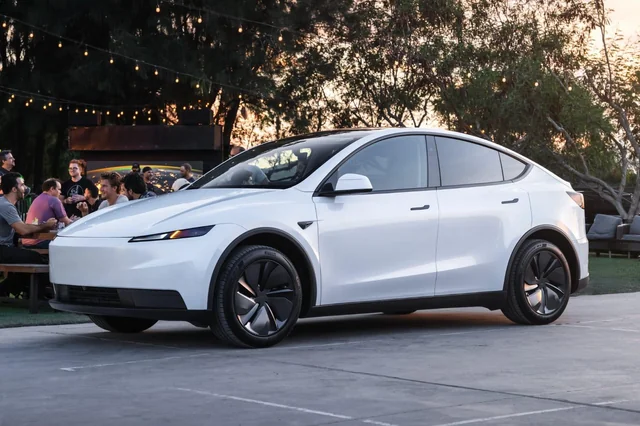
The appeal of electric vehicles (EVs) has been growing steadily across Europe and North America—driven by environmental goals, incentives, and advancing battery-technology. For many prospective buyers, however, the higher price tags of premium EVs remain a barrier. In late 2025, Tesla responded with a strategic move in Europe: the launch of the new Model Y Standard version. With a starting price in Germany of €39,990, and a declared WLTP range of 534 km, the Model Y Standard aims to broaden Tesla’s European appeal and counter mounting competitive pressure.
For Tesla owners in the U.S. and existing European owners, this launch is significant—not only for what it means for new buyers, but for how it may impact Tesla’s product strategy, brand positioning, residual values, and upgrade dynamics. This article explores the European launch of Model Y Standard, how it differs from higher-spec trims (and from the U.S. version), what it signals about Tesla’s strategy, how current owners and prospective buyers should interpret it, the attendant risks and caveats, and practical take-aways for ownership and purchase decisions.
2 | Model Y Standard – Specs, Pricing & Features
2.1 Launch Details and Market Positioning
In October 2025, Tesla announced the Model Y Standard version in Europe, with orders opening in Germany and the Netherlands. The base start price in Germany is €39,990.In some markets, Tesla even offered leasing offers as low as €299 per month before incentives. The vehicle is produced at the company’s German Gigafactory (Gigafactory Berlin/Grünheide) which aligns with Tesla’s regional production strategy.
Tesla’s stated aim is clear: by offering a “volume” variant, it seeks to make a high-volume product (Model Y) more affordable and thus boost its position in the European mid‐sized SUV EV segment. The decision is timely: as other European and Chinese automakers bring more affordable EVs to market, Tesla’s earlier product premium is under pressure.
2.2 Technical Specifications & Feature Trade-Offs
According to available data:
-
WLTP range: 534 km for the European Model Y Standard.
-
Consumption: 13.1 kWh/100 km indicated for the Standard model.
-
Price: €39,990 in Germany/Netherlands for base version.
-
Some trade-offs compared with higher spec trims: fewer premium features, potentially simplified interior materials, fewer luxury extras.
-
The European variant uses CCS2 connector standard (as per European market). One specification resource lists battery usable capacity around 60 kWh for the European RWD Standard variant.
Thus, while the Standard trim delivers Tesla’s core value—brand, charging network, software updates, large screen—it deliberately omits or downgrades some higher-tier features to hit the price point.
2.3 Comparison With U.S. Version & With Competitors
In the U.S., Tesla already offers or plans a “Standard” version of Model Y (or Model 3) as part of its volume strategy—but the European launch highlights region-specific positioning. For example:
-
European Model Y Standard range is quoted at 534 km (WLTP) while U.S. versions may differ due to EPA ratings.
-
Price in Europe reflects local taxes, import/production costs, incentives and competition. In the U.S., pricing dynamics differ.
-
Against competitors: Tesla’s entry price under €40k places it closer to mainstream EVs rather than only premium EVs. This matters because European brands and Chinese imports are aggressively introducing EVs in the €30k-€45k range.
For Tesla owners and potential buyers, understanding these region-specific differences is important: a European buyer gets a slightly different hardware/configuration than a U.S. buyer; U.S. buyers should watch whether Tesla introduces a similar “standard” version locally, and how that might impact resale values.
3 | Significance for European Market & Tesla Strategy
3.1 Addressing Market Pressure in Europe
Tesla’s earlier lead in Europe is being eroded: new competitors have introduced lower-cost EVs with strong features, and European consumers are increasingly value conscious. Tesla’s product portfolio in Europe has been criticised for being somewhat stale compared to aggressive refreshes by other manufacturers. The Model Y Standard is Tesla’s response—a move to regain relevance in the mid-volume segment.
By pricing under €40k, Tesla signals it wants to broaden its customer base and not just rely on premium EV buyers. For current owners, this might mean better economies of scale, improved production efficiency, and possibly more frequent refreshes.
3.2 Implications for U.S. and Global Strategy
While the initial launch is European, Tesla’s move likely foreshadows global strategy: introduce entry-level or standard trims to expand market coverage. U.S. buyers may benefit if a similar version arrives in North America. Tesla owners in the U.S. should watch closely: if a U.S. “Standard” version launches at a lower price, residual values of current higher trims may shift.
Tesla’s use of its European production facility for this variant also signals stronger regional alignment—production in Germany reducing import/transport cost and improving margin. For Tesla owners in the U.S., this may mean more competitive pricing globally and increased production flexibility.
3.3 Impact on Existing Owners and Residual Value
Existing Tesla owners in Europe may experience both positive and negative effects:
Positive:
-
The introduction of more volume models may boost Tesla’s production scale, reduce manufacturing cost, and strengthen the ecosystem (charging network, service centres) benefiting all owners.
-
A broader customer base may enhance brand visibility and network effect—e.g., more Tesla vehicles on the road means more Teslas in service/parts supply, potentially improving overall owner support.
Negative: -
The arrival of a lower-cost Tesla may reduce premium perception, possibly compressing resale values of higher trim models as newer value versions enter the used market.
-
If Tesla shifts its focus to volume and standard models, owners of older or higher-spec models might feel their immediate advantage (e.g., “premium Tesla”) is reduced.
Thus, owners must evaluate how this affects their vehicle’s future trade-in value or upgrade timing.
4 | Considerations for Buyers and Existing Owners
4.1 If You Are a European Buyer
-
Affordability: The Model Y Standard at €39,990 (before incentives) makes Tesla more accessible. Consider local tax incentives, registration benefits, and leasing options (e.g., €299/month offers).
-
Configuration Fit: Understand what features are included and what are omitted (e.g., premium materials, maybe fewer options). Ask: does the Standard version satisfy your usage (commute, family travel, range)?
-
Range vs Real-World Use: 534 km WLTP is strong on paper, but real-world conditions (weather, speed, load) may reduce range. Ensure the configuration meets your driving pattern—especially in colder European winters.
-
Upgrade and Resale Outlook: Because Tesla is launching standard versions, think about how that might affect trade-in value of the Standard trim in 3-5 years. Also compare upgrade cost to higher-spec trims.
-
Service & Parts: With more volume Tesla models, parts availability and service network may improve—check local service-centre wait times, parts policies and warranty conditions.
4.2 If You Are a U.S. Buyer or Owner
-
While this launch is Europe-specific, U.S. buyers should watch for a U.S. equivalent “Standard” version. If one launches at lower pricing, earlier buyers may see even stronger competition or trade-in pressure.
-
If you currently own a Model Y or Model 3 in the U.S., consider how Tesla’s volume strategy may shift globally and what that means for your vehicle’s value and feature support.
-
For future purchase planning: decide whether to wait for lower-cost trims or buy now, depending on your urgency and expected ownership term.
4.3 For Existing Tesla Owners (Europe & USA)
-
If you plan to trade-in or upgrade soon: monitor the launch and uptake of Model Y Standard—how rapidly it sells, the incentives offered, and whether Tesla shifts marketing away from high-spec trims.
-
If you hold a higher trim: your vehicle may retain premium positioning for now, but you should track how Tesla’s fleet and pricing evolve.
-
For retention: ensure your vehicle is well-maintained, software updated; communicate your vehicle’s spec and upgrades when it comes time to resale.
-
For usage: adoption of volume models may lead to more service centres, more parts availability, more accessory aftermarket, which benefits ownership experience.
5 | Risks and Unknowns
5.1 Feature or Quality Trade-Offs
The Standard version necessarily entails compromises—lower cost often means fewer premium features or materials, perhaps lower battery capacity or slower charging, depending on region. Buyers need to check exactly what is included. One spec sheet indicates the European Standard uses a battery around ~60 kWh usable.
If future hardware or software features require higher computing or battery capacity, Standard-trim owners may have less flexibility for upgrades.
5.2 Competitive Response & Market Saturation
Tesla’s move to volume market invites more competition—and if too many low-cost EVs crowd the market, Tesla may face margin pressure, slower growth and potentially slower refresh cycles. That could impact existing Premium-trim owners.
5.3 Resale Value Impact
While the volume model expands access, it may compress brand premium. Vehicles that were once “entry-luxury EV” may now be closer to mainstream EV. That can impact resale values for certain trims. Existing owners may see trade-in offers reflect changed market positioning.
5.4 Timing of Rollout and Availability
Availability may lag in less-popular markets. Although the Standard model launched orders in Germany and Netherlands in October, actual delivery and service support may differ by country—and waiting periods may exist. Early buyers should check local delivery timing and build configuration.
5.5 Hardware Generational Risks
If Tesla introduces next-gen platform or hardware soon after Standard launch, buyers of Standard may feel their vehicle is less “future-proof” compared with a higher trim. Existing owners should evaluate how their vehicle aligns with Tesla’s upcoming roadmap.
6 | Future Outlook
Looking ahead, the arrival of the Model Y Standard in Europe signals broader strategic shifts for Tesla: transition toward more volume, cost control, wider affordability and enhanced production localisation. For the U.S. and global markets, similar versions may follow, meaning Tesla’s product range may stretch from premium luxury to mainstream EV.
For Tesla owners, this means several things:
-
Ownership horizon matters: If you intend to keep your Tesla for many years, ensure your vehicle specification aligns with future-proofing (software upgrades, battery health, service network).
-
Upgrade cycles may tighten: With volume models in place and Tesla’s cost pressure, differentiation between trims and refresh cycles may shrink—owners should consider whether upgrading soon makes sense or waiting is better.
-
Service experience may improve: Volume models help scale production, service parts, and charging network deployment. That benefits owners overall.
-
Residual value stratification: Owners of Premium/high-spec trims may retain value for now, but over time the gap between premium and standard trims may narrow; strategic resale timing may become more important.
7 | Conclusion
The European launch of the Model Y Standard marks an important inflection point for Tesla and its owners. For new buyers, it opens up access to Tesla at a lower cost, unlocking value and broader appeal. For existing Tesla owners and U.S. buyers, it introduces both opportunity and caution: while the brand becomes more accessible and service scale may improve, the premium positioning of earlier models may gradually erode, and hardware/specification differences may matter more than ever.
Ownership in the EV age is not just about the car you drive today, but how it evolves, how it retains value, how features roll out, and how brand momentum sustains. The Model Y Standard is a strategic move by Tesla toward volume and affordability—but that shift changes the calculation for Tesla owners in Europe and North America alike. By choosing wisely, tracking market trends, understanding your local incentives, and aligning with your ownership horizon, you can navigate this shift effectively.
In short: if you’re a Tesla owner or prospective buyer, think not just about “which Tesla” but “which version” and “which spec”—because as Tesla democratises access, the differences between trims will matter more.
8 | FAQ
Q1: How different is the Model Y Standard from the higher-spec Model Y in Europe?
A1: It shares core features—Tesla brand, charging network, large screen, safety systems—but trade-offs are made to hit the price point: slightly lower battery capacity, possibly fewer luxury finishes/options, and smaller cost for access. Buyers should review the detailed spec sheet and see if the Standard meets their usage.
Q2: If I already own a Model Y Premium or higher trim, does this launch affect my vehicle’s value?
A2: Potentially yes. As Tesla introduces lower-cost access models, the premium gap may shrink. That could influence resale/trade-in offers over time. However, higher-spec trims still retain advantages in features and brand perception.
Q3: Will the Model Y Standard be available in the U.S. at a similar price?
A3: At this time the launch is Europe-specific. U.S. availability and pricing have not been confirmed. U.S. buyers should watch for announcements; if a similar version arrives, competitive dynamics and resale implications may follow.
Q4: Does the Standard version compromise safety, software updates or charging compatibility?
A4: Not generally. Tesla appears to include key safety and software features. However, some hardware or option features may be omitted. Buyers should check whether features like Full Self Driving (FSD), premium audio, or other bundled options are same or optional.
Q5: As an existing Tesla owner, should I upgrade now or wait?
A5: That depends on your ownership horizon, vehicle condition and what you value. If you have a higher-spec Tesla and love the features, there may still be value in holding it. If you’re eyeing an upgrade and pricing is important, you could wait for volume models or incentives. Monitor how the Standard version sells, how incentives evolve, and residual value trends.