
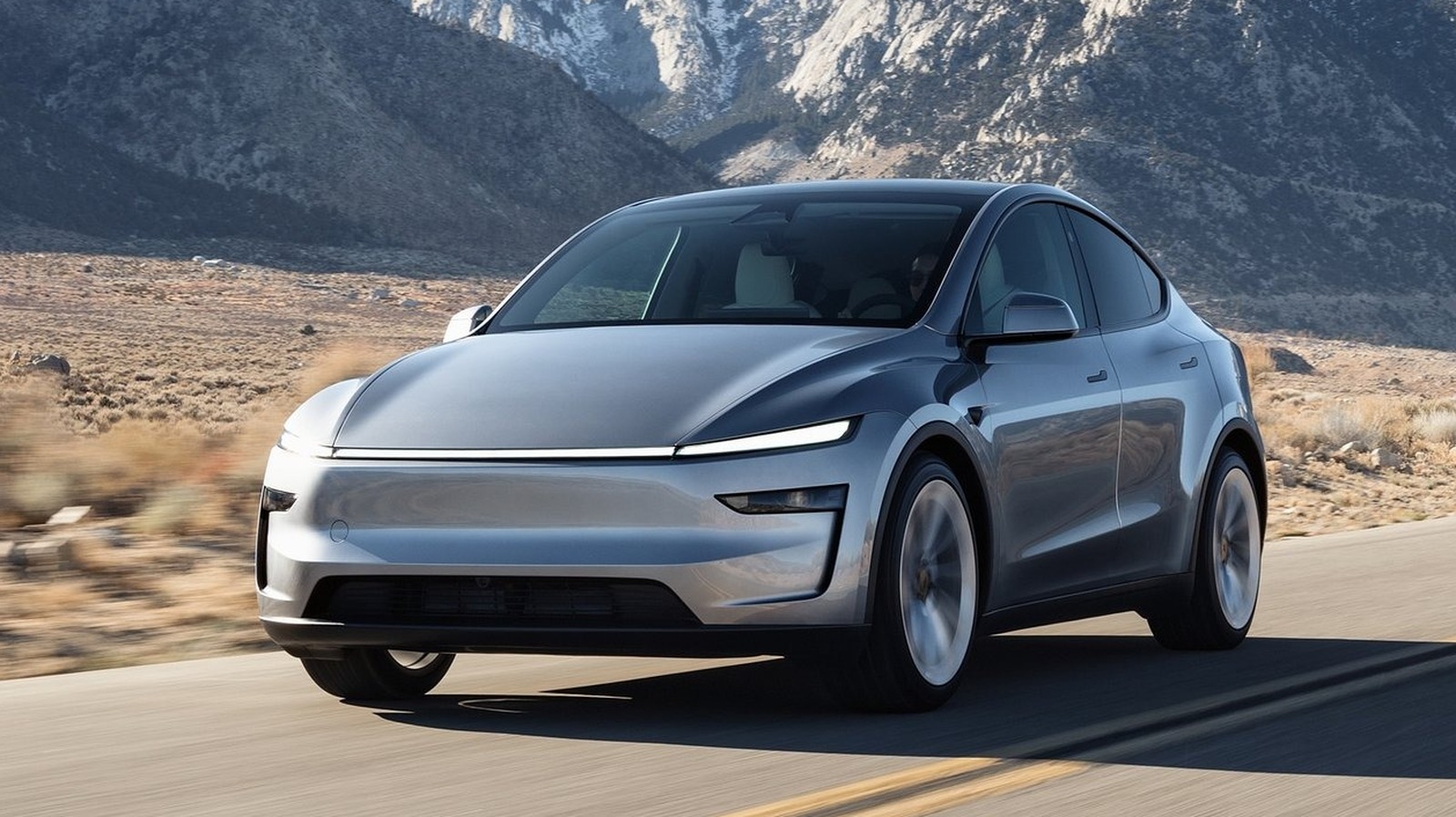
The numbers sent a palpable shockwave through the automotive and financial worlds. For years, Tesla's growth trajectory seemed not just unstoppable but perpetually stratospheric. Each quarter brought new record deliveries, new production milestones, and a further cementing of its position as the undisputed king of the electric vehicle (EV) revolution. But the latest quarterly sales report painted a starkly different picture, one of dipping sales and missed expectations. For the first time in a long while, the narrative of invincible growth has been punctured, replaced by urgent questions and heated debate. Was this inevitable market gravity finally catching up, or is this downturn a symptom of more profound issues brewing within the company?
For the dedicated community of Tesla owners, many of whom are also staunch believers and investors in the company's mission, this news lands with particular weight. It challenges long-held assumptions and forces a re-evaluation of the landscape. This article will delve deep into the complex factors contributing to this sales decline, moving beyond the sensationalist headlines to provide a nuanced analysis. We will unpack the specific numbers from the Q2 report, explore the increasingly debated "Musk Factor" and its impact on brand image, dissect the growing threat from a formidable field of competitors, and analyze Wall Street's volatile reaction. Ultimately, we seek to answer the critical question on every enthusiast's mind: Is this a temporary blip on Tesla's ambitious radar, or does it signal deeper troubles on the horizon?
Chapter 1: Unpacking the Numbers: A Look at the Q2 Sales Report
To truly understand the situation, we must first look past the top-line percentage drop and dissect the figures themselves. The headline number, a significant year-over-year decline in global deliveries, is the result of a complex interplay of regional performance, model-specific demand, and production logistics.
A detailed breakdown reveals a global patchwork of challenges. In North America, Tesla's most mature market, the decline was noticeable. While the Model Y continues to be a bestseller, its pace of growth has slowed considerably. The Model 3, once the bread-and-butter sedan, is facing intense pressure not just from outside competitors but also from its taller sibling, the Model Y. The Cybertruck, despite its high-profile launch and immense public interest, is still in the early stages of its production ramp. Its contribution to the overall delivery numbers is, at this stage, more of a trickle than a flood, and its high price point places it in a different category altogether. Production hurdles and the complex manufacturing process mean it isn't yet the volume seller needed to offset declines elsewhere.
Europe presents an even more complex scenario. The continent has become a fierce battleground for EVs, with established local automakers like Volkswagen, BMW, and Renault Group fielding increasingly compelling and diverse electric offerings. The Q2 numbers showed Tesla losing market share in several key European countries. Factory shutdowns for upgrades at Giga Berlin, aimed at preparing for future models, also had a short-term impact on production output for the quarter, a factor that cannot be discounted. Furthermore, the removal or reduction of EV subsidies in major markets like Germany has cooled down the once red-hot demand across the board, affecting Tesla alongside all other EV manufacturers. The sales dip here is a combination of heightened competition and shifting government incentives.
Then there is China, the world's largest automotive market and a critical pillar of Tesla's global strategy. The Q2 performance in China was perhaps the most concerning for analysts. The market is not just competitive; it's hyper-competitive. Domestic giants like BYD are not just catching up; in terms of sheer volume, they have surpassed Tesla globally by offering a vast spectrum of EVs, from high-end performance models to extremely affordable city cars. While Tesla's models still command a premium and a strong brand cachet, they are no longer the default choice for the tech-savvy Chinese consumer. Companies like NIO, XPeng, and now Huawei-backed Aito are innovating at a breakneck pace, particularly in areas like in-car infotainment and driver-assistance features tailored specifically to local tastes and infrastructure. Tesla's Q2 sales in China reflect a company fighting a multi-front war against rivals who have the home-field advantage.
Looking at the specific models, the aging designs of the Model 3 and Model Y are becoming more apparent. The "Highland" refresh for the Model 3 provided a much-needed boost, but the core design has been on the market for several years. In an industry where newness is a powerful sales driver, this longevity can become a liability. The Model S and Model X, while technologically superb, are niche, high-priced vehicles that do not contribute significantly to the overall volume. Their numbers, while stable, are not enough to move the needle when the mass-market models face headwinds. There was, however, one bright spot: the energy division. Tesla's Megapack and Powerwall sales continue to grow impressively, but for a company valued primarily on its automotive output, this positive news was largely overshadowed.
Chapter 2: The Musk Factor: Politics and Brand Image
For much of Tesla's history, Elon Musk was its greatest asset. His visionary pronouncements, his celebrity status, and his direct-to-consumer engagement on social media built a brand that felt more like a tech movement than a car company. He cultivated an army of loyal fans who served as brand ambassadors. However, in recent years, the nature of Musk's public persona has shifted dramatically, and what was once a unifying force has become, for some, a deeply polarizing one. It's a phenomenon that can no longer be ignored when analyzing Tesla's sales performance.
The "Musk Factor" has evolved from a branding asset to a complex variable. His acquisition of X (formerly Twitter) and his subsequent unfiltered commentary on a wide range of sensitive political and social issues have alienated a segment of the population that was once a core part of Tesla's customer base: environmentally conscious, progressive, and tech-forward buyers. This isn't just anecdotal speculation; multiple consumer polls and market research studies have pointed to a growing "anti-Musk" sentiment directly impacting purchasing decisions. Buyers who once saw a Tesla as a symbol of a clean energy future now hesitate, concerned that the brand has become entangled with political ideologies they do not support.
This is particularly potent in the politically charged climate of the United States and in the more socially progressive markets of Western Europe. Social media platforms are rife with stories of potential buyers opting for a Rivian, a Polestar, or a Ford Mustang Mach-E specifically to avoid aligning themselves with Musk's personal brand. While it is impossible to quantify the exact number of sales lost due to this factor, the sheer volume of the conversation indicates it is a non-trivial headwind. The car you drive is often a statement of identity, and for a growing number of consumers, the statement a Tesla makes has become complicated.
This creates a brand paradox. On one hand, Musk's outspoken nature still energizes a loyal base of supporters who admire his free-speech absolutism and his disruption of established norms. On the other, it actively repels another group. The challenge for Tesla is that the latter group heavily overlaps with the traditional EV buyer demographic. While the brand is attempting to broaden its appeal, this political polarization risks shrinking its addressable market, especially at the premium end.
The company's official response has been silence, adhering to its policy of not spending on traditional advertising and letting the products speak for themselves. But the market is no longer just about the product. It's about the ecosystem, the brand values, and the personalities behind them. In an era of conscious consumerism, the CEO is inextricably linked to the brand. The sales dip, therefore, may not just be an economic signal but also a cultural one, reflecting a shift in how the public perceives Tesla, not just as a carmaker, but as a cultural entity shaped by its iconic and controversial leader.
Chapter 3: The Rise of the Competition
For years, analysts who warned of impending competition for Tesla were proven wrong. Legacy automakers were slow, their EV efforts seemed half-hearted, and Tesla's lead in battery technology, software, and charging infrastructure appeared insurmountable. That reality has now fundamentally changed. The competition is no longer "coming"; it is here, and it is formidable, diverse, and rapidly improving.
In the United States, the challenge is coming from both new players and old guards. Rivian has carved out a strong niche in the premium adventure vehicle market with its R1T and R1S, appealing to an affluent, outdoor-oriented demographic. Ford's Mustang Mach-E and F-150 Lightning have leveraged iconic nameplates to great effect, offering compelling alternatives to the Model Y and Cybertruck, respectively. Hyundai and Kia have been the dark horses, emerging as serious contenders with their E-GMP platform that underpins the IONIQ 5, IONIQ 6, and EV6. These vehicles offer 800-volt architecture for faster charging, distinctive design, and features that rival or, in some cases, exceed what Tesla offers at a similar price point.
The European theater is even more crowded. The Volkswagen Group is leveraging its immense scale, with models like the VW ID.4, Skoda Enyaq, and Audi Q4 e-tron blanketing the crucial family SUV segment. Renault has struck a chord with the retro-styled and affordable Renault 5, tapping into a deep well of brand nostalgia. BMW's i4 and iX models offer the driving dynamics and premium interior quality the brand is famous for, directly targeting the Model 3 and Model X. Mercedes-Benz, with its EQ lineup, competes at the highest end of the market. These European brands have the added advantage of vast dealer networks for sales and service, a point of friction that remains a persistent complaint for some Tesla owners.
The most significant global threat, however, comes from China. BYD (Build Your Dreams) has executed a masterful strategy. While Tesla has focused on a limited, premium lineup, BYD offers a dizzying array of vehicles, from the sub-$15,000 Seagull city car to the luxurious Han sedan. This "something for everyone" approach has allowed them to capture an enormous share of their domestic market and begin an aggressive international expansion, particularly into Europe, Southeast Asia, and Latin America. Their vertical integration, which includes making their own "Blade" batteries, gives them a significant cost advantage. Brands like NIO are pushing the envelope on service with their battery-swapping stations, while XPeng and others are innovating rapidly in autonomous driving software specifically adapted for chaotic urban environments.
This explosion of choice means that Tesla is no longer the only game in town. A potential EV buyer today has a rich and varied menu of options to choose from, each with its own strengths in design, technology, brand heritage, and price. Tesla's key advantages—the Supercharger network and its advanced software—remain potent, but the gap is closing. Other automakers are adopting the NACS charging standard in North America, and their infotainment and driver-assist systems are improving with every model year. The competitive moat, while still present, is no longer as wide or as deep as it once was.
Chapter 4: Wall Street's Reaction and What It Means for Investors
Tesla's stock (TSLA) has always been a battleground between fervent bulls and skeptical bears, but the recent sales report has poured gasoline on the fire. The stock's reaction was swift and predictable: a sharp decline. But the story of the stock is more than just a single-day drop; it's about the recalibration of future expectations. For years, TSLA traded not on its current earnings but on the promise of future dominance in EVs, autonomy, and robotics. Its valuation was, and still is, priced for near-perfect execution and exponential growth. The Q2 numbers were the first hard data point to seriously challenge that growth narrative.
The bull case, championed by analysts like those at Wedbush, remains focused on the long-term vision. Bulls argue that the sales dip is a temporary result of factory retooling, high interest rates affecting car loans, and a temporary lull before the next wave of products. They point to the untapped potential of FSD and the Robotaxi network, which they believe will unlock trillions of dollars in value, making current automotive sales fluctuations seem trivial in hindsight. They also highlight the growth in the energy division and the potential of the Optimus robot. For the bulls, any significant dip in the stock price is a buying opportunity, a chance to invest in the future at a discount. They maintain that Tesla is not a car company but a disruptive AI and technology company, and should be valued as such.
The bear case, however, has been emboldened. Bears argue that the Q2 report is proof that Tesla is, first and foremost, a car company, and is now subject to the same cyclical and competitive pressures as any other automaker. They contend that the valuation is unjustifiably high for a company with slowing growth and shrinking automotive margins. Analysts at firms like Morgan Stanley, while still largely positive, have had to trim their delivery forecasts and price targets. The bears point to the intensifying competition, the brand damage from the "Musk Factor," and the fact that the promise of full autonomy has been "just around the corner" for almost a decade. They see the Q2 report not as an anomaly but as the beginning of a trend, a return to a more realistic valuation as the EV market matures and normalizes.
For the individual investor, many of whom are Tesla owners, this creates a deeply unsettling environment. The stock's volatility is legendary. Its sharp swings can generate immense wealth or inflict significant losses in a short period. The current situation forces investors to ask tough questions. Is their investment thesis based on the car business or the long-shot AI business? How much of the stock's value is tied to the continued leadership of Elon Musk? What is their tolerance for risk in the face of slowing growth? The chasm between the bull and bear narratives has never been wider, making every new data point, every tweet from Musk, and every competitor's press release a catalyst for further volatility.
Conclusion
The Q2 sales dip is not a simple story with a single cause. It's a complex tapestry woven from threads of economic headwinds, fierce competition, shifting brand perception, and internal strategic pivots. It is, without question, the most significant challenge to Tesla's growth narrative in years. To dismiss it as a mere "blip" would be naive. The competition is real and accelerating. The brand is navigating a period of polarization. The core product lineup is aging. These are fundamental challenges that require strategic responses.
However, to declare the Tesla growth story over would be equally premature. The company still possesses formidable assets. The Supercharger network remains the gold standard in reliability and scale. Its software and in-house chip design give it an efficiency and integration advantage that legacy automakers still struggle to replicate. The data collected from millions of vehicles on the road provides an unparalleled foundation for the development of autonomous systems. Furthermore, the company is not standing still. The Cybertruck ramp continues, plans for more affordable models are underway, and innovations in manufacturing and battery technology are constantly in development.
The coming quarters will be critical. The market will be watching closely to see if Tesla can reignite growth. Can it successfully launch its next-generation vehicles and bring them to market quickly? Can it navigate the complex regulatory environment to finally unlock the potential of FSD? Can it stabilize its brand image to appeal to the broadest possible customer base? The era of uncontested dominance is clearly over. Tesla has now entered a new phase, one where it must fight for every sale and prove its valuation not just with promises of the future, but with concrete results in the present. The EV king may not be dethroned, but the throne itself is now in a far more crowded and contentious court.
FAQ Section
-
Is now a good time to buy a Tesla? This depends on your priorities. If you're a buyer, the increased competition and potential for new, more affordable models on the horizon might suggest waiting. However, current models are proven, and the Supercharger network is a major benefit. If you're an investor, the stock's volatility presents both high risk and potential opportunity, depending on your belief in the long-term bull vs. bear case.
-
How much have Tesla's sales actually dropped? While the exact percentages vary by region, the global Q2 delivery numbers fell short of both the previous year's figures and Wall Street's consensus expectations. It marked a notable reversal of the company's consistent quarterly growth trend.
-
Which competitors should I be watching? In the US, keep an eye on Rivian, Ford (Mustang Mach-E), and the Hyundai/Kia group (IONIQ 5, EV6). In Europe, the Volkswagen Group (VW, Audi, Skoda), Renault, and BMW are major players. Globally, China's BYD is the most significant volume competitor.
-
Is Elon Musk's political activity really affecting sales? While it's difficult to get an exact number, multiple consumer surveys and extensive media reporting strongly suggest that his polarizing political commentary is a negative factor for a significant portion of potential EV buyers, particularly in North America and Western Europe.
-
What are analysts predicting for Tesla's stock price? Analyst predictions are currently very divided. "Bull" analysts believe the long-term potential of AI and robotics justifies a high price and see the current dip as a buying opportunity. "Bear" analysts believe the company is overvalued, citing slowing growth and increased competition, and predict a further price correction