
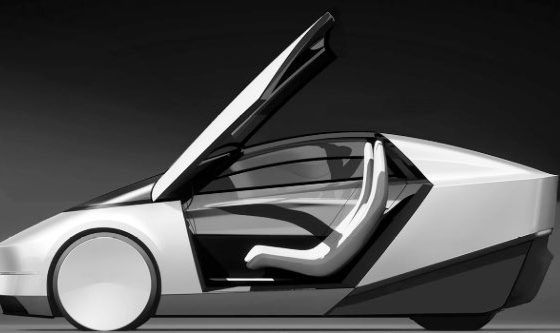
Tesla’s long-awaited Robotaxi program—once touted by CEO Elon Musk as the defining future of the company—is again under intense scrutiny. Following today’s reports that the rollout may face fresh delays due to regulatory uncertainty and technical challenges with Full Self-Driving (FSD) version 12, Tesla’s stock price has slipped amid investor concern. Yet beneath the headlines lies a complex story: how Tesla’s ambition to dominate autonomous mobility intersects with shifting market realities in the U.S. and Europe.
This article explores what the latest developments mean for Tesla’s technology roadmap, its competitive position, and the real-world implications for owners and investors alike.
1. The Robotaxi Vision: Tesla’s Ultimate Goal
From the moment Musk unveiled the concept in 2019, Tesla’s Robotaxi fleet has represented more than a business idea—it’s the company’s technological “endgame.” The vision: cars that drive themselves, generating revenue for owners through a shared mobility platform. Musk predicted that a single Tesla could earn up to $30,000 per year through autonomous ride-hailing.
In 2024, Tesla reiterated its commitment to the project, scheduling a major “Robotaxi unveil” for 2025. However, this week’s news from internal sources and supply-chain insiders suggests that the timeline could shift again, as the company struggles with data processing limitations and compliance requirements under U.S. and EU autonomous vehicle regulations.
2. The Current Status: FSD v12 and Beyond
Tesla’s latest Full Self-Driving (FSD v12) software marks a significant milestone. Using end-to-end neural networks trained on millions of real-world video clips, the system is designed to mimic human decision-making more closely than rule-based code.
However, despite impressive performance in internal demos, regulators remain cautious. The U.S. National Highway Traffic Safety Administration (NHTSA) and the European Union Agency for Cybersecurity (ENISA) continue to emphasize the need for real-world validation and consistent safety metrics before approving commercial driverless operation.
For now, Tesla’s “Autopilot” remains a Level 2 system under SAE classification—requiring active driver supervision. Without regulatory approval for full autonomy, Robotaxi operations remain legally out of reach.
3. Technical and Legal Barriers
While Tesla leads the industry in data volume—reportedly processing over 500 million driving miles per day through its fleet—the path to autonomy remains steep. Three major challenges stand out:
-
Edge Case Performance: FSD struggles with unpredictable urban situations—pedestrian crosswalks, temporary roadwork, and unmarked lanes remain difficult to navigate consistently.
-
Hardware Limitations: Many vehicles still use the HW3 computer, while full Robotaxi functionality may require HW4 or HW5, capable of faster real-time inference and redundancy.
-
Liability and Insurance: Governments in the U.S. and EU are still determining who is responsible in the event of an autonomous accident—the driver, the owner, or Tesla.
These issues collectively slow down commercial rollout. Even if the technology matures quickly, legislative lag may push true Robotaxi deployment into late 2026 or beyond.
4. Economic Implications: What Delays Mean for Investors
Tesla’s stock reacted sharply to today’s reports—dropping roughly 3% during early U.S. trading hours. Investors had hoped the Robotaxi program would offset slowing EV demand and shrinking margins on Model 3/Y sales. Delays raise new questions about Tesla’s near-term profitability.
Yet there’s a long-term silver lining: Tesla’s deep learning and Dojo computing investments could make it a software powerhouse, not just an automaker. Even if commercial Robotaxis take years to launch, the same FSD technology could boost vehicle sales, subscription revenue, and licensing opportunities.
Key takeaway for investors: the Robotaxi project remains a long-term bet, not a near-term catalyst. Market volatility around each milestone reflects this uncertainty.
5. What This Means for Tesla Owners
For Tesla owners in the U.S. and Europe, the Robotaxi delay means their cars won’t yet be income-generating assets. However, it also gives current drivers more time to benefit from continuous FSD updates and enjoy advanced driver assistance before full autonomy arrives.
Owners considering FSD subscriptions may want to evaluate whether to pay the monthly fee now or wait for tangible regulatory progress. Meanwhile, improvements in safety features, energy efficiency, and connectivity continue to enhance Tesla’s ownership value even without full autonomy.
6. Competitors and Market Landscape
Tesla no longer stands alone in the autonomous race. Waymo, Cruise, and Mobileye are already running limited Robotaxi services in U.S. cities such as Phoenix, San Francisco, and Los Angeles. These rivals use sensor-heavy approaches—LIDAR and radar combined with HD maps—while Tesla relies solely on vision-based AI.
The contrast reveals Tesla’s boldness but also its vulnerability. Without external mapping data, Tesla’s software must achieve human-level reasoning from camera feeds alone. This could yield massive scalability advantages—but only if the neural network consistently performs above regulatory thresholds.
7. The Road Ahead
Elon Musk has reaffirmed that the Robotaxi unveil event is still scheduled for 2025, promising “a product that will blow your mind.” But Tesla’s credibility now hinges on execution. The next 12 months will be critical as the company must:
-
Finalize the next-gen hardware platform (HW5 or beyond).
-
Scale Dojo supercomputer training for autonomous datasets.
-
Secure pilot approvals in key regions like California, Texas, and Germany.
-
Address investor concerns about capital allocation between autonomy, AI, and new vehicle models.
Tesla’s progress—or lack thereof—over the coming year will define its valuation and reputation through the decade.
Conclusion
Tesla’s Robotaxi dream is alive, but today’s news confirms that the road remains long and complex. Technological brilliance alone won’t deliver autonomy—regulation, safety validation, and consumer trust must align. For now, Tesla continues to balance visionary goals with the grounded reality of an evolving market.
Owners can take comfort in steady software improvements, while investors must stay patient through volatility. If Tesla eventually succeeds, it could redefine both transportation and the company’s identity itself—from automaker to global mobility platform.
FAQ
Q1: When will Tesla’s Robotaxi officially launch?
A: While Elon Musk previously suggested 2024–2025, the latest reports indicate possible delays into 2026 due to regulatory approval and hardware readiness.
Q2: Will current Tesla models be compatible with Robotaxi service?
A: Only vehicles equipped with FSD and the latest hardware (HW4 or higher) are likely to qualify for future Robotaxi operations.
Q3: How does Tesla’s Robotaxi plan differ from Waymo or Cruise?
A: Tesla relies entirely on camera-based neural networks (“vision-only”), while competitors use LIDAR, radar, and pre-mapped routes for redundancy.
Q4: Will FSD subscription prices change?
A: Tesla has hinted at pricing adjustments as capabilities improve, but as of today, the monthly fee remains at $99 in the U.S.
Q5: What can Tesla owners expect in the next FSD update?
A: Incremental improvements to urban driving, smoother lane changes, and better unprotected left turns are expected by early 2026.