
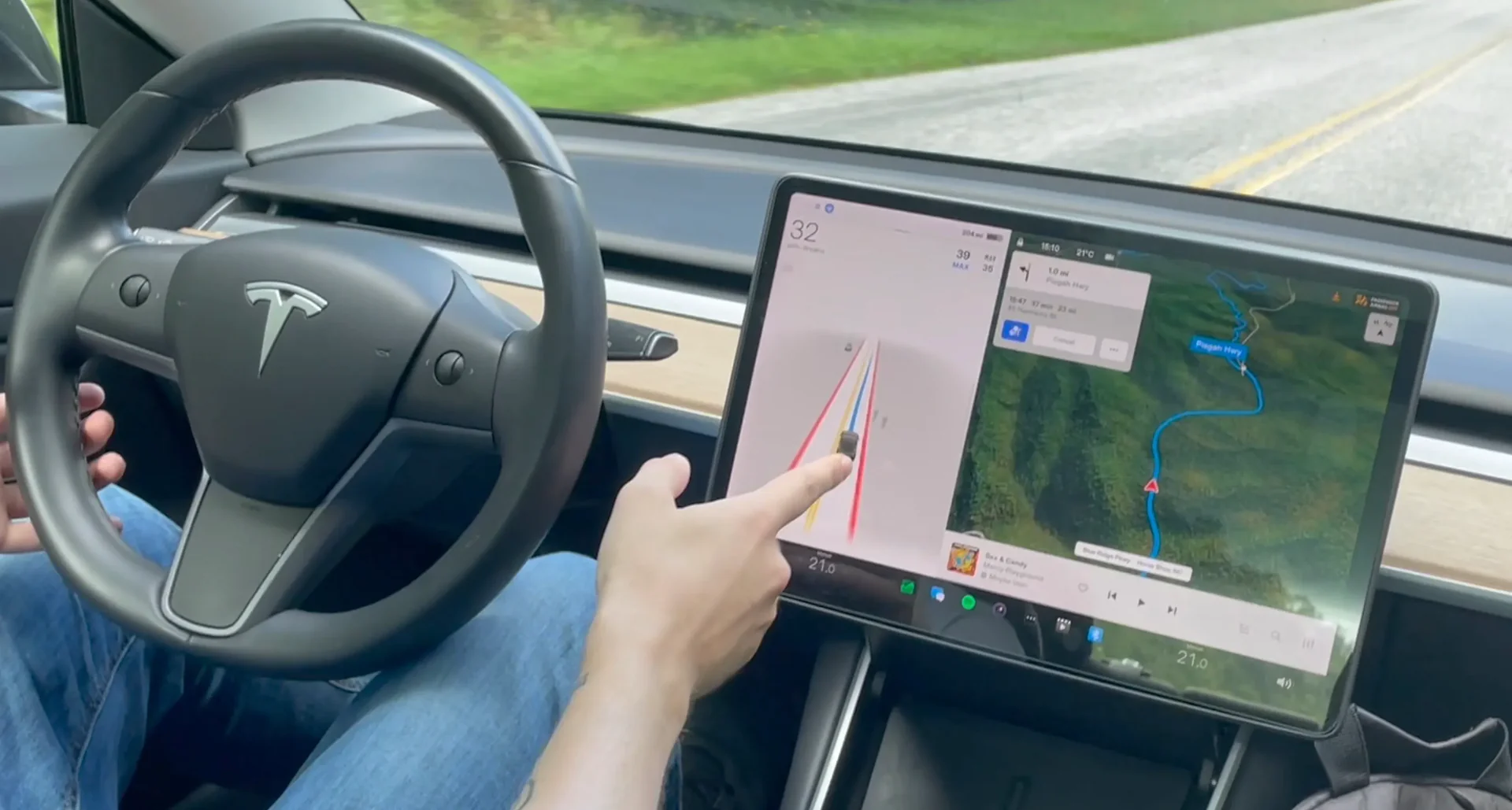
In October 2025, the U.S. National Highway Traffic Safety Administration (NHTSA) opened a sweeping preliminary investigation into approximately 2.88 million Tesla vehicles equipped with Full Self-Driving (FSD) features. The probe centers on alleged violations of traffic laws—such as running red lights and crossing into opposing lanes—while FSD was active. As of now, the investigation references 58 incidents, including 14 crashes and 23 injuries, many of which involve serious safety concerns.
While this inquiry is situated in the U.S., its fallout is already rippling toward Europe. Tesla has long sought regulatory approval for its FSD or advanced driver-assistance systems (ADAS) in European markets, and the American investigation could shift the risk, liability, and regulatory landscape abroad. For Tesla owners, automotive analysts, and policy observers in Europe and the U.S., the case raises urgent questions: How will Europe respond? Could regulatory frameworks tighten? Who bears liability when autonomous systems misbehave? And what does this mean for the future of autonomous driving?
This article presents a deep dive into:
-
The U.S. FSD investigation: scope, allegations, and Tesla’s immediate responses
-
Europe’s regulatory posture toward FSD/ADAS currently
-
Technical, legal, and ethical challenges tied to FSD deployment
-
Possible European reactions, policy direction, and compliance pressures
-
Impacts on European Tesla owners and the broader EV/AV market
-
Strategic implications for Tesla’s autonomy ambitions
-
Recommendations for stakeholders (owners, buyers, regulators)
-
Conclusion
-
FAQ (frequently asked questions)
II. The U.S. FSD Probe: Scope, Allegations, and Early Reactions
2.1 Scope of NHTSA’s Investigation
NHTSA’s investigation is officially classified as a Preliminary Evaluation into Tesla’s FSD (Supervised / Beta) systems. The agency flagged multiple traffic-violation behaviors allegedly induced by FSD while active, including:
-
Entering intersections during a red traffic signal
-
Performing lane changes into oncoming traffic
-
Other violations of traffic laws
Among the 58 reported incidents under review, 14 involved crashes and 23 resulted in injuries. Six of the identified cases directly involved vehicles proceeding through red lights. Tesla’s software update branch 2025.32 has already been linked to some of the recent complaints, and Tesla has responded with incremental patches.
The investigation is not yet a recall, but if NHTSA determines an “unreasonable risk to safety,” it can escalate to defects investigations or recall mandates.
2.2 Underlying Allegations & Safety Risks
At the heart of the investigation are claims that FSD, when active, can prompt vehicles to violate traffic laws in ways a human would not, or without adequate warning to the driver. The allegations raise questions including:
-
Warning & supervision gap: Did FSD fail to properly warn drivers before executing risky maneuvers?
-
Fault in perception / decision logic: Did FSD misinterpret or mis-prioritize traffic signals, lane markings, or right-of-way logic?
-
Overreliance or misbranding: Was FSD marketed or perceived as more autonomous than safely guaranteed, prompting drivers to overly rely on it?
-
Interface & driver takeover dynamics: In scenarios where FSD performs an unsafe action, was the driver given sufficient time and clarity to override?
These claims cut to the core of autonomy’s trust model: can a system safely intervene without violating fundamental traffic law assumptions?
2.3 Tesla’s Immediate Responses: Patches, Messaging & Defense
Tesla has responded swiftly at the software level: for example, shortly after the investigation surfaced, it issued software updates aimed at refining signal detection and intersection logic. The rollout of FSD v14.1.1 (a follow-up to v14.1) addresses early tester complaints (e.g., harsh braking, execution inconsistencies).
Tesla’s messaging emphasizes that FSD is a driver-assist system requiring continuous driver attention, not full autonomy. It also highlights the iterative nature of the software: updates, bug fixes, and safety improvements are a core part of its OTA model.
Nonetheless, critics argue that Tesla’s branding (“Full Self-Driving”) remains misleading, creating the impression of greater capability than currently realized. Tesla is also under pressure to disclose internal logs, test data, and decision-making criteria to regulators—something the company has been reluctant to fully make public in the past.
2.4 Signal Impact on Public, Investors & Regulatory Sentiment
The news triggered a modest decline in Tesla's stock (~2%–3%) as investors priced in the uncertainty of possible liability or mandated recalls. Industry watchers view the probe as a turning point: autonomy is no longer a speculative promise, but a liability-laden pivot point under regulatory scrutiny.
For regulators in other jurisdictions—including Europe—the probe is a wake-up call. It demonstrates that even a leading EV/autonomous firm like Tesla is not immune from systemic risk if its autonomous modules fail to respect basic traffic rules.
III. Europe’s Current Regulatory Posture Toward FSD / ADAS
3.1 European (EU / UNECE) Frameworks for Driver Assistance
In Europe, automotive regulation is more rigid and testing-intensive than in the U.S. For systems like FSD / ADAS, key features include:
-
UNECE / ECE Regulations: Europe relies on a suite of UN-level safety and type-approval standards. For driver-assistance systems, certain requirements apply to lane-keeping, braking, signaling, and emergency behavior.
-
Type-Approval & Homologation: Before a vehicle with advanced systems can be sold in Europe, it must undergo type-approval in the local jurisdiction, consistent with EU directives.
-
Functional Safety & Cybersecurity Requirements: The EU’s approach to software integration demands rigorous validation, redundancy, incident logging, and fault tolerance.
-
Emerging EU AV / ADAS Legislation: The EU is drafting more targeted rules around automated systems, including liability regimes, transparency obligations, and safety assurance protocols.
Because of these rules, Tesla’s push to deploy FSD-like systems in Europe has long been constrained by regulatory guardrails and conservative approval pathways.
3.2 Tesla’s European Approval Struggles
Tesla’s efforts to have FSD or comparable capabilities certified in Europe have been slow and fraught. In the Netherlands, for example, Tesla has been negotiating with the RDW (Netherlands Vehicle Authority) for months. Despite promises of presenting its technology in May 2025, regulators remain cautious.
Internal documents suggest Tesla has expressed frustration with stringent requests—data submissions, simulation requirements, local testing, detailed behavior audit trails, and scheduling bottlenecks. Some Tesla teams reportedly argued that European drivers are being deprived of “advanced features” while U.S. users enjoy freer deployments.
Thus far, full FSD deployment in Europe faces regulatory “go/no-go” gating rather than a gradual OTA rollout approach.
3.3 Risk-Averse European Regulators’ Priorities
European regulators are likely to prioritize:
-
Transparency & explainability: Demanding interpretability in automated decisions; black-box systems may not be acceptable.
-
Incident logging & audit trails: Systems must record sufficient data to reconstruct decisions.
-
Liability clarity: Clear delineation of driver vs. system responsibility.
-
Safe fallback modes: Ensuring that if the system fails or behaves unexpectedly, a safe state (e.g. minimal intervention) is default.
-
Performance in corner cases: Behavior in complex intersections, light changes, occlusions, sensor anomalies, etc., will be under stress tests.
These priorities mean that the U.S. investigation could prompt regulatory tightening in Europe—especially when violations involve law-breaking actions.
3.4 Potential Timeline for Regulatory Reaction
-
In the short term (2025–2026), regulators may demand Tesla or other ADAS providers disclose internal incident logs or safety validation plans.
-
In medium-term (2026–2027), new EU/UNECE rules may explicitly ban systems that can override red lights or enter oncoming lanes without certainty, unless fail-safes are proven.
-
In longer term (2028+), mass deployment of higher-level autonomy will require regulatory frameworks for liability, insurance, oversight, and certification of behavior before rollout.
European regulators will likely use the U.S. investigation as a data point and precedent to refine thresholds of acceptable automated behavior.
IV. Technical, Legal, and Ethical Challenges of FSD Deployment
4.1 Technical Challenges & Edge Cases
Autonomous systems must contend with a vast spectrum of complex, ambiguous, or adversarial scenarios:
-
Perception ambiguity: Recognizing occluded pedestrians, cyclists, unusual vehicles, lighting transitions, or novel signage
-
Decision conflict: Situations where laws conflict (e.g. yield vs. turning priority)
-
Edge-case robustness: Rare corner cases—the infamous “long-tail” problem—are where many accidents arise
-
Software-hardware interaction: Sensor fusion, calibration drift, software updates, environmental variation
-
Failover and safe fallback: Designing fallback modes when the system cannot confidently navigate
These challenges mean that any system deployed across millions of vehicles will encounter unforeseen failure modes.
4.2 Legal Liability & Accountability
One of the thorniest issues is liability:
-
Manufacturer vs driver liability: If FSD causes a traffic violation, is Tesla responsible or does the driver bear liability for oversight?
-
Insurance model adaptation: Insurers may demand new operational liability models for partially autonomous vehicles.
-
Regulator compelled disclosure: Regulators may require logging and disclosure of system decisions in accidents.
-
Class-action & tort litigation: Future lawsuits may hinge on whether Tesla exercised "reasonable care" in design, validation, and update rollout.
The U.S. probe may set a precedent wherein regulators treat automated behavior as capable of being legally unsafe independent of driver action.
4.3 Ethical & Trust Considerations
Autonomy decisions often carry trade-offs:
-
Value trade-offs: E.g. in a sudden situation, choosing between slight red-light violation vs sudden braking into a rear collision
-
Transparency & explainability: Users and regulators may demand that decisions be understandable (why did FSD turn right instead of left?)
-
Trust & adoption curve: Frequent but minor misbehaviors erode user trust more than rare catastrophic failures
-
Distributional fairness: Whether autonomous decisions disadvantage particular groups (e.g. pedestrians vs vehicles)
Tesla—and the industry at large—must balance innovation with prudence and public trust.
4.4 Human-in-the-Loop & Meaningful Control
Because current FSD is categorized as Level 2 / supervised autonomy, the human remains in the control loop:
-
Takeover timing & clarity: If the system fails or behaves unsafely, the driver must be given clear cues and sufficient time to intervene
-
Driver complacency: Overreliance, inattentiveness, or misunderstanding of system boundaries may lead to errors
-
Meaningful human control concept: The system must remain aligned with human intent and allow predictable override (a philosophical and design requirement)
Mismatch between user expectations and system behavior can amplify risk, especially in jurisdictions unfamiliar with such systems.
V. Possible European Responses & Compliance Pressures
5.1 Regulatory Tightening & Preemptive Measures
European regulators may respond to the U.S. probe in multiple ways:
-
Demand for safety validation data: Tesla and others may need to submit incident logs, simulation results, corner-case tests, and counterfactual analyses
-
Mandated limitations: Some countries might restrict or ban advanced ADAS maneuvers (e.g. autonomous intersection crossing) until safety can be demonstrated
-
Certification upgrades: New type-approval requirements for higher ADAS levels, requiring third-party safety audits
-
Transparency rules: Obligations to disclose system limitations, decision logic, incident counts to consumers and regulators
These constraints could slow Tesla’s European FSD rollout or force design changes before deployment.
5.2 Market Impact & Competitive Positioning
-
Any European regulatory tightening benefits conservative incumbents who designs within strict safety boundaries
-
Tesla may be forced to differentiate its European FSD variant—limiting certain autonomous features compared to U.S. systems
-
Regulatory uncertainty may discourage consumers from paying high premiums for FSD features if deployment or usage is restricted
In effect, Tesla’s advantage in software may be attenuated by compliance burdens and feature variation across geographies.
5.3 Harmonization Risks & Global Architecture Pressures
Tesla globally engineers a largely unified architecture. If Europe demands stricter safety behavior than the U.S., Tesla may:
-
Develop separate European FSD variants (limiting features)
-
Apply the stricter behavior model globally (to simplify operations)
-
Introduce dynamic regional constraints in software (a “geofencing” of feature sets)
All of these options carry trade-offs in cost, complexity, and brand uniformity.
5.4 Early European Signals
Some immediate signals already point to regulatory caution:
-
Sweden recently granted Tesla permission to test FSD on state highways and expressways, but only with limited vehicles (3 units) and under regulatory supervision
-
The Netherlands RDW continues to vet Tesla’s detailed test submissions and has been slow in granting broad deployment
-
European safety agencies are increasingly citing the U.S. probe as a “reference point” in their risk assessments
Tesla’s early success in Europe may hinge on its ability to preemptively demonstrate safe behavior and transparent accountability.
VI. Impacts on European Tesla Owners & Market Dynamics
6.1 Feature Availability & Regional Parity
European Tesla owners may find that their FSD-enabled vehicles are:
-
Delayed or constrained in feature activation (e.g. no autonomous intersection crossing)
-
Required to operate with conservative behavior envelopes
-
Subject to more frequent validation or updates to satisfy compliance
This divergence may frustrate owners accustomed to richer U.S. FSD features.
6.2 Insurance, Liability & Ownership Costs
-
Insurers may demand higher premiums or limit discounts for cars using FSD
-
Liability disputes may emerge in accidents involving FSD—owners could be entangled in regulatory or legal audits
-
Resale value may suffer if FSD features are known to be regionally limited or legally constrained
Owners should monitor regulatory changes closely, maintain detailed logs, and consider conservative use when features are uncertain.
6.3 Consumer Trust & Market Reception
-
Public perception may become more cautious: incidents in the U.S. will resonate in Europe
-
Early adopters may face reputational risk if accidents occur—even when liability is ambiguous
-
Sales uptake of FSD-enabled cars may be more restrained unless regulatory stability emerges
For European EV buyers, skepticism of “autonomous premiums” may rise.
6.4 Competitive Landscape & Differentiation
-
Other manufacturers may avoid pushing aggressive autonomous features until regulatory frameworks stabilize
-
Tesla’s software advantage may narrow if its European FSD is less aggressive or constrained
-
Brands that emphasize safety, rule compliance, and liability clarity may gain consumer trust faster
Thus, European Tesla owners are operating in a shifting strategic environment where autonomous capability is under heavier scrutiny.
VII. Strategic Implications for Tesla’s Autonomy Ambitions
7.1 Regulatory as a Key Bottleneck
Autonomous software is only as deployable as regulation allows. The U.S. investigation underscores that safety failures become regulatory crises, not just technical issues. Tesla must now design for regulatory defensibility as much as performance.
7.2 Engineering for Auditable Safety & Explainability
In future FSD versions targeting Europe, Tesla may need to:
-
Embed richer logging, safety envelopes, simulation validation, and interpretable decision frameworks
-
Provide oversight APIs or “explainability modules” so regulators can audit decisions
-
Build fallback behavior that strictly avoids red-light / oncoming lane risk unless proven safe
These shifts increase development overheads but may be necessary for regulatory acceptance.
7.3 Feature Parity vs Regional Divergence
Tesla faces a strategic choice:
-
Global unity: adopt Europe’s stricter behavior globally, simplifying architecture but perhaps diluting U.S. competitiveness
-
Regional divergence: build variant-based behavior per region, increasing complexity, testing burden, and risk of feature fragmentation
Either path sets a precedent for how Tesla balances innovation and compliance mid-term.
7.4 Autonomy as Value Driver vs Regulatory Liability
Tesla has long pitched autonomy (FSD / Robotaxi) as a high-margin, scalable business model. But if regulatory risk, liability restrictions, or limited deployment constrain these systems, the value proposition weakens. Tesla may need to tilt more toward energy, robotics, or subscription services to hedge autonomy risk.
VIII. Recommendations for Stakeholders
8.1 For European Tesla Owners & Potential Buyers
-
Carefully verify what FSD features are legally authorized in your country before purchase
-
Avoid assuming parity with U.S. FSD; ask your dealer for disclosure on feature limitations
-
Maintain logs, video recordings, and system warnings in case of future liability queries
-
Stay updated on regulatory and recall announcements related to FSD
-
Use advanced features conservatively in edge-case or intersection-rich environments
8.2 For U.S. Tesla Owners & Buyers
-
The U.S. investigation may lead to stricter regulation or feature rollback—monitor developments
-
Be cautious of overreliance on FSD beyond its safe limits
-
Participate in safety reporting: if you experience odd behavior, report it to NHTSA
-
Understand that cross-border resale may be impacted if FSD features are region-restricted
8.3 For Regulators & Policymakers
-
Use the U.S. probe as a case study: demand transparent system logs, behavior rationales, and independent audits
-
Develop common frameworks (EU / UNECE) for autonomous behavior thresholds (e.g. red-light compliance)
-
Mandate clear liability rules that balance innovation and safety
-
Encourage public disclosure of system limitations and misbehavior statistics
-
Phase incremental authorization pathways rather than blanket approvals
8.4 For Tesla and Autonomous Systems Developers
-
Prioritize safety auditability, interpretability, and compliance in early design cycles
-
Simulate extreme edge-case behavior and publish white-box validation results where possible
-
Maintain conservative default behavior where uncertainty is high (e.g. in signal detection)
-
Develop modular, region-aware behavior constraints to meet varying regulatory demands
-
Engage proactively with regulators to guide outcome-aligned expectations
IX. Conclusion
The NHTSA’s investigation into Tesla’s FSD system marks a watershed moment for autonomous driving. It underscores the dual reality that technical ambition, while necessary, must be coupled with regulatory defensibility, liability clarity, and public trust. For Europe, the investigation may hasten stricter regulation, constrain feature availability, and force adaptive engineering or conservative behavior models.
For European Tesla owners and prospective buyers, the path toward full autonomy will likely be slower, more cautious, and subject to region-by-region constraints. Tesla’s challenge is no longer just about pushing boundaries — it is about building autonomy that regulators will let run, and that drivers can trust to behave lawfully.
X. FAQ (Frequently Asked Questions)
-
Does the U.S. investigation mean FSD will be banned in Europe?
Not necessarily. But it increases regulatory risk; European authorities may impose stricter constraints or delay approvals. -
If FSD causes a crash, who is liable?
Liability may depend on jurisdiction, evidence of driver supervision, system logs, Tesla’s design, and whether the system misbehaved without clear warning. This is a complex legal frontier. -
Will European Teslas get all the same FSD features as U.S. Teslas?
Likely not. Some features may be regionally limited or disabled to comply with local regulations. -
Is Tesla’s software update process (OTA) vulnerable under this scrutiny?
Yes. Regulators may demand stricter vetting, logging, rollback capability, and behavioral traceability before OTA deployments. -
Should Tesla owners disable FSD until regulators settle rules?
Owners may choose more conservative use, especially in intersections or ambiguous situations. Full disablement isn’t necessary, but cautious usage is prudent.