
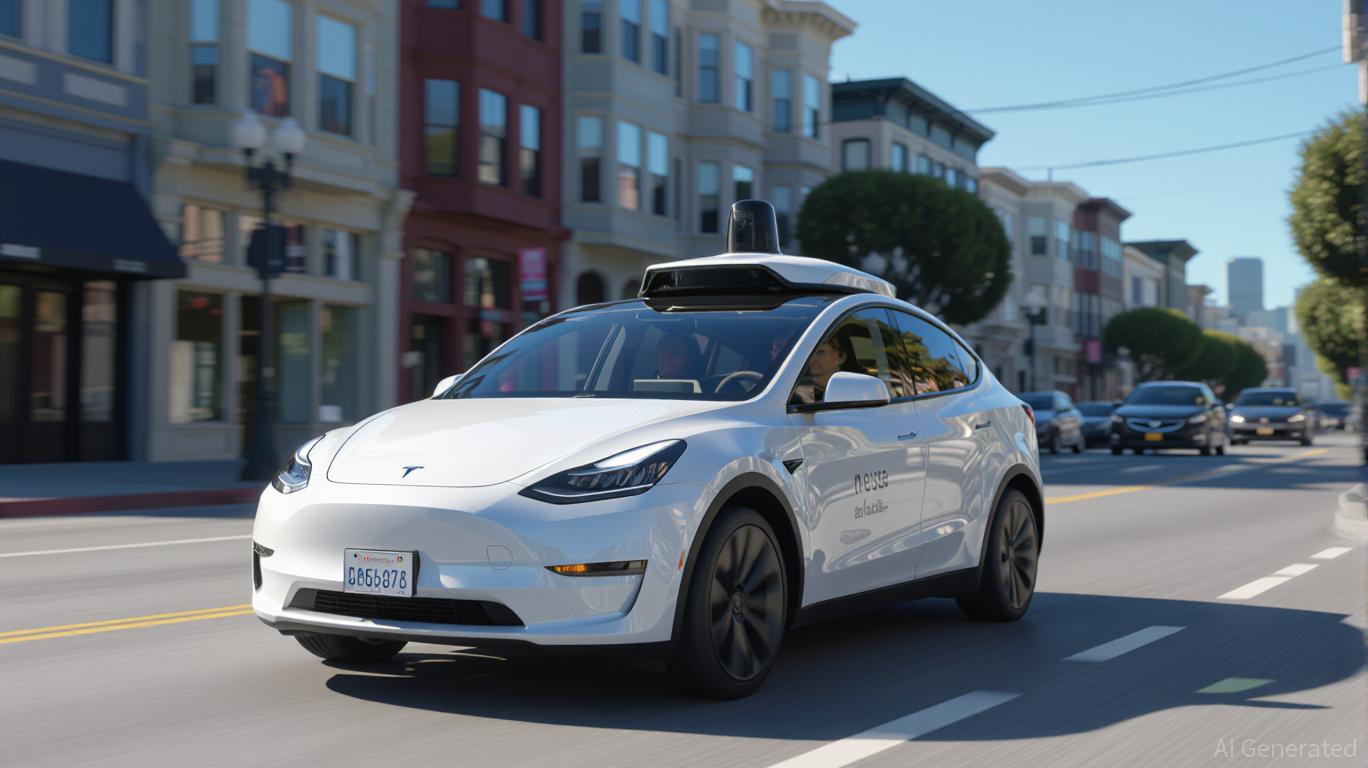
The launch of the Robotaxi service in Austin, Texas, marks a significant strategic milestone for Tesla, signaling a major pivot toward a new business model. This debut is not merely an incremental software update; it is the first tangible step in realizing the company's long-held vision of a high-margin, recurring-revenue service that could fundamentally redefine urban mobility. However, this bold move is unfolding against a backdrop of intense legal scrutiny and public skepticism regarding the safety and maturity of the underlying technology. This analysis will explore the strategic significance of the Austin launch, compare the company's approach to its key rivals, and examine the high-stakes legal and public relations challenges that will determine the long-term success of this ambitious endeavor.
The Robotaxi Launch in Austin
The Robotaxi service was made available to a "select group of people" in Austin, Texas, as a geofenced trial. The technology underpinning the service is an "advanced version of FSD" that utilizes the same hardware and systems already present in hundreds of thousands of customer vehicles today. The key difference is that the system's "problem areas" have been corrected for the specific geofenced area, and confidence levels have likely been adjusted since there is no human backup. This launch is a crucial step for the company, as it is designed to provide tangible proof of its autonomous capabilities and pave the way for a new, high-margin business pillar that could generate unprecedented revenue over time.
The Competitive Landscape and Business Model
Tesla's approach to autonomous mobility stands in stark contrast to that of its primary competitor, Waymo. Waymo's long-term strategy involves a heavy reliance on geofencing and the use of purpose-built vehicles that are equipped with a suite of sensors, including LiDAR. This approach prioritizes safety and controlled deployment in specific, pre-mapped urban areas. By contrast, Tesla's strategy relies on its vast fleet of existing consumer vehicles, which are equipped with its vision-only FSD system. If successful, this model could give the company a massive scale advantage, as it would be able to deploy a Robotaxi fleet without the significant upfront cost of building new, purpose-built vehicles. The debate between the two approaches is reminiscent of the long-standing rivalry between iPhone and Android, where competition drives innovation and coexistence is possible.
The launch is a direct manifestation of the company's "Master Plan Part IV," which aims to set a path toward "Sustainable Abundance" by "reimagining labor, mobility and energy" and democratizing access to autonomous goods and services. This strategic re-articulation frames the Robotaxi service as a key element in transforming the company from a hardware manufacturer into a high-margin, software-driven service provider.
The Looming Legal and Safety Headwinds
The Robotaxi launch is happening concurrently with a series of high-profile legal challenges that cast a long shadow over the company's autonomous driving claims. The company has faced ongoing scrutiny from federal regulators and has been involved in numerous fatal and non-fatal incidents involving its Autopilot and FSD systems. Recent legal developments have been particularly costly. A Florida jury ordered the company to pay $243 million in damages to the family of a pedestrian who died in a crash involving a Tesla's "self-driving" system. The company has appealed this historic verdict, but it sets a precedent for liability in future cases. In a separate case, the company recently settled with the family of a deceased teenager in San Francisco over a fatal crash that occurred in 2019. These legal battles underscore the high-stakes nature of the push toward autonomy and highlight the potential for significant financial and reputational damage.
The rollout is "alarming the public" and a single "bad incident" could set the company back significantly. The company is actively promoting a vision of a fully autonomous future while simultaneously fighting lawsuits that question the safety of its current semi-autonomous systems. The push for revenue from a service is happening at the same time a legal reckoning over the safety of the underlying technology is underway. The success of the former is directly tied to the outcome of the latter.
The Austin launch is not a full-fledged, commercially-ready service, but a public demonstration of what could be described as "proto-autonomy." By releasing a limited, geofenced service, Tesla is achieving two key objectives. First, it is providing tangible proof of its FSD capabilities to a skeptical public and investor base, creating a media and market buzz that can be used to justify its valuation. Second, it is a strategic move to create a new business pillar that can be used to justify the company's high valuation. The launch is a high-stakes, public-facing experiment that risks negative headlines but is essential to the company's long-term monetization plan.
The Robotaxi launch and the ongoing legal challenges are directly linked. The company is actively promoting a vision of a fully autonomous future while simultaneously fighting lawsuits that question the safety of its current semi-autonomous systems. The $243 million verdict is a new precedent for liability. This creates a direct causal relationship: the push for revenue from a service is happening at the same time a legal reckoning over the safety of the underlying technology is underway. The success of the former is directly tied to the outcome of the latter.
In conclusion, the Austin launch is less about immediate revenue and more about strategic signaling. The long-term success of the Robotaxi and Robovan vision will depend on the company's ability to demonstrate the safety and reliability of its systems, build public trust, and successfully navigate the legal and regulatory minefield it has entered. This new business pillar is a high-stakes bet that will determine whether the company can truly transcend its origins as a car manufacturer and become a leader in urban mobility.
Robotaxi vs. Waymo: A Strategic Comparison
| Feature | Tesla Robotaxi | Waymo | Key Differences |
| Technology |
Vision-based, advanced FSD |
LiDAR and camera-based, purpose-built system |
Tesla's vision-only approach is intended to scale to its existing fleet, while Waymo uses a more robust sensor suite for a controlled, purpose-built service. |
| Business Model |
Monetizing a vast fleet of existing customer vehicles |
Deploying a smaller fleet of new, purpose-built vehicles |
Tesla's model could potentially offer a massive scale advantage if successful. |
| Regulatory Approach |
Aims for unsupervised, unrestricted deployment in the future |
Long-term strategy involves geofencing |
Waymo's geofenced approach prioritizes safety and controlled deployment, while Tesla's is a riskier, high-stakes bet on its vision-only system. |
Frequently Asked Questions
Q: What is the difference between the Robotaxi service and FSD Beta? A: The Robotaxi service is an advanced version of FSD that is operating in a limited, geofenced area. It is configured to operate without a human backup driver, unlike the FSD Beta, which is a supervised driver-assist system used by consumer drivers.
Q: What is the "Robovan" and "Cybercab" mentioned in the report? A: The "Cybercab" is a new, fully autonomous vehicle, while the "Robovan" is a high-density vehicle unveiled at the "We, Robot" event. The Robovan is designed to carry up to 20 people or transport goods, offering a high-capacity, low-cost solution for urban transport.
Q: How does the cost of Tesla's Robotaxi compare to services like Uber? A: A recent report indicated that Tesla's Robotaxi service in the Bay Area was priced nearly 20% higher than Uber, but early user reviews and information on the Austin launch do not provide specific cost details. The long-term vision is to get the cost of travel down to a fraction of a dollar per mile.